Clothing stores and boutiques · Promotional offer copywriting
Write the festival offer so the shopper knows what it covers before they message.
Promotional offer copywriting for a clothing shop is the writing of one offer, such as a festival discount, an exchange week or a school uniform bundle, so the headline, the condition, the closing date and the next step all agree. GullySales writes the text from the terms you decide and fits it to the shop sign, the WhatsApp message and the Instagram post.
Scope, fee, reporting and term are agreed in writing after we have read your brief and spoken to you.
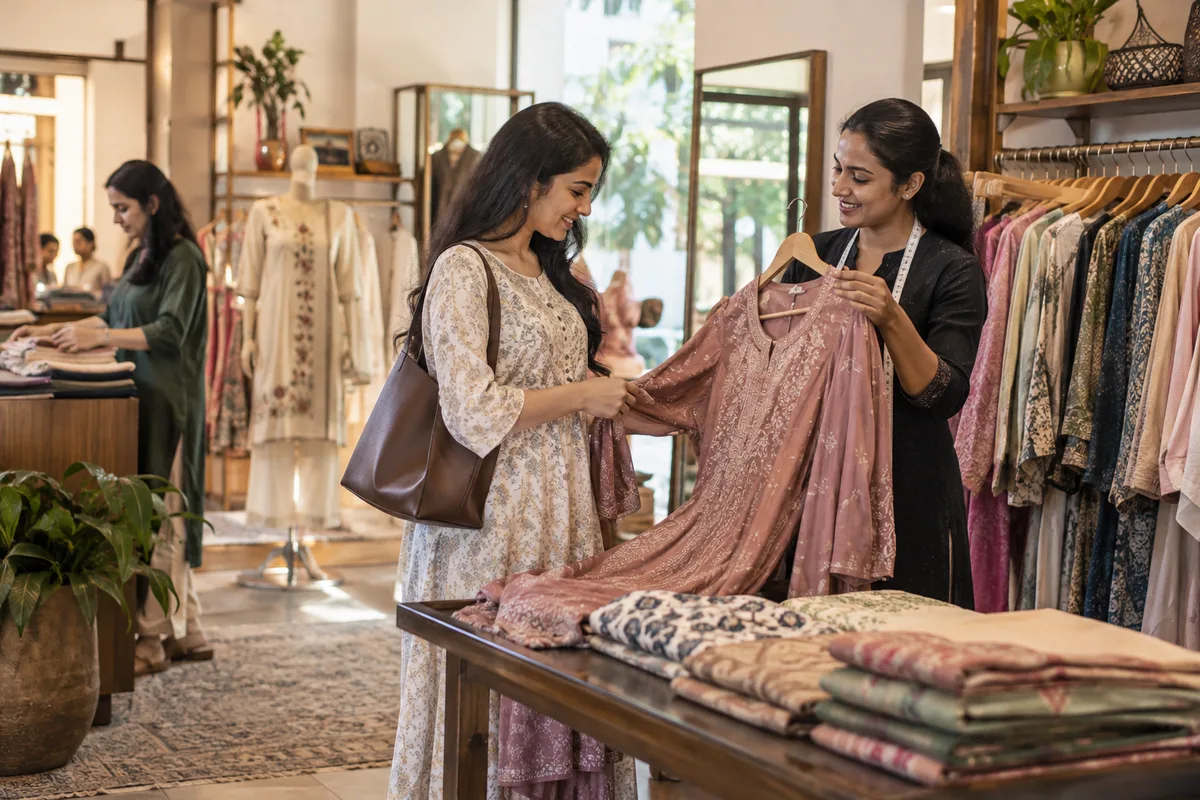
What promotional offer copywriting means
Promotional offer copywriting is the writing of the words that present one offer: its headline, what the buyer gets, the condition, the deadline and the next step. GullySales turns your approved offer into clear copy, with versions for each place it appears, and hands you text that your team has checked against the real terms.
Also for clothing stores and boutiques
- Social media marketing for clothing stores and boutiques
- Content marketing for clothing stores and boutiques
- Instagram marketing for clothing boutiques
- Facebook marketing for clothing boutiques
- Instagram influencer marketing for clothing stores and boutiques
- Regional influencer marketing for clothing stores and boutiques
- Short-form video and reels production for clothing stores and boutiques
- Social media caption and post writing for clothing boutiques
Sales and marketing for clothing stores and boutiques, the overview.
Last updated 14 Nov 2026.
For clothing stores and boutiques
Where it usually goes wrong, and what we would do.
“A festival offer is read in the doorway and on a phone”
A shopper passing the shop reads the banner in a glance, and the same shopper's cousin reads a forwarded message on a phone with the sound off. Both need the offer, the limit and the next step in a few words. Copy that opens with a long greeting loses both readers. Writing the offer in a fixed short order, then fitting it to each place, keeps the banner and the message saying the same thing.
“The small print decides whether the customer feels cheated”
A discount that excludes sale items, bridal pieces or custom stitching is fair, but only if the customer learns it before choosing. When the exclusion surfaces at the billing counter, the offer turns into an argument and a story told in the family group. Stating what the offer covers, what it leaves out and when it ends, in plain words beside the headline, protects the shop's goodwill as much as its margin.
“Stock is thin on the best pieces”
The outfit in the Instagram post is sometimes the single piece of its kind. An offer that names it, or implies the whole collection, sends shoppers to a shelf that no longer holds it. Offer wording has to match what the shop can still supply while the offer runs, and say so honestly, so that a visit ends with a fitting and not a disappointment.
“An exchange or alteration promise has to be one the shop keeps”
Clothing offers attract promises about free alterations, exchange of a size or a delivery before an event. These are the lines a customer holds you to and quotes back. The copy should state only what your tailor and your counter can honour, and name how a customer claims it, so the shop's own staff are not surprised by the offer they advertised.
What we do
What we deliver for clothing stores and boutiques.
The work available for this need. We agree the deliverables and responsibilities for your engagement in writing.
Offer fact sheet
A single page that records the offer as you have decided it: what is given, on which pieces, the exclusions, the closing date, the exchange rule and who in the shop deals with the customer. Every version of the copy is checked against it.
Result: One signed-off page holds the offer, and each version of the copy matches it.
Headline options for the occasion
Several headlines, each from a different angle: the occasion, the saving, the fabric, the deadline or the bundle. You choose the one that suits your shop's voice. We do not rank them on any claim about response.
Result: You hold a set of headlines to choose from, each tied to the same fact sheet.
Main offer text for shop and phone
The body words that present the offer in a short fixed order: what the shopper gets, which pieces it covers, how to claim it and where to go next. Written to be read by a customer standing at the counter.
Result: A shopper can read the offer in one glance and state what it covers.
Conditions wording in plain language
A short statement of the exclusions, the closing rule and the alteration or exchange terms, written for your approval. Where consumer or advertising rules apply, the wording goes to your own adviser for the final say.
Result: The conditions are written in plain words and are approved by a named person.
Versions for sign, message and post
The same offer fitted to the shop banner, the counter card, a WhatsApp broadcast, an Instagram post and a story caption. Each version stays inside the platform's current specification and repeats the same conditions.
Result: Every place the offer appears carries the same terms in matching words.
Closing message for when the offer ends
A short thank-you and a clear note that the offer has ended, with a line that points the shopper to your standing range or the next season. It stops late claims at the counter without causing offence.
Result: A closing text exists before the offer ends, so staff are not improvising.
How the result is measured
- Enquiries or visits that quote the offer
- Redemptions recorded against the offer
- Questions asked about the conditions
Recorded as a baseline before work starts, so every later report has an honest comparison.
Who it is for
This is written for these clothing stores and boutiques.
- Women's ethnic wear and saree boutiques
- Designer and occasion wear studios
- Multi-brand clothing and accessories stores
- Men's wear and ethnic wear stores
- Custom tailoring and blouse stitching studios
- Kids' wear stores
- School uniform retailers and suppliers
- Corporate, hospital and hospitality uniform suppliers
- Fashion accessories and jewellery boutiques
Before you decide
Agree the work. Know how to judge it.
Promotional offer copywriting for clothing boutiques and retailers: use these checks to prepare, choose the scope, and review what changes.
Bring the right evidence
Bring questions from sales calls and examples of objections that delay a decision. Choose a subject expert who can check the substance, and identify evidence that can be published.
Make the scope clear
Agree the reader, buying question, format, and distribution route for each piece. Set the approval process and distinguish new research from rewriting material you already have.
Check the work in use
Ask a colleague to use the draft in a real buyer conversation. It should answer the question, support its claims, and make the next step clear without requiring a sales pitch to explain it.
Know when to change course
If the same unanswered question appears in several articles, improve the strongest page before commissioning another. More words are not a substitute for missing evidence.
These are discussion points, not a fixed package. GullySales confirms the deliverables, responsibilities, fee, and term in writing after reading your brief and speaking with you.
Before we start
What to have ready before the work starts.
The records, access and decisions this work needs from clothing stores and boutiques. Anything missing is noted in the written scope, with who will supply it.
- The offer decided in writing
- Write down what is given, on which pieces and until when, and have someone who can commit the shop sign it. If the terms keep moving, copy waits, because every version has to match one fixed text and not a conversation.
- Stock the offer can honour
- Tell us which pieces and sizes are available for the duration of the offer. We do not promise what the shelf cannot supply. Where stock is unknown, the copy stays silent on limits, and customers learn them at the counter.
- A list of places the offer appears
- Name the banner, counter card, message list, Instagram, listing and any printed handout. Each has its own shape. A place left off the list gets no version, and the customer sees mismatched wording where one was missed.
- One approver for the terms
- A named person who can confirm that the conditions are true, fair and lawful for the trade. Without that person the conditions wording is held back, and the offer does not leave draft or reach a customer.
- Platform and consumer rules you follow
- Send any marketplace policy, platform advertising rule or note from your adviser that limits offer wording. Where none arrives, we draft in general terms and mark the gap, so your adviser can check it before anything is published.
How it works
How the promotional offer copywriting work runs
The work itself, in order. How an engagement starts, from your brief to a written scope, is set out on our method page.
- 1
Read the offer and the stock behind it
We read the offer as you have decided it, together with the pieces it covers and the stock you can supply while it runs. We ask who handles the response, whether it is the counter, the tailor or the person who answers messages.
- 2
Write the fact sheet first
Before any headline, we put the terms on one page and send it for approval. If the exclusions contradict the headline idea, or the closing date is loose, we stop and ask. Copy is never written against an unsettled offer.
- 3
Pick the angle for this shopper
We decide who the offer is for, whether the bride's family, the festival shopper or the school parent, and what that person cares about first. We state the angle and the single action wanted, and you confirm it before drafting.
- 4
Draft the headline, body and conditions together
The headline, the main text, the call to action and the small print are written as one piece, so the promise and the conditions agree word for word. Phrases that the counter could not honour are removed at this stage.
- 5
Fit the offer to each place it appears
The approved master text is adapted for the banner, the counter card, the message and the post, keeping identical terms. Where a platform sets its own rules for offer wording, we check its current rules and flag anything your adviser should read.
- 6
Check with your approver and compare after
Your named approver reads every claim and condition against the fact sheet. After the offer closes, we read the replies and counter notes against the answers recorded before the work began, and note which questions the copy settled and which it did not.
Where this fits
Three pieces of sales work, in this order.
This work sits inside sales process design, at stage 1, prospecting and lead generation. The audit comes before it, and sales management keeps it running.
Step 1
Sales audit
Find where deals are being lost and what to fix first.
Start here if you cannot say where orders are lost.
Step 2 · you are here
Sales process design
One written way to sell, from first enquiry to repeat order.
Start here if every salesperson sells differently.
Step 3
Sales management
A target, a review routine and someone who owns the number.
Start here if the team has targets and no routine.
FAQ
Questions owners ask before they call.
Not here? More answers, or ask on WhatsApp.
Can you write an offer for a festival rush when the terms are not final?
Will the copy say the offer is a limited time?
Can the same offer text go on the shop banner and in WhatsApp?
Do you write the offer for school uniforms and bulk orders too?
Can you promise that an offer will bring more customers?
What if a customer disputes the conditions at the counter?
How much does it cost?
How long is the contract?
How soon will we see results?
Who will actually do the work?
From the blog
Further reading for clothing stores and boutiques.
 5 min read · 29 Sept 2026Festival and wedding-season stock and promotion timing for retailersHow a retailer lines up promotion with the stock cycle in festival and wedding season: what to announce before, during and after, and when to stop.
 6 min read · 21 Sept 2026Influencer marketing vs social media advertising: which one should you pay for?An ad is a message you control, shown to people you choose. A creator post is a recommendation you do not control, shown to people who chose the creator.
 8 min read · 21 Sept 2026How to write an influencer briefA brief fixes the claim, the offer and the disclosure, then leaves the creator alone. Hand over a script and you pay for a bad advertisement.
More for clothing stores and boutiques
Related work to consider.
Closest to this: content and social
- Social media marketing for clothing stores and boutiques
- Content marketing for clothing stores and boutiques
- Instagram marketing for clothing boutiques
- Facebook marketing for clothing boutiques
- Instagram influencer marketing for clothing stores and boutiques
- Regional influencer marketing for clothing stores and boutiques
- Short-form video and reels production for clothing stores and boutiques
- Social media caption and post writing for clothing boutiques
Also for clothing stores and boutiques
Or start from the overview: sales and marketing for clothing stores and boutiques.
Your next practical step
Tell us what you are trying to grow, and we will read it before we call.
Eight short steps, mostly taps. Skip anything you would rather answer on the call.