Clothing stores and boutiques · Shopify and WooCommerce store marketing
Make the online store as clear as the fitting room, so a saved outfit becomes an order.
Store marketing for a boutique connects an existing Shopify or WooCommerce shop to search, shopping ads and repeat-purchase messages, so a shopper who saved an outfit can pick a size and pay. GullySales checks the size and colour data, the purchase tracking and the returns record, then agrees which channels fit your margins and your collection calendar.
Scope, fee, reporting and term are agreed in writing after we have read your brief and spoken to you.
What shopify and WooCommerce store marketing means
Shopify and WooCommerce store marketing connects an existing online store to search, advertising, and repeat-purchase messages so buyers can find products and place orders. GullySales reviews the catalogue and installed apps, prepares product feeds, checks purchase tracking against store records, and agrees which marketing channels to run around your margins and order history.
Also for clothing stores and boutiques
- SEO for clothing stores and boutiques
- Local SEO for clothing stores and boutiques
- Website for clothing boutiques
- Cart recovery and checkout optimisation for clothing stores and boutiques
- PPC ads for clothing stores and boutiques
- Lead generation for clothing stores and boutiques
- Digital marketing for clothing stores and boutiques
- Reputation management for clothing stores and boutiques
Sales and marketing for clothing stores and boutiques, the overview.
Last updated 14 Nov 2026.
For clothing stores and boutiques
Where it usually goes wrong, and what we would do.
“A garment is one product with several choices”
A kurta set comes in sizes, colours and sometimes a stitched or ready version. If the store lists each choice as a separate product, search shows duplicates and the shopper cannot compare. If the choices sit under one page but stock is not tracked per size, the buyer pays for a size that left the shelf last week. Variant structure decides what shopping ads can show and what the packing team picks, so it is checked before any advertising money moves.
“The shopper cannot try it on”
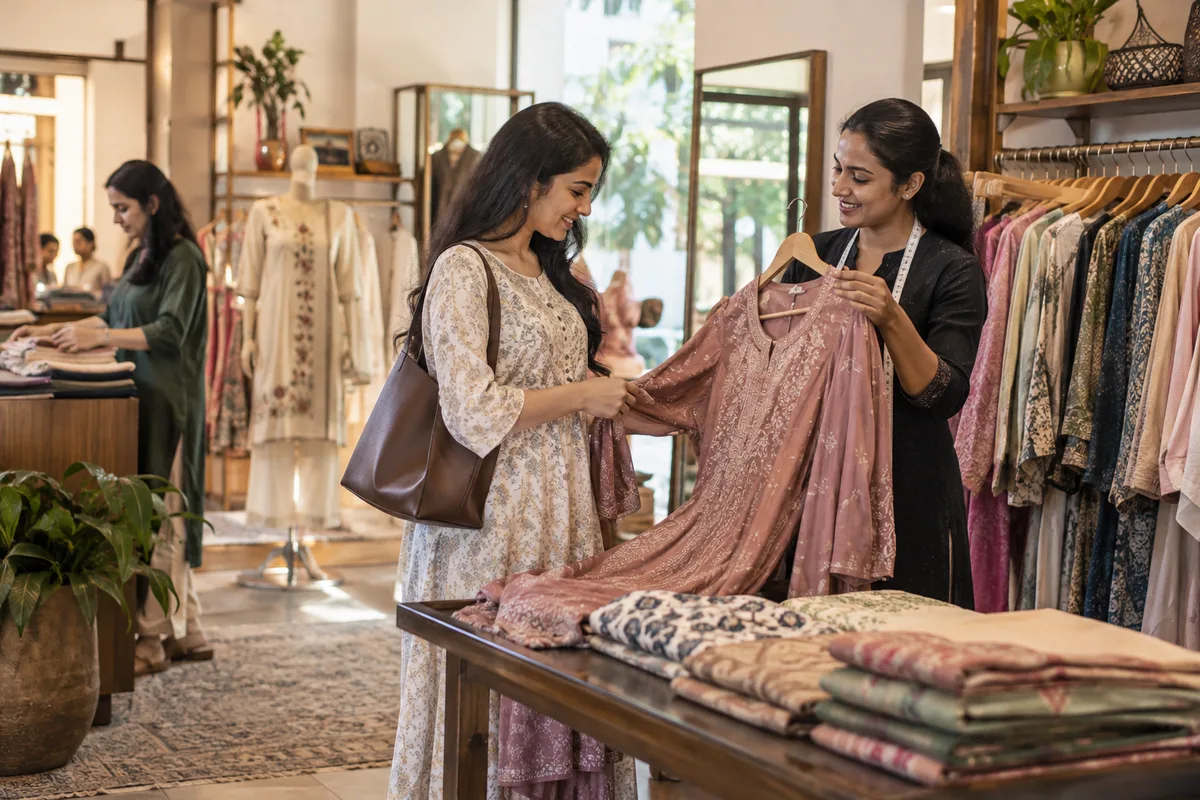
In the shop, a mother holds the blouse against the daughter and checks the border in daylight. Online, the page has to do that work. Missing fabric details, a size chart that lists only the label size, and photographs taken under shop lights leave the buyer guessing, and a guess becomes a return. Marketing before page repair sends visitors to a page that cannot answer the questions the counter would have answered at once.
“Orders that never became revenue”
Cash on delivery refusals, failed payment redirects and exchanges inflate the count of orders a boutique sees in its advertising account. An outfit bought for a wedding and sent back after the function still shows as a sale in the platform's headline figure. Decisions about which collection to promote then rest on orders that did not stay. The record has to separate placed, paid, delivered and returned before anyone reads results.
“Collections move with the occasion”
A festival drop, a bridal edit and a back-to-school uniform range each have a short selling window and a different buyer. A store that keeps last season's banner and a collection page full of sold-out sizes loses the shopper who arrived from a reel. Promotion has to follow what is in stock and what the occasion calls for, and the store settings have to let your team change that without a developer.
What we do
What we deliver for clothing stores and boutiques.
The work available for this need. We agree the deliverables and responsibilities for your engagement in writing.
Variant and stock review
A list of every garment page showing how sizes, colours and ready or stitched options are set up, which ones duplicate, and where stock is tracked per size. You approve each structural change before it is made, because a mistake here affects what customers are charged.
Result: Every live garment has one page, and each size shows its own stock.
Size chart and fabric information
A proposed size chart per garment type, measured in the units your tailor uses, with fabric, lining, care and length written the way a shopper asks about them. Your tailor or store manager checks each chart against the real garment.
Result: A buyer can pick a size without a message to the shop first.
Shopping feed with colour and size fields
The catalogue fields that shopping surfaces read, such as colour, size, material and age group, matched to the store. You check selected garments against the shelf; where a field is unknown it is left empty rather than guessed.
Result: Sampled garments appear in the feed with the same price and sizes as the store.
Purchase tracking and order status record
Purchase events connected to the agreed analytics and advertising accounts, compared with store orders. The record separates paid orders from cash on delivery, refused parcels, exchanges and returns so results are read on orders that stayed.
Result: A test order appears once in each account and matches the store record.
Message flows for the boutique
Agreed messages for a cart left with a size selected, an order update, a request for a photograph or review after delivery, and a note when a saved style is back in stock. You approve wording and opt-in text, and promotional messages stay apart from order updates.
Result: Each message has a named trigger, an approved text and a recorded test send.
Collection calendar and channel plan
A plan tying search, shopping and message activity to your selling windows, with the store changes needed before each window starts. Spend is shown apart from our fee, and the products in scope are named.
Result: Each selling window lists the products, the channels and the store changes it depends on.
How the result is measured
- Search visits and advertising clicks to product and collection pages, separate from orders
- Products approved and active in the agreed shopping feeds
- Qualified product enquiries and reply time where enquiries form part of the buying path
Recorded as a baseline before work starts, so every later report has an honest comparison.
Who it is for
This is written for these clothing stores and boutiques.
- Women's ethnic wear and saree boutiques
- Designer and occasion wear studios
- Multi-brand clothing and accessories stores
- Men's wear and ethnic wear stores
- Custom tailoring and blouse stitching studios
- Kids' wear stores
- School uniform retailers and suppliers
- Corporate, hospital and hospitality uniform suppliers
- Fashion accessories and jewellery boutiques
Before you decide
Agree the work. Know how to judge it.
Shopify and WooCommerce store marketing for clothing stores and boutiques: use these checks to prepare, choose the scope, and review what changes.
Bring the right evidence
Choose a product group and follow its journey from the product page to delivery. Review cancelled orders and returns alongside completed purchases, with customer details removed.
Make the scope clear
Agree which catalogue items, payment steps, and sales channels are included. Account for fulfilment costs and returns when deciding what acquisition spend the order can support.
Check the work in use
Test a purchase on mobile, including the address, delivery charge, payment failure, and confirmation. For trade orders, test quotation requests and minimum-order information as well.
Know when to change course
If stock or delivery promises are unreliable, resolve those first. Increasing paid traffic to unavailable products wastes budget and creates avoidable complaints.
These are discussion points, not a fixed package. GullySales confirms the deliverables, responsibilities, fee, and term in writing after reading your brief and speaking with you.
Before we start
What to have ready before the work starts.
The records, access and decisions this work needs from clothing stores and boutiques. Anything missing is noted in the written scope, with who will supply it.
- Garment export with sizes and stock
- The platform export of all products, with sizes, colours and stock. Without it, we cannot tell which pages are duplicates or which sizes are shown as available when the shelf is empty, and the review would rest on what the store looks like at a glance.
- Admin access to store and ad accounts
- Staff-level access to the store and to any advertising or analytics accounts, created for us by your team. Accounts in a former agency's or relative's name need to be moved to you before work starts, or tracking cannot be checked.
- Returns and refused parcel record
- A sheet or the store's own list of returns, exchanges and refused cash on delivery parcels, with the reason where known. It shows which garments come back and why, and without it results would count orders that never became revenue.
- Fabric and measurement facts
- Fabric, lining, length and care details from your tailor or supplier, and the size chart you use at the counter. Wrong wording here causes returns, so a person who handles the garments needs to confirm it, not the person who writes the page.
- Names for approving and answering
- One person who approves product wording and changes, and one who answers messages from the store. Without them, approvals wait and a shopper's question on a saved style goes unanswered while the interest is still warm.
How it works
How the shopify and woocommerce store marketing work runs
The work itself, in order. How an engagement starts, from your brief to a written scope, is set out on our method page.
- 1
The garment list and store access
We ask for the product export, your platform admin access and the order records you already keep. The first read is of how your garments are structured and which ones carry the bulk of your sales. You approve the scope in writing, including anything that needs your own developer.
- 2
Recording the starting position
Before any change, we note enquiries by source, store orders, returns and refused parcels from the records you hold. These are the figures the work is read against afterwards. If a record does not exist, we say so and agree how it will be kept from now on.
- 3
Fixing the variants and charts
Structural changes to garment pages go first, in batches you approve. Your tailor or manager confirms measurements and fabric wording on the real garments. Changes needing code go to the named developer, and platform limits are written down so they are not discovered after launch.
- 4
Feed and tracking checks
We check sampled garments in the shopping feed and place test orders to see each purchase recorded once. Cash on delivery and failed payment paths are tested separately. Advertising spend starts only after these checks are complete and you have seen the results.
- 5
Message tests and the first window
Messages are sent to your own phone and email for approval before activation. The first collection window then runs with the channels you chose, and your team keeps the stock and size list current so the page matches the shelf.
- 6
Reading results against the record
Results are compared with the starting figures, counting only orders that were paid and not returned. You see which garments, channels and messages produced orders that stayed, and decide what to repeat, change or stop for the next window.
Where this fits
Three pieces of sales work, in this order.
This work sits inside sales process design, at stage 0, foundation. The audit comes before it, and sales management keeps it running.
Step 1
Sales audit
Find where deals are being lost and what to fix first.
Start here if you cannot say where orders are lost.
Step 2 · you are here
Sales process design
One written way to sell, from first enquiry to repeat order.
Start here if every salesperson sells differently.
Step 3
Sales management
A target, a review routine and someone who owns the number.
Start here if the team has targets and no routine.
FAQ
Questions owners ask before they call.
Not here? More answers, or ask on WhatsApp.
Do I need a Shopify or WooCommerce store before this starts?
Can the store handle both ready-made and stitched-to-measure outfits?
Will you run advertising for the boutique?
What about customers who prefer to come into the shop?
How will I know whether a sale came from marketing or from the festival itself?
Do you replace my marketplace listings?
How much does it cost?
How long is the contract?
How soon will we see results?
Who will actually do the work?
From the blog
Further reading for clothing stores and boutiques.
 5 min read · 29 Sept 2026Festival and wedding-season stock and promotion timing for retailersHow a retailer lines up promotion with the stock cycle in festival and wedding season: what to announce before, during and after, and when to stop.
 6 min read · 21 Sept 2026Influencer marketing vs social media advertising: which one should you pay for?An ad is a message you control, shown to people you choose. A creator post is a recommendation you do not control, shown to people who chose the creator.
 8 min read · 21 Sept 2026How to write an influencer briefA brief fixes the claim, the offer and the disclosure, then leaves the creator alone. Hand over a script and you pay for a bad advertisement.
More for clothing stores and boutiques
Related work to consider.
Closest to this: search and visibility
Also for clothing stores and boutiques
- PPC ads for clothing stores and boutiques
- Lead generation for clothing stores and boutiques
- Digital marketing for clothing stores and boutiques
- Reputation management for clothing stores and boutiques
- Branding and identity for clothing stores and boutiques
- Social media marketing for clothing stores and boutiques
Or start from the overview: sales and marketing for clothing stores and boutiques.
Your next practical step
Tell us what you are trying to grow, and we will read it before we call.
Eight short steps, mostly taps. Skip anything you would rather answer on the call.