Clothing stores and boutiques · Social media cover and banner design
Let the cover show what the shop sells before the shopper scrolls.
Social media cover and banner design for a clothing boutique is the artwork at the top of the Instagram, Facebook and WhatsApp business profile, where a shopper decides at a glance whether this is the shop for the occasion. GullySales designs it from the stock you actually hold, for each profile you run, and hands over the editable files.
Scope, fee, reporting and term are agreed in writing after we have read your brief and spoken to you.
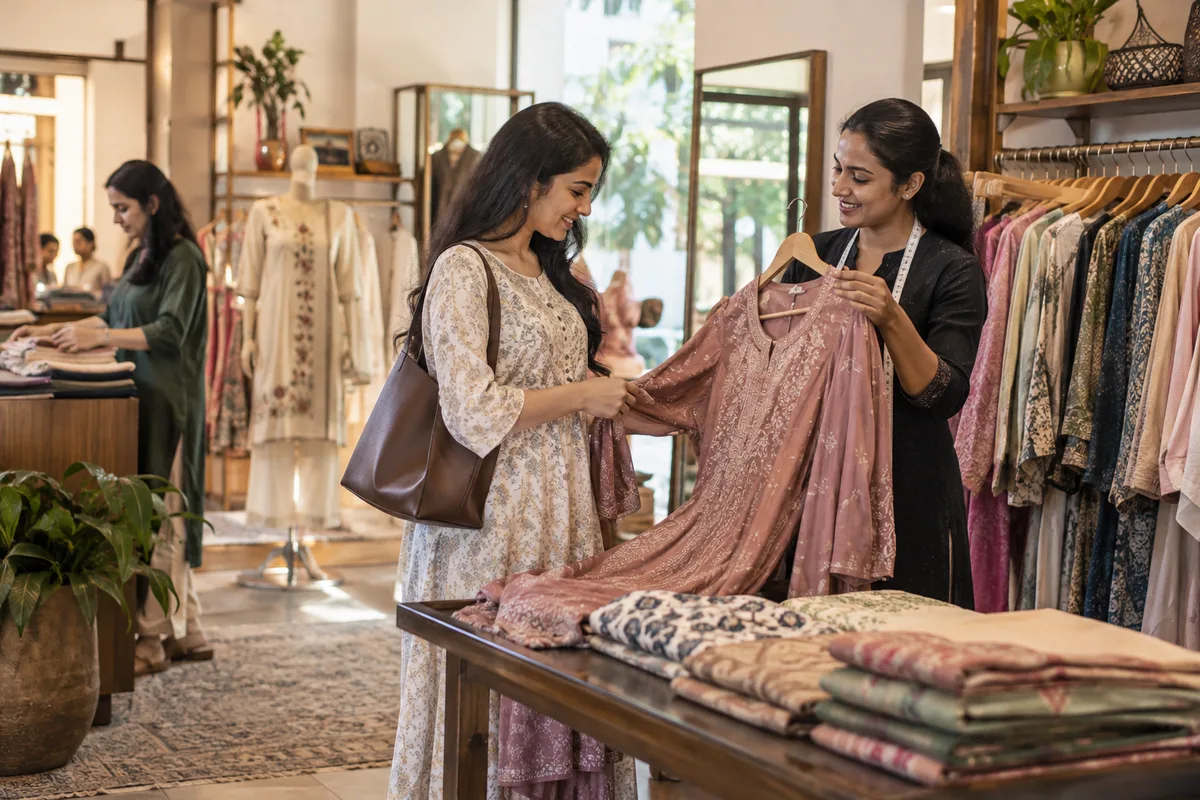
What social media cover and banner design means
Social media cover and banner design is the artwork at the top of a business profile, page or channel, the first large image a visitor sees after finding you. GullySales designs it for each platform you use, supplies the agreed versions with the editable file, and checks how it looks on a phone and a desktop screen.
Also for clothing stores and boutiques
- Social media marketing for clothing stores and boutiques
- Content marketing for clothing stores and boutiques
- Instagram marketing for clothing boutiques
- Facebook marketing for clothing boutiques
- Instagram influencer marketing for clothing stores and boutiques
- Regional influencer marketing for clothing stores and boutiques
- Short-form video and reels production for clothing stores and boutiques
- Social media caption and post writing for clothing boutiques
Sales and marketing for clothing stores and boutiques, the overview.
Last updated 14 Nov 2026.
For clothing stores and boutiques
Where it usually goes wrong, and what we would do.
“The cover still shows last season's window”
A banner photographed for a festive launch stays on the profile long after the rails have changed. A shopper who saved your post opens the profile, sees an outfit that is no longer in the shop, and wonders whether anyone is still answering messages. Boutique stock moves faster than a cover is touched, so the artwork has to be built so that one line or one picture can be swapped without redrawing the whole banner.
“One photograph cannot carry a mixed range”
The same shop may sell sarees, blouses stitched to measure, kids' wear and school uniforms. A cover that leads with a bridal outfit alone sends the school parent away, and a cover with nine small thumbnails tells nobody anything. The cover should name the one idea the shop wants to be known for this season, and leave the rest of the range to the pinned posts, the highlights and the catalogue beneath it.
“A tall garment is cropped into a wide strip”
Clothing is photographed upright and covers are wide. Squeezing a saree into a thin strip cuts the border, the pallu or the hemline, which is the part that sells the garment. A model cut off at the forehead looks careless. The layout has to be planned around the shape of the garment and the area each platform keeps visible, with the fabric detail placed where the crop leaves it intact.
“The cover and the fitting appointment never meet”
A shopper who likes the cover has the next questions ready: where is the shop, when is it open, how do I ask the price. If the banner gives no clue and the profile buttons are not set up to match, the shopper leaves without asking. The cover should point to the single next step the owner wants, such as a message to book a fitting, and agree with what the buttons below it offer.
What we do
What we deliver for clothing stores and boutiques.
The work available for this need. We agree the deliverables and responsibilities for your engagement in writing.
Cover brief for the shop
One page recording the shopper you are speaking to, the lead garment or range, the single line the banner carries and the next step you want taken. You approve it before any layout begins, so a dispute about taste is settled on paper and not on finished artwork.
Result: The owner can state in one sentence what the cover is for.
Safe-area map for each profile
A drawing for every platform you use, marking where the profile picture, the buttons and the phone crop cover the banner, using the platform's current specification. The shop name, the line and the garment detail are all placed inside the part that always shows.
Result: Nothing important sits under a button or beyond a phone crop.
Two cover directions
Two different arrangements of picture, line and logo, not the same layout in two colours. One might lead with a draped saree, another with the rail and the shop front. You choose one, and only that one is taken to final artwork.
Result: The owner has compared two real choices before approving one.
Final covers for every profile
The approved artwork prepared for each named profile, labelled by platform and checked on a phone and a computer screen. The matching profile picture treatment is included so the logo sits cleanly inside the round frame.
Result: Each profile can be uploaded without resizing or cropping by hand.
Season swap set
Alternate versions on the same layout for the wedding season, a festive launch, a clearance sale and new arrivals. Only the picture and the line change, and the logo, colours and spacing stay fixed so the shop is recognised on every visit.
Result: A change of season means swapping a line, not commissioning a redraw.
Editable files and handover sheet
The layered source file, a list of fonts and picture licences used, and a short sheet saying which file belongs on which profile and who may change the line. A staff member who is not a designer can follow it.
Result: Anyone on the team can find the right file and replace the line.
How the result is measured
- Profiles whose banner matches the current offer
- Platforms on which the cover has been checked on a phone
- Profile visits that lead to a contact or enquiry
Recorded as a baseline before work starts, so every later report has an honest comparison.
Who it is for
This is written for these clothing stores and boutiques.
- Women's ethnic wear and saree boutiques
- Designer and occasion wear studios
- Multi-brand clothing and accessories stores
- Men's wear and ethnic wear stores
- Custom tailoring and blouse stitching studios
- Kids' wear stores
- School uniform retailers and suppliers
- Corporate, hospital and hospitality uniform suppliers
- Fashion accessories and jewellery boutiques
Before you decide
Agree the work. Know how to judge it.
Social media cover and banner design for clothing boutiques and retailers: use these checks to prepare, choose the scope, and review what changes.
Bring the right evidence
Review the posts that produced useful conversations, not only the ones with the most views. Gather buyer questions and decide which team member can contribute credible material.
Make the scope clear
Choose the audience and channel before setting a posting volume. Agree who supplies material, approves posts, and handles messages, including complaints or questions the agency cannot answer.
Check the work in use
Follow a post through to the profile, website, and response. A useful report explains the quality of conversations and enquiries, alongside reach and engagement.
Know when to change course
If publishing takes time away from unanswered buyer messages, fix the response routine first. Do not expand to another channel without a clear reason for being there.
These are discussion points, not a fixed package. GullySales confirms the deliverables, responsibilities, fee, and term in writing after reading your brief and speaking with you.
Before we start
What to have ready before the work starts.
The records, access and decisions this work needs from clothing stores and boutiques. Anything missing is noted in the written scope, with who will supply it.
- Current stock photographs
- Pictures of the garments you want to lead with, taken in good light and ironed, with permission from any model. The cover is only as good as the picture it is built on, and a dark or creased photograph cannot be rescued by layout.
- The lead range for the season
- A decision on which outfits or services come first, for example bridal wear, festive wear or school uniforms. Without it the cover tries to show everything, and a shopper cannot tell what the shop is known for.
- Profile logins held by you
- Access to each profile stays with the owner. GullySales prepares the files and you upload them yourself or delegate it to a person you trust. Without a clear login holder, a finished cover can wait unused for weeks.
- Logo, shop sign and colours
- The logo files, the colours and the lettering on the shop board. The cover should look like the same shop as the sign above the door, and a mismatch makes a returning customer doubt the profile is yours.
- Today's profile and message figures
- A note of profile visits, link taps and messages before the change, from the platform's own insight screens. Without this record there is nothing to compare against afterwards, and any claim about the new cover would be a guess.
How it works
How the social media cover and banner design work runs
The work itself, in order. How an engagement starts, from your brief to a written scope, is set out on our method page.
- 1
Walk the shop and open the profiles
We read your brief and open each profile on a phone and on a computer, noting what a visitor sees now, which parts the platform covers and what is already in place. We also look at the shop sign, the rails and the window, because the cover should look like the same shop a shopper will walk into.
- 2
Choose the lead garment and the line
With you, we settle the one range or outfit the cover leads with and the single line it carries, such as bridal blouses stitched to measure or new festive arrivals. A cover asked to hold the whole shop holds nothing, so the rest of the range is left to the posts below.
- 3
Map the crop for each profile
We draw the safe area for every profile you named, marking the circle the profile picture takes and the strip the platform trims on a phone. The garment detail that sells it, such as a border or a hem, is positioned so no crop removes it.
- 4
Select or photograph the pictures
We review the photographs you supply and flag any that are dark, creased, badly lit or taken without permission from a model or a customer. Where a new photograph is needed we brief the shot, and the owner decides whether a garment is shown on a person, on a mannequin or laid flat.
- 5
Design and check on the phone first
Because a shopper meets the cover on a phone, we design and judge it there, then check the computer view. We test the line in bright light and in the dark setting, and adjust contrast and position until the shop name and the garment hold in every crop.
- 6
Hand over and read the profile figures
We deliver the final files, the source file and the handover sheet. Then we compare profile visits and taps on the message button against the figures you recorded before the cover changed, and report what moved without crediting the cover for anything the figures do not show.
Where this fits
Three pieces of sales work, in this order.
This work sits inside sales process design, at stage 1, prospecting and lead generation. The audit comes before it, and sales management keeps it running.
Step 1
Sales audit
Find where deals are being lost and what to fix first.
Start here if you cannot say where orders are lost.
Step 2 · you are here
Sales process design
One written way to sell, from first enquiry to repeat order.
Start here if every salesperson sells differently.
Step 3
Sales management
A target, a review routine and someone who owns the number.
Start here if the team has targets and no routine.
FAQ
Questions owners ask before they call.
Not here? More answers, or ask on WhatsApp.
Should the cover show a model or only the garment?
Do we need a different cover for each profile?
Can the cover announce a sale or an offer?
When should we change the cover?
Will a new cover bring more people to the shop?
Does this include writing the posts and running the accounts?
How much does it cost?
How long is the contract?
How soon will we see results?
Who will actually do the work?
From the blog
Further reading for clothing stores and boutiques.
 5 min read · 29 Sept 2026Festival and wedding-season stock and promotion timing for retailersHow a retailer lines up promotion with the stock cycle in festival and wedding season: what to announce before, during and after, and when to stop.
 6 min read · 21 Sept 2026Influencer marketing vs social media advertising: which one should you pay for?An ad is a message you control, shown to people you choose. A creator post is a recommendation you do not control, shown to people who chose the creator.
 8 min read · 21 Sept 2026How to write an influencer briefA brief fixes the claim, the offer and the disclosure, then leaves the creator alone. Hand over a script and you pay for a bad advertisement.
More for clothing stores and boutiques
Related work to consider.
Closest to this: content and social
- Social media marketing for clothing stores and boutiques
- Content marketing for clothing stores and boutiques
- Instagram marketing for clothing boutiques
- Facebook marketing for clothing boutiques
- Instagram influencer marketing for clothing stores and boutiques
- Regional influencer marketing for clothing stores and boutiques
- Short-form video and reels production for clothing stores and boutiques
- Social media caption and post writing for clothing boutiques
Also for clothing stores and boutiques
Or start from the overview: sales and marketing for clothing stores and boutiques.
Your next practical step
Tell us what you are trying to grow, and we will read it before we call.
Eight short steps, mostly taps. Skip anything you would rather answer on the call.