Clothing stores and boutiques · Social media post and story design
Design the post so the outfit is seen first and the shop's name second.
Social media post and story design for a clothing shop is the artwork for feed posts and vertical stories that show an outfit, a collection arrival, a fitting slot or a festival notice. GullySales designs each piece to your brand rules and the platform's current specification, and hands over exported images and editable files.
Scope, fee, reporting and term are agreed in writing after we have read your brief and spoken to you.
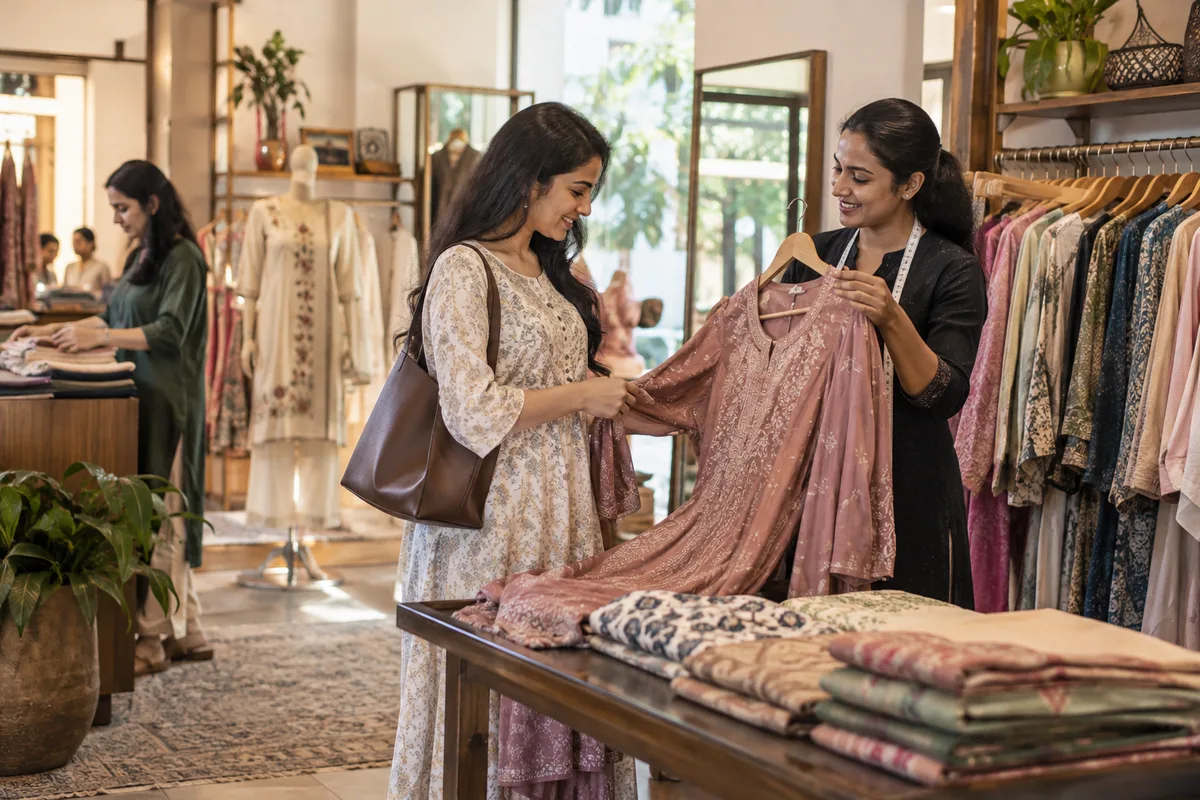
What social media post and story design means
Social media post and story design is the artwork for single feed posts and vertical stories on Instagram, Facebook, LinkedIn and X (Twitter). GullySales designs each piece to your brand rules and the platform's current specification, then hands over the layered source files and the exported images ready to publish.
Also for clothing stores and boutiques
- Social media marketing for clothing stores and boutiques
- Content marketing for clothing stores and boutiques
- Instagram marketing for clothing boutiques
- Facebook marketing for clothing boutiques
- Instagram influencer marketing for clothing stores and boutiques
- Regional influencer marketing for clothing stores and boutiques
- Short-form video and reels production for clothing stores and boutiques
- Social media caption and post writing for clothing boutiques
Sales and marketing for clothing stores and boutiques, the overview.
Last updated 14 Nov 2026.
For clothing stores and boutiques
Where it usually goes wrong, and what we would do.
“The photograph is the product and the design must not hide it”
A shopper saves an outfit because of its drape, colour and work. Heavy borders, large logos and text laid across the garment cover the reason for the save. Good clothing artwork keeps the cloth clear, places the price or the occasion line in a quiet band, and gives the shop's name a small steady corner, so the picture does the selling.
“Stories get cropped by the platform's own buttons”
A story shows the viewer's reply box at the bottom and the account name at the top, and a message placed there is covered. A new arrival notice with the code in the lower strip disappears behind the interface. Drawing stories to the platform's current safe zones keeps the outfit, the code and the way to ask all visible.
“A feed that changes style from one post to the next looks like several shops”
When the festive post, the bridal post and the sale post each use a different font, border and colour, the grid reads as the work of different shops. A returning shopper cannot tell which posts are yours. A small family of layouts, fixed in colour and type, lets a post change in content but still look like the same boutique.
“The post must lead to a message, not only a like”
A shopper who saves a saree wants to ask if it is available in another colour. A post with no code, no clear reply route and no mention of the fitting option leaves that shopper with a like and nothing else. Designing the code, the reply cue and the visiting line into the layout turns a saved outfit into a question the shop can answer.
What we do
What we deliver for clothing stores and boutiques.
The work available for this need. We agree the deliverables and responsibilities for your engagement in writing.
Message and hierarchy sheet
Before any artwork, one page states the point of each piece, the order the eye should travel and what is left out. You approve the idea first, so design time is not spent on a post that tries to announce a collection, a sale and a fitting slot together.
Result: Each post has one stated message that you approved before the layout began.
Feed post artwork for the outfit
Single posts and carousels framed for the feed, with the garment kept clear, the code and the occasion line in a quiet band and the logo placed where your brand rules put it. Text is sized for a phone screen.
Result: On a phone-sized view the outfit, the code and the way to ask are all legible.
Story frames for arrivals and fitting slots
Full-screen vertical frames for a new arrival, a collection reveal or a fitting-slot notice, with text and key elements held clear of the areas the platform covers. A multi-frame story reads alone and in order.
Result: Nothing important sits under the reply box or the account name on a story.
Versions for each network
The same idea redrawn for Instagram, Facebook and the WhatsApp status where you use them, not one image stretched. Where a network crops or frames a post differently, the version is redrawn so the outfit and the message survive.
Result: Each network gets a version framed for its own placement.
A small family of layouts
Three or four related layouts, such as outfit alone, outfit with a note, collection grid and notice, built on your palette and type. They let a post differ in content and still look like the same boutique.
Result: A run of posts on the grid reads as one shop and not as a mixed set.
Exports, editable files and a usage note
Final images exported to the platform's current specification and named by network and placement, the layered source files with their fonts listed, and a one-page note saying what must not be altered and which images need your licence check.
Result: Your team can change a date, a code or a price without redrawing the piece.
How the result is measured
- Posts published that follow your brand rules
- Pieces returned for being cropped or unreadable
- Platform versions delivered for each idea
Recorded as a baseline before work starts, so every later report has an honest comparison.
Who it is for
This is written for these clothing stores and boutiques.
- Women's ethnic wear and saree boutiques
- Designer and occasion wear studios
- Multi-brand clothing and accessories stores
- Men's wear and ethnic wear stores
- Custom tailoring and blouse stitching studios
- Kids' wear stores
- School uniform retailers and suppliers
- Corporate, hospital and hospitality uniform suppliers
- Fashion accessories and jewellery boutiques
Before you decide
Agree the work. Know how to judge it.
Social media post and story design for clothing boutiques and retailers: use these checks to prepare, choose the scope, and review what changes.
Bring the right evidence
Review the posts that produced useful conversations, not only the ones with the most views. Gather buyer questions and decide which team member can contribute credible material.
Make the scope clear
Choose the audience and channel before setting a posting volume. Agree who supplies material, approves posts, and handles messages, including complaints or questions the agency cannot answer.
Check the work in use
Follow a post through to the profile, website, and response. A useful report explains the quality of conversations and enquiries, alongside reach and engagement.
Know when to change course
If publishing takes time away from unanswered buyer messages, fix the response routine first. Do not expand to another channel without a clear reason for being there.
These are discussion points, not a fixed package. GullySales confirms the deliverables, responsibilities, fee, and term in writing after reading your brief and speaking with you.
Before we start
What to have ready before the work starts.
The records, access and decisions this work needs from clothing stores and boutiques. Anything missing is noted in the written scope, with who will supply it.
- Brand colours, fonts and logo files
- Posts are checked against your palette, type and logo space. Vector logo files and a short set of rules are enough. If neither exists, the first task becomes recovering the logo and setting the colours, and the artwork waits behind it.
- Photographs of the outfits
- Clear, well lit photographs of each piece, or of a model or a mannequin, that you have the right to use. A person who appears needs to have agreed. With no usable photograph, the design relies on type and colour, which sells clothing poorly.
- The one message for each post
- A point you can state in a sentence, with its code, date or fitting slot. If the message is still argued over inside the shop, the artwork shows that uncertainty and the post reads as crowded and unclear to a shopper.
- The networks and placements
- State whether each piece goes to the feed, a story or a status, and on which network. Frames differ by placement, so an unstated placement is guessed, and a wrong guess means the piece is redrawn.
- A named approver with a back-up
- Someone who can say a piece may go out, and a second person for when the first is on the shop floor. If approval sits with a group, proofs circulate unanswered and the new arrival post misses the day it was meant for.
How it works
How the social media post and story design work runs
The work itself, in order. How an engagement starts, from your brief to a written scope, is set out on our method page.
- 1
Read what you post now
We read the last stretch of your posts and stories, your brand colours and fonts and the photographs you already take. We note which outfits you feature, who is meant to see them, and where the current artwork covers the cloth or repeats itself.
- 2
Agree the message for each piece
Each post gets one point you can state in a sentence, with its code, date or action. We write the point and the reading order in the hierarchy sheet and you confirm it. Arguments about what to include are settled here, before layout begins.
- 3
Check each network's current specification
We confirm the placements you will use and the platform's current specification for each one, including the zones a network covers with its own interface. Artwork is drawn to fit those frames, not adjusted after the layout is finished.
- 4
Design the posts and the stories as a set
Layout, type, colour and photography are set to your brand rules. Feed posts and stories are drawn together, so a shopper who sees an outfit in the feed and then in a story recognises the same boutique and the same code.
- 5
Review at phone size
Every piece is checked at the size a shopper meets it, on a phone held in one hand. Text that is too small, a logo too near the edge or a code that is hard to read is corrected before you see a proof.
- 6
Handle changes, hand over and read the replies
Your approver reviews the pieces and changes follow the written scope. We release exports, source files and the usage note, then compare the questions that arrive in your messages with the ones recorded before the work began, to see what the artwork answered.
Where this fits
Three pieces of sales work, in this order.
This work sits inside sales process design, at stage 1, prospecting and lead generation. The audit comes before it, and sales management keeps it running.
Step 1
Sales audit
Find where deals are being lost and what to fix first.
Start here if you cannot say where orders are lost.
Step 2 · you are here
Sales process design
One written way to sell, from first enquiry to repeat order.
Start here if every salesperson sells differently.
Step 3
Sales management
A target, a review routine and someone who owns the number.
Start here if the team has targets and no routine.
FAQ
Questions owners ask before they call.
Not here? More answers, or ask on WhatsApp.
Do you take the photographs as well?
Can the same design work for Instagram and Facebook?
Will you write the caption too?
Can your layouts handle a festival and a wedding in the same week?
Can my own staff edit the posts later?
Do you promise more followers or more visits?
How much does it cost?
How long is the contract?
How soon will we see results?
Who will actually do the work?
From the blog
Further reading for clothing stores and boutiques.
 5 min read · 29 Sept 2026Festival and wedding-season stock and promotion timing for retailersHow a retailer lines up promotion with the stock cycle in festival and wedding season: what to announce before, during and after, and when to stop.
 6 min read · 21 Sept 2026Influencer marketing vs social media advertising: which one should you pay for?An ad is a message you control, shown to people you choose. A creator post is a recommendation you do not control, shown to people who chose the creator.
 8 min read · 21 Sept 2026How to write an influencer briefA brief fixes the claim, the offer and the disclosure, then leaves the creator alone. Hand over a script and you pay for a bad advertisement.
More for clothing stores and boutiques
Related work to consider.
Closest to this: content and social
- Social media marketing for clothing stores and boutiques
- Content marketing for clothing stores and boutiques
- Instagram marketing for clothing boutiques
- Facebook marketing for clothing boutiques
- Instagram influencer marketing for clothing stores and boutiques
- Regional influencer marketing for clothing stores and boutiques
- Short-form video and reels production for clothing stores and boutiques
- Social media caption and post writing for clothing boutiques
Also for clothing stores and boutiques
Or start from the overview: sales and marketing for clothing stores and boutiques.
Your next practical step
Tell us what you are trying to grow, and we will read it before we call.
Eight short steps, mostly taps. Skip anything you would rather answer on the call.