Clothing stores and boutiques · Social media template design
Give every shift the same post layout, so the feed looks like one shop.
Social media template design for a clothing boutique is a set of reusable layouts for new arrivals, stitching updates, offers and festive greetings that the owner or a sales assistant fills with a new photograph and line. GullySales designs the layouts from your brand rules, locks what must stay fixed, and hands over the working files with a short guide.
Scope, fee, reporting and term are agreed in writing after we have read your brief and spoken to you.
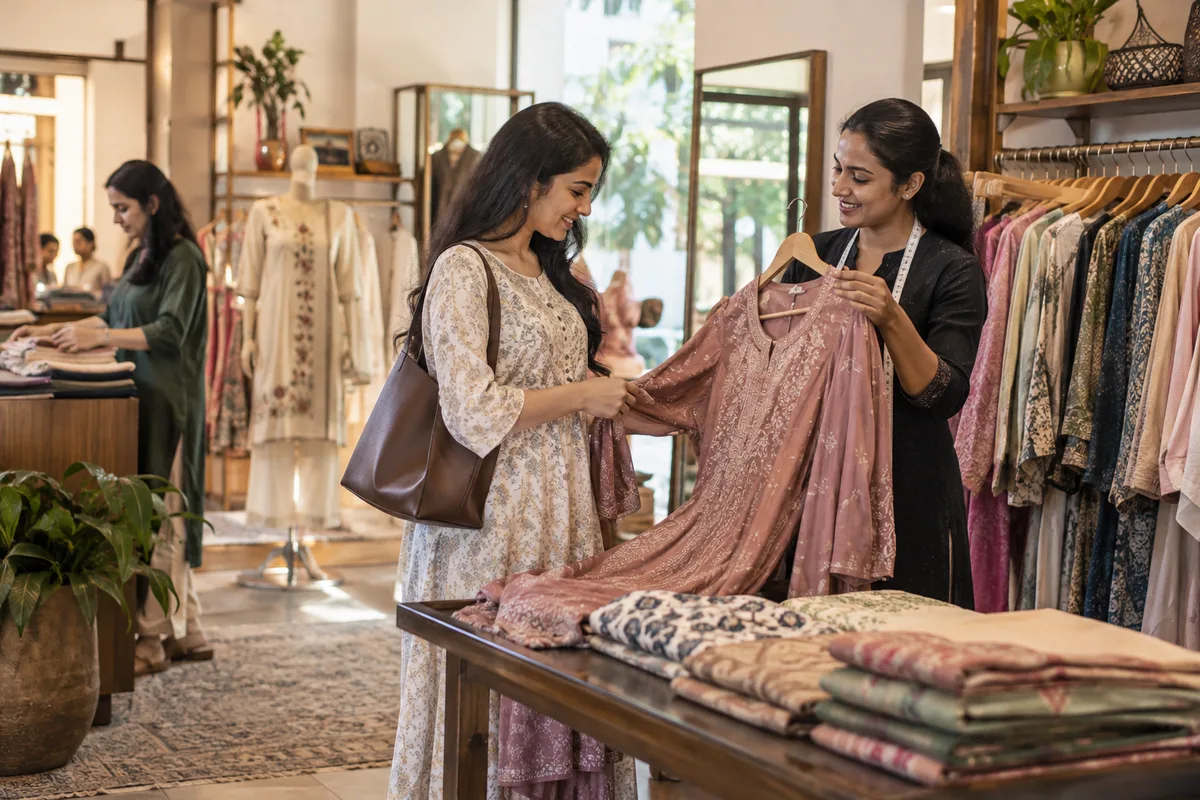
What social media template design means
Social media template design is a set of reusable post, story and carousel layouts that your team fills with new words and pictures instead of drawing each post again. GullySales designs the layouts from your brand rules, locks what must stay fixed, marks what may change, and hands over the working files with a short guide for whoever posts.
Also for clothing stores and boutiques
- Social media marketing for clothing stores and boutiques
- Content marketing for clothing stores and boutiques
- Instagram marketing for clothing boutiques
- Facebook marketing for clothing boutiques
- Instagram influencer marketing for clothing stores and boutiques
- Regional influencer marketing for clothing stores and boutiques
- Short-form video and reels production for clothing stores and boutiques
- Social media caption and post writing for clothing boutiques
Sales and marketing for clothing stores and boutiques, the overview.
Last updated 14 Nov 2026.
For clothing stores and boutiques
Where it usually goes wrong, and what we would do.
“The feed changes with whoever holds the phone”
In a busy shop, the owner posts on one afternoon, a sales assistant posts on another, and a relative posts when a festival arrives. Each picks a different font, a different logo position and a different shade of the shop colour. A shopper scrolling the feed sees what looks like several small shops, which weakens the sense that this one has a clear style.
“New arrivals wait for the one person who can design”
A fresh delivery of sarees or a rack of festive kurtas loses value if the post waits for the person who knows the design tool. By the time that person is free, the customers who would have asked about the outfit have already visited another shop. A ready layout lets any assistant post a new arrival the moment the stock is steamed and hung.
“Staff move things they should not touch”
A helpful assistant enlarges the logo to fill a gap, changes the headline font to look festive, or lays a price tag across the drape of the garment. The post then hides the very fabric it is meant to show. A template locks the logo, the colours and the space kept clear for the garment, and opens only the zones meant for changing.
“A post for stitching orders is not a post for stock”
A boutique publishes very different kinds of post: a ready outfit, a custom blouse slot, an order ready for collection, a fitting reminder, a school uniform notice. One layout does not suit all of them. Each post type needs its own frame, with space for a size note or a collection line where it matters, so a shopper reads each at a glance.
What we do
What we deliver for clothing stores and boutiques.
The work available for this need. We agree the deliverables and responsibilities for your engagement in writing.
Post type list for the shop
A written list of the posts the boutique really publishes, such as new arrivals, a restock, a custom stitching slot, a festive greeting, a sale notice and a collection reminder. Each template is tied to one of them, so nothing is drawn that your team would never use.
Result: Every template on the list matches a post the shop has actually made.
Arrival and restock layouts
Frames for a single outfit, a pair of colours and a set of three, with a fixed logo position, a clear space for the garment and a line for the fabric or the occasion. Only the picture and the line are open to change.
Result: An assistant can post a new arrival without choosing a font.
Story and reel cover frames
Taller versions of the main layouts for stories and short video covers, with the zones that buttons and captions cover kept free of the logo, the garment detail and the line. They follow the platform's current specification.
Result: Stories show the whole garment, not a logo hidden behind a button.
Carousel set for collections
A cover frame, content frames for individual outfits and a closing frame carrying the next step, all designed to sit together. Swipe order and repeated elements are fixed, so your team changes pictures and lines only.
Result: A collection post keeps the same look from the first frame to the last.
Notice layouts for orders and fittings
Plain frames for an order ready to collect, a fitting reminder, a closing day and a change in opening hours, built for readability. They avoid decoration so that a customer sees the date and the instruction at once.
Result: A routine notice goes out on the shop's own look in minutes of effort, not a redraw.
Editable files, rules and usage guide
Working files in the format your team's design tool opens, with text styles and colours set as reusable parts, a rule sheet for each open zone, and a guide showing how to duplicate a template and replace a picture.
Result: A new colleague can follow the guide without asking the designer.
How the result is measured
- Posts published from a template instead of a blank canvas
- Staff who can produce an on-brand post without asking a designer
- Posts that break a locked brand element
Recorded as a baseline before work starts, so every later report has an honest comparison.
Who it is for
This is written for these clothing stores and boutiques.
- Women's ethnic wear and saree boutiques
- Designer and occasion wear studios
- Multi-brand clothing and accessories stores
- Men's wear and ethnic wear stores
- Custom tailoring and blouse stitching studios
- Kids' wear stores
- School uniform retailers and suppliers
- Corporate, hospital and hospitality uniform suppliers
- Fashion accessories and jewellery boutiques
Before you decide
Agree the work. Know how to judge it.
Social media template design for clothing boutiques and retailers: use these checks to prepare, choose the scope, and review what changes.
Bring the right evidence
Review the posts that produced useful conversations, not only the ones with the most views. Gather buyer questions and decide which team member can contribute credible material.
Make the scope clear
Choose the audience and channel before setting a posting volume. Agree who supplies material, approves posts, and handles messages, including complaints or questions the agency cannot answer.
Check the work in use
Follow a post through to the profile, website, and response. A useful report explains the quality of conversations and enquiries, alongside reach and engagement.
Know when to change course
If publishing takes time away from unanswered buyer messages, fix the response routine first. Do not expand to another channel without a clear reason for being there.
These are discussion points, not a fixed package. GullySales confirms the deliverables, responsibilities, fee, and term in writing after reading your brief and speaking with you.
Before we start
What to have ready before the work starts.
The records, access and decisions this work needs from clothing stores and boutiques. Anything missing is noted in the written scope, with who will supply it.
- Your last posts and stories
- Access to the posts you have already published, good and bad. We read them to learn which layouts your team returns to, and without them we would invent a style that does not match how the shop actually sells.
- Brand colours, fonts and logo files
- The logo in a usable file, the shop colours and any fonts already in use. Templates built on unsettled rules must be redrawn when the rules change, so a shop without them should settle them first.
- The names of the people who post
- Who posts, on which device, with which design tool. A template that needs a laptop is useless to an assistant who posts from a phone between customers, so we need to know where the work will happen.
- A set of real garment pictures
- A handful of ordinary photographs taken the way your team takes them, good and poor. We test layouts against real pictures, and a template that only works with studio photographs fails on the first busy afternoon.
- Decisions on what staff may change
- Your view on what an assistant may edit, such as the headline and the picture, and what stays fixed, such as the logo and the colours. If left open, staff will adjust whatever looks wrong to them, and the feed drifts again.
How it works
How the social media template design work runs
The work itself, in order. How an engagement starts, from your brief to a written scope, is set out on our method page.
- 1
List the posts the shop really makes
We read your brief and scroll your recent posts and stories, listing the kinds you publish, from new arrivals to stitching slots to festive wishes. We note which layouts already work, which post types recur and which design mistakes your team keeps making by hand.
- 2
Agree who will fill the templates
We ask who posts: the owner, a sales assistant, a relative, an agency. The skill of that person with a design tool decides how much we lock and how simple the open zones must be. A template for a confident designer and one for a shop assistant are not the same file.
- 3
Draw the layouts and fix the brand
We draw each layout with the logo, colours, type styles and spacing set from your brand rules. Where the rules are silent, such as how a garment name is lettered, we propose a choice and mark it for your decision instead of guessing.
- 4
Test with awkward real stock
We fill each layout with real outfits, then with difficult ones: a very long garment name, a dark saree on a dark background, a photograph with no space at the top, a missing picture. Layouts that break are redrawn before you see them.
- 5
Build the files and write the guide
We set up the working files so text styles, colours and picture zones are reusable parts, then write the guide against the actual files and test it by following it ourselves on a clean copy, as a new assistant would.
- 6
Hand over and compare the feed
We deliver the files, the guide and the handover list, and handle changes as your written scope sets out. Afterwards we compare how consistent the feed looks and how many posts went out against the record you made before the work began.
Where this fits
Three pieces of sales work, in this order.
This work sits inside sales process design, at stage 1, prospecting and lead generation. The audit comes before it, and sales management keeps it running.
Step 1
Sales audit
Find where deals are being lost and what to fix first.
Start here if you cannot say where orders are lost.
Step 2 · you are here
Sales process design
One written way to sell, from first enquiry to repeat order.
Start here if every salesperson sells differently.
Step 3
Sales management
A target, a review routine and someone who owns the number.
Start here if the team has targets and no routine.
FAQ
Questions owners ask before they call.
Not here? More answers, or ask on WhatsApp.
Do we need templates if we only post a few times?
Which design tool will the files use?
Can the templates carry prices?
Will templates stop staff from posting poor photographs?
Can templates be updated for a new season?
Is this the same as writing captions or planning posts?
How long is the contract?
How soon will we see results?
Who will actually do the work?
What do you need from us?
From the blog
Further reading for clothing stores and boutiques.
 5 min read · 29 Sept 2026Festival and wedding-season stock and promotion timing for retailersHow a retailer lines up promotion with the stock cycle in festival and wedding season: what to announce before, during and after, and when to stop.
 6 min read · 21 Sept 2026Influencer marketing vs social media advertising: which one should you pay for?An ad is a message you control, shown to people you choose. A creator post is a recommendation you do not control, shown to people who chose the creator.
 8 min read · 21 Sept 2026How to write an influencer briefA brief fixes the claim, the offer and the disclosure, then leaves the creator alone. Hand over a script and you pay for a bad advertisement.
More for clothing stores and boutiques
Related work to consider.
Closest to this: content and social
- Social media marketing for clothing stores and boutiques
- Content marketing for clothing stores and boutiques
- Instagram marketing for clothing boutiques
- Facebook marketing for clothing boutiques
- Instagram influencer marketing for clothing stores and boutiques
- Regional influencer marketing for clothing stores and boutiques
- Short-form video and reels production for clothing stores and boutiques
- Social media caption and post writing for clothing boutiques
Also for clothing stores and boutiques
Or start from the overview: sales and marketing for clothing stores and boutiques.
Your next practical step
Tell us what you are trying to grow, and we will read it before we call.
Eight short steps, mostly taps. Skip anything you would rather answer on the call.