Clothing stores and boutiques · WhatsApp marketing
Make the WhatsApp catalogue the second showroom for every wedding shopper.
WhatsApp marketing for a boutique means the catalogue, the quick replies and the occasion messages a shopper sees on the app they already use every day. GullySales sets up WhatsApp Business so a price question gets pictures and an invitation, and a customer list gets a collection preview.
Scope, fee, reporting and term are agreed in writing after we have read your brief and spoken to you.
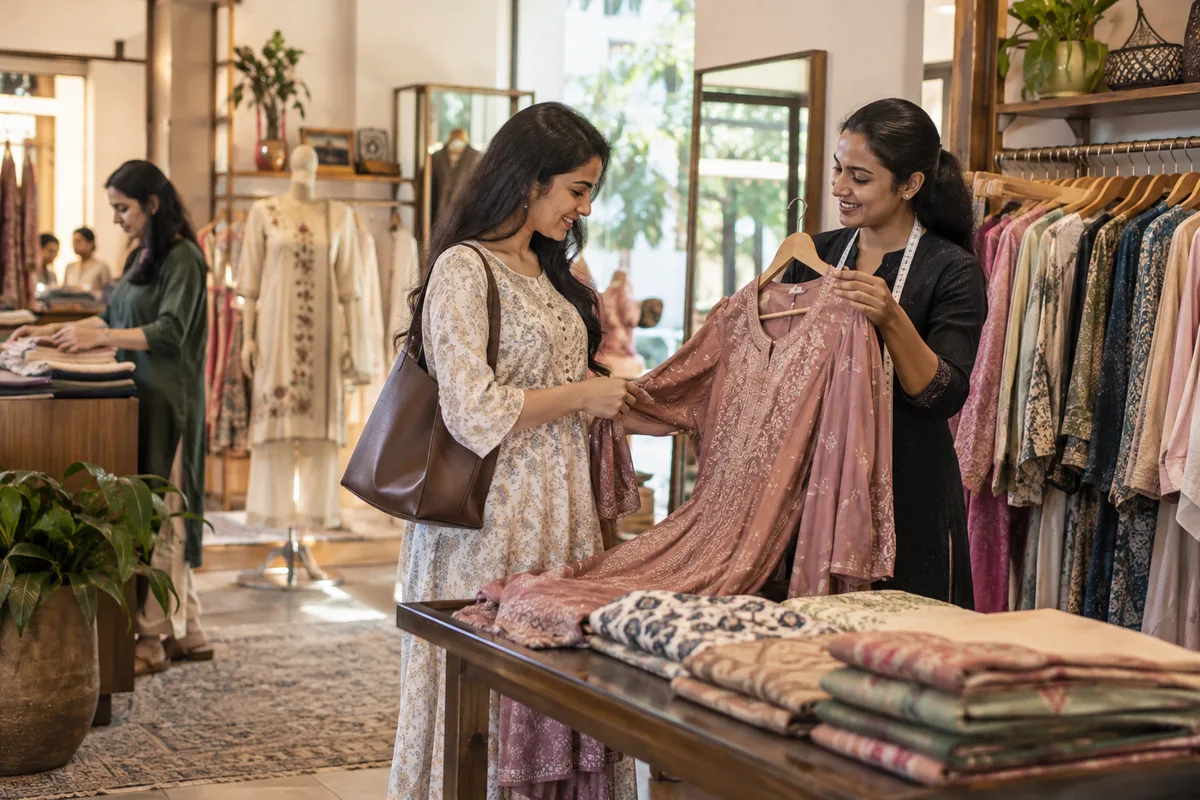
What WhatsApp marketing means
WhatsApp marketing is sending updates, offers and reminders to customers on the app most Indian buyers already check daily. GullySales sets up business WhatsApp, writes the message templates and keeps the list consented and current.
Also for clothing stores and boutiques
- Email marketing for clothing stores and boutiques
- SEO for clothing stores and boutiques
- PPC ads for clothing stores and boutiques
- Lead generation for clothing stores and boutiques
- Digital marketing for clothing stores and boutiques
- Reputation management for clothing stores and boutiques
- Local SEO for clothing stores and boutiques
- Branding and identity for clothing stores and boutiques
Sales and marketing for clothing stores and boutiques, the overview.
Last updated 5 Oct 2026.
For clothing stores and boutiques
Where it usually goes wrong, and what we would do.
“The shopper sends a photo and asks for the price”
A saved screenshot of a saree or blouse arrives with no words. A catalogue entry with the fabric, colours and size range answers faster than the owner can type, and makes the shop look organised.
“Customers forward your catalogue to the family”
The bride forwards your collection to the mother and a cousin on other phones. Clean photographs, clear names and a visible price range travel well, while a messy gallery of unlabelled images does not.
“Broadcast to everyone and people mute you”
A message about men's wear sent to a list of bridal customers earns a block. Groups by occasion and style keep each message relevant, and each recipient should have agreed to hear from the shop.
“The personal number is a trap”
When the business runs from the owner's own number, enquiries mix with family chats and vanish when the phone is lost. A separate Business number with labels keeps the shop's conversations in the shop.
What we do
What we deliver for clothing stores and boutiques.
Every deliverable, what it covers for you, and the result it is there to produce. Nothing here is an extra.
A WhatsApp Business profile set up properly
Business name, address, hours, description and the link to your Maps listing, entered on a dedicated number.
Result: A new contact sees a real shop, not a stranger.
A catalogue arranged by occasion
Collections loaded as bridal, festival, everyday, men's and kids' with clear photographs, names and price ranges.
Result: A price question is answered with one catalogue link.
Quick replies for the common questions
Saved answers for price, sizes, stitching, alterations and visiting hours, written in the language the customer used.
Result: The reply goes out in seconds, in a consistent voice.
Labels by stage and occasion
Labels such as new enquiry, fitting booked, order in progress and ready for collection.
Result: You can see every open conversation by stage.
Consent-based collection preview lists
Lists of customers who asked to hear about new collections, grouped by the kind of outfit they buy.
Result: Previews reach people who want them.
A reply rule for shop hours
A named person who answers within the hours the shop is open, and an away message for the rest.
Result: An enquiry does not wait unanswered during the day.
How the result is measured
- Messages delivered
- Reply rate
- Enquiries from WhatsApp
Recorded as a baseline before work starts, so every later report has an honest comparison.
What to capture or send
What a boutique should send on WhatsApp, and when it is welcome.
- The catalogue shared by occasion
- Send the bridal, festive or everyday collection the customer asked about, not the whole catalogue. A short list is forwarded to the family; a long one is ignored.
- Reply to a photo with a price request
- Ask for the event date and size before quoting. A quote with a date lets the customer see you will deliver in time and lets you see if you can.
- Fitting appointment confirmation
- Send the date, time and what to bring. A message the customer can show a relative cuts down the calls asking which day was agreed.
- Order ready notice
- A message with the shop hours and the balance due. Add a photograph of the finished piece only if the customer has agreed to receive one.
- New collection preview to opted-in customers
- Send it only to those who asked to hear. Name the occasion it suits, and give a clear way to stop receiving it.
- The school uniform ordering window
- Message parents who opted in with the dates, size chart and where to collect. Keep uniform messages in a separate list from retail offers.
Who it is for
This is written for these clothing stores and boutiques.
- Women's ethnic wear and saree boutiques
- Designer and occasion wear studios
- Multi-brand clothing and accessories stores
- Men's wear and ethnic wear stores
- Custom tailoring and blouse stitching studios
- Kids' wear stores
- School uniform retailers and suppliers
- Corporate, hospital and hospitality uniform suppliers
- Fashion accessories and jewellery boutiques
Not for
It is not the right fit if.
- You run the business from a personal number that family and friends also use, and have not moved to a business number.
- Customers have not agreed to hear from you on WhatsApp, and you hold only numbers copied from old slips.
How it works
How the whatsapp marketing work runs
The work itself, in order. How an engagement starts, from your brief to a written scope, is set out on our method page.
- 1
Read the chats you already have
We read how customers write to you, which questions repeat and where a chat goes quiet. The repeated questions decide what gets automated first.
- 2
Sort the list and the permission
Contacts who asked to hear from you are separated from numbers that only sit in a phone book. We agree the wording new contacts will see before they say yes.
- 3
Choose the app or the API
One phone and a small team can stay on the ordinary app. Several people on one number, templates or a CRM link need the API through a provider, which is its own piece of setup work.
- 4
Write the replies and the plan
The greeting, away message, saved replies and handover rule are written in your words and approved by you. The message plan and its templates follow.
- 5
Connect the record and test
Each link carries its source line and each chat lands in the CRM. We test on real phones, including a customer who asks for a person.
- 6
Read the unanswered questions
A question the first reply could not answer becomes a new saved reply or a fixed handover. Stop requests are watched too, with the number's quality rating where the API is used, since both show a message plan that has gone too far.
Where this fits
Three pieces of sales work, in this order.
This work sits inside sales process design, at stage 0, foundation. The audit comes before it, and sales management keeps it running.
Step 1
Sales audit
Find where deals are being lost and what to fix first.
Start here if you cannot say where orders are lost.
Step 2 · you are here
Sales process design
One written way to sell, from first enquiry to repeat order.
Start here if every salesperson sells differently.
Step 3
Sales management
A target, a review routine and someone who owns the number.
Start here if the team has targets and no routine.
FAQ
Questions owners ask before they call.
Not here? More answers, or ask on WhatsApp.
Should we use the WhatsApp Business app or the API?
Can we message past customers about a sale?
Should the catalogue show prices?
Do we need a separate number for the shop?
How long is the contract?
How soon will we see results?
Who will actually do the work?
What do you need from us?
What if we are not happy with the work?
From the blog
Further reading for clothing stores and boutiques.
 7 min read · 21 Sept 2026How to advertise to working womenThe constraint is time, not interest. Buy the commute, the lunch hour and the window after nine at night, and make the response possible without a phone call.
 7 min read · 21 Sept 2026How to advertise to women entrepreneursNothing useful here comes from gender. It comes from how these businesses are financed, where they sell from and which hours of the day the founder is actually free.
 6 min read · 22 May 2026How to increase footfall in a retail storeBe found on Maps for what you stock, give past customers a reason to come back on WhatsApp, and run promotions tied to dates people already shop for.
More for clothing stores and boutiques
Everything else we would do for you.
Closest to this: messaging and automation
Also for clothing stores and boutiques
Or start from the overview: sales and marketing for clothing stores and boutiques.
Your next practical step
Tell us what you are trying to grow, and we will read it before we call.
Eight short steps, mostly taps. Skip anything you would rather answer on the call.