Door and window dealers · Content marketing
Write the guides a first-time buyer wishes someone had given them before measuring.
Content marketing for a door and window dealer means guides, comparisons and photographs that answer what an owner-builder asks before ordering. GullySales plans which questions to answer, writes them in plain language and connects each piece to a measurement request.
Scope, fee, reporting and term are agreed in writing after we have read your brief and spoken to you.
What content marketing means
Content marketing is writing articles, guides and pages that answer the questions buyers search before they are ready to enquire. This makes your business visible and trusted before the first call. GullySales plans this content from the first conversation onward, choosing topics that match real search demand rather than guesses.
Also for door and window dealers
- Social media marketing for door and window dealers
- Lead generation for door and window dealers
- SEO for door and window dealers
- Local SEO for door and window dealers
- Buyer persona for door and window dealers
- CRM for door and window dealers
- Follow-up systems for door and window dealers
- WhatsApp marketing for door and window dealers
Sales and marketing for door and window dealers, the overview.
Last updated 14 Nov 2026.
For door and window dealers
Where it usually goes wrong, and what we would do.
“The buyer does not know the vocabulary”
Rebate, shutter, sash, frame and sill mean little to a first-time builder. A guide that explains each term with a picture of an opening earns trust, because the buyer finally understands the quote in hand.
“Comparison answers the real worry”
Owners ask whether UPVC will look cheap, whether wood will warp and whether aluminium will be hot. A fair comparison that admits where each material falls short reads as honest and is shared with the mason.
“A measuring guide prevents a costly error”
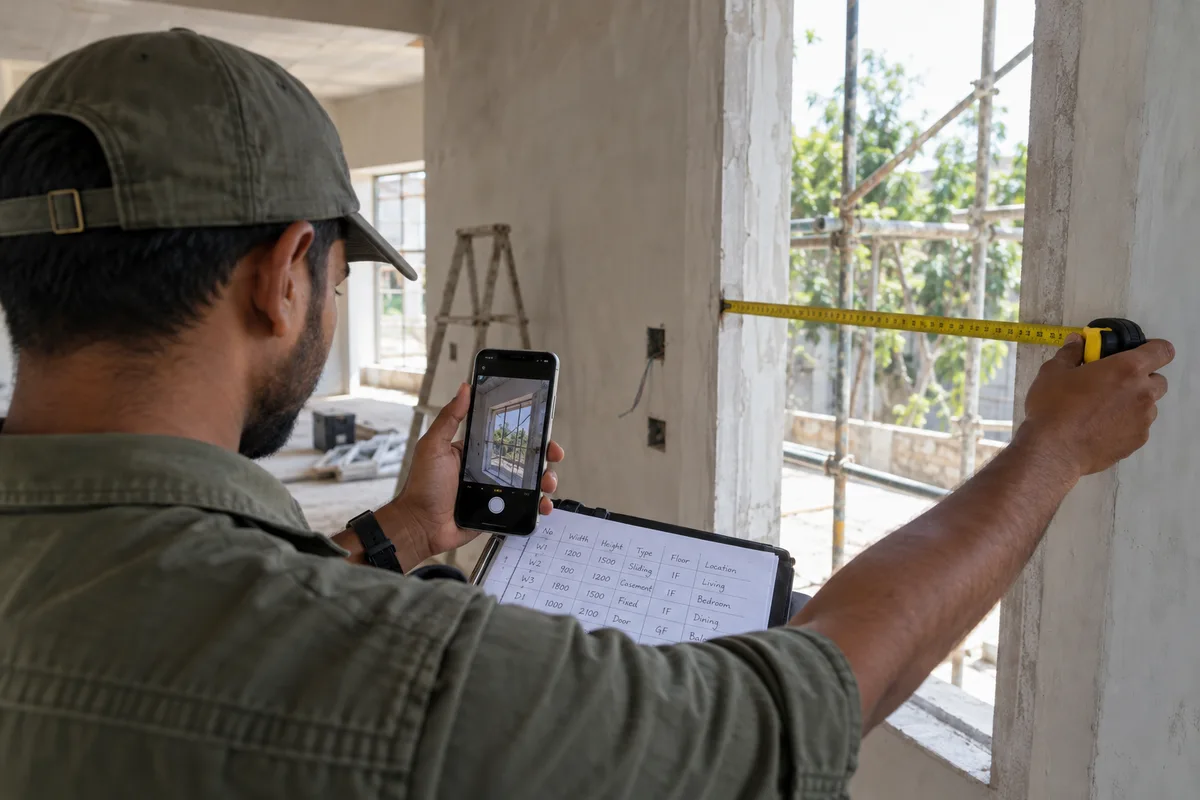
A door made to a wrong size goes back to the factory. A short guide showing how to note opening width, height and wall depth lets the buyer prepare, and shows that your visit exists for good reason.
“Seasonal content matches the problem”
Sticking frames and seepage appear in the monsoon, noise complaints in festival months. Writing about the problem when the buyer feels it brings the right reader to the right page.
What we do
What we deliver for door and window dealers.
The work available for this need. We agree the deliverables and responsibilities for your engagement in writing.
A buyer's guide to each material
One guide each for wooden, flush, UPVC and aluminium, written for a family choosing for a house.
Result: Each material has a plain guide that ends in a visit offer.
A how-to-measure sheet
A printable page with diagrams for noting opening sizes before the dealer visits.
Result: Buyers can send opening sizes in advance.
A glossary of door and window terms
Plain definitions with pictures, linked from guides and quotes.
Result: The quote and the glossary use the same words.
A fitted-project story
A short account of one fitted house, with the material choices and why, used with consent.
Result: Each story shows a decision, not just a photograph.
A content calendar tied to buyer stage
Topics ordered by when owners need the answer, from planning to handover.
Result: The plan shows which question each piece answers.
How the result is measured
- Pages published
- Organic traffic
- Enquiries from content pages
Recorded as a baseline before work starts, so every later report has an honest comparison.
Posts and pieces to plan
The guides give a first-time buyer the words to ask for what they need.
- UPVC or aluminium: which for a balcony
- A comparison guide with sunlight, rain and cleaning, so the buyer sees the difference before the showroom visit.
- How to measure an opening before you call
- A sheet with a drawing that shows height, width and depth, with a note that the dealer re-measures on site.
- Frame, shutter, glass and hardware: what the quote includes
- A guide that explains each line in an itemised quote, written for the buyer who was once confused by a lump sum.
- Termite and damp in wooden frames
- A seasonal piece on wood care and the treatment options you offer, kept to what you know from your own work.
- Door and window words explained
- A glossary of lintel, mullion, casement and transom, with a picture for each, for the buyer reading a quote.
Who it is for
This is written for these door and window dealers.
- Wooden and flush door dealers
- UPVC window and door dealers
- Aluminium window and sliding door dealers
- Door and window dealers who also sell frames and hardware
- Dealers supplying builders and contractors
- Showrooms for premium teak and imported doors
- Dealers who work with a fabricator or manufacturer
- Dealers selling security doors and fire-rated doors
Before you decide
When this may not be the right fit.
- You have no one who can check a guide against what you really fit, and a wrong measuring tip could cost a buyer an order.
- Your itemised quote format is not settled, so a guide on reading quotes would describe a layout you have not adopted.
Before you decide
Agree the work. Know how to judge it.
Content marketing for door and window dealers: use these checks to prepare, choose the scope, and review what changes.
Bring the right evidence
Bring questions from sales calls and examples of objections that delay a decision. Choose a subject expert who can check the substance, and identify evidence that can be published.
Make the scope clear
Agree the reader, buying question, format, and distribution route for each piece. Set the approval process and distinguish new research from rewriting material you already have.
Check the work in use
Ask a colleague to use the draft in a real buyer conversation. It should answer the question, support its claims, and make the next step clear without requiring a sales pitch to explain it.
Know when to change course
If the same unanswered question appears in several articles, improve the strongest page before commissioning another. More words are not a substitute for missing evidence.
These are discussion points, not a fixed package. GullySales confirms the deliverables, responsibilities, fee, and term in writing after reading your brief and speaking with you.
Before we start
What to have ready before the work starts.
The records, access and decisions this work needs from door and window dealers. Anything missing is noted in the written scope, with who will supply it.
- A page of questions from the counter
- Questions your salesperson hears, noted over a stretch of ordinary days. Rough notes are acceptable. Without them, the topics come from our guess about buyers and may miss what your customers ask.
- The fitter's time for the measuring guide
- The person who measures must be free to walk through the steps. A short call is acceptable. Without it, the measuring sheet is generic, and a wrong measurement published is worse than none.
- Your product ranges and sections
- The materials, frame sections and glass options you supply. A catalogue is acceptable. Missing, comparisons stay general and might describe something you do not stock.
- A decision on naming brands
- Decide whether guides name the brands you stock, and whether you may use their names. Bring the answer. Without it, guides describe materials and ranges without brand names.
- Someone to update seasonal guides
- A named person who revises guides when ranges, finishes or monsoon advice changes. Missing, guides age and a buyer may rely on a size or finish you no longer carry.
How it works
How the content marketing work runs
The work itself, in order. How an engagement starts, from your brief to a written scope, is set out on our method page.
- 1
Note down what buyers ask across the counter
We sit with your salesperson and fitter and write down what owner-builders ask before ordering: the difference between wooden and UPVC, how a flush door behaves in monsoon, how to measure a frame. You say which question loses an order when answered badly. The result is a list that decides the first guides. We also mark the questions asked at different stages of building, such as which frame section to choose before the walls are plastered and how to protect a wooden door after fitting, so the guides follow the order in which a house is built and not the order of your catalogue.
- 2
Name who checks technical facts
A guide about sizes, frames or glass must match what you supply. You or your senior fitter are named as the reader who confirms each guide. What exists after this step is a list of topics, each with a named checker, and a rule that nothing is published unchecked.
- 3
Interview the fitter for the measuring sheet
A measuring guide can prevent a costly error, so we write it with the person who measures. We note the points: the frame size, the plaster allowance, the direction of opening. You read it for errors. Anything that changes with the site is marked as a reason to ask for a visit.
- 4
Write the material comparisons from your own stock
Each comparison, such as UPVC and aluminium, is drafted from what you actually sell, with care, fitting and the situations each suits. We avoid claims about brands and performance that you cannot prove. You decide which comparisons carry a call to visit. Each comparison covers what the material is made of, how it is fitted, how it is looked after, what the monsoon does to it and which openings it suits, such as a bathroom, a balcony or a street-facing room. Where the answer depends on the building, the comparison says so and invites a site visit instead of guessing.
- 5
Photograph one project as a story
A project story follows an opening from measurement to fitting, with the fitter's notes and the product used. We write it with the family's agreement, naming the locality but not the address. You approve the text, and the story links to the relevant material page. We include the problem the family started with, the choice made and the fitter's note on what had to be adjusted on site, because a buyer reads the honest detail as evidence that the dealer knows the work. Prices and names are left out unless the family agrees to share them.
- 6
Link each piece to a visit request
Every guide ends with a path to a site visit request. We then compare requests that mention a guide with the visit counts recorded before. You see which topics reduced repeat questions at the counter and which brought requests, and decide what to revise. We also read the questions asked after a guide was sent, because a repeated follow-up question shows a gap in the guide, and we ask the salesperson which guide they now send first so the guide that answers the repeated question is easy to find on the phone.
Where this fits
Three pieces of sales work, in this order.
This work sits inside sales process design, at stage 0, foundation. The audit comes before it, and sales management keeps it running.
Step 1
Sales audit
Find where deals are being lost and what to fix first.
Start here if you cannot say where orders are lost.
Step 2 · you are here
Sales process design
One written way to sell, from first enquiry to repeat order.
Start here if every salesperson sells differently.
Step 3
Sales management
A target, a review routine and someone who owns the number.
Start here if the team has targets and no routine.
FAQ
Questions owners ask before they call.
Not here? More answers, or ask on WhatsApp.
How many guides do we need?
Who writes the content?
Is a measuring guide safe to publish?
Should guides mention brands we stock?
Is a how-to-measure sheet safe to publish?
Should guides mention the brands we stock?
How much does it cost?
How long is the contract?
How soon will we see results?
Who will actually do the work?
More for door and window dealers
Related work to consider.
Closest to this: content and social
Also for door and window dealers
Or start from the overview: sales and marketing for door and window dealers.
Your next practical step
Tell us what you are trying to grow, and we will read it before we call.
Eight short steps, mostly taps. Skip anything you would rather answer on the call.