Door and window dealers · Buyer persona
Know whether the person asking for a rate is the owner, the mason or the purchase manager.
A buyer persona for a door and window dealer describes the distinct people who decide and order, from the owner-builder to the contractor's purchase manager. GullySales writes these from your own enquiries and site visits, so messages speak to what each person weighs.
Scope, fee, reporting and term are agreed in writing after we have read your brief and spoken to you.
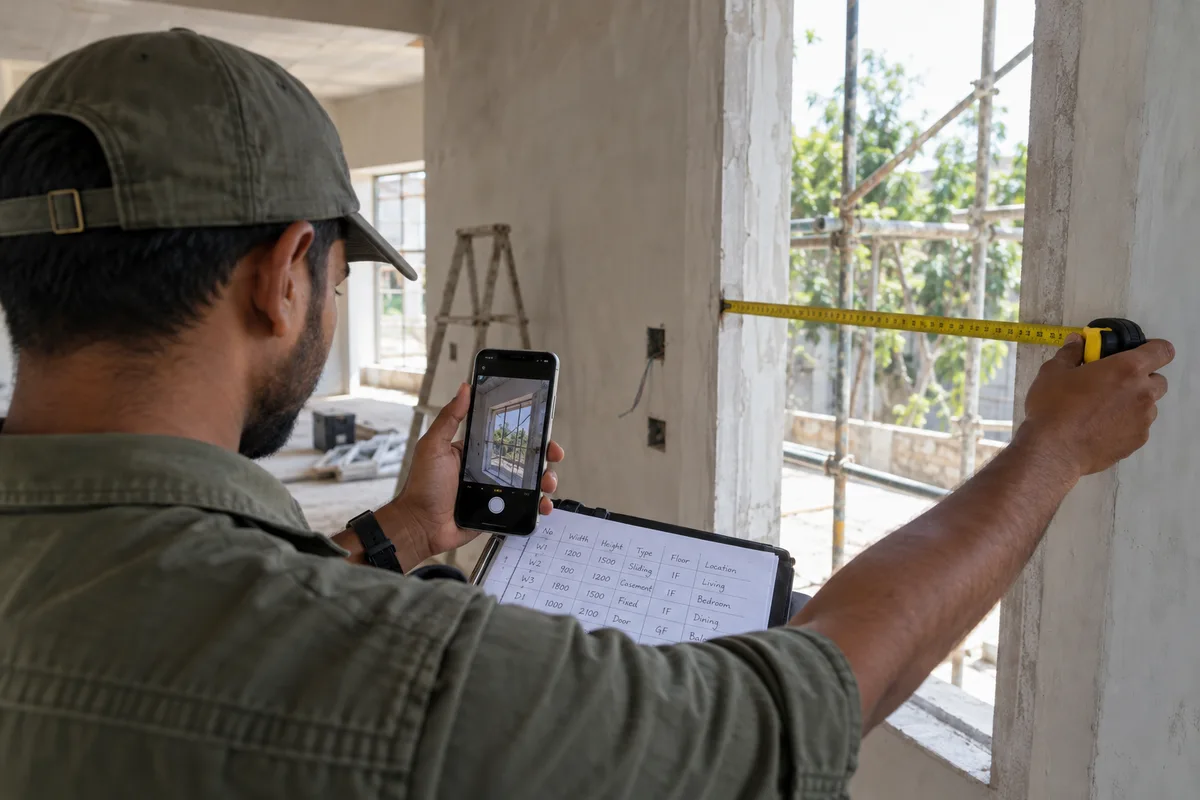
What buyer persona means
A buyer persona is a plain description of the kind of customer who actually buys from you. It includes what they search, what worries them and who else they ask before deciding. GullySales builds this from real enquiries and past sales rather than a generic template, then uses it to write every page and advert.
Also for door and window dealers
- Digital marketing for door and window dealers
- Lead generation for door and window dealers
- SEO for door and window dealers
- Local SEO for door and window dealers
- Social media marketing for door and window dealers
- Content marketing for door and window dealers
- CRM for door and window dealers
- Follow-up systems for door and window dealers
Sales and marketing for door and window dealers, the overview.
Last updated 14 Nov 2026.
For door and window dealers
Where it usually goes wrong, and what we would do.
“The owner-builder decides once and worries about everything”
An owner building a first house buys doors and windows once. They fear a wrong measurement and a hidden cost. They respond to a visit, a clear quote and a dealer who explains choices without pressure.
“The renovating family wants minimal disturbance”
A family replacing windows lives in the house during work. Noise, dust and the number of days matter to them. They want to know how the fitting will be carried out and who will be at the door.
“The contractor buys against a schedule”
A contractor wants matched sets delivered when the stage requires them. Rate counts, but a missed delivery costs more. They remember the dealer who delivered on the day and answered the phone on site.
“The mason is a recommender, not a buyer”
The mason does not pay, yet decides where the family goes. They value a dealer who respects their work, fits what they measured and does not bypass them. Their trust shapes orders without appearing in the invoice.
What we do
What we deliver for door and window dealers.
The work available for this need. We agree the deliverables and responsibilities for your engagement in writing.
Persona sheets for each buyer
A one-page description of each buyer: what they ask first, what they fear and what convinces them.
Result: Each sheet is written in the words your own customers use.
A question map by stage
The questions each persona asks from planning to handover, with the best answer you have.
Result: The team can answer in the buyer's terms.
Message versions per persona
The same offer written differently for an owner, a contractor and a designer.
Result: No one receives a message written for another buyer.
An enquiry tag
A field on the register recording which type of buyer each enquiry is.
Result: Enquiries can be reviewed by buyer type.
A persona review with your team
A conversation with those who meet buyers daily to correct what the sheets assume.
Result: Your own staff confirm the descriptions match real buyers.
How the result is measured
- Enquiry match to persona
- Conversion rate by persona
- Content aligned to persona
Recorded as a baseline before work starts, so every later report has an honest comparison.
Who is asking
Five people ask for a rate, and each wants a different reassurance.
- Owner-builder building their own house
- Wants a single dealer for doors, windows and hardware, and a person who comes to the plot when something does not fit.
- Family renovating an occupied flat
- Wants to know how long the house stays open, how dust is controlled and whether old frames are removed.
- Contractor with a schedule
- Wants a rate for the whole drawing, delivery sequenced with the building, and one contact for changes.
- Mason or carpenter recommending a dealer
- Wants a fair margin, a dealer who respects their relationship with the owner, and an answer when they call from site.
- Purchase manager at a developer
- Wants a written rate, samples to approve, and a record of each delivery against the bill of quantities.
Who it is for
This is written for these door and window dealers.
- Wooden and flush door dealers
- UPVC window and door dealers
- Aluminium window and sliding door dealers
- Door and window dealers who also sell frames and hardware
- Dealers supplying builders and contractors
- Showrooms for premium teak and imported doors
- Dealers who work with a fabricator or manufacturer
- Dealers selling security doors and fire-rated doors
Before you decide
When this may not be the right fit.
- You sell almost only over the counter and have no builder or contractor buyers, so those personas would describe a business you are not running.
- Your team does not note who the buyer is on the enquiry, and personas would sit unused.
Before you decide
Agree the work. Know how to judge it.
Buyer persona for door and window dealers: use these checks to prepare, choose the scope, and review what changes.
Bring the right evidence
Write the decision the research must support, such as entering a market or choosing a buyer group. Separate what you know from sales records from what the team currently assumes.
Make the scope clear
Agree which buyers to speak to, which sources to review, and what access you can provide. Include lost enquiries and people who chose another supplier, where they are willing to take part.
Check the work in use
Look for source dates, sample limitations, and evidence that disagrees with the preferred answer. A recommendation should show how it follows from the findings.
Know when to change course
Do not treat a few positive conversations as proof of demand. Test the proposed offer with an actual buying decision before committing to a wider launch.
These are discussion points, not a fixed package. GullySales confirms the deliverables, responsibilities, fee, and term in writing after reading your brief and speaking with you.
Before we start
What to have ready before the work starts.
The records, access and decisions this work needs from door and window dealers. Anything missing is noted in the written scope, with who will supply it.
- A sample of recent quotes, names removed
- Quotes showing the buyer type, openings and products. Photographs of the file are acceptable. Without them, the personas rest on general ideas about buyers, and the team will not recognise them.
- Time with the salesperson and the fitter
- Both must be free for short talks. Between customers is fine. Without them, the persona work is thin, since they know who decides.
- Notes on buyers who did not order
- What you remember about enquiries that ended without an order, and why. Two or three cases are enough. Missing, personas cover only buyers who bought.
- An introduction to a mason and a contractor
- Names of two recommenders willing to talk for a short while. Missing, the mason and contractor pages are drawn from your view alone.
- A view on the buyers you want more of
- Decide whether you want more builders, more renovating families or both. That sets which personas matter. If undecided, we describe current buyers and note the choice as pending.
How it works
How the buyer persona work runs
The work itself, in order. How an engagement starts, from your brief to a written scope, is set out on our method page.
- 1
Choose which buyers to describe first
An owner-builder, a renovating family and a contractor's purchase manager all order from you, and they decide differently. We look at your quotes and orders and ask which brings the greatest trouble and the highest income. You choose the two or three to describe first so the work stays short.
- 2
Pull ten recent quotes from the file
With your permission we read a sample of recent quotes with names removed, noting the buyer type, the stage of the house, the number of openings, the products asked and how long the decision took. Your salesperson explains each. The result is a set of real cases. We mark who made the first call and who paid, which can be different people in a family, and we note the quotes that were revised after the first visit, because a revised quote shows a worry the first one did not settle, such as a window size changed after the architect saw the drawing.
- 3
Interview the counter and the fitter
The salesperson and the fitter know who decides and who recommends. We ask for the exact phrases buyers use and what makes them go quiet. You read the notes before they become any persona. We ask each person to describe the last order lost and the last order won, and what the family said at the moment they decided, so the personas carry the words of real buyers and the doubts the counter has learned to answer, such as the fear of a sticking frame in the monsoon.
- 4
Speak to a mason and a contractor
With your introduction, we talk to one mason and one contractor about how they choose a dealer and what makes them send a family to you. You pick who is called. What exists is a short set of reasons that keeps the mason and contractor pages honest. We ask what makes a mason stop recommending a dealer, such as a delayed delivery or a visit that did not happen, and what a contractor checks before adding a dealer to the approved list, so the pages describe the recommender as a person with a reputation to protect and not as a source of leads.
- 5
Write each persona, then you mark it up
Each persona gets a page: the situation, the worry, who else decides, what proof is asked and what would lose the order. You strike what does not match and the salesperson adds the sentence a buyer of that kind says. Where two personas look alike on paper, we merge them into one page, since a team that must remember six profiles uses none of them. Each page ends with the first question to ask on the phone and the document or photograph that moves the buyer to a site visit.
- 6
Tag new enquiries and compare outcomes
The team tags each new enquiry with the persona it fits. We compare visits, quotes and orders by persona with the counts at the start. You decide which persona to revise or retire. We also check whether the persona assigned to an enquiry matched the buyer who finally ordered, and where it did not, we ask the salesperson what signalled the difference, so the next version of the page carries the clue that was missed at the first call.
Where this fits
Three pieces of sales work, in this order.
This work sits inside sales process design, at stage 0, foundation. The audit comes before it, and sales management keeps it running.
Step 1
Sales audit
Find where deals are being lost and what to fix first.
Start here if you cannot say where orders are lost.
Step 2 · you are here
Sales process design
One written way to sell, from first enquiry to repeat order.
Start here if every salesperson sells differently.
Step 3
Sales management
A target, a review routine and someone who owns the number.
Start here if the team has targets and no routine.
FAQ
Questions owners ask before they call.
Not here? More answers, or ask on WhatsApp.
How do you build personas without surveys?
Does each door and window range need its own persona?
Does the mason need a persona of their own?
How does the counter team put a persona to use?
Should the persona include the family's budget?
How often should the personas be revised?
How long is the contract?
How soon will we see results?
Who will actually do the work?
What do you need from us?
More for door and window dealers
Related work to consider.
Closest to this: strategy and research
Also for door and window dealers
Or start from the overview: sales and marketing for door and window dealers.
Your next practical step
Tell us what you are trying to grow, and we will read it before we call.
Eight short steps, mostly taps. Skip anything you would rather answer on the call.