Door and window dealers · Lead generation
Bring in enquiries from people whose walls are up and whose openings are still unordered.
Lead generation for a door and window dealer means finding owner-builders, renovating families and contractors at the stage when openings are about to be ordered. GullySales sets up the enquiry sources, the site visit record and the follow-up so each lead has a name and a next step.
Scope, fee, reporting and term are agreed in writing after we have read your brief and spoken to you.
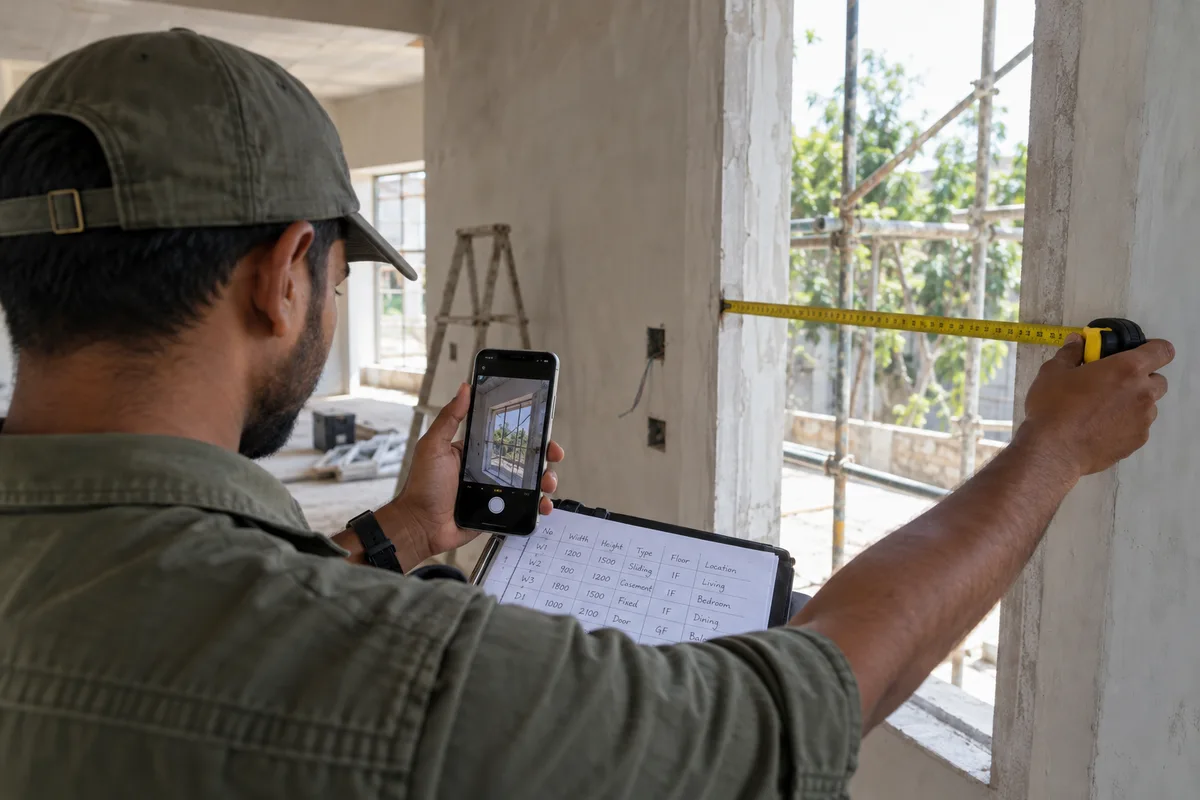
What lead generation means
Lead generation is the combined work of every channel that brings in a new enquiry, whether from search, adverts, referrals or a stall at an exhibition. GullySales runs these channels together and reports the number of enquiries each one produced, not the activity behind it.
Also for door and window dealers
- CRM for door and window dealers
- Follow-up systems for door and window dealers
- SEO for door and window dealers
- Local SEO for door and window dealers
- Social media marketing for door and window dealers
- Content marketing for door and window dealers
- Buyer persona for door and window dealers
- WhatsApp marketing for door and window dealers
Sales and marketing for door and window dealers, the overview.
Plan the next part of the work
Last updated 21 Nov 2026.
For door and window dealers
Where it usually goes wrong, and what we would do.
“The best lead is a house at lintel stage”
An owner whose roof is cast has openings to fill and a mason asking where to order. A lead from that stage is worth more than a browser comparing finishes for a house not yet planned. Your messages should speak to the stage of construction, not to doors in general.
“A mason's mention is a lead nobody wrote down”
The mason on site names a dealer to the owner, and the owner walks into the showroom saying so. If the front desk never asks who sent them, the source is lost and the mason is treated like a stranger.
“A request for a measurement is the real enquiry”
Asking only for a price over the phone suggests the buyer is comparing. Asking you to come and measure means the buyer is serious. Treat the two differently, and make the measurement request the easiest thing to do on every page and message.
“Builder leads arrive as drawings, not as calls”
A contractor emails a drawing and a schedule and waits for a rate. That is a lead with a deadline. It needs a named person who receives the drawing, logs it and replies, or it lands in a shared inbox and sits.
What we do
What we deliver for door and window dealers.
The work available for this need. We agree the deliverables and responsibilities for your engagement in writing.
A lead source list
Walk-in, Maps call, mason, builder, architect and repeat customer, each with a clear label at the point of entry.
Result: The register shows where each enquiry came from, not just that it came.
A measurement request path
One button and one WhatsApp message that ask for the address, the number of openings and a convenient day.
Result: A request for a site visit reaches the register with an address attached.
A construction-stage page
A page for owners who are about to order, listing the doors and windows a house needs and the sizes to keep ready.
Result: An owner-builder can count openings before calling.
A builder drawing intake
A single contact and a simple log for drawings received, rate sent and revision made.
Result: Every drawing has an owner and a status.
A source-to-order review
A look at which source led to a measured site, a quote and a confirmed order.
Result: You can see which sources produce orders rather than only calls.
How the result is measured
- Relevant enquiries by source
- Duplicate and unsuitable enquiries
- Time to the first response
- Accepted enquiries reaching an agreed next step
Recorded as a baseline before work starts, so every later report has an honest comparison.
What to capture or send
A site visit needs a handful of details that the showroom call never records.
- Stage of construction
- Plot, walls up, lintel cast or plastered. It tells you whether frames or finished windows are needed, and how soon the buyer must decide.
- Openings and approximate count
- Doors and windows to be fitted. Lets the dealer judge whether the job suits a single visit or a drawings-based quote.
- Material in mind
- Wood, flush, UPVC or aluminium. Sends the enquiry to the right person and the right showroom corner before the call.
- Mason or contractor who recommended you
- Record the name when the buyer mentions one, so the source list shows which tradespeople send orders.
- Site location and landmark
- A showroom visit is easy to promise, and a site far from the shop changes the quote, so ask the location first.
Who it is for
This is written for these door and window dealers.
- Wooden and flush door dealers
- UPVC window and door dealers
- Aluminium window and sliding door dealers
- Door and window dealers who also sell frames and hardware
- Dealers supplying builders and contractors
- Showrooms for premium teak and imported doors
- Dealers who work with a fabricator or manufacturer
- Dealers selling security doors and fire-rated doors
Before you decide
When this may not be the right fit.
- You have one person who both quotes and visits sites, so more enquiries would only stretch the measurement visits further apart.
- Your showroom stocks only ready flush doors, and a campaign built around custom UPVC windows would bring buyers you cannot supply.
Before you decide
Agree the work. Know how to judge it.
Lead generation for door and window dealers: use these checks to prepare, choose the scope, and review what changes.
Bring the right evidence
Define the organisations or buyers you can serve and the reasons they would consider a conversation. Bring examples of accepted and rejected prospects so the selection rule is visible.
Make the scope clear
Agree the research sources, contact approach, qualification rules, and handover. Clarify which meetings count as accepted and what happens to replies that are not ready to buy.
Check the work in use
Review why a prospect was selected and what was learned from the response. Count held, relevant conversations separately from contacts found, messages sent, or meetings booked.
Know when to change course
If the same objection appears repeatedly, adjust the offer or buyer group before increasing outreach. Respect a request to stop contact and keep the exclusion in the record.
These are discussion points, not a fixed package. GullySales confirms the deliverables, responsibilities, fee, and term in writing after reading your brief and speaking with you.
Before we start
What to have ready before the work starts.
The records, access and decisions this work needs from door and window dealers. Anything missing is noted in the written scope, with who will supply it.
- The site visit register or notebook
- Whatever you use to note who asked for a measurement, the address and the outcome. A notebook is acceptable if the pages are legible. Without it, we cannot count visits or tie an order to a source, and the first stretch of work becomes keeping one.
- The last twenty quotes with their outcome
- A set of recent quotes marked as ordered, lost or pending, with the type of customer. Sheets or photographs of the file are acceptable. Without them, the baseline of conversion is a guess, and we cannot tell which enquiries are worth chasing first.
- Names of masons and contractors who refer
- The people who send you buyers, with a phone number and the kind of work they do. First names are enough. If you cannot name any, the plan relies on search, the map and walk-ins, and the mason route is described but not started.
- A decision on how far you will serve
- Say which localities you will visit for a measurement and which you will not. Only you can set the distance that makes a visit worth the trip. Missing, the form accepts requests from places your fitter cannot reach, and the visit cost falls on you.
- The builder's usual drawing format
- A sample of how a builder or architect sends openings: a sketch, a schedule or a PDF. A forwarded message is acceptable. Without it, the drawing intake is designed in the dark, and drawings continue to arrive on personal phones.
How it works
How the lead generation work runs
The work itself, in order. How an engagement starts, from your brief to a written scope, is set out on our method page.
- 1
Read the site visit register for sources
We sit with your visit register, the enquiry notebook and the quote file, and mark where each customer first heard of you: a mason, a showroom walk-in, a map result, a builder's drawing or a relative. You tell us which became orders. What exists afterwards is a count of enquiries and orders by source, kept apart for homeowners and builders.
- 2
Ask the masons and fitters who send you work
The people on site bring you the bulk of your buyers without writing anything down. We sit with your fitter and the two or three masons or contractors you rely on, and ask what they say when a family asks about doors. You decide how they are thanked, if at all. The result is a named list of referrers and what each sends.
- 3
Decide which jobs you will quote at lintel stage
A house at lintel stage is ready for door and window frames, while a house at plaster stage may already have chosen. With you we agree which stages, house sizes and product lines you want enquiries for, and which you decline because of distance or material. That decision shapes the form and the pages.
- 4
Set up the measurement request path
A request for a site measurement is the enquiry that matters. We write the short form and message that asks for the locality, the stage of construction, the number of openings and a photograph, and agree who answers it and where it is recorded. You approve the questions so a visit is never booked blind.
- 5
Test one homeowner and one builder enquiry
We send a test request as a family would, and a test drawing as a builder's office would. We watch who replies, how the details are recorded and what happens to a drawing that arrives by message. Gaps are closed before any promotion begins, so a real enquiry does not fall between two phones.
- 6
Match orders to sources against the first count
Once enquiries have run through the new routine, we sit down with the register and the order book. We compare enquiries, visits, quotes and orders by source and by customer type against the counts from the first step. You see which sources sent buyers with a stage and a date, and decide which to repeat.
Where this fits
Three pieces of sales work, in this order.
This work sits inside sales process design, at stage 1, prospecting and lead generation. The audit comes before it, and sales management keeps it running.
Step 1
Sales audit
Find where deals are being lost and what to fix first.
Start here if you cannot say where orders are lost.
Step 2 · you are here
Sales process design
One written way to sell, from first enquiry to repeat order.
Start here if every salesperson sells differently.
Step 3
Sales management
A target, a review routine and someone who owns the number.
Start here if the team has targets and no routine.
FAQ
Questions owners ask before they call.
Not here? More answers, or ask on WhatsApp.
Should we run paid ads for door and window leads?
How do we get masons to send us work?
Which leads are worth the most?
Should a lead from a mason be treated differently?
Who answers a measurement request when the showroom is busy?
Should builder leads and family leads go in the same list?
How much does it cost?
How long is the contract?
How soon will we see results?
Who will actually do the work?
More for door and window dealers
Related work to consider.
Closest to this: leads and follow-up
Also for door and window dealers
Or start from the overview: sales and marketing for door and window dealers.
Your next practical step
Tell us what you are trying to grow, and we will read it before we call.
Eight short steps, mostly taps. Skip anything you would rather answer on the call.