Electronics and appliance stores · Lead generation
Nobody takes the number of the family that walks out empty-handed.
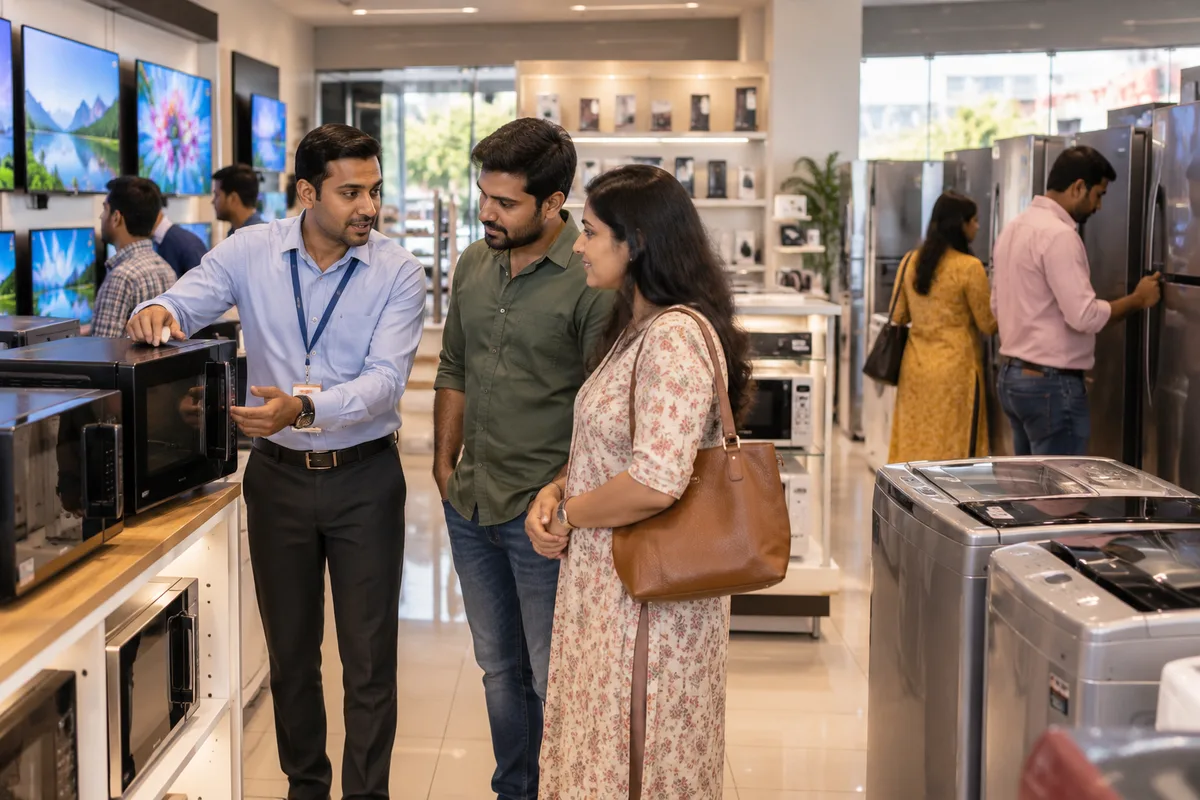
Lead generation in an appliance shop is mostly recovery: the family who compared your television with a listing on their phone and left to think. GullySales gives the floor a way to record the visit in one line, writes the WhatsApp reply, and names who holds the phone during the rush.
Scope, fee, reporting and term are agreed in writing after we have read your brief and spoken to you.
What lead generation means
Lead generation is the combined work of every channel that brings in a new enquiry, whether from search, adverts, referrals or a stall at an exhibition. GullySales runs these channels together and reports the number of enquiries each one produced, not the activity behind it.
Also for electronics and appliance stores
- CRM for electronics and appliance stores
- Follow-up systems for electronics and appliance stores
- Newspaper advertising for electronics and appliance stores
- Outdoor advertising for electronics and appliance stores
- SEO for electronics and appliance stores
- PPC ads for electronics and appliance stores
- Digital marketing for electronics and appliance stores
- Reputation management for electronics and appliance stores
Sales and marketing for electronics and appliance stores, the overview.
Last updated 5 Oct 2026.
For electronics and appliance stores
Where it usually goes wrong, and what we would do.
“The enquiry is a photograph of a price tag”
Families send a picture of a model and ask for your best price. Put the fitting date and the exchange value beside your figure, because the number alone will always be beaten by an app.
“Nobody records the walk-out”
A store counts bills, not visits, so the eight families who left on Sunday evening leave no trace at all. One line each, with the model and a phone number, is the whole difference.
“In April the phone loses to the floor”
During the air conditioner weeks the counter is three deep and the phone rings out. Put one person on messages for those six weeks and let the floor sell to whoever is standing there.
“Finance is the question hiding behind the price question”
What the family wants to know is the monthly figure on their card and whether the old machine is worth anything. Give both in the first reply and the conversation keeps going.
What we do
What we deliver for electronics and appliance stores.
Every deliverable, what it covers for you, and the result it is there to produce. Nothing here is an extra.
A walk-out line the counter will actually write
A one-line register at billing with model, name, number and whether the family is comparing, filled while they are still in the shop.
Result: Sunday's visitors still exist on Monday morning.
One shop number that everybody answers
A single WhatsApp number for enquiries with saved replies for price, fitting date and exchange, so nothing waits for the owner's personal phone.
Result: Messages are answered during showroom hours.
A first reply carrying three numbers
The final figure, the monthly instalment on the common bank cards and the value you will give for the old machine, sent together rather than on request.
Result: The family compares you on what only a shop can offer.
A named person on messages through the season
For the air conditioner weeks and the festival fortnight, one person taken off the floor for the phone, with the hours written up and a stand-in at lunch.
Result: The rush stops swallowing the enquiries it creates.
Follow-up on a written schedule
A second message the next evening and a call three days later for anyone who asked about a large purchase, with the scheme end date as the reason to write.
Result: The family who went home to think hears from you first.
An enquiry book read every Saturday
Enquiries by source, what was quoted, what was billed and what went quiet, read together at the end of the week.
Result: You learn which category loses buyers at the counter.
How the result is measured
- Enquiries generated
- Cost per enquiry
- Enquiries by source
Recorded as a baseline before work starts, so every later report has an honest comparison.
Where enquiries come from
The places an electronics store's enquiries arrive, and what to record at each.
- Family who looks and leaves without a bill
- Use the walk-out line: model seen, name, number and whether they are comparing. Write it before they reach the door, and message the same evening with the model and price they saw.
- WhatsApp message with a model number copied from a listing
- Record the model, the price they saw online and the buyer's number. Reply with your price, what is included, such as installation, and the delivery date for the model asked about.
- Phone call asking for the price of an AC or television
- Ask the room size or screen size, then give the price. Note the call in the register with the model discussed, so a salesperson can call back if they do not visit.
- Lead handed over by a brand's own enquiry desk
- Brands sometimes pass on customers who enquired on their site. Record the brand, the model and the date received, call the customer, and note whether they bought here or elsewhere.
- Festival or exchange-offer visitors
- Note the old product being exchanged, the model wanted and the finance option asked about. Customers at an offer period compare more stores, so record the number and call back before the offer closes.
- Customers of the service or repair counter
- Record the product, its age and the problem. A family bringing in an old fridge is also a family who may replace it, so note the model and the purchase year.
Who it is for
This is written for these electronics and appliance stores.
- Multi-brand consumer electronics showrooms
- Home appliance stores
- Mobile phone and accessories retailers
- Home theatre and audio specialists
- Telecom counters selling SIM, broadband and DTH connections
- Brand-exclusive stores run by franchisees
- Kitchen appliance and small appliance retailers
- Electronics stores with service and repair centres
Not for
It is not the right fit if.
- Nobody on the floor will write down a walk-out's name and model, so a lead form would stay empty
- You have no one to call back within the day, and more enquiries would only be lost during the AC rush
How it works
How the lead generation work runs
The work itself, in order. How an engagement starts, from your brief to a written scope, is set out on our method page.
- 1
Understand your capacity
We ask how many enquiries your team can answer well, who answers after hours, and what a good enquiry looks like. Without this, the system fills a funnel nobody is watching.
- 2
Audit current sources
We read your call log, WhatsApp chats, enquiry sheet and platform dashboards. The baseline is recorded: enquiries by source, reply time, conversion and cost per order.
- 3
Strategise the channel mix
Search and maps are chosen for people ready to buy, ads for people who are not yet looking, and content and referrals for trust.
- 4
Implement capture and follow-up
Pages, forms, tags, the lead record and the first-reply message are built and tested end to end. We submit test enquiries ourselves before any media money is spent.
- 5
Measure and optimise
Enquiries are traced to source and judged by what became orders, not by volume alone. Channels that fill the sheet with poor enquiries are cut back. How often you are reported to is agreed in writing.
Where this fits
Three pieces of sales work, in this order.
This work sits inside sales process design, at stage 1, prospecting and lead generation. The audit comes before it, and sales management keeps it running.
Step 1
Sales audit
Find where deals are being lost and what to fix first.
Start here if you cannot say where orders are lost.
Step 2 · you are here
Sales process design
One written way to sell, from first enquiry to repeat order.
Start here if every salesperson sells differently.
Step 3
Sales management
A target, a review routine and someone who owns the number.
Start here if the team has targets and no routine.
FAQ
Questions owners ask before they call.
Not here? More answers, or ask on WhatsApp.
Our staff will never fill a form during the rush. What will they do?
Is it rude to message a family who only came to look?
A customer asks for a price match with an online listing. Should we give one?
How do we record a customer who buys at the brand's own store after visiting us?
How long is the contract?
How soon will we see results?
Who will actually do the work?
What do you need from us?
What if we are not happy with the work?
From the blog
Further reading for electronics and appliance stores.
 8 min read · 21 Sept 2026How to advertise to retail business ownersA shop owner is behind the counter from ten to nine and cannot leave it. That single fact rules out most media, and it makes the lean afternoon hour and the distributor's salesman worth more than any campaign.
 6 min read · 11 Jun 2026How to advertise during the festive seasonThe festive season is bought in the monsoon. Book early, know why the rates rise, and match what you sell to the day people actually buy it.
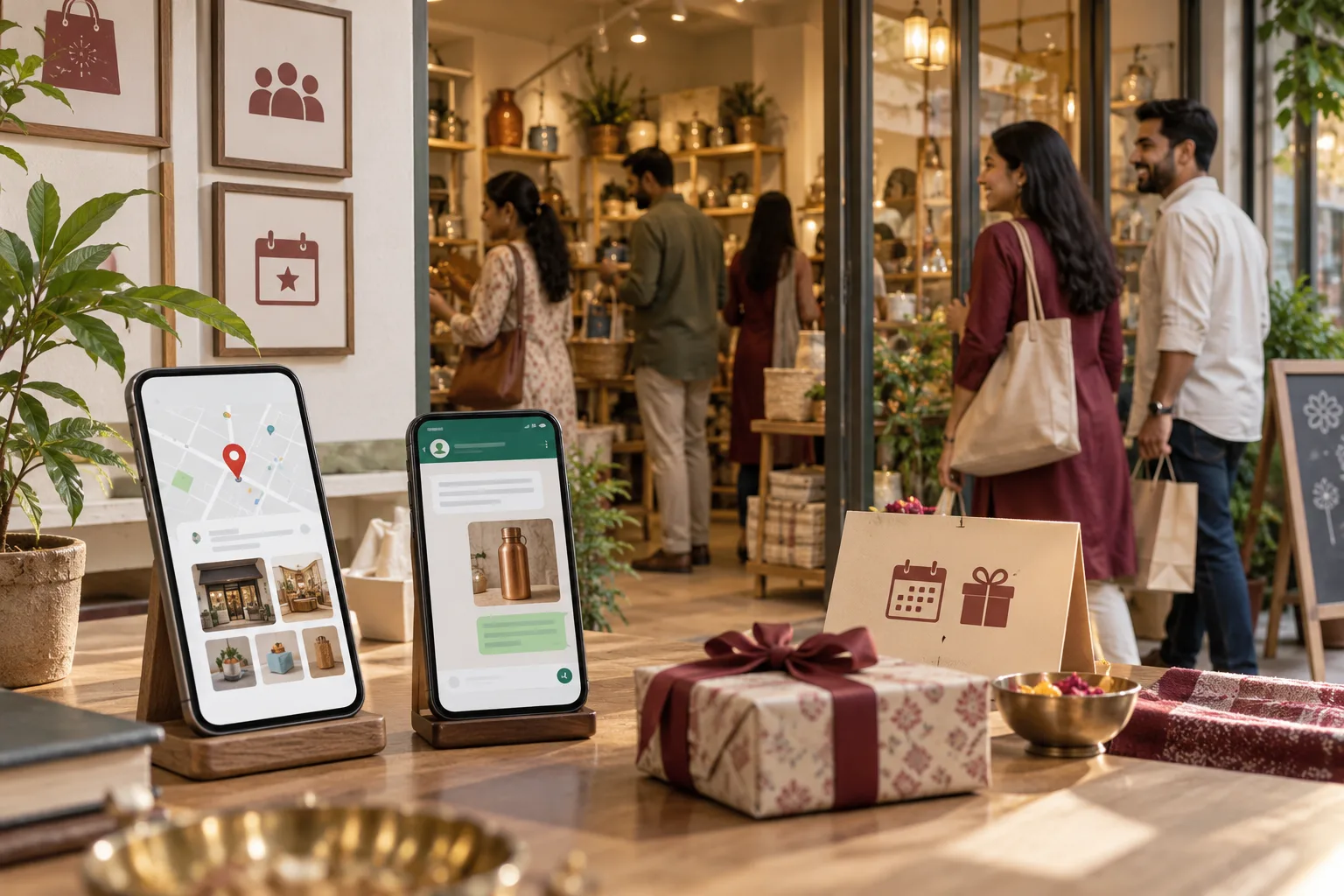 6 min read · 22 May 2026How to increase footfall in a retail storeBe found on Maps for what you stock, give past customers a reason to come back on WhatsApp, and run promotions tied to dates people already shop for.
More for electronics and appliance stores
Everything else we would do for you.
Closest to this: leads and follow-up
Also for electronics and appliance stores
- Newspaper advertising for electronics and appliance stores
- Outdoor advertising for electronics and appliance stores
- SEO for electronics and appliance stores
- PPC ads for electronics and appliance stores
- Digital marketing for electronics and appliance stores
- Reputation management for electronics and appliance stores
Or start from the overview: sales and marketing for electronics and appliance stores.
Your next practical step
Tell us what you are trying to grow, and we will read it before we call.
Eight short steps, mostly taps. Skip anything you would rather answer on the call.