Electronics and appliance stores · Pay per click advertising
Bid on the buyer who wants it fitted tomorrow, not on the model name.
Paid search for an appliance store is a contest against marketplaces with deeper pockets, so the budget belongs on what they answer badly: stock nearby and fitting this week. GullySales sets the radius and the hours, writes the negative keywords, and counts calls instead of clicks.
Scope, fee, reporting and term are agreed in writing after we have read your brief and spoken to you.
What pay per click advertising means
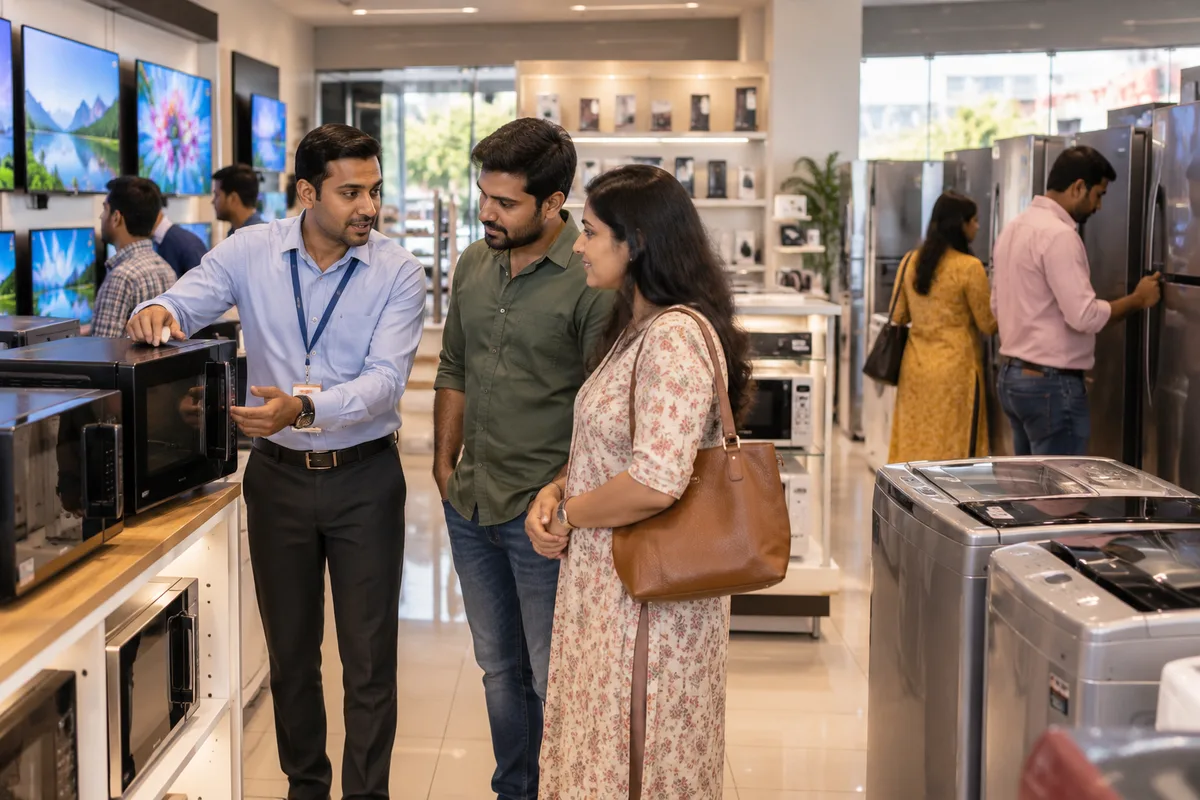
Pay per click advertising (PPC) is paying a fee each time someone clicks your advert on Google or another platform. It puts you at the top of a search page immediately, instead of waiting for ranking to build. GullySales sets the targeting, writes the ad text and checks spend against enquiries received.
Also for electronics and appliance stores
- Newspaper advertising for electronics and appliance stores
- Outdoor advertising for electronics and appliance stores
- SEO for electronics and appliance stores
- Lead generation for electronics and appliance stores
- Digital marketing for electronics and appliance stores
- Reputation management for electronics and appliance stores
- Local SEO for electronics and appliance stores
- Branding and identity for electronics and appliance stores
Sales and marketing for electronics and appliance stores, the overview.
Last updated 5 Oct 2026.
For electronics and appliance stores
Where it usually goes wrong, and what we would do.
“The big sale weeks price you out”
During the national online sale weeks, click prices on model names climb past anything a dealer margin can carry. Pause those keywords and put the money behind fitting and exchange searches.
“Ads should run while the counter is answering”
A click at midnight reaches a shop that opens at ten, and by morning the family has ordered from an app. Weight the budget to showroom hours and the evening, when somebody picks up.
“The radius is the installation van, not the city”
A click from thirty kilometres away costs the same as one from your own street and cannot be served. Keep the targeting to the pin codes your fitter reaches the next day.
“Repair traffic is the cheapest saving in the account”
Words like repair, service centre, spare part and remote bring clicks from people who will never buy a machine. Blocking them takes an hour and pays back every month.
What we do
What we deliver for electronics and appliance stores.
Every deliverable, what it covers for you, and the result it is there to produce. Nothing here is an extra.
Targeting drawn around the delivery area
Campaign radius and pin code lists matched to where your installation team travels, with a separate budget for the localities closest to the showroom.
Result: The account stops paying for clicks you cannot serve.
A negative keyword list for repair traffic
Terms covering service centres, spare parts, remotes, second-hand machines and job enquiries, reviewed as new ones appear.
Result: You stop paying for calls about somebody else's warranty.
Call ads weighted to counter hours
Call extensions and a schedule that puts the money into the hours the floor is open, with the evening peak protected during the season.
Result: Somebody answers while the family is still deciding.
An offer page a marketplace cannot copy
A landing page carrying the exchange scheme, the EMI options and the fitting window, written the way your counter states them.
Result: The click lands on the one thing an app cannot promise.
A calendar for pausing and pressing
Month by month, when to pause model keywords against the national sale weeks and when to raise the budget for local festival buying days.
Result: Money moves to the weeks a nearby family is deciding.
Calls counted against bills
Every advertisement call logged with the model asked about and whether it became a bill, read against the baseline taken before the account was rebuilt.
Result: The account is judged on machines sold.
How the result is measured
- Cost per click
- Cost per enquiry
- Enquiries from paid search
Recorded as a baseline before work starts, so every later report has an honest comparison.
Searches to bid on and block
The searches worth paying for at an appliance store, and the ones to keep out.
- Product plus fitting, such as 1.5 ton split AC with installation
- Bid. This shopper wants it installed and is comparing nearby stores. Mention installation and stock in the advertisement, which an online seller cannot promise as easily.
- Model name searches, such as a specific refrigerator or TV model
- Bid in a small campaign. A shopper with a model number is price checking. Show the price, stock and EMI on the advertisement, or leave those out and keep to nearby stores.
- EMI, exchange and no cost EMI searches
- Bid. These buyers are planning a large purchase. Say which cards and EMI partners you accept and what exchange you take, and land them on the offers page.
- Repair, service centre, spare part and job searches
- Block, unless you run service. AC repair near me, washing machine repair and spare part bring service enquiries that cost the same click as a sale. Add them as negatives.
- Where the click lands
- A page for the product with price, stock, delivery and installation terms, the store address and a click-to-call button that rings in counter hours.
- Counting a real enquiry
- Count a call that reached the counter, a store visit mentioned by the caller, or a WhatsApp message with a model asked about. Match them to bills.
Who it is for
This is written for these electronics and appliance stores.
- Multi-brand consumer electronics showrooms
- Home appliance stores
- Mobile phone and accessories retailers
- Home theatre and audio specialists
- Telecom counters selling SIM, broadband and DTH connections
- Brand-exclusive stores run by franchisees
- Kitchen appliance and small appliance retailers
- Electronics stores with service and repair centres
Not for
It is not the right fit if.
- Your billing software cannot show which enquiries became sales, so the spend on each model could not be judged
- The store cannot fit or deliver beyond a few localities, and ads would pay for clicks from areas you do not serve
How it works
How the pay per click advertising work runs
The work itself, in order. How an engagement starts, from your brief to a written scope, is set out on our method page.
- 1
Agree the whole budget
We fix the total paid budget across platforms, who owns each ad account, and how much is open to moving.
- 2
Audit tracking and accounts
We check that conversions fire once, that calls and WhatsApp chats are counted, and that your enquiry sheet matches what the platforms say.
- 3
Set one definition of success
You and we agree what a qualified enquiry is and what an order is, so every platform is judged the same way.
- 4
Build and launch the plan
Campaigns are structured across platforms with shared naming and tags from day one.
- 5
Read search terms and lead quality
We review the queries that triggered ads and the enquiries that arrived, and remove waste before moving money.
- 6
Reallocate and report
Budget moves toward what is earning, within agreed limits. Results are reported against the baseline, at the frequency agreed in writing.
Where this fits
Three pieces of sales work, in this order.
This work sits inside sales process design, at stage 1, prospecting and lead generation. The audit comes before it, and sales management keeps it running.
Step 1
Sales audit
Find where deals are being lost and what to fix first.
Start here if you cannot say where orders are lost.
Step 2 · you are here
Sales process design
One written way to sell, from first enquiry to repeat order.
Start here if every salesperson sells differently.
Step 3
Sales management
A target, a review routine and someone who owns the number.
Start here if the team has targets and no routine.
FAQ
Questions owners ask before they call.
Not here? More answers, or ask on WhatsApp.
Click prices on air conditioner keywords look too high. Should we stop?
Should we advertise during the big online sale weeks?
Should we bid on a brand name plus our city?
Can a small store compete with large online sellers on Google?
How long is the contract?
How soon will we see results?
Who will actually do the work?
What do you need from us?
From the blog
Further reading for electronics and appliance stores.
 8 min read · 21 Sept 2026How to advertise to retail business ownersA shop owner is behind the counter from ten to nine and cannot leave it. That single fact rules out most media, and it makes the lean afternoon hour and the distributor's salesman worth more than any campaign.
 6 min read · 11 Jun 2026How to advertise during the festive seasonThe festive season is bought in the monsoon. Book early, know why the rates rise, and match what you sell to the day people actually buy it.
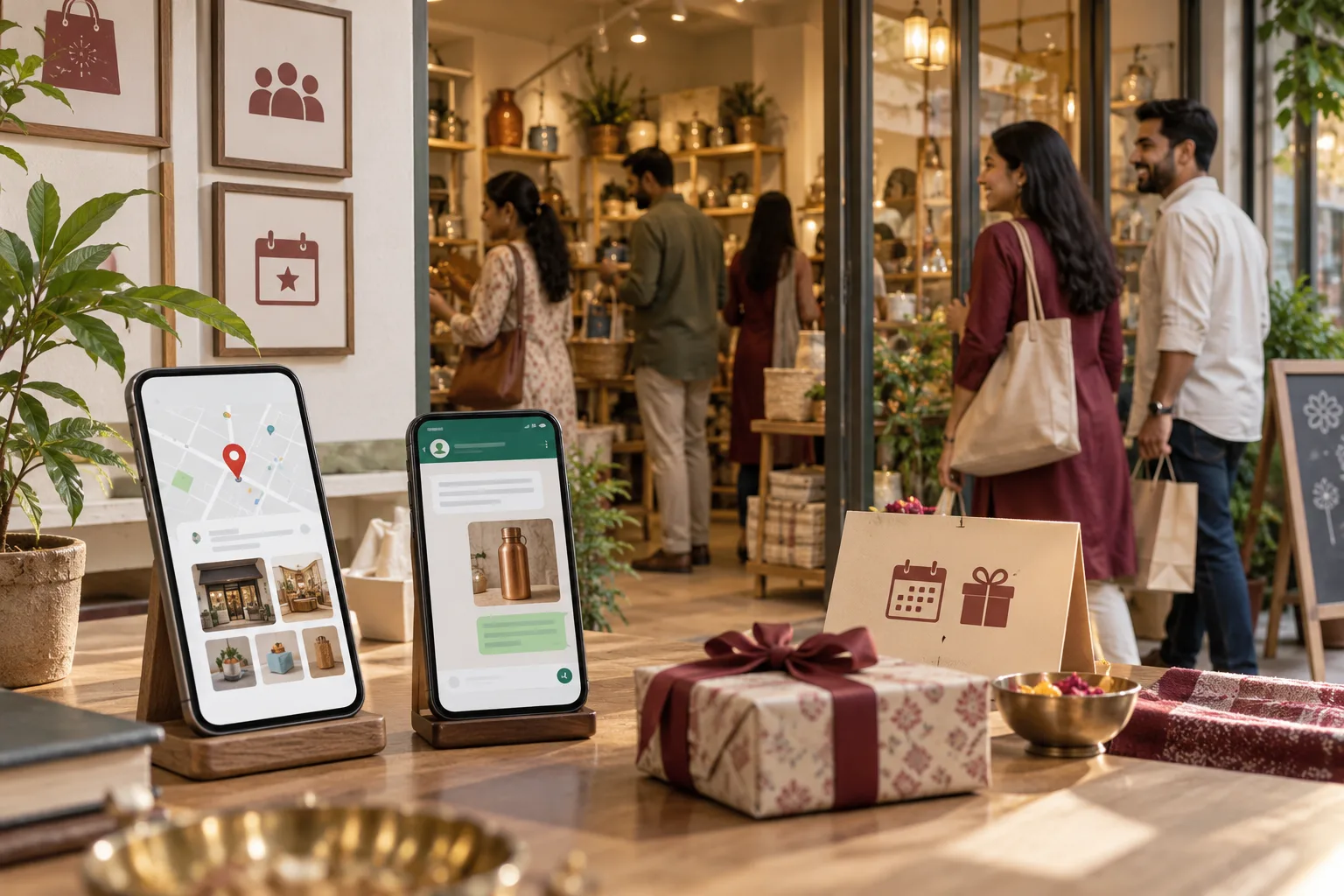 6 min read · 22 May 2026How to increase footfall in a retail storeBe found on Maps for what you stock, give past customers a reason to come back on WhatsApp, and run promotions tied to dates people already shop for.
More for electronics and appliance stores
Everything else we would do for you.
Closest to this: paid and media
Also for electronics and appliance stores
- SEO for electronics and appliance stores
- Lead generation for electronics and appliance stores
- Digital marketing for electronics and appliance stores
- Reputation management for electronics and appliance stores
- Local SEO for electronics and appliance stores
- Branding and identity for electronics and appliance stores
Or start from the overview: sales and marketing for electronics and appliance stores.
Your next practical step
Tell us what you are trying to grow, and we will read it before we call.
Eight short steps, mostly taps. Skip anything you would rather answer on the call.