Electronics and appliance stores · Branding
Your board carries six manufacturer logos and none of them is yours.
A multi-brand store's identity is what a family says when a neighbour asks where they bought the fridge. GullySales settles what your shop stands for, then puts it on the board, the van, the invoice folder and the way the fitter leaves a house.
Scope, fee, reporting and term are agreed in writing after we have read your brief and spoken to you.
What branding means
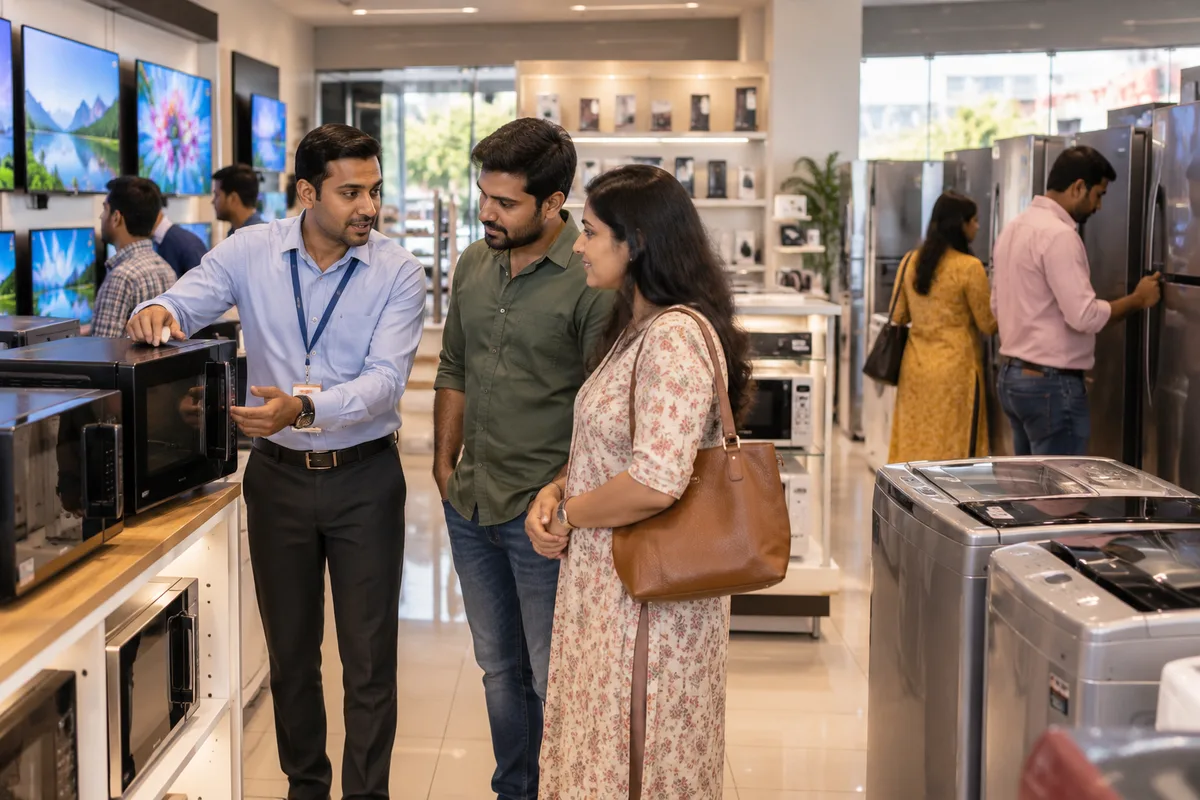
Branding is what a customer remembers about your business beyond the product, including your name, colours, tone of voice and what you are known for locally. GullySales sets or corrects this once and applies it consistently across your website, signage and adverts so the business looks like one company everywhere.
Also for electronics and appliance stores
- Newspaper advertising for electronics and appliance stores
- Outdoor advertising for electronics and appliance stores
- SEO for electronics and appliance stores
- PPC ads for electronics and appliance stores
- Lead generation for electronics and appliance stores
- Digital marketing for electronics and appliance stores
- Reputation management for electronics and appliance stores
- Local SEO for electronics and appliance stores
Sales and marketing for electronics and appliance stores, the overview.
Last updated 5 Oct 2026.
For electronics and appliance stores
Where it usually goes wrong, and what we would do.
“Manufacturer boards are not your signage”
Every brand supplies a board and the front becomes a wall of other people's logos. One name, lit and readable from the road, is what gets repeated to a neighbour.
“The fitter is the brand”
Shoes off, the old machine carried out, the packing taken away and the remote explained to whoever will use it. That is what gets described in the apartment group, not your offer.
“Decide what you refuse to be”
A shop promising to beat every online price is racing a warehouse and will lose. Standing for next-day fitting, honest exchange values and a phone that gets answered is defensible.
“The invoice folder outlives the advertisement”
Warranty cards and the installation slip stay in a kitchen drawer for years. A clean folder with your name and the service numbers on it is read long after a campaign is forgotten.
What we do
What we deliver for electronics and appliance stores.
Every deliverable, what it covers for you, and the result it is there to produce. Nothing here is an extra.
The shopfront decided and lit
One legible name board, manufacturer boards placed where their agreements require, and lighting still working at nine in the evening.
Result: People can find and name your shop from the road.
What the shop stands for, in one line
The promise your counter and your fitters can keep every day, agreed with you, rather than a slogan about prices you cannot hold.
Result: Everyone in the shop says the same thing.
The van and the fitting team kitted out
Vehicle livery, shirts, shoe covers, a tool mat and a printed installation slip, so the household sees the shop that sold them the machine.
Result: The home visit becomes something worth describing.
A customer folder that stays in the house
Invoice, warranty cards, installation slip and the numbers to call, in one printed folder kept in the kitchen drawer.
Result: Your name is in the house when the next machine is needed.
One look across counter and screen
Colours, typeface and photographs used the same way on the board, the bill, the Maps profile and the WhatsApp display picture.
Result: The shop looks like one business wherever it is seen.
A name checked before you extend it
Whether the name still works for the mobile counter, a service desk and a second branch, tested before it is painted on another wall.
Result: You do not repaint everything in two years.
How the result is measured
- Recognition in customer feedback
- Consistency across channels
- Repeat enquiries by name
Recorded as a baseline before work starts, so every later report has an honest comparison.
Positioning in one sentence
Fill this sentence in for your own shop, because six brand boards will not do it for you.
- Who it is for, as a household moment
- Name the moment: a family buying a first fridge on EMI, a couple furnishing a rented flat, or a shopkeeper who wants a TV for the waiting area. Each walks in asking different questions.
- What you sell, and what you also fix
- Say the categories you really stock, such as TVs, ACs, washing machines and small appliances, and add install and service. Customers remember a shop that handles the fitting, not just the box.
- What the buyer gets that the online price does not
- Choose one that holds: demo on the shop floor, installation by your fitter, a name to call when the compressor fails. Online sellers cannot say that, so lead with it.
- The proof you can show
- Show authorised dealer certificates from the brands, photographs of installs with permission, and a service register that shows who came and when. Keep brand logos as your agreements allow.
- Words every electronics board uses
- Lowest price, biggest range and one roof are on every shop front. A buyer who has seen the online price already knows you cannot win that sentence, so write a different one.
- The name and tagline test
- Say the shop's name for someone searching on a phone. If it is a founder's name or an unusual spelling, make sure the Google listing and the bill use the same letters.
Who it is for
This is written for these electronics and appliance stores.
- Multi-brand consumer electronics showrooms
- Home appliance stores
- Mobile phone and accessories retailers
- Home theatre and audio specialists
- Telecom counters selling SIM, broadband and DTH connections
- Brand-exclusive stores run by franchisees
- Kitchen appliance and small appliance retailers
- Electronics stores with service and repair centres
Not for
It is not the right fit if.
- Your shop is changing location or ownership soon, and a new board and identity would be repainted before it is known
- You sell only on the strength of one manufacturer's name and have no wish to be known apart from it
How it works
How the branding work runs
The work itself, in order. How an engagement starts, from your brief to a written scope, is set out on our method page.
- 1
Interview customers and team
We talk to real buyers, won and lost, and to people inside the business who deal with customers daily.
- 2
Review the competitive field
We look at how the nearest competitors present themselves so the position is not accidentally identical.
- 3
Draft the position
A first version of the positioning statement and messaging pillars is written and checked against what customers actually said.
- 4
Test it against real conversations
The draft is tried out in a real sales call or two before it is finalised, since a position that does not survive a real conversation needs rework.
- 5
Hand over the rollout brief
The final position, pillars and not-for list are documented for your team and any agency to apply consistently.
Where this fits
Three pieces of sales work, in this order.
This work sits inside sales process design, at stage 1, prospecting and lead generation. The audit comes before it, and sales management keeps it running.
Step 1
Sales audit
Find where deals are being lost and what to fix first.
Start here if you cannot say where orders are lost.
Step 2 · you are here
Sales process design
One written way to sell, from first enquiry to repeat order.
Start here if every salesperson sells differently.
Step 3
Sales management
A target, a review routine and someone who owns the number.
Start here if the team has targets and no routine.
FAQ
Questions owners ask before they call.
Not here? More answers, or ask on WhatsApp.
Does a small store need a logo?
The brands want their colours on our shopfront. How much do we give?
Should we call ourselves a brand showroom if we sell many brands?
Is a service centre a separate brand from the shop?
How long is the contract?
How soon will we see results?
Who will actually do the work?
What do you need from us?
What if we are not happy with the work?
From the blog
Further reading for electronics and appliance stores.
 8 min read · 21 Sept 2026How to advertise to retail business ownersA shop owner is behind the counter from ten to nine and cannot leave it. That single fact rules out most media, and it makes the lean afternoon hour and the distributor's salesman worth more than any campaign.
 6 min read · 11 Jun 2026How to advertise during the festive seasonThe festive season is bought in the monsoon. Book early, know why the rates rise, and match what you sell to the day people actually buy it.
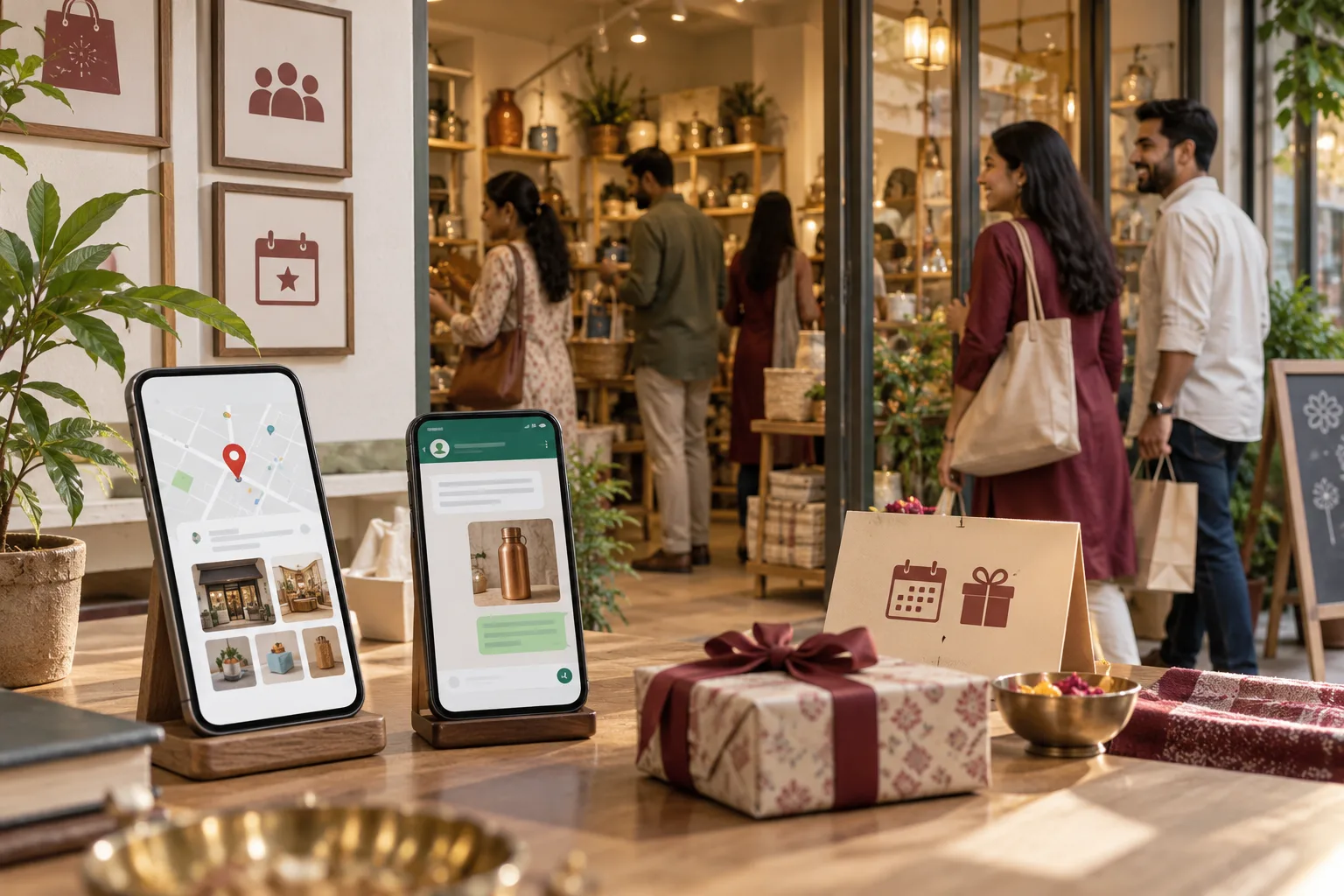 6 min read · 22 May 2026How to increase footfall in a retail storeBe found on Maps for what you stock, give past customers a reason to come back on WhatsApp, and run promotions tied to dates people already shop for.
More for electronics and appliance stores
Everything else we would do for you.
- Newspaper advertising for electronics and appliance stores
- Outdoor advertising for electronics and appliance stores
- SEO for electronics and appliance stores
- PPC ads for electronics and appliance stores
- Lead generation for electronics and appliance stores
- Digital marketing for electronics and appliance stores
Or start from the overview: sales and marketing for electronics and appliance stores.
Your next practical step
Tell us what you are trying to grow, and we will read it before we call.
Eight short steps, mostly taps. Skip anything you would rather answer on the call.