Electronics and appliance stores · Digital marketing
Spend the year around April, Diwali and the cricket season, not evenly.
Digital marketing for an appliance store is the plan that decides which month gets the money and which channel carries which category. GullySales builds that calendar around your season, the brands funding part of it and the fitting capacity you have, then reports enquiries against bills.
Scope, fee, reporting and term are agreed in writing after we have read your brief and spoken to you.
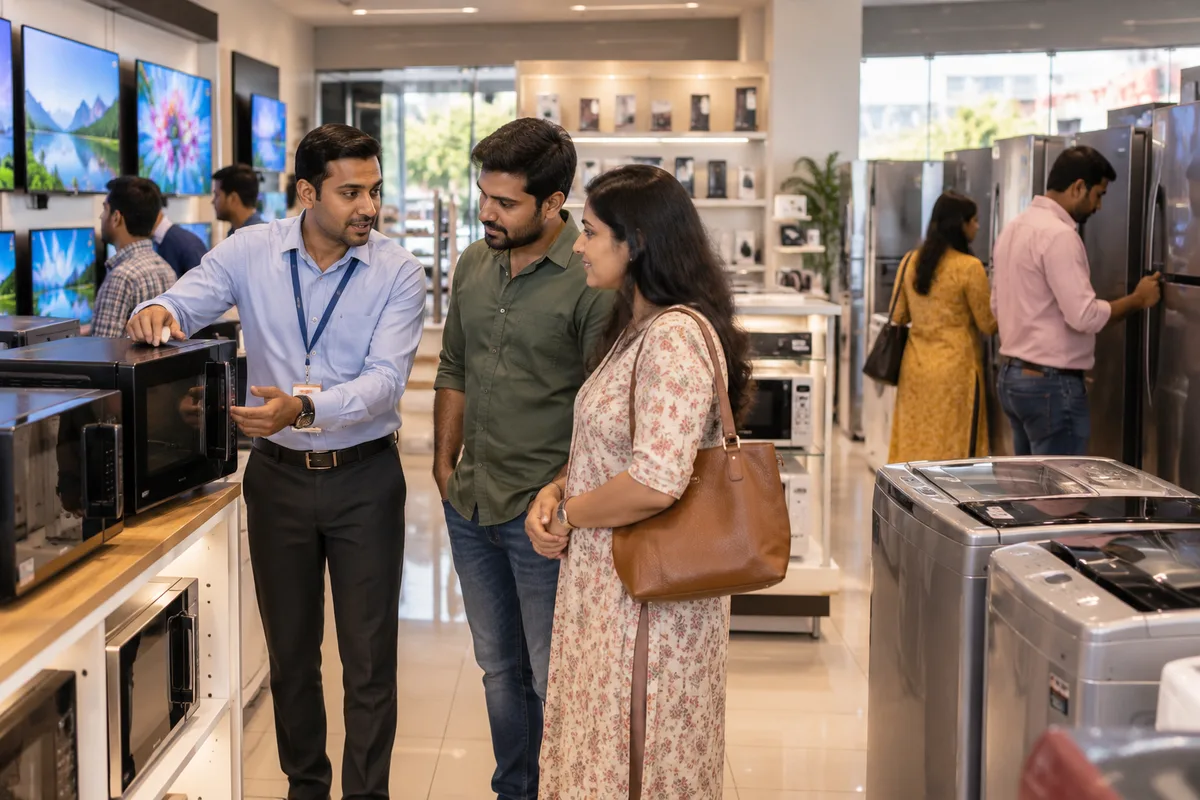
What digital marketing means
Digital marketing is the combined work of search, social media, advertising and website channels running together rather than as separate projects with separate people. GullySales runs these as one connected system so a change in one channel, such as a new offer, is reflected everywhere at once.
Also for electronics and appliance stores
- Buyer personas for electronics and appliance stores
- Newspaper advertising for electronics and appliance stores
- Outdoor advertising for electronics and appliance stores
- SEO for electronics and appliance stores
- PPC ads for electronics and appliance stores
- Lead generation for electronics and appliance stores
- Reputation management for electronics and appliance stores
- Local SEO for electronics and appliance stores
Sales and marketing for electronics and appliance stores, the overview.
Last updated 5 Oct 2026.
For electronics and appliance stores
Where it usually goes wrong, and what we would do.
“Four buying seasons and eight quiet months”
Air conditioners from February, televisions before a big tournament, everything before the festival, and appliances for families moving into newly handed-over flats nearby. A flat monthly budget spends itself in weeks when nobody is buying.
“Brand money is sitting unclaimed”
Manufacturers fund a share of dealer advertising for named models, with their own artwork rules and proof requirements. Most stores never ask and pay for the whole campaign themselves.
“Do not advertise what the fitters cannot fit”
Sixty air conditioner orders in a week you can install thirty becomes a row of angry reviews. The campaign calendar is built backwards from the installation diary.
“The mobile counter needs almost none of this”
Phone and SIM buyers walk in from the street and decide in ten minutes. Put the budget behind the machines that carry a margin and an installation, not the counter that runs on footfall.
What we do
What we deliver for electronics and appliance stores.
Every deliverable, what it covers for you, and the result it is there to produce. Nothing here is an extra.
A season calendar for the whole year
Month by month, which category is advertised, on which channel and at what budget, built around the heat, the festivals and the tournament weeks.
Result: The money lands in the weeks people are buying.
Brand support asked for before each campaign
The co-operative funds, artwork rules and proof of publication each manufacturer requires, gathered before the booking rather than after it.
Result: Somebody else pays for part of the campaign.
Channels matched to category and buyer
Search and Maps for the machine somebody needs this week, short video for the categories that need a demonstration, WhatsApp for households you have already billed.
Result: Each category is sold where its buyer is looking.
Capacity checked against every offer
The delivery and fitting diary read before an offer week is booked, with a cap on how many orders a single slot can take.
Result: Sales you win do not turn into complaints.
One enquiry record behind every channel
Calls, messages and forms landing in one book with a source against each, instead of four dashboards that disagree.
Result: You can compare a Maps enquiry with a leaflet.
A report against the opening baseline
Enquiries by source, walk-ins, bills, average bill value and repeat households, set beside the figures recorded before the work started.
Result: You can see the month a channel began to pay.
How the result is measured
- Enquiries across channels
- Cost per enquiry overall
- Channel mix by contribution
Recorded as a baseline before work starts, so every later report has an honest comparison.
Where to start for a store
Start with the walk-out follow-up and the listing, then spend ahead of each season.
- Google Business Profile with real stock
- List the categories you carry, the brands, the timings and the service centre. Reply to every review that mentions delivery, and record the calls from the profile in a register.
- Walk-out follow-up
- Take a name and number from every family that leaves without buying a TV or an AC. Call back with the exact model and EMI option, and note which calls turned into bills.
- Brand support claims
- Ask each brand's area manager what co-op funding and display support is open before the AC and festival seasons. Keep the claim paperwork in one folder with dates.
- An installation capacity sheet
- Write how many AC and washing machine fittings your technicians can do in a day. Pause the offer when the sheet is full, and note the enquiries you turned away.
- A household record
- Record what each family bought, the model and the date. Message them before a warranty ends or the season returns, with their consent.
- What to leave until later
- Always-on ads for mobile accessories and a full online store. Spend only on the seasons and categories where your fitters and stock can handle the rush.
Who it is for
This is written for these electronics and appliance stores.
- Multi-brand consumer electronics showrooms
- Home appliance stores
- Mobile phone and accessories retailers
- Home theatre and audio specialists
- Telecom counters selling SIM, broadband and DTH connections
- Brand-exclusive stores run by franchisees
- Kitchen appliance and small appliance retailers
- Electronics stores with service and repair centres
Not for
It is not the right fit if.
- The shop has no stock plan for the seasons, so ads for a model that is out of stock waste the festival weeks
- Billing, enquiries and installation are recorded nowhere, so there is nothing to tell you which channel brought a family in
How it works
How the digital marketing work runs
The work itself, in order. How an engagement starts, from your brief to a written scope, is set out on our method page.
- 1
Agree the one aim
We settle what the campaign must achieve, such as enquiries for a launch or footfall for an event, and the date it must be live.
- 2
Check what is ready
We list the channels you already run, who runs them, and what each can produce in the time available. Anything that cannot be done properly is left out.
- 3
Write the idea and the message sheet
We draft the one-sentence idea, test it against each planned format, and fix the wording that all channels will copy.
- 4
Brief every channel from the same sheet
Your agency, freelancer or in-house person receives the message sheet and calendar. Their work is checked against the sheet before it goes out.
- 5
Run on the shared calendar
Channels go live together. If the offer changes, every channel is changed on the same day from the same sheet.
- 6
Measure as one campaign
Enquiries and orders are read against the baseline. The reporting schedule is agreed in writing with the scope.
Where this fits
Three pieces of sales work, in this order.
This work sits inside sales process design, at stage 0, foundation. The audit comes before it, and sales management keeps it running.
Step 1
Sales audit
Find where deals are being lost and what to fix first.
Start here if you cannot say where orders are lost.
Step 2 · you are here
Sales process design
One written way to sell, from first enquiry to repeat order.
Start here if every salesperson sells differently.
Step 3
Sales management
A target, a review routine and someone who owns the number.
Start here if the team has targets and no routine.
FAQ
Questions owners ask before they call.
Not here? More answers, or ask on WhatsApp.
How much of the budget should go to the air conditioner season?
We already run Instagram, Maps and Google Ads. What is missing?
Customers check the online price in the shop. How do I answer that?
Is it worth chasing a family that bought a fridge elsewhere?
How long is the contract?
How soon will we see results?
Who will actually do the work?
What do you need from us?
What if we are not happy with the work?
From the blog
Further reading for electronics and appliance stores.
 8 min read · 21 Sept 2026How to advertise to retail business ownersA shop owner is behind the counter from ten to nine and cannot leave it. That single fact rules out most media, and it makes the lean afternoon hour and the distributor's salesman worth more than any campaign.
 6 min read · 11 Jun 2026How to advertise during the festive seasonThe festive season is bought in the monsoon. Book early, know why the rates rise, and match what you sell to the day people actually buy it.
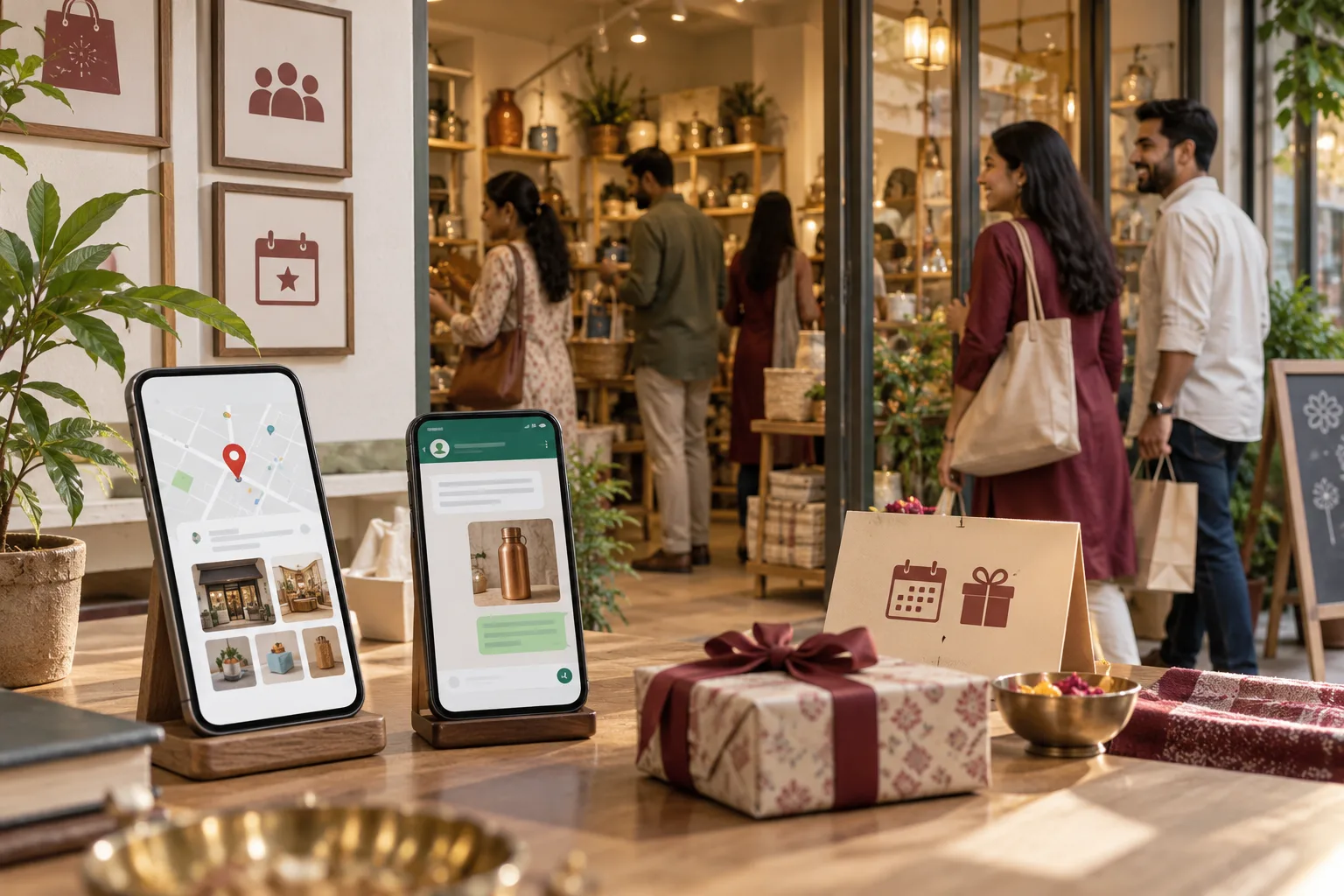 6 min read · 22 May 2026How to increase footfall in a retail storeBe found on Maps for what you stock, give past customers a reason to come back on WhatsApp, and run promotions tied to dates people already shop for.
More for electronics and appliance stores
Everything else we would do for you.
Closest to this: strategy and research
Also for electronics and appliance stores
- Newspaper advertising for electronics and appliance stores
- Outdoor advertising for electronics and appliance stores
- SEO for electronics and appliance stores
- PPC ads for electronics and appliance stores
- Lead generation for electronics and appliance stores
- Reputation management for electronics and appliance stores
Or start from the overview: sales and marketing for electronics and appliance stores.
Your next practical step
Tell us what you are trying to grow, and we will read it before we call.
Eight short steps, mostly taps. Skip anything you would rather answer on the call.