Electronics and appliance stores · Newspaper advertising
Put the leaflet into the papers on your delivery streets, nowhere else.
Newspaper advertising for an electronics store is two buys, not one: display space in an edition on a chosen morning, and a printed leaflet inserted into the papers of chosen delivery routes. GullySales picks the routes and the dates against your season, and prints a number the insert alone carries.
Scope, fee, reporting and term are agreed in writing after we have read your brief and spoken to you.

What newspaper advertising means
Newspaper advertising is space in a named edition of a paper on a named day, priced by the column centimetre. GullySales picks the edition and language your buyers actually read, meets the release deadline, and gives the reader somewhere to go.
Also for electronics and appliance stores
- Outdoor advertising for electronics and appliance stores
- PPC ads for electronics and appliance stores
- SEO for electronics and appliance stores
- Lead generation for electronics and appliance stores
- Digital marketing for electronics and appliance stores
- Reputation management for electronics and appliance stores
- Local SEO for electronics and appliance stores
- Branding and identity for electronics and appliance stores
Sales and marketing for electronics and appliance stores, the overview.
Last updated 5 Oct 2026.
For electronics and appliance stores
Where it usually goes wrong, and what we would do.
“The insert is bought by delivery route, not by title”
A leaflet goes into the morning papers on the routes you name, priced by the thousand copies. It is the closest print comes to the few kilometres your van covers.
“The date is the first hot week, not the month of April”
Air conditioner enquiries start the week the nights stop cooling, and the fitting slots go in days. An insertion booked to a calendar date misses that by a fortnight.
“Read the installation diary before booking the space”
An offer that brings sixty air conditioner orders you can fit in three weeks buys the delivery complaints already sitting on your listing. Match the offer week to what the fitting team can keep.
“The leaflet is read beside an open phone”
A family compares it with an online listing at the breakfast table. Model, exchange value and the EMI figure in plain numbers survive that comparison. A photograph of the showroom does not.
What we do
What we deliver for electronics and appliance stores.
Every deliverable, what it covers for you, and the result it is there to produce. Nothing here is an extra.
Insert routes chosen by where you deliver
The pin codes and paper routes inside the distance your installation team travels, with the print quantity set to those routes alone.
Result: The leaflet lands where you can deliver and install.
Dates set by the season rather than the calendar
Insertions timed to the week enquiries start, the festival buying days and the model changeover, with each paper's deadline behind them.
Result: The advertisement appears while the household is deciding.
Offer wording checked with the finance desk
The EMI scheme, the exchange terms and the warranty line confirmed with your card and finance partners before any of it is printed.
Result: The floor is not explaining away a printed promise.
Brand support settled in advance
Where a manufacturer funds part of the space for a named model, its artwork rules and its proof of publication are agreed before the booking.
Result: Someone else pays for a share of the insertion.
A WhatsApp number on the leaflet alone
One number printed nowhere else, answered on the floor, so a question about a model gets a price and a stock answer the same hour.
Result: You count the leaflet by the messages it brings.
Distribution and printed page verified
The quantity supplied, the routes it went to and a dated copy of the page as it ran, all read against the invoice.
Result: You pay for leaflets that went into papers.
How the result is measured
- Insertions published as booked
- Enquiries traced to the print route
- Cost per traced enquiry
Recorded as a baseline before work starts, so every later report has an honest comparison.
How space is bought, and checked
What a store owner checks with the insert desk before a leaflet goes into the papers.
- Copies per delivery route
- Ask the paper's insert desk for the route list and the copies on each. Match those to the pin codes in your delivery book and drop any route your van cannot reach.
- Insert and display on one sheet
- Get the leaflet price per thousand copies and the display price per column centimetre quoted together in writing. Compare them by households you can actually deliver to.
- Size, weight and stock limits
- Ask the desk the largest leaflet size, the paper weight and the fold it will insert. A leaflet over its limit is refused or charged extra, and a second print run costs more.
- Morning with fewer inserts
- A leaflet in a thick bundle of inserts is read last. Ask which mornings carry the thinnest bundle on your routes, and weigh that against the festival or heatwave date.
- Brand funding and its proof
- Ask the brand's area manager whether a named-model advertisement gets a funded share, and what proof they want: tear sheet, invoice or a distribution certificate from the paper.
- Model code on every row
- Give each model a short code on the leaflet and ask buyers to quote it on WhatsApp. The floor then knows which model the family means before it replies.
Who it is for
This is written for these electronics and appliance stores.
- Multi-brand consumer electronics showrooms
- Home appliance stores
- Mobile phone and accessories retailers
- Home theatre and audio specialists
- Telecom counters selling SIM, broadband and DTH connections
- Brand-exclusive stores run by franchisees
- Kitchen appliance and small appliance retailers
- Electronics stores with service and repair centres
Not for
It is not the right fit if.
- The leaflet carries no stock you can deliver this week, so the reader who comes in finds an empty display
- You cannot say which streets the paper reaches, so the money is spent on readers who live outside your installation area
How it works
How the newspaper advertising work runs
The work itself, in order. How an engagement starts, from your brief to a written scope, is set out on our method page.
- 1
Fix the date first
A launch, an admission window, an opening weekend or a notice. Everything else is planned backwards from that morning.
- 2
Choose edition, language and day
We match the edition to your catchment and the day to the section your buyer opens.
- 3
Decide size, position and the route back
Display or classified display, the size in column centimetres, which page we request, and what the reader is told to call or scan.
- 4
Release the artwork early
The file goes to the publication ahead of its deadline, in the format it takes, with the position request on the order.
- 5
Verify what printed
We read the printed page against the release order, ask for the tear sheet, and raise it if the ad ran small, late, in the wrong edition or in the wrong section.
- 6
Count what came back
Calls, scans and form fills on the traced route, reported against what that insertion cost.
Where this fits
Three pieces of sales work, in this order.
This work sits inside sales process design, at stage 1, prospecting and lead generation. The audit comes before it, and sales management keeps it running.
Step 1
Sales audit
Find where deals are being lost and what to fix first.
Start here if you cannot say where orders are lost.
Step 2 · you are here
Sales process design
One written way to sell, from first enquiry to repeat order.
Start here if every salesperson sells differently.
Step 3
Sales management
A target, a review routine and someone who owns the number.
Start here if the team has targets and no routine.
FAQ
Questions owners ask before they call.
Not here? More answers, or ask on WhatsApp.
Is an insert better than a display advertisement?
How do we know the leaflet did anything?
Who prints the leaflet, our shop or the paper?
Can the same leaflet go into two papers on one route?
How much does it cost?
How long is the contract?
How soon will we see results?
Who will actually do the work?
What do you need from us?
What if we are not happy with the work?
From the blog
Further reading for electronics and appliance stores.
 6 min read · 11 Jun 2026How to advertise during the festive seasonThe festive season is bought in the monsoon. Book early, know why the rates rise, and match what you sell to the day people actually buy it.
 8 min read · 21 Sept 2026How to advertise to retail business ownersA shop owner is behind the counter from ten to nine and cannot leave it. That single fact rules out most media, and it makes the lean afternoon hour and the distributor's salesman worth more than any campaign.
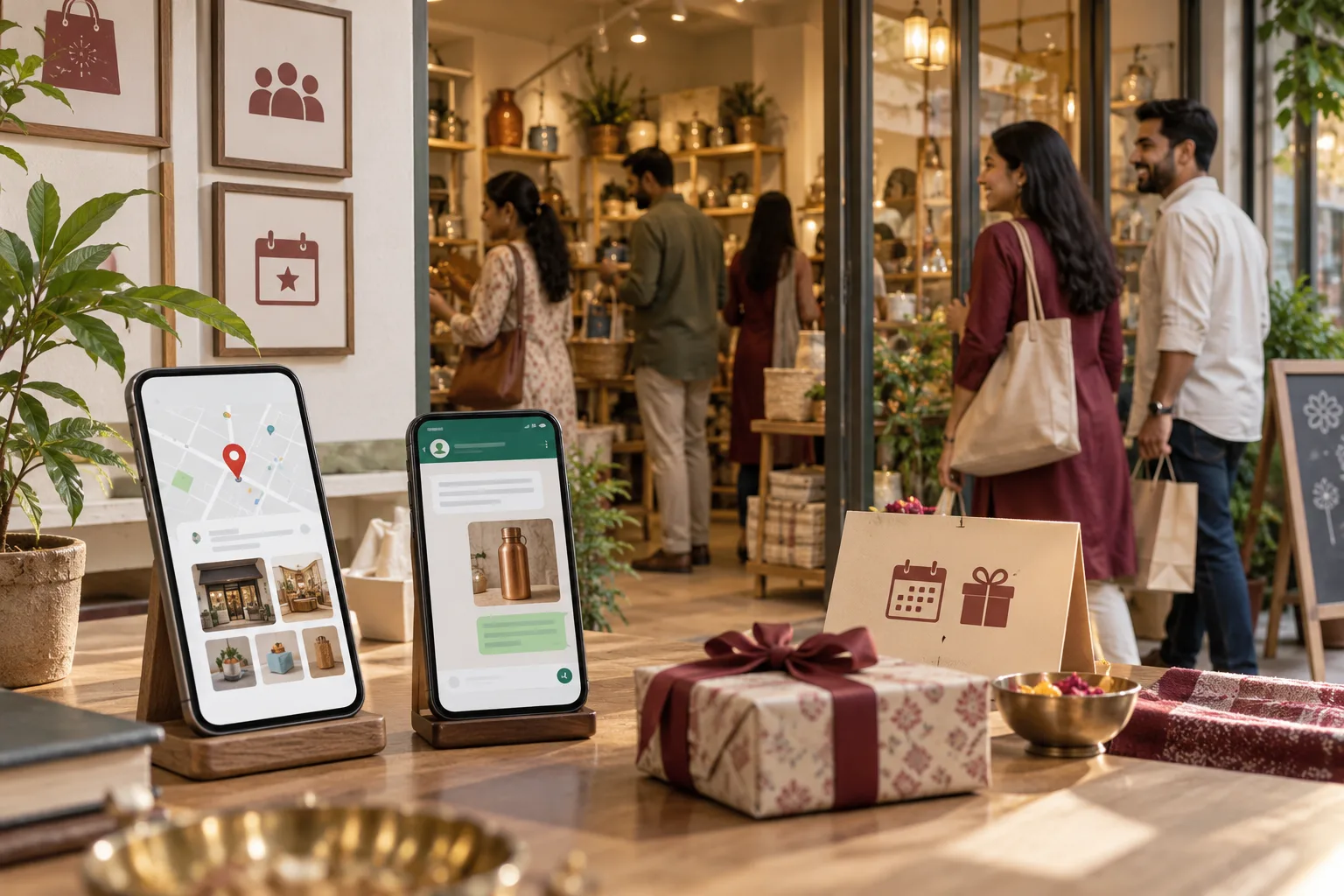 6 min read · 22 May 2026How to increase footfall in a retail storeBe found on Maps for what you stock, give past customers a reason to come back on WhatsApp, and run promotions tied to dates people already shop for.
More for electronics and appliance stores
Everything else we would do for you.
Closest to this: paid and media
Also for electronics and appliance stores
- SEO for electronics and appliance stores
- Lead generation for electronics and appliance stores
- Digital marketing for electronics and appliance stores
- Reputation management for electronics and appliance stores
- Local SEO for electronics and appliance stores
- Branding and identity for electronics and appliance stores
Or start from the overview: sales and marketing for electronics and appliance stores.
Your next practical step
Tell us what you are trying to grow, and we will read it before we call.
Eight short steps, mostly taps. Skip anything you would rather answer on the call.