Computer and mobile repair shops · Buyer persona
Know who walks in with a broken device, and what each of them is afraid of.
A buyer persona for a repair shop describes the kinds of people who bring a phone or computer in, what they worry about and how they choose. GullySales writes these from your own job cards and counter conversations, so the pages and replies speak to a real customer.
Scope, fee, reporting and term are agreed in writing after we have read your brief and spoken to you.
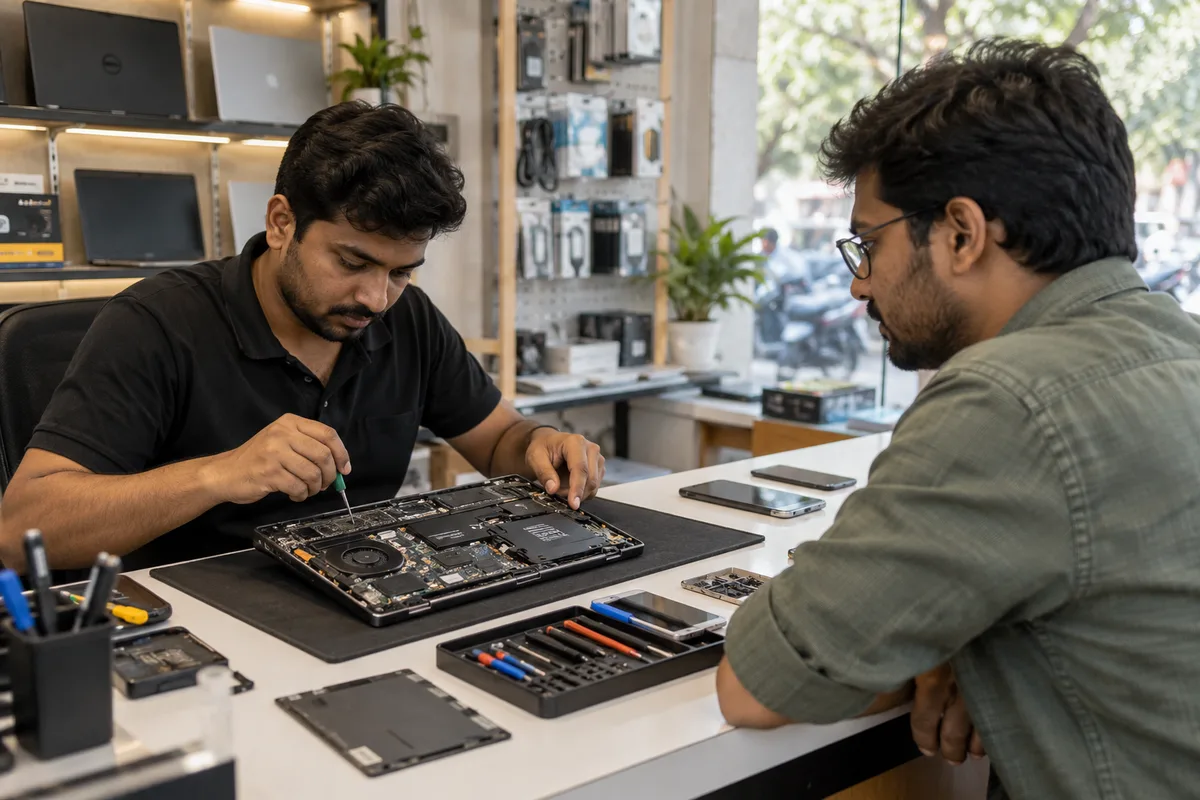
What buyer persona means
A buyer persona is a plain description of the kind of customer who actually buys from you. It includes what they search, what worries them and who else they ask before deciding. GullySales builds this from real enquiries and past sales rather than a generic template, then uses it to write every page and advert.
Also for computer and mobile repair shops
- Buyer journey for computer and mobile repair shops
- Digital marketing for repair shops
- SEO for computer and mobile repair shops
- Local SEO for computer and mobile repair shops
- PPC for computer and mobile repair shops
- Reputation management for computer and mobile repair shops
- Content marketing for computer and mobile repair shops
- Social media marketing for computer and mobile repair shops
Sales and marketing for computer and mobile repair shops, the overview.
Last updated 11 Oct 2026.
For computer and mobile repair shops
Where it usually goes wrong, and what we would do.
“The student wants it today and worries about the bill”
A cracked phone is a lifeline for a student. The question is the price and whether it will be ready by evening. A reply that gives the deciding factors and a collection time to confirm at the counter beats a long list of services.
“The laptop owner worries about what is on the disk”
Photos, bank apps and work files sit on the dead machine. The buyer is deciding whether to trust a stranger with them. Saying how data is handled, and who is allowed to open the device, answers the real objection.
“The office manager buys trust and a named contact”
An office with several computers wants one person who picks up, a clear scope and a bill the accounts team accepts. The manager is not comparing screen prices, so a counter-style reply reads as the wrong shop.
“The parent decides with the child watching”
A parent paying for a child's phone asks around, checks reviews and wants to hear that the work is explained plainly. The child wants the phone back. Both read the same reply, and it must satisfy each of them.
What we do
What we deliver for computer and mobile repair shops.
Every deliverable, what it covers for you, and the result it is there to produce. Nothing here is an extra.
Four customer profiles drawn from your job cards
Student, laptop owner, office manager and parent are checked against your real repair records and adjusted to the people who actually come.
Result: You have a short written profile for each buyer, based on your own cards.
The worry behind each repair
For each profile, the fear that decides the choice: price, data, delay or being overcharged, written next to the repair it attaches to.
Result: Each repair page answers a named worry.
A reply script for each profile
The first message and the follow-up for each buyer, in the words your counter would use.
Result: Staff reply in a consistent voice to different people.
Questions to ask at the counter
Three or four questions that sort a walk-in into a profile without sounding like a survey.
Result: The counter learns who is in front of them.
Profile notes on the job card
A tick for the buyer profile on each card, kept alongside the source.
Result: You can see which profile brings the repairs and the return visits.
A yearly review of who actually came
A look at the cards to see whether the profiles still fit, since a new college or office nearby changes the mix.
Result: The profiles stay true to the lane.
How the result is measured
- Enquiry match to persona
- Conversion rate by persona
- Content aligned to persona
Recorded as a baseline before work starts, so every later report has an honest comparison.
Who is asking
The people who walk in with a broken device, and what each wants to know.
- A student with a cracked phone
- Wants to know the price range, whether it can be done while they wait and whether the part is original. Give a plain estimate and a warranty line.
- A laptop owner worried about files
- Wants to know whether the data is safe and who will see it. Tell them what you check, what you will not open and how they can back up first.
- An office manager with several machines
- Wants a named contact, a pickup arrangement and an invoice. Offer a short written plan for support visits.
- A parent paying for a child's device
- Wants to know whether repair is worth it against buying a new one. Give an honest view and the likely life of the repair.
- A gamer or editor with a failing laptop
- Wants a technician who understands the model's cooling and ports. Show repairs of that kind on the page.
Who it is for
This is written for these computer and mobile repair shops.
- Mobile phone repair shops
- Laptop and desktop repair shops
- Chip-level and motherboard specialists
- Data recovery services
- Computer AMC providers for offices
- Mobile accessory and repair shops
- Apple and premium device repairers
- Repair kiosks in malls and markets
Not for
It is not the right fit if.
- You have not looked at your job cards to see who actually comes in, so the profiles would be imagined.
- You serve only walk-in customers in a college lane, and a set of office personas would never be used.
How it works
How the buyer persona work runs
The work itself, in order. How an engagement starts, from your brief to a written scope, is set out on our method page.
- 1
Understand the current view
We start with how your team currently describes the customer, since the gap between belief and reality is the finding itself.
- 2
Audit past enquiries and sales
We look at recent enquiries and closed deals to see who actually bought, not who was assumed to buy.
- 3
Interview customers and staff
Structured conversations with recent buyers, held as talk about the last purchase and not a questionnaire. We ask what happened before they called, who else was involved and what they compared. Customers agree before we contact them, and their answers are reported without names.
- 4
Build the personas
Findings are written into short, usable persona documents rather than a long report.
- 5
Apply to your marketing
We show where each persona should change a page, an ad or a script you already have. The sales team reads the drafts and says which ring true. A persona they do not recognise is rewritten.
Where this fits
Three pieces of sales work, in this order.
This work sits inside sales process design, at stage 0, foundation. The audit comes before it, and sales management keeps it running.
Step 1
Sales audit
Find where deals are being lost and what to fix first.
Start here if you cannot say where orders are lost.
Step 2 · you are here
Sales process design
One written way to sell, from first enquiry to repeat order.
Start here if every salesperson sells differently.
Step 3
Sales management
A target, a review routine and someone who owns the number.
Start here if the team has targets and no routine.
FAQ
Questions owners ask before they call.
Not here? More answers, or ask on WhatsApp.
How many buyer profiles does a repair shop need?
Do we need customer surveys to build these?
Can one page serve all the buyers?
Should the profile record what a customer fears?
How much does it cost?
How long is the contract?
How soon will we see results?
Who will actually do the work?
What do you need from us?
What if we are not happy with the work?
More for computer and mobile repair shops
Everything else we would do for you.
Closest to this: strategy and research
Also for computer and mobile repair shops
Or start from the overview: sales and marketing for computer and mobile repair shops.
Your next practical step
Tell us what you are trying to grow, and we will read it before we call.
Eight short steps, mostly taps. Skip anything you would rather answer on the call.