Spas · Email marketing
Give your spa list a reason to open before the diary goes quiet.
Email marketing for a spa is the planned use of email to bring first-time visitors, package holders and corporate contacts back to a booking. GullySales cleans and segments your permission-based list, writes the emails with one clear booking step, and reads results against enquiries and visits, not sends.
Scope, fee, reporting and term are agreed in writing after we have read your brief and spoken to you.
What email marketing means
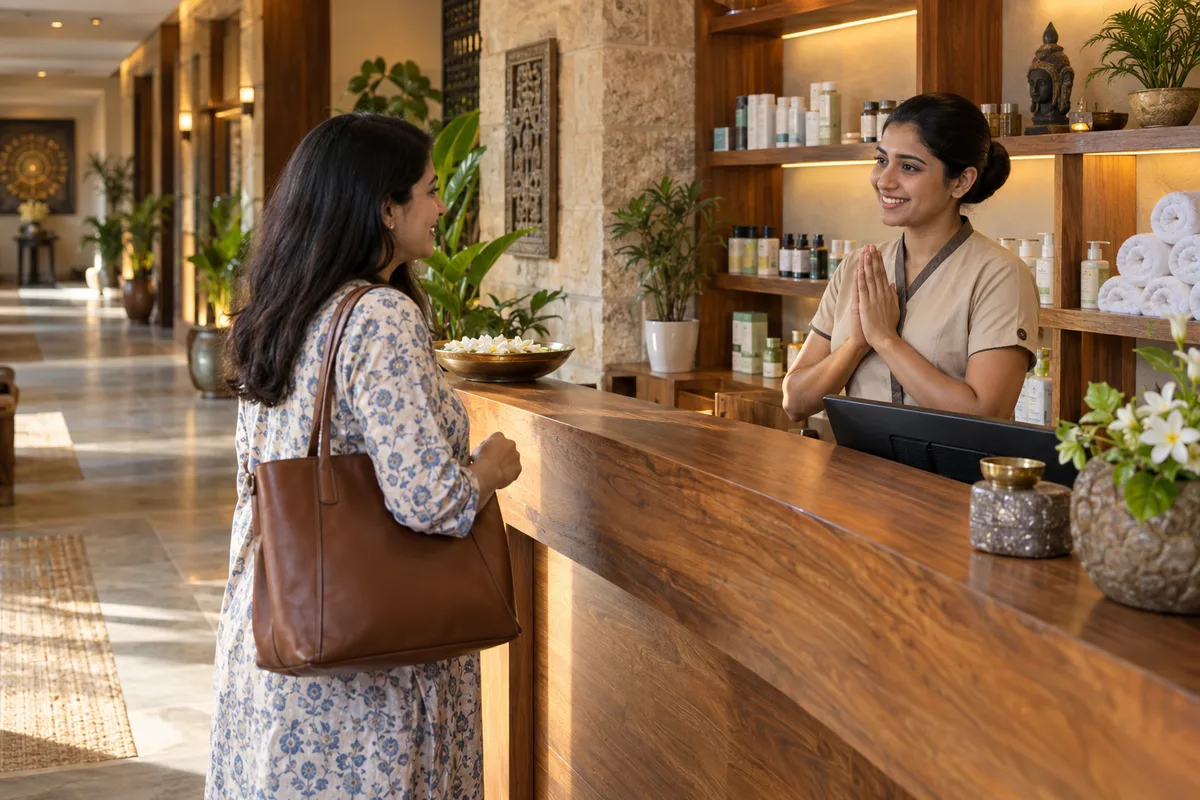
Email marketing is sending planned messages to a list of past and prospective customers who have agreed to hear from you. It suits offers, updates and staying in touch with someone who is not ready to buy yet. GullySales writes and schedules these emails and tracks who opens, clicks and enquires.
Last updated 14 Nov 2026.
For spas
Where it usually goes wrong, and what we would do.
“A guest list is not a mailing list”
Names collected at the front desk, on a gift voucher form or at a wellness day are only usable if the customer agreed to hear from you. A spa that mails everyone it has ever met risks complaints and spoils delivery for the people who do want the news. A record of where each address came from comes before any campaign.
“The same email goes to a first-timer and a regular”
A customer who had one massage on a launch offer and a regular with a long-standing package need different messages. Sending both the same discount teaches the regular to wait for offers and tells the first-timer nothing about what to book next. Groups defined by what a customer has actually bought let each email say something relevant.
“Treatment claims can creep into the copy”
Spa emails drift into promises about stress, pain or skin that nobody has checked. For a medi-spa or any service close to a clinic, the wording is the owner's responsibility, and advertising rules differ by profession and state. Emails stay with what the treatment is, who gives it and how to book, and your own adviser reviews anything stronger.
“Slow weekday slots need a different email from the weekend”
The spa is full on Saturday and half empty on a Tuesday afternoon. An email that announces the whole menu fills neither. A message aimed at a defined group, such as a nearby office or a regular who prefers quiet hours, with one weekday slot to book, gives the customer a specific reason to open the diary now.
What we do
What we deliver for spas.
The work available for this need. We agree the deliverables and responsibilities for your engagement in writing.
List review and consent record
A record of where each address came from and what the customer agreed to receive. Entries with no traceable source are set aside for your decision. This protects the people you are writing to and keeps your sending address in good standing with the mail providers.
Result: Each address on the list has a recorded source and a yes or no on consent.
Audience groups with rules
Defined groups such as first-time visitors, package holders, lapsed regulars, gift voucher recipients and corporate contacts. Each has an inclusion rule written in plain words, so anyone on your team can see why a customer receives a given email.
Result: A customer can be placed in a group by reading its rule.
Welcome and first-visit follow-up
A short email series for a new subscriber or a first-time guest, introducing the spa, the therapists and the next booking step. It explains what to expect on a first visit, including hygiene and what to wear, so a nervous customer feels prepared.
Result: A new first-time guest receives the agreed welcome email once.
Package and renewal emails
Messages for a customer with a package part-used, near expiry or recently finished. They state the balance and terms plainly and give one way to book or renew. The wording is written to inform, never to press the customer into a decision.
Result: A customer with sessions left sees their package terms stated in the email.
Slow-slot campaigns
Emails built around the quiet weekday afternoons you name, each with one slot, one treatment and one way to reply or book. They are sent to a group the slot suits, not to the whole list, so the offer reaches people who could actually come.
Result: Each campaign names one slot and one group, and replies reach your front desk.
Reply handling and reading sheet
A simple routine that sends replies and booking requests from emails to a named person, and a sheet recording which emails led to a booking or a conversation. Opens and clicks are shown alongside, but are not treated as results.
Result: You can see which emails led to a reply, an enquiry or a booking.
How the result is measured
- Open rate
- Click rate
- Enquiries from email
Recorded as a baseline before work starts, so every later report has an honest comparison.
Who it is for
This is written for these spas.
- Day spas
- Ayurveda and wellness centres
- Salon-spa combo outlets
- Medi-spas and skin clinics with spa services
- Massage-only therapy centres
- Resort and hotel spas
- Corporate and mobile wellness services
Before you decide
Agree the work. Know how to judge it.
Email marketing for spas: use these checks to prepare, choose the scope, and review what changes.
Bring the right evidence
Describe how the contact list was collected, what people asked to receive, and which messages are currently sent. Include opt-outs and replies when reviewing campaign performance.
Make the scope clear
Agree the audience, message purpose, sending system, and response owner. Separate promotional communication from order or service updates, and check current platform requirements before launch.
Check the work in use
Test the message with a small appropriate audience before wider use. Check links, reply handling, opt-outs, and whether the response leads to a relevant conversation or order.
Know when to change course
Do not use an unexplained contact list as a shortcut to demand. If recipients do not expect the message, resolve the permission and relevance questions before sending.
These are discussion points, not a fixed package. GullySales confirms the deliverables, responsibilities, fee, and term in writing after reading your brief and speaking with you.
Before we start
What to have ready before the work starts.
The records, access and decisions this work needs from spas. Anything missing is noted in the written scope, with who will supply it.
- Your customer and booking records
- Email groups are only as good as the history behind them. We need an export of customers, what they bought and when, with the format kept as it is. If the records are patchy, we start with the groups the data supports and say so.
- A list of where addresses were collected
- Each source needs a note on what the customer was told when they gave their address. A form that said nothing about emails changes how the address may be used. When the source is unknown, the address is held back until you decide with your adviser.
- Access to your email sending tool
- We need to see how emails are sent today and add campaigns to it. If you have no tool, we help you choose a simple one before writing starts. Without a tool and a sending address, the emails remain drafts on paper.
- Photographs of the rooms and therapists
- Real images of the treatment room, the entrance and the therapist at work make the emails recognisable. Stock pictures of candles tell a customer nothing. If you have none, a simple photo session comes first, with written agreement from anyone shown.
- A named person for replies
- Emails invite replies, and someone must answer them. Name who looks at the inbox and how they hand a booking to the diary. If replies sit unread, customers who answered are worse off than those who never heard from you.
How it works
How the email marketing work runs
The work itself, in order. How an engagement starts, from your brief to a written scope, is set out on our method page.
- 1
Review the list you already hold
We ask where your addresses live: the booking system, the voucher forms, the corporate enquiry sheet and the front desk notebook. We check what each source allowed you to do with the address, and you decide what to keep. The starting list may be smaller than expected, and that is a better foundation.
- 2
Record the starting position
Before the first campaign we note the returning customers, package renewals and weekday bookings your records show, along with what a reply from email looks like today. These are the figures the later results are read against, and they stay in your hands.
- 3
Group customers by what they bought
Using your own booking history, we define the groups and write each rule. A first-time visitor, a package holder and a corporate contact are never mixed. You check a sample of names in each group against what you know of the customer, and correct the rules before any writing begins.
- 4
Write the emails with the treatment room in mind
Copy is drafted in your spa's voice, using the actual rooms, therapists and treatments, with one booking step per email. Anything about health or skin is checked with you and your own adviser first. Subject lines say what is inside, and no email promises a result.
- 5
Send and watch the replies
Emails go out through your email tool in the order agreed, and replies are routed to a named person on your team. We watch for bounces and complaints and pause a campaign if the list shows a problem. Nothing is sent to an address that has not been confirmed as permitted.
- 6
Read the result against your record
After the campaigns have run for a period you choose, we set the replies, bookings and renewals against the starting figures. We say plainly which emails brought conversations and which did not, and you decide what to repeat, change or stop.
Where this fits
Three pieces of sales work, in this order.
This work sits inside sales process design, at stage 0, foundation. The audit comes before it, and sales management keeps it running.
Step 1
Sales audit
Find where deals are being lost and what to fix first.
Start here if you cannot say where orders are lost.
Step 2 · you are here
Sales process design
One written way to sell, from first enquiry to repeat order.
Start here if every salesperson sells differently.
Step 3
Sales management
A target, a review routine and someone who owns the number.
Start here if the team has targets and no routine.
FAQ
Questions owners ask before they call.
Not here? More answers, or ask on WhatsApp.
Is email still worth doing when customers book on WhatsApp?
Can I email everyone who ever visited the spa?
How many emails will you send my customers?
Can the emails say a treatment relieves pain or improves skin?
Will emails fill my quiet weekday afternoons?
What do you need from me to start?
How much does it cost?
How long is the contract?
How soon will we see results?
Who will actually do the work?
From the blog
Further reading for spas.
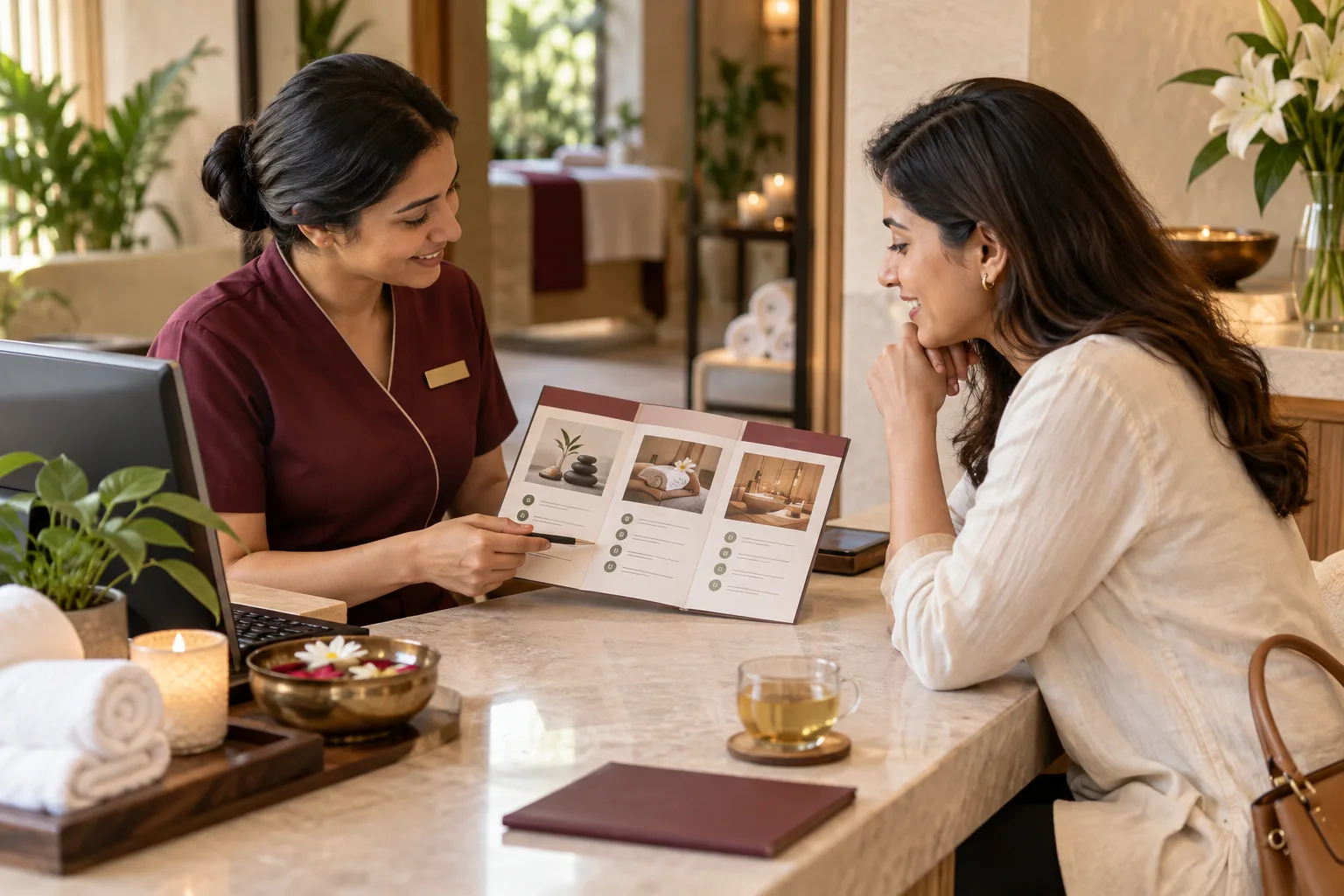 6 min read · 19 Aug 2026How to sell spa membership packages that customers renewBuild spa membership packages around how often customers already visit, with a saving they can see. Offer them after a session; follow up before renewal.
 7 min read · 3 Jun 2025How to reactivate dormant customersDefine dormant against your own purchase interval, then call your highest-value lapsed customers to ask why they stopped before offering any discount.
More for spas
Related work to consider.
Closest to this: messaging and automation
Also for spas
Or start from the overview: sales and marketing for spas.
Your next practical step
Tell us what you are trying to grow, and we will read it before we call.
Eight short steps, mostly taps. Skip anything you would rather answer on the call.