Spas · Appointment reminders and no-show reduction
An empty massage room at four in the afternoon is rent paid for nothing.
For a spa, this work turns a booked treatment into an attended one, an early cancellation or a moved slot, using messages that reach the guest while the therapist's time can still be refilled. GullySales writes the reminders, agrees the reply routes with your front desk, and reads attendance against your own booking records.
Scope, fee, reporting and term are agreed in writing after we have read your brief and spoken to you.
What appointment reminders and no-show reduction means
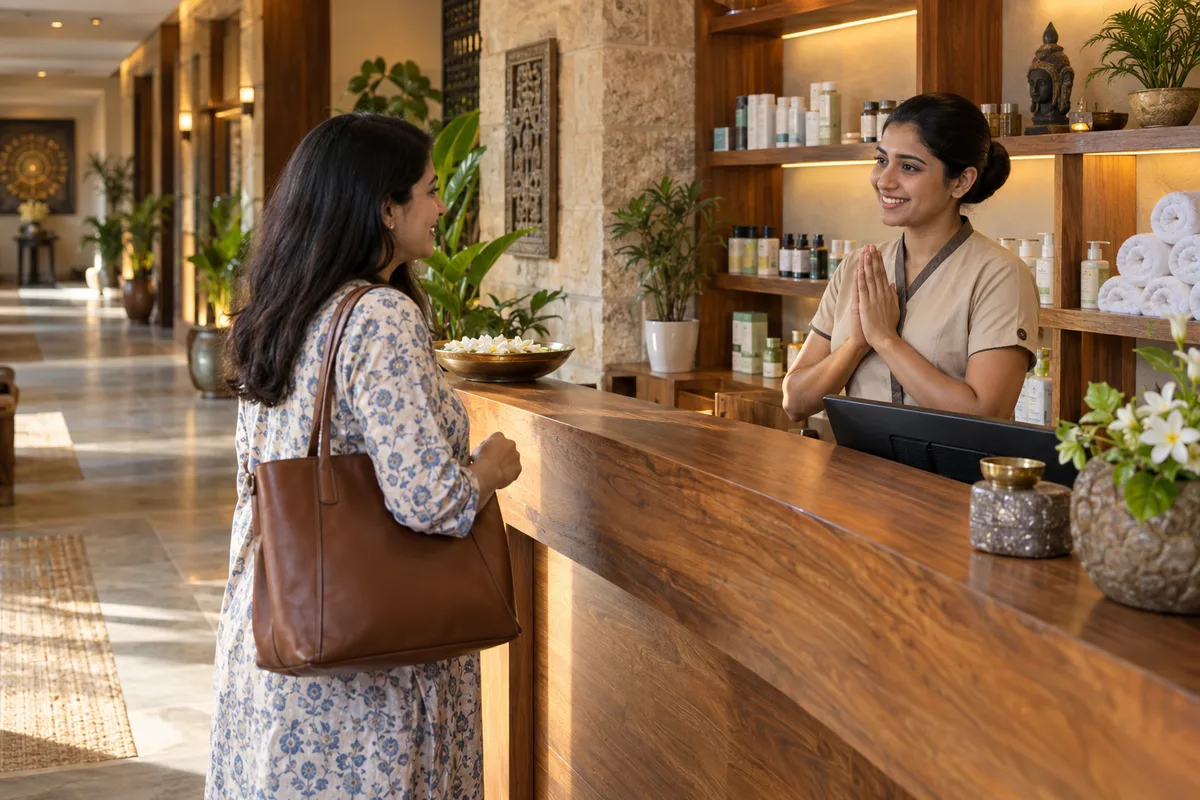
Appointment reminders and no-show reduction is the work of turning a booked slot into an attended visit, an early cancellation or a rearranged appointment through timely messages and clear replies. GullySales writes the reminders, connects them to your booking records where supported, and measures attendance against your starting position rather than treating messages sent as the result.
Last updated 14 Nov 2026.
For spas
Where it usually goes wrong, and what we would do.
“A treatment slot cannot be stored for later”
A missed appointment at a spa is not like an unsold shirt that waits on the shelf. The therapist was rostered, the room was prepared, the oils and linen were set out, and the hour is gone once it passes. A couple's suite left empty costs two guests' worth of time. This work starts by counting that lost time from your own appointment book, so the reminders are judged against what an empty slot really costs your spa.
“Guests book on impulse and forget on the day”
Plenty of spa bookings are made on a Thursday evening for a Sunday visit, sometimes after a message to a friend or a scroll through Maps. By Sunday the plan has competed with errands, traffic and a change of mood. A first-time guest has no habit to carry them there. The reminder has to rebuild the intention: the treatment booked, the therapist, the time, and an easy way to say the plan has changed.
“Cancelling feels awkward, so guests stay silent”
Some guests do not cancel because they dislike telling a person they are not coming. Others do not know whether a late message is accepted at all. If the only route is a phone call to a busy desk, silence is easier. A reply that works with one word, such as a tap on a confirm or move option inside WhatsApp, lets the guest be honest, and gives your desk a chance to offer the slot to someone else.
“A reminder can reveal too much or ask too much”
A message that names a sensitive treatment can be read by a colleague or family member holding the guest's phone. A reminder that is cold or reads like a penalty notice can put off a guest you spent effort winning. Spa messages need a neutral way to describe the visit, a clear statement of what the late-arrival and cancellation rules are, and a tone that matches a place people visit to relax.
What we do
What we deliver for spas.
The work available for this need. We agree the deliverables and responsibilities for your engagement in writing.
Attendance baseline from your book
A count of booked, attended, cancelled and missed treatments, split by treatment type, therapist and walk-in against advance booking. Your front desk checks the figures against the paper or software diary before any reminder is switched on, so later changes are read against something you accepted.
Result: You hold a written starting position that your desk has checked against the diary.
Reminder sequence by booking type
Separate message plans for a same-day booking, an advance booking, a couple's treatment, a package session and a group or bridal booking. Each states when a message is sent relative to the slot, and what the guest is asked to do. You approve the sequence before any guest receives it.
Result: Each booking type has an approved plan you can read on one page.
Approved message wording
Reminder, confirm, move and cancel messages written in your spa's voice, in the languages your guests use. They carry time, branch, therapist where chosen, arrival advice and what to bring, with the treatment described in neutral terms. You approve the wording, including how the cancellation rule is put.
Result: A message library with your sign-off recorded against every message.
Reply routes for the front desk
A written route for each reply: confirm, ask to move, cancel, or question. It names who sees the reply, what they offer next and where the change is recorded in the diary. The desk tries the routes on test bookings before real guests are included.
Result: The desk can show what happens to each type of reply, on a test booking.
Waiting list and slot refill rule
A short list of guests who asked to be told if a slot opens, with a rule for who is contacted first and how the diary is updated when a freed slot is taken. It stops a cancellation from being a quiet loss on the day.
Result: A cancelled slot has a named next step and a named person.
Permission and stop record
A record of how each guest agreed to receive messages, a method for honouring stop requests and a list of those excluded. Your own adviser reviews the consent wording for the places you serve. Messages go only to guests who are on the record.
Result: Every guest messaged appears on the permission record, and stopped numbers stay excluded.
How the result is measured
- No-show rate against the baseline, by day and appointment type
- Confirmed, cancelled or moved bookings traced to reminder replies
- Cancelled slots refilled and subsequently attended
Recorded as a baseline before work starts, so every later report has an honest comparison.
Who it is for
This is written for these spas.
- Day spas
- Ayurveda and wellness centres
- Salon-spa combo outlets
- Medi-spas and skin clinics with spa services
- Massage-only therapy centres
- Resort and hotel spas
- Corporate and mobile wellness services
Before you decide
Agree the work. Know how to judge it.
Appointment reminders and no-show reduction for spas: use these checks to prepare, choose the scope, and review what changes.
Bring the right evidence
Trace recent enquiries from arrival to the last recorded action. Include a won enquiry, an unsuitable one, and one that went quiet, with personal details removed for the initial discussion.
Make the scope clear
Agree who accepts each enquiry, what makes it qualified, and how ownership changes. Include a rule for missed replies and a clear reason for closing an enquiry.
Check the work in use
Pick an enquiry at random and ask the team to find its owner, latest conversation, and next action. Check that the record agrees with what actually happened.
Know when to change course
If no one has capacity to respond, assign that responsibility before buying more leads. Automation can support the owner, but it cannot replace an unresolved handover.
These are discussion points, not a fixed package. GullySales confirms the deliverables, responsibilities, fee, and term in writing after reading your brief and speaking with you.
Before we start
What to have ready before the work starts.
The records, access and decisions this work needs from spas. Anything missing is noted in the written scope, with who will supply it.
- Your appointment diary or booking export
- The reminders can only be as accurate as the records behind them. If the diary lives partly on paper and partly in software, tell us which is the master. Without a clear record we cannot build a baseline, and a reminder sent for a booking that was already moved is worse than none.
- The cancellation and late-arrival rule
- Guests need to see a rule that your team applies the same way each time. Tell us what happens when a guest arrives late, whether treatments are shortened, and whether a deposit is held. If the rule is unwritten, we help you put it into plain words, but you must decide it.
- A named person who owns replies
- Every reminder invites a reply, and a reply that nobody reads is a broken promise to the guest. Name the person on each shift who watches the inbox, and who covers a lunch break or a day off. Without a named owner, replies pile up and the reminders do harm.
- Therapist rota and room list
- Refilling a slot depends on knowing which therapist, room and treatment are free. Bring the rota, the room list and any therapist or gender preferences guests are allowed to request. Without them, a freed slot cannot be offered with confidence, and the waiting list will stay unused.
- Your permission records for guest numbers
- We need to know how guest phone numbers were collected, and whether guests agreed to messages. Bring any forms, booking-page wording or notes. Where agreement was never recorded, those numbers stay out until your adviser says otherwise, which may shrink the first list but protects the guests and the spa.
How it works
How the appointment reminders and no-show reduction work runs
The work itself, in order. How an engagement starts, from your brief to a written scope, is set out on our method page.
- 1
Reading the appointment diary together
We start with the diary or booking software your spa really uses, including any paper pages the desk keeps for walk-ins. You tell us who maintains it and who may approve changes. We note where cancellations are marked and where they are simply deleted, because a deleted booking hides the very figures we need.
- 2
Agreeing what counts as a no-show
Your desk and manager decide whether a guest who arrives far past the start, or cancels at the door, is a no-show. They also decide how a package session, a gift voucher booking and a corporate booking are counted. We write the rule down so the baseline and the later reading use identical definitions.
- 3
Setting the message moments
We place reminders around the real behaviour of spa guests: advance bookings made days ahead, same-day bookings made over a phone call, and package sessions booked at the end of a visit. You review examples for each, including the one nearest to the slot, and decide which bookings deserve a personal call from the desk instead.
- 4
Writing and approving the messages
We draft the wording with your house style, including how you speak about arrival, late-arrival handling and the health declaration where your spa uses one. You approve every message. Where the spa offers medi-spa or clinic-style services, your own adviser reviews what the messages say about treatments before anything is sent.
- 5
Testing with the front desk
Before live sending, the desk makes test bookings and replies as a guest would: confirming, asking to move, cancelling late and writing something unexpected. We watch where the reply lands and fix the route where a message would have sat unseen. Only then do real bookings enter the plan.
- 6
Reading the result against the baseline
After the plan is running, we read attendance, cancellations given in time and refilled slots against the figures your desk accepted at the start. Where a message did not change behaviour, we say so. Treatments you chose to leave outside the plan are shown separately, so the comparison stays honest.
Where this fits
Three pieces of sales work, in this order.
This work sits inside sales process design, at stage 1, prospecting and lead generation. The audit comes before it, and sales management keeps it running.
Step 1
Sales audit
Find where deals are being lost and what to fix first.
Start here if you cannot say where orders are lost.
Step 2 · you are here
Sales process design
One written way to sell, from first enquiry to repeat order.
Start here if every salesperson sells differently.
Step 3
Sales management
A target, a review routine and someone who owns the number.
Start here if the team has targets and no routine.
FAQ
Questions owners ask before they call.
Not here? More answers, or ask on WhatsApp.
Will reminders stop guests missing their massage?
Should we ask for a deposit as well as sending reminders?
What should a reminder say about the treatment?
How do we handle a guest who cancels at the door?
Can this work with a hotel or resort spa booking system?
What if guests reply on WhatsApp but the desk uses a phone?
How much does it cost?
How long is the contract?
How soon will we see results?
Who will actually do the work?
From the blog
Further reading for spas.
 6 min read · 19 Aug 2026How to sell spa membership packages that customers renewBuild spa membership packages around how often customers already visit, with a saving they can see. Offer them after a session; follow up before renewal.
 7 min read · 3 Jun 2025How to reactivate dormant customersDefine dormant against your own purchase interval, then call your highest-value lapsed customers to ask why they stopped before offering any discount.
More for spas
Related work to consider.
Closest to this: messaging and automation
Also for spas
Or start from the overview: sales and marketing for spas.
Your next practical step
Tell us what you are trying to grow, and we will read it before we call.
Eight short steps, mostly taps. Skip anything you would rather answer on the call.