Spas · Social media ads
Show a nearby customer the treatment room before they search for a spa.
Meta advertising for a spa places paid ads on Facebook and Instagram to reach people in the spa's catchment who are not yet searching, with a clear message to book or ask on WhatsApp. GullySales plans the campaign, prepares the creative from the spa's own photographs, and traces bookings back to the ad that brought them.
Scope, fee, reporting and term are agreed in writing after we have read your brief and spoken to you.
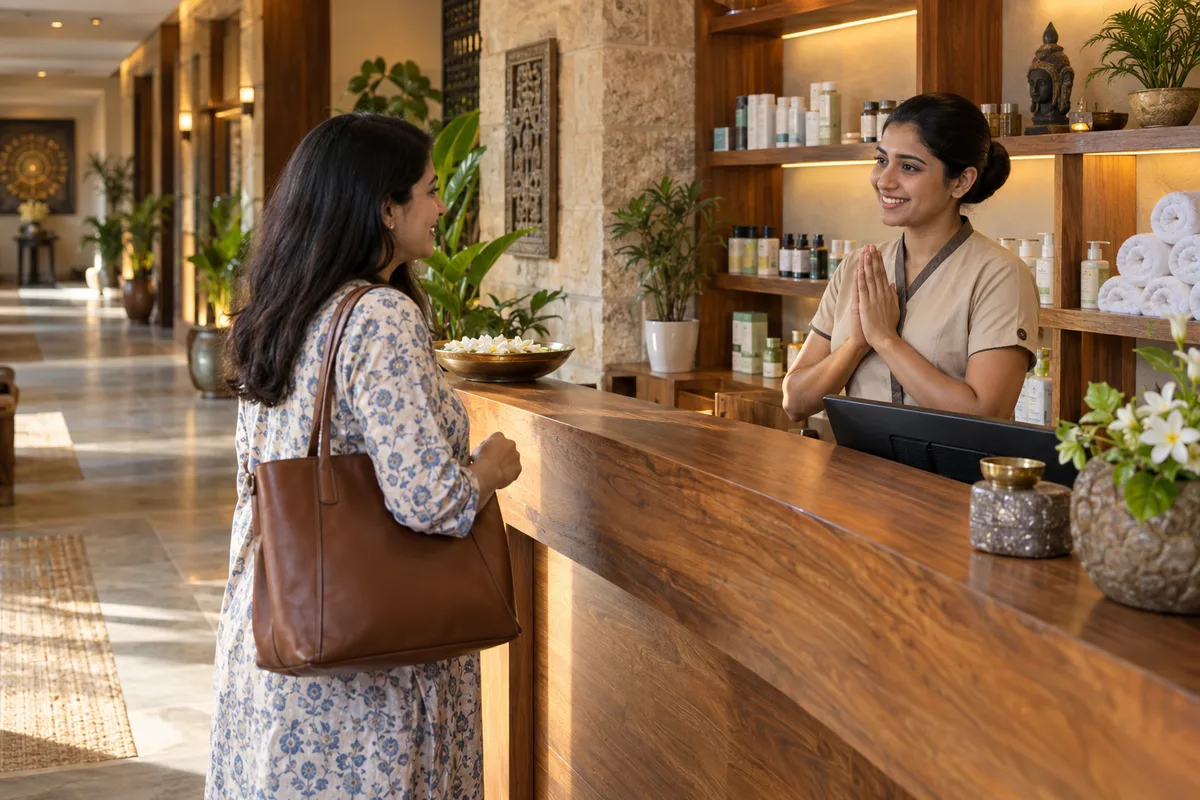
What social media ads means
Social media ads are paid posts on platforms such as Instagram and Facebook shown to people chosen by location, age or interest rather than to your existing followers. GullySales sets the targeting, writes the ad copy and checks spend against the enquiries it brings so it produces enquiries instead of likes.
Last updated 14 Nov 2026.
For spas
Where it usually goes wrong, and what we would do.
“People scrolling are not yet shopping”
A customer who opens a spa search is ready to compare. A customer scrolling a feed is not, and an ad that reads like a price list gets passed over. The ad has to give a reason to stop, such as a quiet weekday afternoon treatment in a room they can see, and a single easy step towards booking.
“The catchment is a few kilometres, not a city”
A spa serves people who will travel a short distance for a massage or facial, and that distance shrinks after work hours when traffic builds. Targeting the whole city wastes spend on people who will never come. The audience plan names the streets, offices and residential areas the spa can really serve, and checks each against where past customers actually came from.
“The creative must show a real room and real hands”
Stock pictures of stones and candles look like every other spa ad. Photographs of your own treatment room, with its clean towels, the therapist at work and the reception answer the hygiene question quietly. Short phone video for Stories and Reels also needs the therapist's consent and the customer's, and no clinical results should be implied.
“Health wording is under the platform's rules”
Ads for wellness, skin and body treatments are also subject to the platform's current rules, which change, and to your own council's rules for medical services. Claims about cures or body results, and personal-attribute wording, can get an ad rejected or the account restricted. We check the platform's current rules before each ad is written, and your adviser decides the treatment wording, so that no ad is built on a claim that must later be removed.
What we do
What we deliver for spas.
The work available for this need. We agree the deliverables and responsibilities for your engagement in writing.
Ad account under your ownership
The Business Manager, the ad account and the pixel are set up in your name, with your administrator access checked. Payment settings are yours. If the engagement ends, campaign history stays with the spa.
Result: You can log in as administrator and see every campaign we ran.
Catchment and audience plan
A written plan names the localities, the age and interest groups, the treatments to promote and the offers for weekday slots. It states assumptions, such as the radius, so they can be tested against where bookings come from.
Result: The plan names the areas served and the reasons for each.
Creative for feed, Stories and Reels
Images, short video and copy adapted for each placement from your own photographs and clips, with phone-sized previews you approve. Consent from the therapist or customer in any frame is confirmed before use.
Result: You have approved every ad on a phone-sized preview before launch, with consent noted for anyone shown.
WhatsApp and booking destination
Ads open a WhatsApp message with the offer already named, or a short form asking for treatment, slot and branch. A named person receives it at the front desk with the offer attached.
Result: A test enquiry from an ad arrives with the offer name in it.
Tracking and test record
The Meta pixel and, where your booking tool supports it, server-side events record agreed actions. A test booking confirms that the ad, the enquiry and the booking record match. Taps on a button are kept apart from confirmed bookings.
Result: The record shows which ad each confirmed booking came from.
Creative test record and report
Alternative images and messages, such as a room photograph against a therapist clip, are compared against the agreed objective, and the record shows what changed and why an ad stayed or went. The report reads bookings and no-shows against the figures recorded before the work.
Result: You can read what changed, what was kept and what the bookings show.
How the result is measured
- Cost per enquiry
- Click-through rate
- Enquiries from paid social
Recorded as a baseline before work starts, so every later report has an honest comparison.
Who it is for
This is written for these spas.
- Day spas
- Ayurveda and wellness centres
- Salon-spa combo outlets
- Medi-spas and skin clinics with spa services
- Massage-only therapy centres
- Resort and hotel spas
- Corporate and mobile wellness services
Before you decide
Agree the work. Know how to judge it.
Meta advertising for spas: use these checks to prepare, choose the scope, and review what changes.
Bring the right evidence
Choose the buyer problem, offer, and evidence the advert will show. Review lead quality from earlier campaigns and the questions the sales team needed to ask before a conversation became useful.
Make the scope clear
Agree the creative variations, audience approach, landing page or form, and follow-up owner. Separate media spend from creative production and campaign management.
Check the work in use
Check whether the person responding understood the offer and fits your buying criteria. Review cost per qualified conversation as well as platform-reported leads.
Know when to change course
Cheap form submissions can still be expensive to handle. If the team repeatedly explains basic eligibility, make it clear in the advert and form before scaling the campaign.
These are discussion points, not a fixed package. GullySales confirms the deliverables, responsibilities, fee, and term in writing after reading your brief and speaking with you.
Before we start
What to have ready before the work starts.
The records, access and decisions this work needs from spas. Anything missing is noted in the written scope, with who will supply it.
- Photographs and clips of your own rooms
- Treatment room, reception, therapists at work and the entrance, in good light. The ads rest on these, and without them we would be left with stock pictures that look like every other spa. Tell us if a person in a frame has not agreed to appear.
- The weekday slots you want to fill
- A list of the treatments, days and hours with the lowest bookings, and the price you can offer. If nothing is chosen, the ad will advertise the whole menu and persuade no one in particular.
- A named person for WhatsApp and calls
- Someone who answers the message, with rules for the evening and for closed days. Ads that bring in enquiries nobody answers waste the spend, and the customer books with the next spa.
- Where bookings are recorded today
- The diary, booking software or sheet where each booking is written, and whether the source is noted. Without it we cannot match a booking to an ad, so the results would show only clicks.
- Treatment wording for your adviser
- If the spa offers medical, skin or similar treatments, list which ones need your own adviser's review and who that adviser is. The review must happen before the ads are written, not after one is rejected.
How it works
How the social media ads work runs
The work itself, in order. How an engagement starts, from your brief to a written scope, is set out on our method page.
- 1
Agreeing the slot you want to fill
We begin with your diary: which treatments, rooms and hours are slow, and which customers you want. You approve the result being bought, such as WhatsApp bookings for weekday afternoons, and the figure that counts as a booking. We record enquiries by source and how many arrive now.
- 2
Account access and tracking checks
You provide account access and any website or booking tool access. We check ownership, the pixel and the booking tool connection, and list anything missing. Where the booking record cannot be linked to the ad, we say so before any spending begins.
- 3
Offer and creative approval
You approve the offer, the catchment, the photographs and the clips. Any treatment wording that your adviser must see goes to them at this point. We read the draft ads against the platform's current rules, and change any wording that is likely to be rejected.
- 4
Testing the route from ad to desk
A test response goes through the full route: the ad, the WhatsApp or form, the front desk and the booking sheet. The campaign launches only after the person who replies confirms that the enquiry arrives in a form they can act on.
- 5
Front desk feedback on enquiries
The front desk marks each enquiry as booked, attended, no-show or unsuitable. We read these notes alongside the platform's own figures, because an enquiry that never turned up is not a booking. Offers and audiences are changed on that evidence.
- 6
Reading results against the starting record
Results are compared against the figures taken before launch: bookings by source, reply time and attended visits. We state where the data is incomplete. Your own figures and the platform's current rules, not a target we promise, decide whether the campaign continues.
Where this fits
Three pieces of sales work, in this order.
This work sits inside sales process design, at stage 1, prospecting and lead generation. The audit comes before it, and sales management keeps it running.
Step 1
Sales audit
Find where deals are being lost and what to fix first.
Start here if you cannot say where orders are lost.
Step 2 · you are here
Sales process design
One written way to sell, from first enquiry to repeat order.
Start here if every salesperson sells differently.
Step 3
Sales management
A target, a review routine and someone who owns the number.
Start here if the team has targets and no routine.
FAQ
Questions owners ask before they call.
Not here? More answers, or ask on WhatsApp.
Should a spa advertise on Facebook and Instagram or on Google?
How much should we spend?
Can you promise bookings from the ads?
Can we show customers or therapists in the ads?
Do we need a website for this?
Who owns the ad account if we stop?
How long is the contract?
How soon will we see results?
Who will actually do the work?
What do you need from us?
From the blog
Further reading for spas.
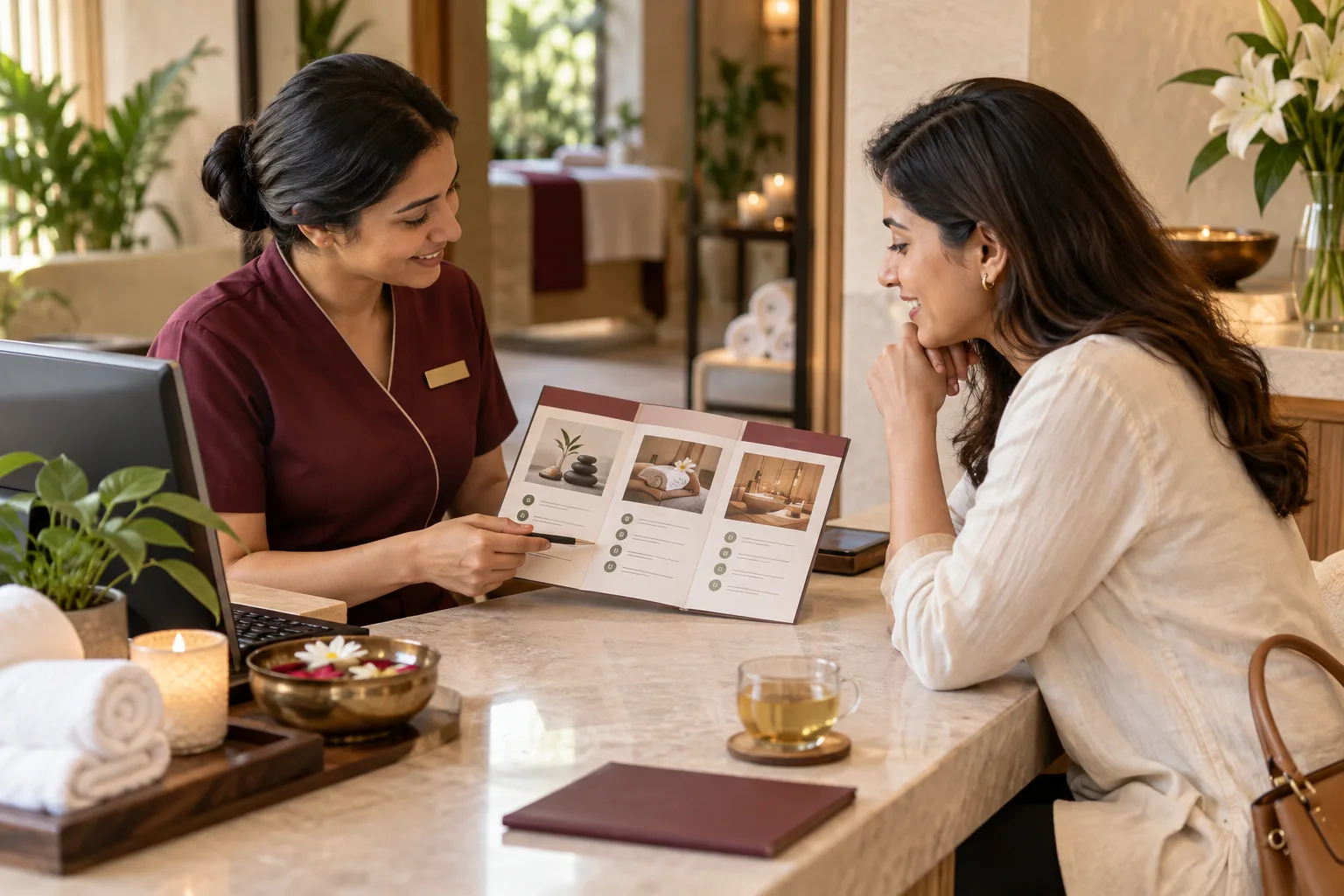 6 min read · 19 Aug 2026How to sell spa membership packages that customers renewBuild spa membership packages around how often customers already visit, with a saving they can see. Offer them after a session; follow up before renewal.
 7 min read · 3 Jun 2025How to reactivate dormant customersDefine dormant against your own purchase interval, then call your highest-value lapsed customers to ask why they stopped before offering any discount.
More for spas
Related work to consider.
Closest to this: paid and media
Also for spas
Or start from the overview: sales and marketing for spas.
Your next practical step
Tell us what you are trying to grow, and we will read it before we call.
Eight short steps, mostly taps. Skip anything you would rather answer on the call.