Spas · Sales scripts
Give the front desk the words for a nervous first booking.
Sales messaging for a spa is the set of call openings, WhatsApp replies and follow-up messages your front desk uses from the first question about a massage to the booking and the package offer afterwards. GullySales writes them from your treatments and real conversations, and agrees what a receptionist may promise.
Scope, fee, reporting and term are agreed in writing after we have read your brief and spoken to you.
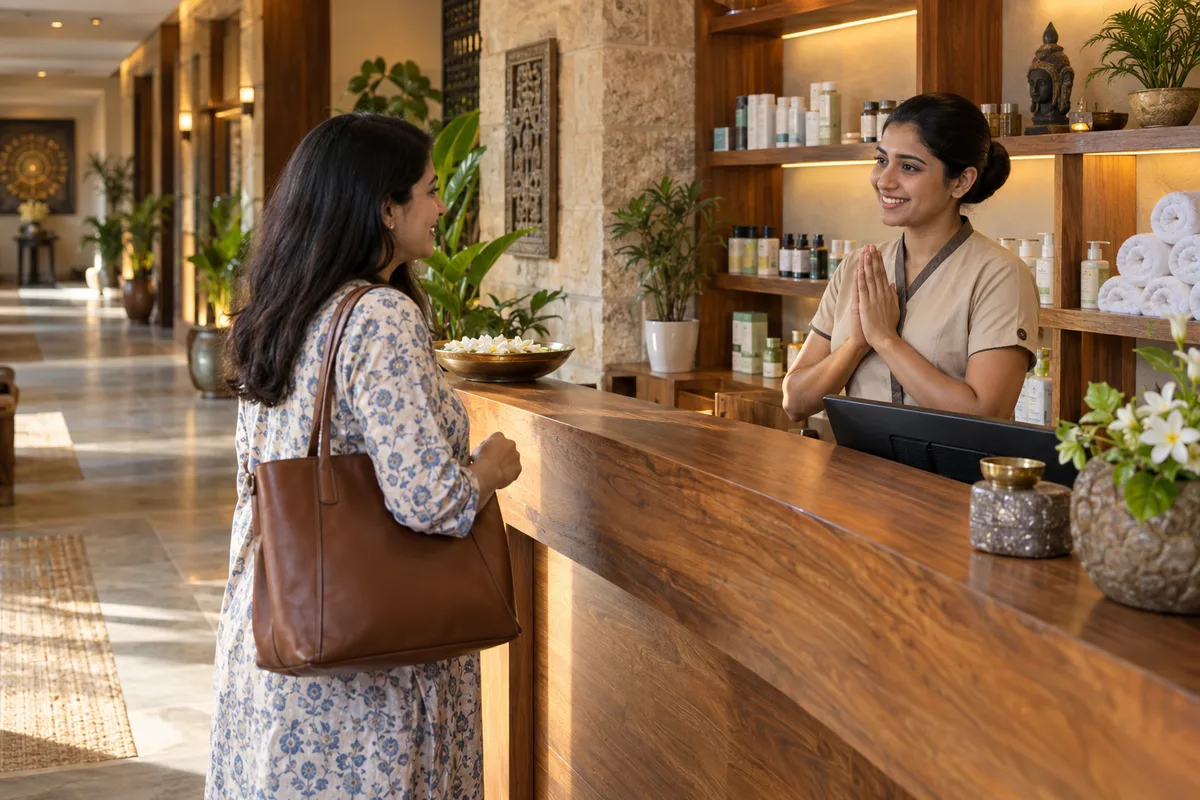
What sales scripts means
A sales script is a written guide for what to say on a call or visit, covering the opening, the questions to ask and the answer to a common objection. GullySales writes these from real recorded calls so the wording matches how your best salesperson already talks.
Last updated 14 Nov 2026.
For spas
Where it usually goes wrong, and what we would do.
“The first question is about cleanliness, not price”
A nervous first-time customer messages to ask whether the towels are fresh, whether the room is private and whether the therapist will be a woman or a man. A reply that opens with a price list answers a question nobody asked. The script has to deal with comfort and privacy first, in plain words, then move to the treatment and the slot. A front desk without that script improvises, and the customer reads hesitation as a sign of the wrong kind of spa.
“Replies come in the evening and in several languages”
Booking questions arrive after the spa has closed, in the language the customer thinks in, sometimes mixed with English. A receptionist who replies the next morning meets a customer who has already booked elsewhere. The messaging work includes a first reply that holds the enquiry overnight, written in the languages your customers use, with a clear note of what the receptionist will confirm when the desk opens, such as slots, therapist and room.
“The package offer sounds like a hard sell”
After a good first massage, the customer is more open to hearing that a set of sessions costs less per visit. The same sentence, said while the customer is still on the table or at the payment counter, sounds like pressure. The words and the moment both matter. The script settles when the offer is made, what is said about the terms, and how a receptionist accepts a polite no without losing the next booking.
“Questions about health conditions need a limit”
Customers ask whether a treatment is safe in pregnancy, with back pain or with a skin condition. A front desk that answers from memory may say something the spa cannot stand behind. The script lists the questions a receptionist must pass to a trained therapist or to the customer's own doctor, gives the exact words for doing so politely, and records the question in the enquiry note so that nobody repeats an answer that was never approved.
What we do
What we deliver for spas.
The work available for this need. We agree the deliverables and responsibilities for your engagement in writing.
Enquiry reply set
Written first replies for the questions that arrive by WhatsApp and phone, covering treatments, slots, privacy, therapist preference and how to reach the spa. Each reply names what the receptionist confirms next. Your owner approves any statement about treatments before it is used.
Result: Every common first question has an approved reply a receptionist can send.
Call guide for the front desk
An opening, a few questions to learn what the customer wants and a way to offer a slot, written for walk-in enquiries by phone. It tells the receptionist which details to write in the enquiry record, such as preferred time, therapist preference and how the customer found the spa.
Result: The next person to call back sees what was already asked.
Package offer script
The words for offering a set of sessions after a first visit, including what is said about validity, missed sessions and extension, and a gentle way to leave the offer open. It is checked against the package terms your owner has set, and no discount is offered that the manager has not approved.
Result: A receptionist offers a package the same way each time, and records the reply.
Follow-up sequence for quiet enquiries
A short run of messages for people who asked and never booked, each with a different purpose: a reminder of the slot they asked about, a note on what to expect on the first visit and a final polite close. The sequence states when it stops, and a customer who says stop is recorded.
Result: A quiet enquiry reaches a booking, a no or a recorded stop.
Corporate wellness pitch notes
A call and email outline for approaching an HR manager at an office near the spa, with the questions to ask about employee numbers and a plain description of what the spa can offer on site or at the centre. It leaves out claims about stress or health outcomes, and your owner approves what is offered.
Result: The pitch to an HR contact follows the same outline each time.
Limits and escalation sheet
A single page saying what a receptionist may promise, which questions go to a therapist, which go to the manager and which are for the customer's own doctor. It also lists words to avoid about health. The owner signs it off, and the sheet sits at the desk.
Result: A receptionist can check an unusual request against one page.
How the result is measured
- Script adherence
- Conversion rate using the script
- Call length consistency
Recorded as a baseline before work starts, so every later report has an honest comparison.
Who it is for
This is written for these spas.
- Day spas
- Ayurveda and wellness centres
- Salon-spa combo outlets
- Medi-spas and skin clinics with spa services
- Massage-only therapy centres
- Resort and hotel spas
- Corporate and mobile wellness services
Before you decide
Agree the work. Know how to judge it.
Sales messaging, scripts and follow-up sequences for spas: use these checks to prepare, choose the scope, and review what changes.
Bring the right evidence
Bring real questions, objections, and call examples that the team finds difficult. Agree which selling behaviour needs to change and how it will be observed at work.
Make the scope clear
Choose the roles and situations to practise. Separate a training session from coaching, manager follow-up, and any scripts or reference material to be produced.
Check the work in use
Use a realistic practice conversation, then review the same skill in live work with appropriate permission. Look for a change in behaviour before attributing a sales result to training.
Know when to change course
If the problem is an unclear offer, missing product knowledge, or no permission to make a decision, fix that first. A communication workshop cannot remove those barriers.
These are discussion points, not a fixed package. GullySales confirms the deliverables, responsibilities, fee, and term in writing after reading your brief and speaking with you.
Before we start
What to have ready before the work starts.
The records, access and decisions this work needs from spas. Anything missing is noted in the written scope, with who will supply it.
- Recent enquiry conversations
- Copies of WhatsApp threads and call notes show which questions customers actually ask and where a receptionist's reply lost them. Remove names and numbers first. Without real conversations, the scripts are written from guesses and sound like they belong to some other spa.
- Your treatment menu and package terms
- The scripts must describe treatments and packages as the spa sells them. Share the menu, the names of therapist specialities and the package terms on validity, missed sessions and cancellation. If a term is undecided, tell us, because a receptionist cannot be given words for a rule that does not exist.
- Rules on health questions
- Decide who answers a question about pregnancy, injury or a skin condition: the therapist, the manager or the customer's own doctor. Write it down. Without it, the script either lets the receptionist answer a question they are not trained for or sends every customer away with no answer.
- A front desk lead for rehearsal
- One person who answers the customers all day, and can say which lines sound like the spa and which do not. They also keep the enquiry record. A script written without this person is rarely used, because the people using it never agreed to it.
- Permission to contact enquirers
- Confirm how enquirers' numbers were collected and what they agreed to. A follow-up message to someone who asked a question is different from a promotional message to an old list. Your own adviser decides what rules apply to you, and any record of a stop request must be kept.
How it works
How the sales scripts work runs
The work itself, in order. How an engagement starts, from your brief to a written scope, is set out on our method page.
- 1
Collecting real enquiry conversations
You share WhatsApp threads, call notes, the enquiry sheet and any booking records from the last few months, with customer names removed. We read where conversations became bookings and where they stopped. Your best receptionist tells us which questions they hear and how they answer, because the script should sound like your spa, not a template.
- 2
Deciding the enquiry stages
With your owner we set out the stages a customer passes through: first question, slot offered, booked, visited and package offered. For each, we decide who owns it and what ends it. The stage names are the spa's own, and your manager signs off before any words are drafted.
- 3
Drafting replies and call guides
We write the replies, openings and questions for each stage, in the languages you name. Each piece has a purpose, such as hold the enquiry, confirm a slot or reassure on privacy. Treatment descriptions come from your own menu and therapist briefings, and anything about health or skin is routed rather than answered.
- 4
Approval of promises and limits
Your owner reads every line that commits the spa: discounts, validity, extension, therapist choice and cancellation. We mark each as approved, needs a decision or not to be said. The limits sheet is written from those decisions, and a receptionist is not asked to use a line the owner has not signed.
- 5
Rehearsal with the front desk
Your receptionists try the scripts on each other and on a few real enquiries. We listen for lines that feel stiff, for questions the script missed and for places where a receptionist wants to say something else. The wording is changed before it goes live, so the team has helped to shape what they will be using.
- 6
Reading the records against the baseline
After the scripts have been in use, we compare the enquiry record with the starting position: enquiries answered, enquiries that became bookings, packages offered and packages taken. We separate the number of messages sent from the number of customers who booked, and your owner decides which scripts to change.
Where this fits
Three pieces of sales work, in this order.
This work sits inside sales process design, at stage 2, qualification. The audit comes before it, and sales management keeps it running.
Step 1
Sales audit
Find where deals are being lost and what to fix first.
Start here if you cannot say where orders are lost.
Step 2 · you are here
Sales process design
One written way to sell, from first enquiry to repeat order.
Start here if every salesperson sells differently.
Step 3
Sales management
A target, a review routine and someone who owns the number.
Start here if the team has targets and no routine.
FAQ
Questions owners ask before they call.
Not here? More answers, or ask on WhatsApp.
Will the scripts make my receptionists sound robotic?
Can the scripts say that a treatment relieves pain or stress?
Do you write in regional languages?
How do the follow-up messages avoid being pushy?
Does this include a script for corporate wellness calls?
Will you send the messages for us?
How much does it cost?
How long is the contract?
How soon will we see results?
Who will actually do the work?
From the blog
Further reading for spas.
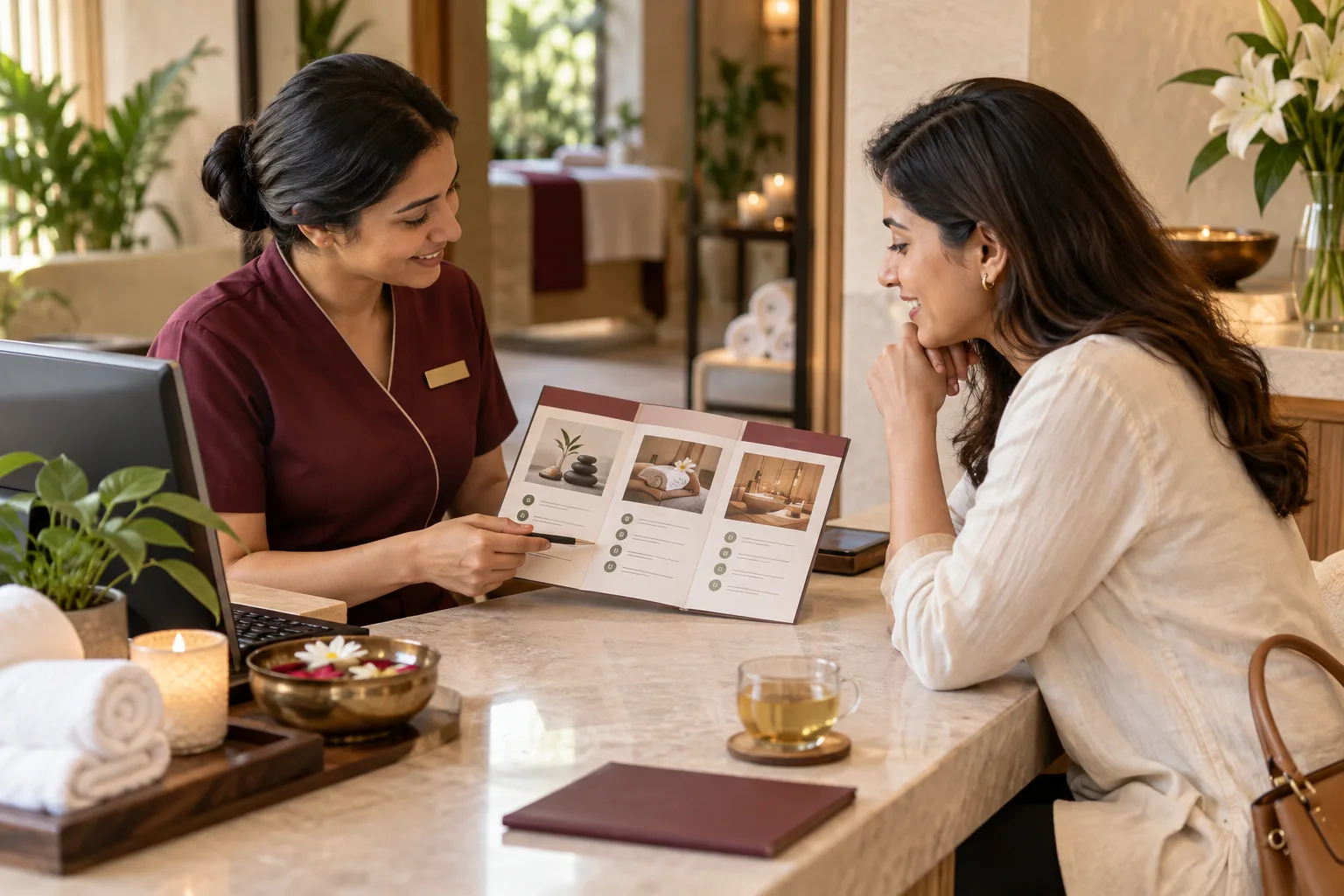 6 min read · 19 Aug 2026How to sell spa membership packages that customers renewBuild spa membership packages around how often customers already visit, with a saving they can see. Offer them after a session; follow up before renewal.
 7 min read · 3 Jun 2025How to reactivate dormant customersDefine dormant against your own purchase interval, then call your highest-value lapsed customers to ask why they stopped before offering any discount.
More for spas
Related work to consider.
Closest to this: sales craft
Also for spas
Or start from the overview: sales and marketing for spas.
Your next practical step
Tell us what you are trying to grow, and we will read it before we call.
Eight short steps, mostly taps. Skip anything you would rather answer on the call.