Denting and painting shops · Automotive
Be the bodyshop an insurer, a surveyor and an owner can all check.
A car reverses into a pillar in Jayanagar and the rear bumper cracks. The insurance company's app lists three cashless garages, and the owner has heard of only one. What matters is a decent finish, a fair insurer approval and as few days without the car as the repair allows.
Scope, fee, reporting and term are agreed in writing after we have read your brief and spoken to you.
In one paragraph
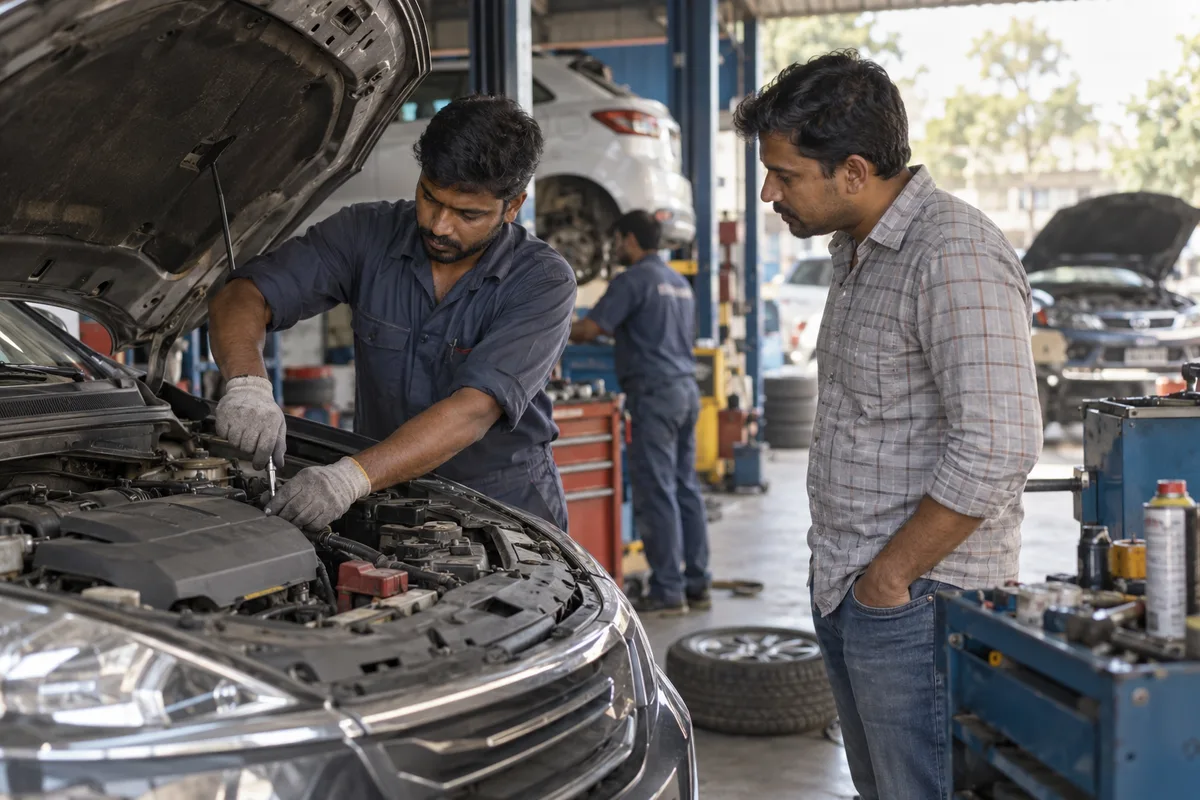
A denting and painting shop repairs accident damage and repaints cars, much of it on insurance claims. Marketing puts the bodyshop where an owner or surveyor looks after a collision. Sales is the estimate, the record of the insurer's approval and the colour-match check before delivery.
Accident repair is a stressed purchase. The owner is not shopping for a bargain; the car has to look as it did. Where the claim is cashless, the insurer's list and the surveyor shape which garage the car goes to, so the shop has to be visible to them as well as to the owner. Rules and panels differ by insurer.
Last updated 18 Oct 2026.
How buyers decide
How denting and painting shops are chosen.
When the car is insured, the owner may follow the insurer's list of cashless garages or the surveyor's suggestion. Being on those lists, and being known by the people who assess damage, matters to how work reaches the shop. Rules differ by insurer, so check each one.
For private repairs and out-of-claim work, such as scratches, parking dents and paint touch-ups, owners search locally and judge on paint match and finish. Photographs of finished panels in daylight convince them more than a promise.
Fleet and cab operators choose a shop on turnaround and invoice discipline. A transport head wants to know when the car will be back and to receive one clean invoice per vehicle.
The problem
What usually goes wrong for denting and painting shops.
What owners tell us on the first call, in their words.
“Insurance approval delays the whole job”
The car waits for the surveyor and the estimate revision, and the owner blames us for the delay.
“Colour match disputes at delivery”
A panel looks slightly different under sunlight. The owner is unhappy and the shop has no record of the match process.
“Estimates change as panels are opened”
Hidden damage turns a modest repair into a larger one. The insurer's approval for extra work takes time.
“We are not on every insurer's cashless list”
Without empanelment the owner may go elsewhere, and we do not know how to apply.
“Private jobs depend on word of mouth”
Owners of scratch and dent jobs cannot see our work online.
“Fleet work is irregular”
Cab operators send cars when they are in trouble and not on a schedule, and we have no formal arrangement.
What we do
What we do for denting and painting shops.
Everything included for denting and painting shops.
An estimate and approval record
A written estimate with photos of damage and a log of the insurer's approval and any extra work.
A colour-match routine
A record of paint code, test panel and daylight check before the car is handed over.
A surveyor and insurer outreach pack
A short profile of the shop, the bay and paint booth, the staff and the process, with an introduction to surveyors and insurance desks.
Photographs of finished work
Panels photographed in daylight with the owner's consent and no number plate.
An owner status message
A short message at each stage: received, approved, in paint, ready.
A report against a baseline
Jobs by source, insurer approvals, repeat fleet work and reviews, set against figures taken before the work began.
How the result is measured
- Jobs by source
- Insurance claim jobs received
- Private scratch and dent jobs
- Cars delivered by the date the owner was given
- Fleet repeat work
- Reviews that mention finish
Recorded as a baseline before work starts, so every later report has an honest comparison.
Every service, written for denting and painting shops
Each has its own page: what it involves for denting and painting shops, what you get, and what it is measured on.
- Lead generationFill the bays with cars from the sources that actually send them.
- SEOBe the page that answers the search typed beside a scratched car.
- Local SEOBe the bodyshop on the map when a bumper cracks nearby.
- Social media marketingLet finished panels do the talking on Instagram and Facebook.
- Content marketingWrite what an owner needs to read before handing over the keys.
- Buyer personasKnow who brings the car, who sends it and who pays.
- CRMKeep every car, owner and approval in one place the whole shop reads.
- Follow-up systemsNever let an estimate go cold because nobody called back.
- WhatsApp marketingTake the damage photo, the estimate and the status all on one chat.
- Digital marketingPut the shop where a collision, a scratch and a fleet each look first.
- WebsiteBuild a site that answers an owner before the first call is made.
Worth a page and a campaign of their own
Cashless insurance repair · Surveyor and insurer relationships · Colour matching and paint booth · Paintless dent removal · Bumper and panel repair · Fleet repair contracts · Pick-up and drop · Estimate approval record · Photographs of finished work
Priority campaigns
Campaigns for what denting and painting shops most want to sell.
Each one planned around when your buyers decide, and measured against the baseline.
After a collision
A page and a Maps profile for people searching for accident repair, with what to do after an accident and what to bring.
Scratch and dent repair
A page with photos for small repairs that owners put off, such as a scraped door or a parking dent.
Wet roads and festival traffic
Posts and a Maps update for the months of slippery roads and crowded festival travel, when owners think of bumpers and brakes.
Fleet introduction
An approach to cab operators and company transport desks.
Beyond search
Where we reach buyers of denting and painting shops, beyond Google.
Search matters, but it is rarely the only way this industry's buyers find a supplier.
Insurance surveyors and branch desks
A surveyor visits the car and writes the assessment. A one-page profile giving the paint booth, the staff and the insurers the shop is empanelled with gives that visit something to refer to.
Insurance agents
A client with a collision rings the agent to ask where to take the car. A card with the shop's cashless insurers, named correctly, and a number that is answered gives the agent something to pass on.
Cab operators and company transport heads
Bumper and door damage from city driving is routine for a cab operator, who wants a shop that quotes the repair and returns the car for the next duty. A repair-terms outline and a named contact fit that buyer.
Used car dealers
A pre-owned dealer repaints a bumper or door before a car goes on the forecourt and wants a per-panel rate and a stated paint-match check.
Towing and roadside assistance providers
A tow operator has to say where to take a car when the owner has no garage in mind. A location card with the bay address and a number answered at night keeps the shop in mind.
Who it is for
This is written for these denting and painting shops.
- Cashless insurance bodyshops
- Independent denting and painting garages
- Dealer-attached authorised bodyshops
- Premium and luxury car body repair specialists
- Scratch, dent and paintless dent removal specialists
- Cab and fleet repair shops
- Two-wheeler and commercial vehicle body shops
- Mobile dent repair teams
Not for
It is not the right fit if.
- You want a guaranteed Google ranking or a guaranteed number of leads. Nobody honest can promise either.
- You need enquiries by next week and have nobody to answer them.
- You want posts and reach reported, not enquiries and orders.
How it works
How the work runs for denting and painting shops
The work itself, in order. How an engagement starts, from your brief to a written scope, is set out on our method page.
- 1
Look at how a damaged car reaches you
Job files are sorted by how the car arrived: insurer list, surveyor, tow operator, owner search or fleet.
- 2
Make approvals and status visible
The estimate record and stage messages are set up so owners are not left guessing.
- 3
Reach the people who direct work
One outreach pack, adjusted for surveyors, agents and tow operators, with a record of who received it.
- 4
Show the finish
Photography of panels with consent, and a profile that displays them.
- 5
Report against the baseline
Jobs and repeat sources go beside figures taken before the work started, and the plan changes where they disagree.
Where this fits
Three pieces of sales work, in this order.
GullySales builds every engagement from three pieces of sales work. This page is not one of them, but the same three steps apply to the business behind it.
Step 1
Sales audit
Find where deals are being lost and what to fix first.
Start here if you cannot say where orders are lost.
Step 2
Sales process design
One written way to sell, from first enquiry to repeat order.
Start here if every salesperson sells differently.
Step 3
Sales management
A target, a review routine and someone who owns the number.
Start here if the team has targets and no routine.
FAQ
Questions denting and painting shops ask before they call.
Not here? More answers, or ask on WhatsApp.
Can we advertise cashless claims?
Can we promise the car will look like new?
How do we reach surveyors?
Do you handle the insurer's paperwork?
Can we show cars on social media?
How much does it cost?
How long is the contract?
How soon will we see results?
Who will actually do the work?
What do you need from us?
Part of Automotive. See the other industries in the sector.
Your next practical step
Tell us what you are trying to grow, and we will read it before we call.
Eight short steps, mostly taps. Skip anything you would rather answer on the call.