Car detailing studios · Buyer persona
Know whether the person at the desk is the new SUV owner, the fleet manager or the enthusiast.
A buyer persona for a detailing studio is a written picture of who books each service, what they worry about for their car and what makes them trust one bay over another. GullySales builds yours from your own job records and customer conversations, and uses it to decide what each page and message says.
Scope, fee, reporting and term are agreed in writing after we have read your brief and spoken to you.
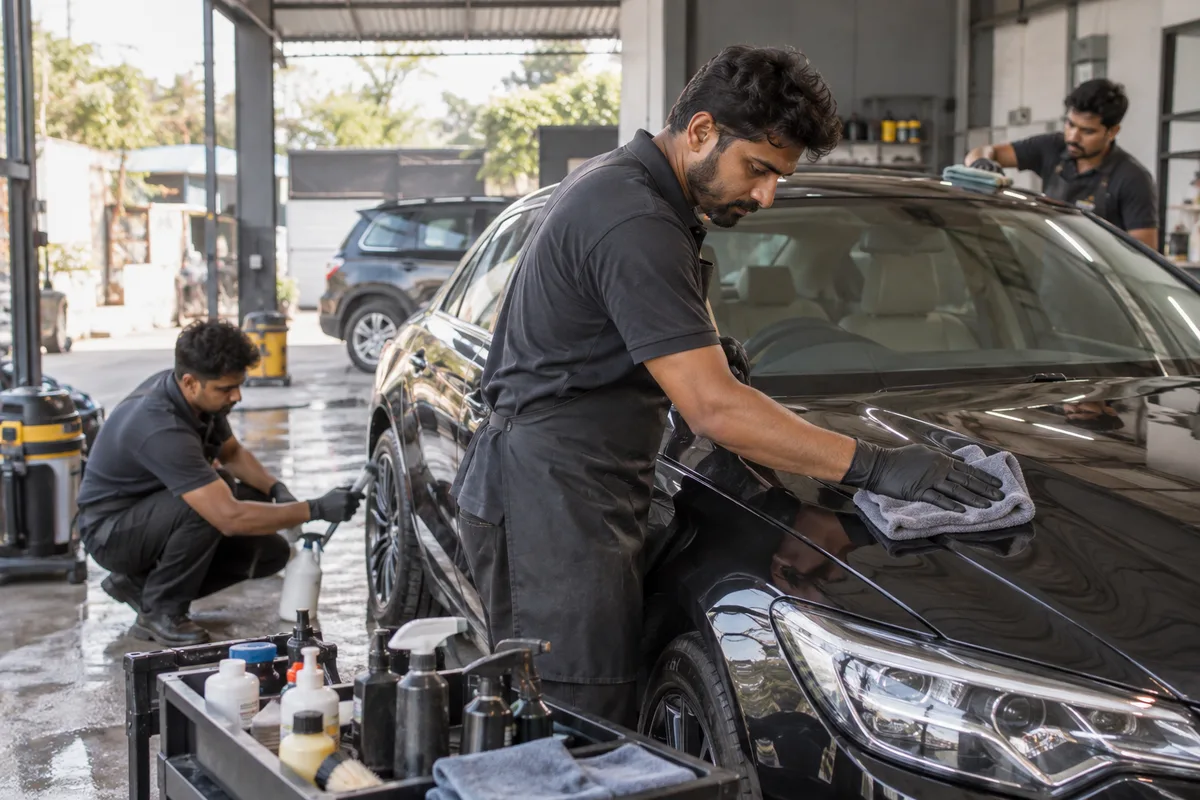
What buyer persona means
A buyer persona is a plain description of the kind of customer who actually buys from you. It includes what they search, what worries them and who else they ask before deciding. GullySales builds this from real enquiries and past sales rather than a generic template, then uses it to write every page and advert.
Also for car detailing studios
- Digital marketing for car detailing studios
- Marketing automation for car detailing studios
- Branding for car detailing studios
- Business analytics for car detailing studios
- Content marketing for car detailing studios
- Lead management for car detailing studios
- Paid ads for car detailing studios
- Reputation management for car detailing studios
Sales and marketing for car detailing studios, the overview.
Last updated 5 Oct 2026.
For car detailing studios
Where it usually goes wrong, and what we would do.
“The new-car owner wants protection and reassurance”
Paying a large sum for a vehicle, the owner fears a bad first coating more than a high price. They ask about the brand, the warranty card and what the studio will do if something is missed, and they want a person to explain it.
“The enthusiast judges the process”
This buyer knows paint correction, asks about the machine polish stages and checks the lighting in your photographs. Marketing that skips the method reads as amateur, and one shaky detail in a reel ends the conversation.
“The family car owner wants the inside fixed”
A parent with a child-stained back seat or a smell that will not leave cares about hygiene and time without the car. The decision is practical, and the question is whether the car comes back cleaner and on the day promised.
“The fleet or dealership contact buys on reliability”
A showroom manager or a company with several cars asks whether you can deliver on the agreed day, every time, with an invoice they can file. Photographs matter less than the track record you can describe.
What we do
What we deliver for car detailing studios.
Every deliverable, what it covers for you, and the result it is there to produce. Nothing here is an extra.
Four persona sheets
One page each for the new-car owner, the enthusiast, the family owner and the fleet contact, written from your own customers.
Result: You can say who a given page or post is for.
A record of what each persona asked
The questions, objections and photographs that came up in enquiries, grouped by buyer type.
Result: Messages answer what people really ask.
A service-to-persona map
Which package suits which buyer, and what to lead with in the first reply for each.
Result: The first reply matches the person.
Message variants for each persona
Short versions of the Instagram caption, website heading and WhatsApp opener for each buyer.
Result: Copy stops trying to speak to everyone at once.
A list of what each buyer needs to see
The proof each persona looks for: process shots, warranty card, interior hygiene or delivery record.
Result: Every page carries the proof its reader wants.
A review of the personas against bookings
A comparison of the personas with the cars that actually booked, repeated when your mix changes.
Result: The sheets change when your customers do.
How the result is measured
- Enquiry match to persona
- Conversion rate by persona
- Content aligned to persona
Recorded as a baseline before work starts, so every later report has an honest comparison.
Who is asking
These buyers ask for a detailing job, and each wants something different first.
- New SUV owner, week of delivery
- Wants to know whether to coat before first use and what the film or coating protects. Wants reassurance that the studio will not damage fresh paint.
- Enthusiast with a modified car
- Wants to see the process: correction steps, lights used, products named. Judges the studio by how it speaks about the work.
- Family with children and pets
- Wants the interior fixed: stains, smell, seats. Asks what chemicals are used and whether the car will be ready for a trip.
- Fleet manager or dealership contact
- Wants reliability, a repeatable standard and an invoice that fits their accounts. A single scratch complaint costs the whole account.
- Second-hand buyer reselling later
- Wants to know whether a coating adds value and how to show records. Asks for a bill and photographs of the work.
Who it is for
This is written for these car detailing studios.
- Mobile car detailing services
- Studio-based detailing centres
- Ceramic coating and PPF specialists
- Bike detailing and coating studios
- Fleet and dealership detailing partners
- Luxury and exotic car detailing specialists
- Interior deep cleaning specialists
- Car wash and quick service outlets
Not for
It is not the right fit if.
- You detail only a few cars a month and know each owner by name, so a persona document adds nothing.
- You have no record of what owners asked at the first enquiry, so the persona would rest on opinion.
- You hope a persona will tell you whom to target, when your bay is already full of one kind of owner.
How it works
How the buyer persona work runs
The work itself, in order. How an engagement starts, from your brief to a written scope, is set out on our method page.
- 1
Understand the current view
We start with how your team currently describes the customer, since the gap between belief and reality is the finding itself.
- 2
Audit past enquiries and sales
We look at recent enquiries and closed deals to see who actually bought, not who was assumed to buy.
- 3
Interview customers and staff
Structured conversations with recent buyers, held as talk about the last purchase and not a questionnaire. We ask what happened before they called, who else was involved and what they compared. Customers agree before we contact them, and their answers are reported without names.
- 4
Build the personas
Findings are written into short, usable persona documents rather than a long report.
- 5
Apply to your marketing
We show where each persona should change a page, an ad or a script you already have. The sales team reads the drafts and says which ring true. A persona they do not recognise is rewritten.
Where this fits
Three pieces of sales work, in this order.
This work sits inside sales process design, at stage 0, foundation. The audit comes before it, and sales management keeps it running.
Step 1
Sales audit
Find where deals are being lost and what to fix first.
Start here if you cannot say where orders are lost.
Step 2 · you are here
Sales process design
One written way to sell, from first enquiry to repeat order.
Start here if every salesperson sells differently.
Step 3
Sales management
A target, a review routine and someone who owns the number.
Start here if the team has targets and no routine.
FAQ
Questions owners ask before they call.
Not here? More answers, or ask on WhatsApp.
Do we need a persona if we know our customers?
How many personas should a small studio have?
Where does the information come from?
Does the persona change the quote?
How much does it cost?
How long is the contract?
How soon will we see results?
Who will actually do the work?
What do you need from us?
What if we are not happy with the work?
From the blog
Further reading for car detailing studios.
 5 min read · 11 Oct 2026Using due dates to bring vehicle owners back: service, insurance and pollution checksHow a workshop or dealer can record each vehicle's next service, insurance and pollution-check dates, then call owners with a real reason instead of a generic offer.
 6 min read · 17 Jun 2026Garage management software: what to check, and how to bring more cars inWhat garage management software must do, from job cards to service reminders, the questions to ask vendors, and the auto repair shop marketing that fills the bays.
- 6 min read · 2 Jun 2026Pricing detailing and care packages so customers pick the middle oneHow a car detailing studio can set three named tiers with plain inclusions and result photos, so a customer can choose a package in one visit and the middle one earns its place.
More for car detailing studios
Everything else we would do for you.
Closest to this: strategy and research
Also for car detailing studios
Or start from the overview: sales and marketing for car detailing studios.
Your next practical step
Tell us what you are trying to grow, and we will read it before we call.
Eight short steps, mostly taps. Skip anything you would rather answer on the call.