Auto parts and accessories dealers · CRM
Keep every garage, fleet and tyre buyer in one record instead of the owner's memory.
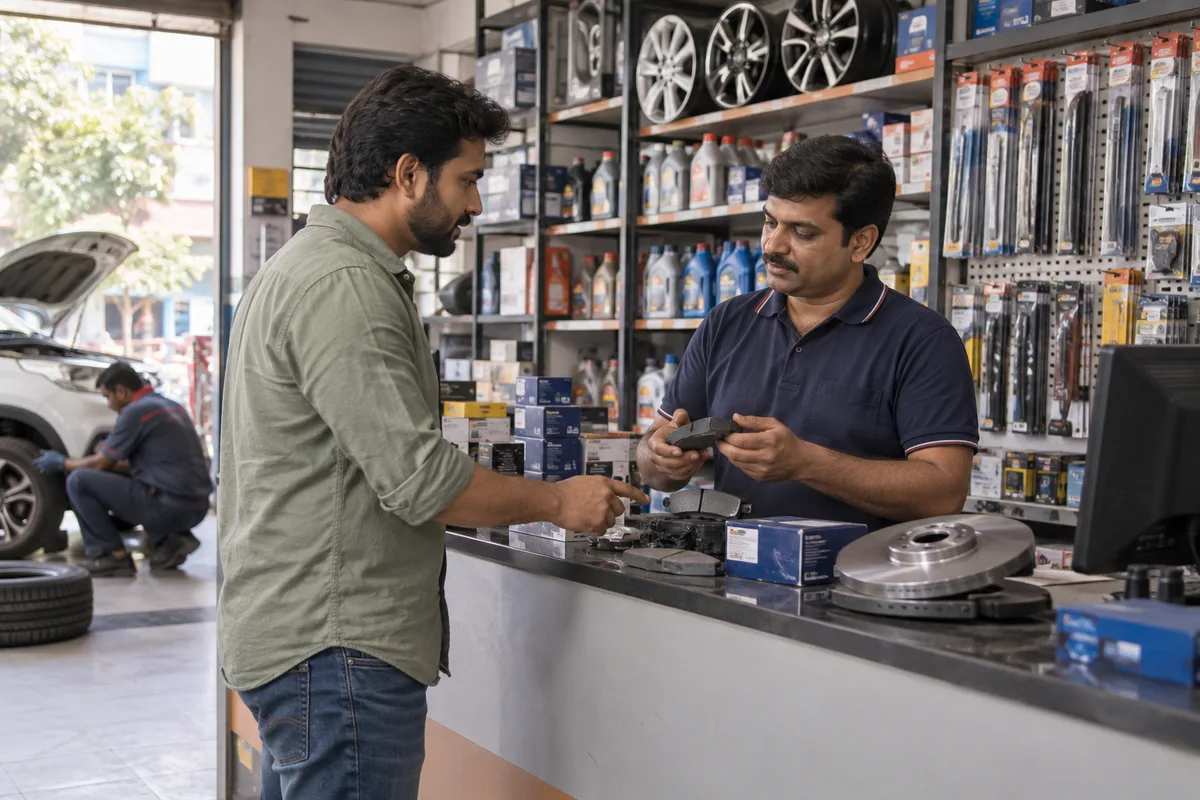
A CRM for an auto parts dealer is a single record of each garage, fleet and walk-in buyer, with what they bought, what they owe and when you last spoke. GullySales sets up a CRM that fits a counter business, using tools your staff will open every day.
Scope, fee, reporting and term are agreed in writing after we have read your brief and spoken to you.
What CRM means
A CRM is the record where every enquiry, call and quote is kept against a customer, replacing separate notebooks, spreadsheets and memory. GullySales sets up or cleans an existing CRM and reports from it by enquiry outcome rather than by activity logged.
Also for auto parts and accessories dealers
- Lead generation for auto parts and accessories dealers
- Follow-up systems for auto parts dealers
- SEO for auto parts and accessories dealers
- PPC ads for auto parts and accessories dealers
- Digital marketing for auto parts and accessories dealers
- Reputation management for auto parts and accessories dealers
- Branding and identity for auto parts and accessories dealers
- Social media marketing for auto parts and accessories dealers
Sales and marketing for auto parts and accessories dealers, the overview.
Last updated 5 Oct 2026.
For auto parts and accessories dealers
Where it usually goes wrong, and what we would do.
“The best accounts live in the owner's head”
Ask who the ten biggest garages are and the owner answers instantly. Ask which of them bought less this season and the answer is a guess. A record of purchases per account shows the slide while a call can still change it.
“Credit without a record becomes a collection problem”
Garages expect credit, and giving it is a business decision. Without each account's limit, dues and last payment in one place, the dealer discovers a late payer only after the next large order has gone out.
“A tyre buyer returns for the next tyre, not the next month”
A car owner who fitted tyres once will need alignment checks, a battery and eventually new tyres. A record of the vehicle, the fitting date and the brand makes a useful reminder possible.
“Walk-in sales leave no trace”
Cash buyers at the counter pay and leave. A habit of noting a name, a number and a vehicle for each fitting turns a one-off sale into someone you can contact for the next service.
What we do
What we deliver for auto parts and accessories dealers.
Every deliverable, what it covers for you, and the result it is there to produce. Nothing here is an extra.
Account register
Every garage, fleet and dealer account with contact person, delivery area, brands bought, credit limit and outstanding amount.
Result: Any staff member can see where an account stands before replying.
Vehicle and fitting record
A simple entry for retail buyers with the vehicle, the tyre or part fitted and the date.
Result: You know who is due for a check and what they bought.
Pipeline for new accounts
A list of garages and fleets you are trying to win, with the stage of each conversation and the next step.
Result: Prospects stop depending on whoever remembers them.
Overdue and slow-account view
A view that lists accounts whose purchases have dropped or whose payments are late.
Result: You see the accounts that need a call this week.
Staff habits and a short guide
A plain routine for who enters what, and when, written so the counter team follows it without extra effort.
Result: The record stays current because it fits the work at the counter.
How the result is measured
- Enquiries logged in the CRM
- Data completeness
- Reports generated from CRM data
Recorded as a baseline before work starts, so every later report has an honest comparison.
Fields worth keeping
Keep these fields for each garage, fleet and tyre buyer, and who fills each.
- Garage name, contact and delivery area
- Filled by the counter on first order. It decides who gets a delivery and lets the owner see which areas the shop reaches.
- Credit limit and outstanding amount
- Set by the owner and updated by the accounts clerk. It stops an order beyond the limit and shows which accounts need a call before the next supply.
- Usual parts and brands bought
- Entered by the counter after each order. It lets the shop offer the same brand again and warn the garage when it is short.
- Vehicle and tyre size for retail buyers
- Filled at the sale. A tyre buyer returns for the next tyre and a note of the size makes the reminder possible.
- Last order date
- Updated from the bill. It shows which garage has gone quiet, so the owner can call before the account moves elsewhere.
- Source of the buyer
- Filled by the counter: walk-in, map search, mechanic referral or WhatsApp. It shows what brings the buyers who return.
Who it is for
This is written for these auto parts and accessories dealers.
- Multi-brand spare parts dealers serving garages
- Authorised parts distributors for a vehicle manufacturer
- Two-wheeler spare parts shops
- Tyre dealers and tyre showrooms for major brands
- Tyre, alignment and wheel care centres
- Car accessories and fitment shops
- Commercial vehicle parts and tyre suppliers
- Battery, lubricant and filter dealers
- Online-first auto parts sellers
Not for
It is not the right fit if.
- Your billing software already holds these fields and nobody will enter them twice.
- The counter takes a rush of walk-in sales and nobody has time to record a name.
- You have not decided who may see credit limits, and the record would circulate more widely than you want.
How it works
How the CRM work runs
The work itself, in order. How an engagement starts, from your brief to a written scope, is set out on our method page.
- 1
Map the sales process
We sit with the people who sell and write down how a deal moves from enquiry to payment, including where it stalls.
- 2
Agree stages, fields and owners
Each stage gets a name your team already uses and a proof that the deal has left it. We agree which fields are required at which stage, and who may change what.
- 3
Build on a copy
Pipeline, fields and views are built on a trial copy where the CRM offers one, or in a separate pipeline where the plan allows. Live work stays untouched.
- 4
Connect channels, then switch on automations
Channels are connected first. Each automation is then switched on separately, so a misfiring rule is easy to find.
- 5
Test with real deals
The people who will use the CRM run open deals through it. Gaps are fixed before the whole team switches over.
- 6
Switch over and trim
Once real use shows which fields stay empty and which stages nobody uses, those are cut and the handover record is updated.
Where this fits
Three pieces of sales work, in this order.
This work sits inside sales management. A target, a review routine and someone who owns the number.
Step 1
Sales audit
Find where deals are being lost and what to fix first.
Start here if you cannot say where orders are lost.
Step 2
Sales process design
One written way to sell, from first enquiry to repeat order.
Start here if every salesperson sells differently.
Step 3 · you are here
Sales management
A target, a review routine and someone who owns the number.
Start here if the team has targets and no routine.
FAQ
Questions owners ask before they call.
Not here? More answers, or ask on WhatsApp.
Do we need special software for a CRM?
Can the CRM connect to our billing software?
Who should be allowed to see credit limits?
Who should be allowed to see credit limits?
How much does it cost?
How long is the contract?
How soon will we see results?
Who will actually do the work?
What do you need from us?
What if we are not happy with the work?
From the blog
Further reading for auto parts and accessories dealers.
 6 min read · 6 Oct 2026How buyers choose a showroom, workshop or parts counterCar, bike, repair and parts buyers send one enquiry to several sellers and pick the first clear answer. This post lists what each buyer checks, and where a dealer or workshop quietly loses them.
- 6 min read · 1 Oct 2026Serving the workshop trade and the walk-in buyer at the same parts counterHow an auto parts shop can run two lanes at one counter: an account lane for garages that buy on speed and credit, and a retail lane for walk-in owners who buy on price and advice.
 8 min read · 21 Sept 2026How to advertise to dealersA dealer is buying an investment, not a product. The advertisement has to answer margin, credit, stock rotation and territory, or the enquiries will all be from people with no shop.
More for auto parts and accessories dealers
Everything else we would do for you.
Closest to this: leads and follow-up
Also for auto parts and accessories dealers
- SEO for auto parts and accessories dealers
- PPC ads for auto parts and accessories dealers
- Digital marketing for auto parts and accessories dealers
- Reputation management for auto parts and accessories dealers
- Branding and identity for auto parts and accessories dealers
- Social media marketing for auto parts and accessories dealers
Or start from the overview: sales and marketing for auto parts and accessories dealers.
Your next practical step
Tell us what you are trying to grow, and we will read it before we call.
Eight short steps, mostly taps. Skip anything you would rather answer on the call.