Auto repair shops · Content marketing
Answer the strange noise question before the driver even picks up the phone.
Content marketing for an auto repair shop means short pages and posts aimed at a driver searching before they call. The questions are real ones, such as why a car is vibrating at high speed or when to change brake pads. GullySales writes this from the questions your mechanics hear most often.
Scope, fee, reporting and term are agreed in writing after we have read your brief and spoken to you.

What content marketing means
Content marketing is writing articles, guides and pages that answer the questions buyers search before they are ready to enquire. This makes your business visible and trusted before the first call. GullySales plans this content from the first conversation onward, choosing topics that match real search demand rather than guesses.
Last updated 5 Oct 2026.
For auto repair shops
Where it usually goes wrong, and what we would do.
“Symptom-based content earns trust before the visit”
A driver searching why their car pulls to one side finds your page first. They arrive already trusting that you understand the problem, rather than treating the visit as a cold enquiry.
“Service-interval content brings in the customer before a breakdown”
A clear page on when to service brakes, coolant or an AC system reaches a customer proactively, before the more stressful and costlier breakdown scenario happens.
“Local content beats generic automotive advice”
A page mentioning your specific locality and the roads or traffic conditions around it ranks better and feels more relevant than a copied general car-care article.
What we do
What we deliver for auto repair shops.
Every deliverable, what it covers for you, and the result it is there to produce. Nothing here is an extra.
Symptom-based page set
Pages answering real symptom questions, such as why a car pulls to one side or vibrates at speed, sourced from your mechanics.
Result: A worried driver finds your page before they pick up the phone.
Service-interval reminder content
Pages explaining when to service brakes, coolant or an AC system, aimed at a driver before a breakdown happens.
Result: A driver books proactively instead of waiting for a costlier failure.
Mechanic question log
A running record of the questions your mechanics hear most often, used as the source for new content.
Result: Content answers what customers are actually asking at the counter.
Locality-specific service pages
Pages naming your specific area and its roads or traffic conditions, rather than generic car-care advice.
Result: A nearby driver recognises the page as written for their own area.
Approval routine before publishing
A short review step where your team checks each piece for accuracy before it goes live.
Result: Content stays technically accurate without slowing publishing down.
How the result is measured
- Pages published
- Organic traffic
- Enquiries from content pages
Recorded as a baseline before work starts, so every later report has an honest comparison.
Questions buyers ask first
The questions a driver asks before handing over the keys, and the piece that answers each.
- Will the estimate change once you open the car?
- Describe how you quote, that extra work needs the owner's approval first, and that replaced parts are shown to the owner. Put the process on one page and a card at the counter.
- Do I have to use the company workshop to keep the warranty?
- Explain what to keep, such as invoices and service book entries, and tell the owner to check their own warranty booklet. Do not give a legal opinion.
- Original, OES or aftermarket: which part is going in my car?
- A plain page on the three part types, which you use for which job, and why the price differs. Offer the owner the choice and note it on the job card.
- Can you handle my insurance claim?
- List what the owner brings: policy, registration certificate, driving licence, claim number. Say who contacts the insurer and surveyor, and what cashless repair does and does not cover.
- What happens from drop-off to handover?
- Show the steps: inspection, estimate, approval, repair, test drive, handover. Say what slows a job, such as a part on order, so the owner is not surprised.
- Which garage near me can I trust with my car?
- A locality page with bay photographs, the mechanics by name, brands serviced and timings. People choose the garage they can picture.
Who it is for
This is written for these auto repair shops.
- Multi-brand service garages
- Authorised brand service centres
- Denting and painting specialists
- Two-wheeler service centres
- Fleet and commercial vehicle service providers
- Insurance-claim repair specialists
Not for
It is not the right fit if.
- No mechanic is willing to explain a fault to a camera or a writer, so an article about a noise would be generic and could be found anywhere.
- The garage cannot price a job from a description, so a piece that invites a driver to ask would promise a quote it cannot give.
How it works
How the content marketing work runs
The work itself, in order. How an engagement starts, from your brief to a written scope, is set out on our method page.
- 1
Agree the plan
Topics and formats come from the content strategy and the buyer-question list. The volume goes into the written scope, agreed with you, not into a number quoted on a call.
- 2
Brief and draft
Each piece starts from its one-page brief and a short conversation with your technical person, recorded if they allow it, so the draft uses their words.
- 3
Check the facts
Your person marks the draft for accuracy and we correct it. Regulated subjects also go to your own adviser, because restrictions on claims apply to articles as much as to advertisements.
- 4
Publish and distribute
The piece goes live on your site, then out through the channels where your buyers already are.
- 5
Read the enquiries and adjust
Results are reported against the baseline recorded before work began. Topics that brought readers but no enquiries are changed or dropped. How often you are reported to is agreed in writing.
Where this fits
Three pieces of sales work, in this order.
This work sits inside sales process design, at stage 0, foundation. The audit comes before it, and sales management keeps it running.
Step 1
Sales audit
Find where deals are being lost and what to fix first.
Start here if you cannot say where orders are lost.
Step 2 · you are here
Sales process design
One written way to sell, from first enquiry to repeat order.
Start here if every salesperson sells differently.
Step 3
Sales management
A target, a review routine and someone who owns the number.
Start here if the team has targets and no routine.
FAQ
Questions owners ask before they call.
Not here? More answers, or ask on WhatsApp.
Who writes this?
How much content is enough?
Should we put videos of repairs online?
Can the mechanics' answers become replies on WhatsApp?
How long is the contract?
How soon will we see results?
Who will actually do the work?
What do you need from us?
What if we are not happy with the work?
From the blog
Further reading for auto repair shops.
 5 min read · 11 Oct 2026Using due dates to bring vehicle owners back: service, insurance and pollution checksHow a workshop or dealer can record each vehicle's next service, insurance and pollution-check dates, then call owners with a real reason instead of a generic offer.
 6 min read · 6 Oct 2026How buyers choose a showroom, workshop or parts counterCar, bike, repair and parts buyers send one enquiry to several sellers and pick the first clear answer. This post lists what each buyer checks, and where a dealer or workshop quietly loses them.
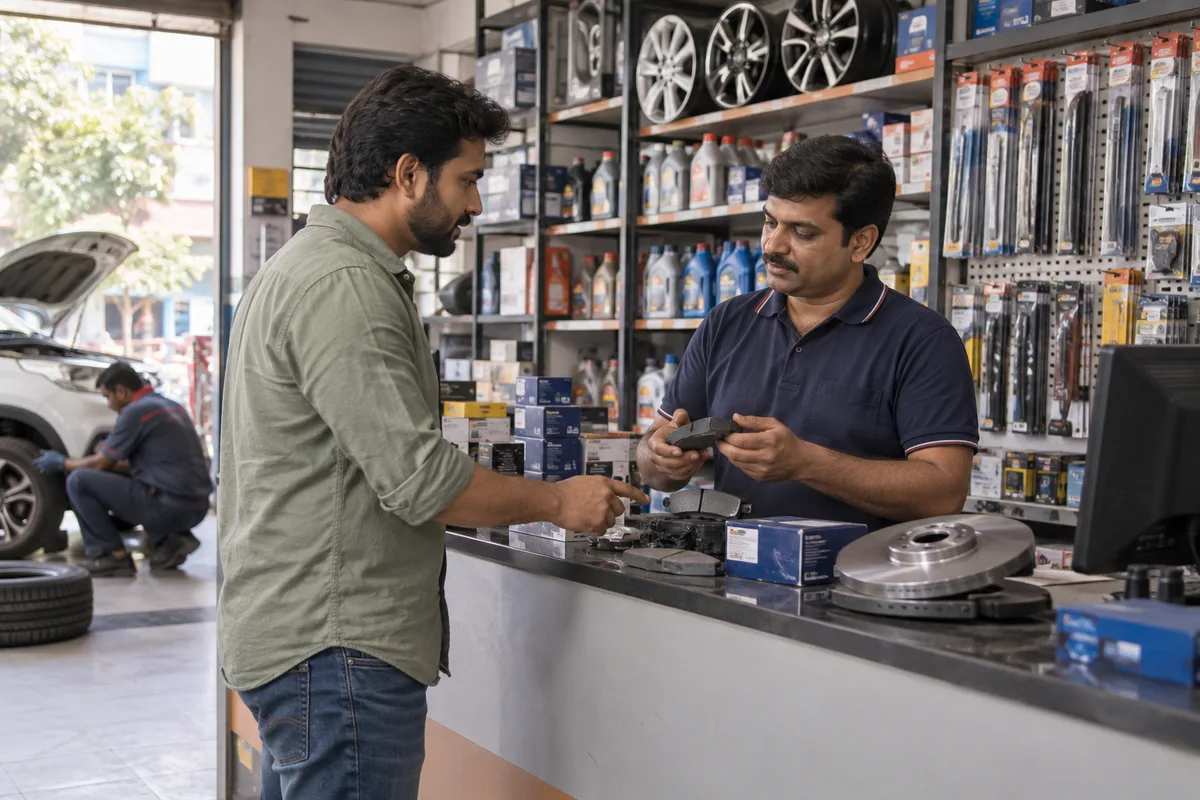 6 min read · 1 Oct 2026Serving the workshop trade and the walk-in buyer at the same parts counterHow an auto parts shop can run two lanes at one counter: an account lane for garages that buy on speed and credit, and a retail lane for walk-in owners who buy on price and advice.
More for auto repair shops
Everything else we would do for you.
Closest to this: content and social
Also for auto repair shops
Or start from the overview: sales and marketing for auto repair shops.
Your next practical step
Tell us what you are trying to grow, and we will read it before we call.
Eight short steps, mostly taps. Skip anything you would rather answer on the call.