Auto repair shops · Follow up systems
Chase the brake job the customer told you to leave until next time.
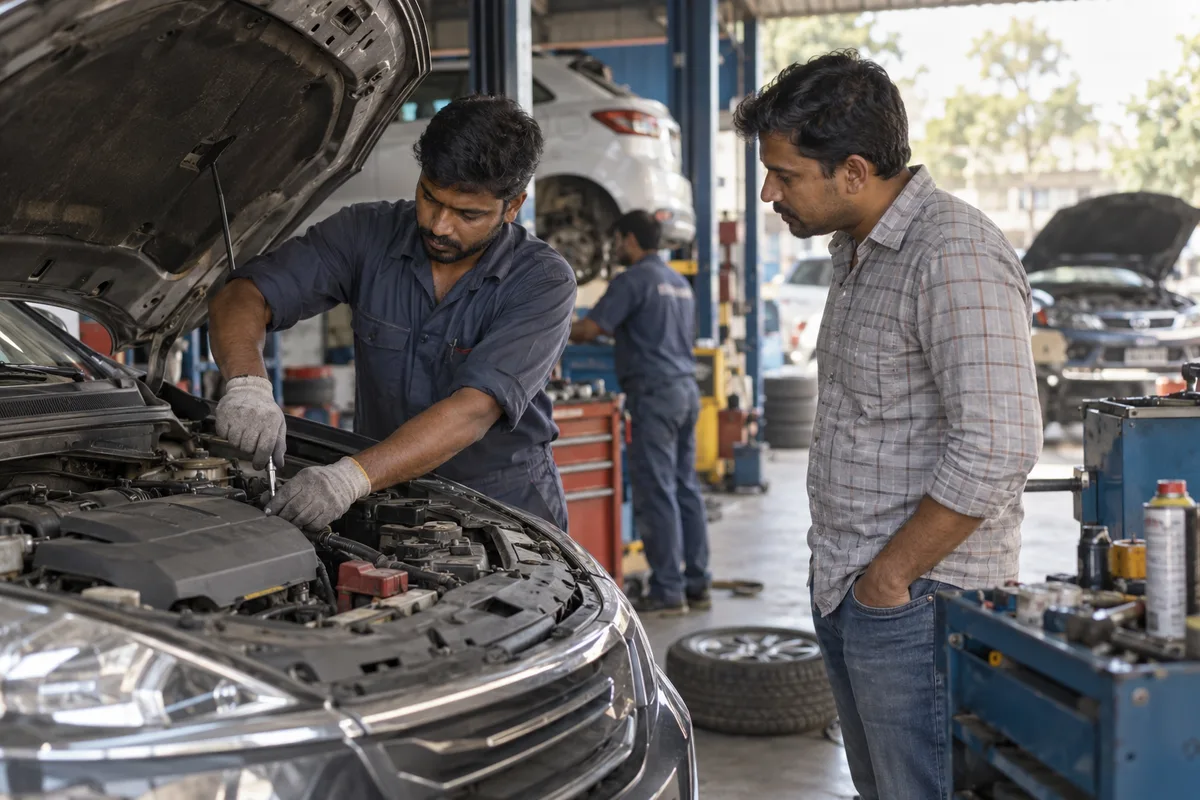
Follow-up for a garage is what happens to the work a customer declined, the call nobody answered and the estimate waiting on approval while the car sits in a bay. GullySales builds the callback list, the wording for the approval message and the written rule that says when to stop.
Scope, fee, reporting and term are agreed in writing after we have read your brief and spoken to you.
What follow up systems means
A follow-up system is the set routine for calling, messaging or emailing an enquiry more than once, since most buyers do not decide on the first conversation. GullySales sets the number and timing of follow-ups so an undecided buyer keeps hearing from you until they decide either way.
Last updated 5 Oct 2026.
For auto repair shops
Where it usually goes wrong, and what we would do.
“The job card already tells you what to chase”
Every job card carries work the driver put off: the worn brake pads, the suspension bush, the AC service left for summer. Nobody reads that list back out three months later.
“Missed calls come in exactly when the workshop is busiest”
A driver who rings at two in the afternoon and gets no answer rings the next garage on the Maps list. Pull the unanswered numbers off the phone before you lock up.
“A car waiting on approval is a bay you cannot use”
The mechanic finds a cracked mounting and the owner does not pick up. Send the photograph with the price and the answer comes back in a line.
What we do
What we deliver for auto repair shops.
Every deliverable, what it covers for you, and the result it is there to produce. Nothing here is an extra.
A declined-work list pulled off the job cards
The work a driver put off, written at the counter with the date and the odometer reading, ready to be called when it actually comes due.
Result: The brake job you were told to leave becomes a booking.
Missed calls worked as a list, not from memory
Unanswered numbers taken off the workshop phone once the last car is out, with the time each call came in, so somebody rings back before the driver books elsewhere.
Result: A call you could not take still turns into a job.
Approval wording with the photograph attached
What to send when extra work is found mid-job: the picture of the part, the price, and what happens if it is left alone.
Result: The bay is free by evening instead of held overnight.
A second contact on a denting and painting quote
The quote restated in writing with what the price covers, whether the panel is being replaced or beaten out, and the paint warranty.
Result: Your quote is the one the driver can compare properly.
Insurance claim chasing, kept separate from retail
A different routine for a job waiting on a surveyor visit, a claim number or a document from the customer, because none of that is chased like a quote.
Result: A claim job stops sitting in the yard waiting on nobody in particular.
A written stop rule
How many attempts, on which channel, and the note that closes an enquiry with a reason so the same number is not rung for a year.
Result: Your team stops guessing who is still worth calling.
How the result is measured
- Follow-up completion rate
- Average number of follow-ups before close
- Enquiries closed after repeat follow-up
Recorded as a baseline before work starts, so every later report has an honest comparison.
Follow-up routine for this trade
Here is what the garage does next at each point where work stalls.
- Estimate sent, no approval
- The service advisor sends the line items again with the photograph of the worn part beside each one. Ask which items the customer wants done first, and record the answer on the job card.
- Declined brake pads or tyres
- Note the reason given on the job card at the counter. Call after the car has covered some distance with a plain safety reminder, and do not repeat the price pitch.
- Customer says they will check with their usual mechanic
- Offer to hold the written estimate and the part prices open, and ask when they plan to decide. Put that date on the callback list.
- Car delivered, customer not heard from
- Ring the service advisor's own customer once the car has been driven, and ask whether anything feels different. Write down any complaint before it turns into a one-star review.
- Insurance claim waiting on surveyor
- Tell the owner who at the insurer holds the file and what is pending. Record the claim reference and the next date you will check, separate from the retail callbacks.
- Service due date approaching
- Message the owner by WhatsApp with the vehicle number and the service due date from your job card records. Ask whether a pickup slot would help.
Who it is for
This is written for these auto repair shops.
- Multi-brand service garages
- Authorised brand service centres
- Denting and painting specialists
- Two-wheeler service centres
- Fleet and commercial vehicle service providers
- Insurance-claim repair specialists
Not for
It is not the right fit if.
- Quotes are given on the phone and never written down, so a follow-up would have no figure to refer to.
- The garage has no one who will make the call or send the message, so a system would remain a sheet that no one opens.
How it works
How the follow up systems work runs
The work itself, in order. How an engagement starts, from your brief to a written scope, is set out on our method page.
- 1
Measure today's reply time
From your recent enquiries, we set the time each arrived against its first reply, using the call log, chats, form entries and portal panel. We also count the follow-ups each one got.
- 2
Agree targets and the sequence
We set reply targets and the follow-up sequence with your team, based on its real hours and workload.
- 3
Write the templates and first-call questions
The first reply, the quote follow-up and the last attempt are written in your voice and loaded as quick replies. The first-call questions are agreed with your best salesperson.
- 4
Set ownership, tasks and alerts
Named owners, cover for leave and CRM or sheet tasks go live. App alerts, such as IndiaMART's, are switched on for the right phones.
- 5
Track and adjust
Reply time and follow-up completion are reported against the baseline, and the routine is changed where it is not kept. How often you are reported to is agreed in writing.
Where this fits
Three pieces of sales work, in this order.
This work sits inside sales process design, at stage 2, qualification. The audit comes before it, and sales management keeps it running.
Step 1
Sales audit
Find where deals are being lost and what to fix first.
Start here if you cannot say where orders are lost.
Step 2 · you are here
Sales process design
One written way to sell, from first enquiry to repeat order.
Start here if every salesperson sells differently.
Step 3
Sales management
A target, a review routine and someone who owns the number.
Start here if the team has targets and no routine.
FAQ
Questions owners ask before they call.
Not here? More answers, or ask on WhatsApp.
Who actually makes these calls in a small garage?
Will a callback about declined work feel pushy?
What do we say when the customer refuses the extra work?
Should the repeat contact go on WhatsApp or as a call?
How long is the contract?
How soon will we see results?
Who will actually do the work?
What do you need from us?
What if we are not happy with the work?
From the blog
Further reading for auto repair shops.
 6 min read · 6 Oct 2026How buyers choose a showroom, workshop or parts counterCar, bike, repair and parts buyers send one enquiry to several sellers and pick the first clear answer. This post lists what each buyer checks, and where a dealer or workshop quietly loses them.
 5 min read · 11 Oct 2026Using due dates to bring vehicle owners back: service, insurance and pollution checksHow a workshop or dealer can record each vehicle's next service, insurance and pollution-check dates, then call owners with a real reason instead of a generic offer.
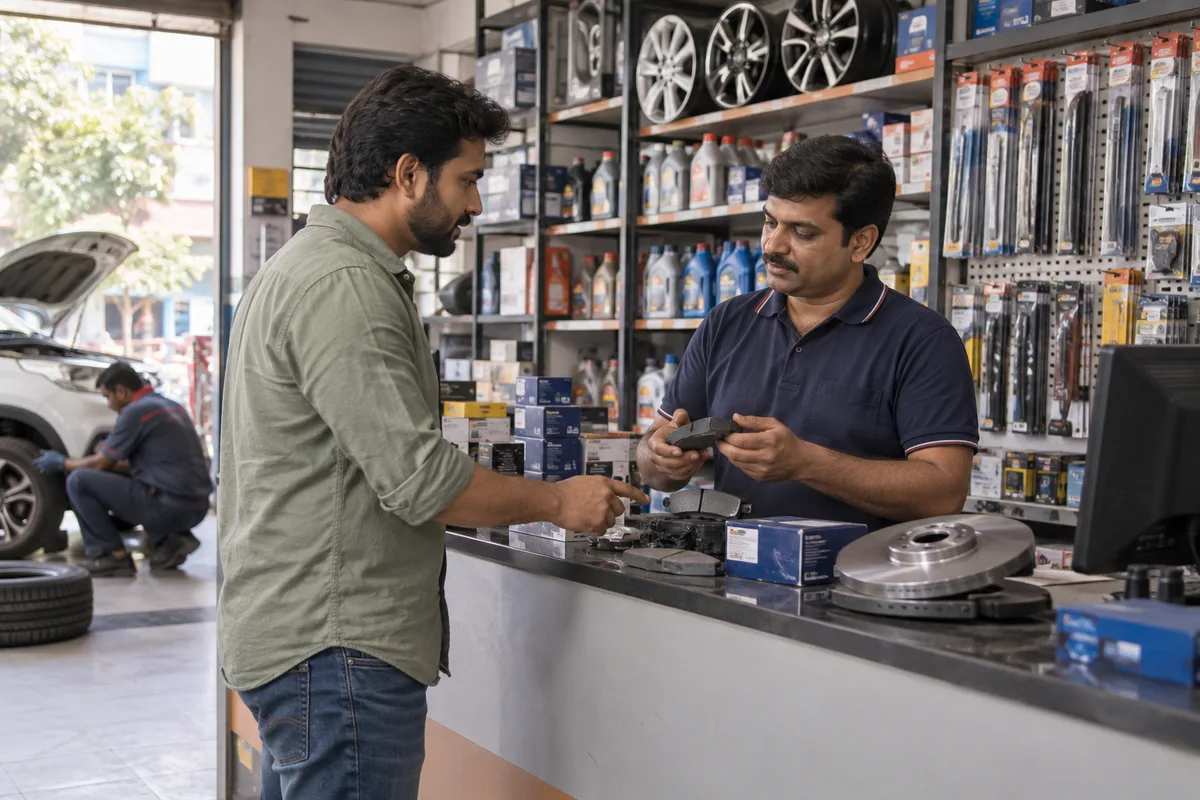 6 min read · 1 Oct 2026Serving the workshop trade and the walk-in buyer at the same parts counterHow an auto parts shop can run two lanes at one counter: an account lane for garages that buy on speed and credit, and a retail lane for walk-in owners who buy on price and advice.
More for auto repair shops
Everything else we would do for you.
Closest to this: leads and follow-up
Also for auto repair shops
Or start from the overview: sales and marketing for auto repair shops.
Your next practical step
Tell us what you are trying to grow, and we will read it before we call.
Eight short steps, mostly taps. Skip anything you would rather answer on the call.