Auto repair shops · Review generation
Ask for the review at the key handover, not by message the next day.
Review generation for a garage is asking the right customer to write one at the counter, while the car is clean and the problem is gone. It is also what you say in public to the driver who writes that the bill came in over the estimate. GullySales sets the ask, the wording and the reply routine.
Scope, fee, reporting and term are agreed in writing after we have read your brief and spoken to you.
What review generation means
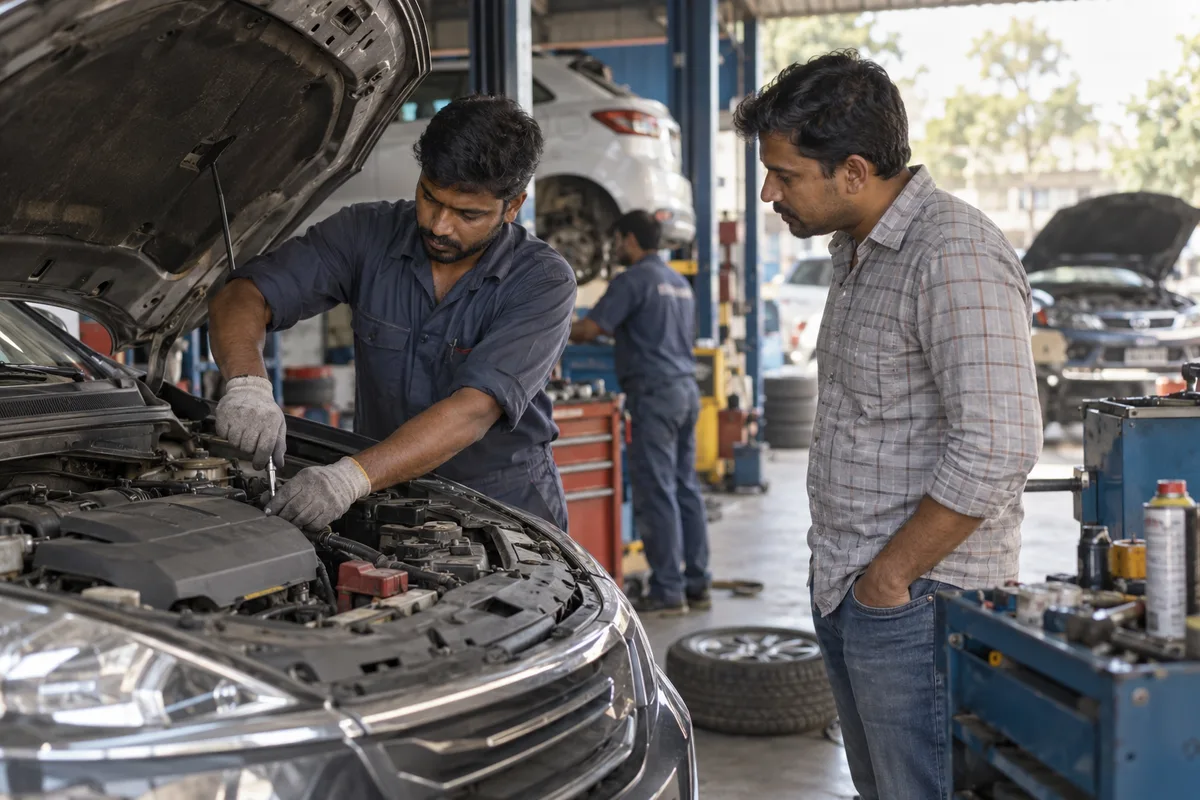
Review generation is the routine of asking satisfied customers to leave a Google or platform review at the moment they are happiest, rather than hoping they remember later. GullySales builds the request into your existing follow-up steps and tracks how many turn into a review.
Last updated 5 Oct 2026.
For auto repair shops
Where it usually goes wrong, and what we would do.
“The customer to ask is not the one who paid the most”
Ask the driver whose bill came in under the estimate, or whose rattle was found on the first attempt. Somebody who has just paid for a gearbox is thinking about the money.
“A review that names the car and the repair does real work”
Clutch replacement on a Swift, back the same day, beats good service and honest people. A driver searching for that exact repair reads it and rings you.
“Nearly every bad review here is about the bill or the delay”
Reply with the job card: what was quoted, what was found, what it came to. Never argue about part prices in public, and offer to look at the car again.
What we do
What we deliver for auto repair shops.
Every deliverable, what it covers for you, and the result it is there to produce. Nothing here is an extra.
The handover ask, and who makes it
A short spoken request from whoever hands back the key, with the link on a printed card or sent while the customer is still standing at the counter.
Result: The ask happens every day instead of when somebody remembers.
Wording that gets the repair named
A prompt asking the customer to say what was done and to which vehicle, since a review naming the job is what a searching driver stops on.
Result: Reviews start mentioning clutch, AC and denting work by name.
A rule for who not to ask
The jobs to skip: a bill that went over the estimate, a repair that came back a second time, a claim that took longer than you said it would.
Result: You stop collecting one-star reviews by asking for them.
Replies to billing and delay complaints
Factual answers built from the job card, with an offer to re-inspect and a line that moves the detail off the public page and onto a phone call.
Result: A reader sees a garage that answers rather than one that argues.
Review counts read by service adviser
Who asked, how many were written, and which vehicles and repairs they mention, read against the baseline recorded before the work started.
Result: You can see which adviser has quietly stopped asking.
How the result is measured
- Reviews received
- Average rating
- Response rate to requests
Recorded as a baseline before work starts, so every later report has an honest comparison.
Asking for reviews the right way
Ask at the counter when the keys change hands and the bill matches the estimate the customer approved.
- Keys handed back at the counter
- Ask when the customer collects the keys, after the adviser has gone through the job card and the final bill matches the estimate they approved.
- Service adviser asks, mechanic does not
- The adviser who took the car in and explained the work asks. A mechanic busy under another car, or an owner standing over the customer, reads as pressure.
- QR beside the payment desk
- Print the Google review code next to the card machine and on the tag that travels with the key, so the customer can scan it while the receipt prints.
- Make, model and repair named
- Suggest the customer write the car and what was fixed, such as a clutch plate on a Swift or an AC gas refill. A driver with the same car trusts that detail.
- The disputed job is left alone
- Do not ask a customer who argued over an extra part, an insurer's approval or a late delivery. Settle that first and reply to any public complaint with the facts.
- Fleet and two-wheeler accounts
- A fleet manager gives a signed reference letter more readily than a star rating. Ask walk-in two-wheeler customers for the Google review and the fleet account for a line.
Who it is for
This is written for these auto repair shops.
- Multi-brand service garages
- Authorised brand service centres
- Denting and painting specialists
- Two-wheeler service centres
- Fleet and commercial vehicle service providers
- Insurance-claim repair specialists
Not for
It is not the right fit if.
- Cars come back for a second visit on the same fault, so asking at handover would collect complaints in public.
- The garage has no Google listing a driver can reach from a link, so a request for a review would send them nowhere.
How it works
How the review generation work runs
The work itself, in order. How an engagement starts, from your brief to a written scope, is set out on our method page.
- 1
Find the moment to ask
We walk through one customer's visit with you and pick the point where the job is done and the customer is still in front of you or holding the phone.
- 2
Read your current reviews
We read every review you have, count how many were answered, and note what customers praise in their own words. We also check that your name, address and phone on Google match your signboard.
- 3
Set up the ask
Link, QR code, message wording and a short briefing for the team. We write down what staff must never do: offer a discount, choose who to ask, or post a review themselves.
- 4
Answer every review
Each incoming review is answered by the routine set down in writing. A complaint is answered by the person who can fix it, with your approval where you want it.
- 5
Count and adjust
We count how many customers were asked and how many reviewed. If few reply, we move the moment or the person asking before touching the wording.
Where this fits
Three pieces of sales work, in this order.
This work sits inside sales process design, at stage 7, after the sale. The audit comes before it, and sales management keeps it running.
Step 1
Sales audit
Find where deals are being lost and what to fix first.
Start here if you cannot say where orders are lost.
Step 2 · you are here
Sales process design
One written way to sell, from first enquiry to repeat order.
Start here if every salesperson sells differently.
Step 3
Sales management
A target, a review routine and someone who owns the number.
Start here if the team has targets and no routine.
FAQ
Questions owners ask before they call.
Not here? More answers, or ask on WhatsApp.
Can we offer a discount for a review?
We do honest work and still have a handful of reviews. Why?
Should we message the review link after the car leaves instead of asking at the counter?
A customer said no when we asked. Do we ask again at the next service?
How much does it cost?
How long is the contract?
How soon will we see results?
Who will actually do the work?
What do you need from us?
What if we are not happy with the work?
From the blog
Further reading for auto repair shops.
 6 min read · 6 Oct 2026How buyers choose a showroom, workshop or parts counterCar, bike, repair and parts buyers send one enquiry to several sellers and pick the first clear answer. This post lists what each buyer checks, and where a dealer or workshop quietly loses them.
 6 min read · 2 Sept 2025Local SEO checklist for businesses in IndiaA practical checklist for the map result: profile completeness, Indian address formats, reviews and consistent details everywhere you are listed.
 5 min read · 11 Oct 2026Using due dates to bring vehicle owners back: service, insurance and pollution checksHow a workshop or dealer can record each vehicle's next service, insurance and pollution-check dates, then call owners with a real reason instead of a generic offer.
More for auto repair shops
Everything else we would do for you.
Closest to this: reputation
Also for auto repair shops
Or start from the overview: sales and marketing for auto repair shops.
Your next practical step
Tell us what you are trying to grow, and we will read it before we call.
Eight short steps, mostly taps. Skip anything you would rather answer on the call.