Auto repair shops · Website
Let a driver request a quote in two taps, not a phone call they might not make.
Website design for an auto repair shop means a simple, fast, mobile-first site listing services and prices where you are comfortable stating them. It also needs an easy way to request a quote or book a slot. GullySales builds this so an enquiry does not depend entirely on a phone call.
Scope, fee, reporting and term are agreed in writing after we have read your brief and spoken to you.
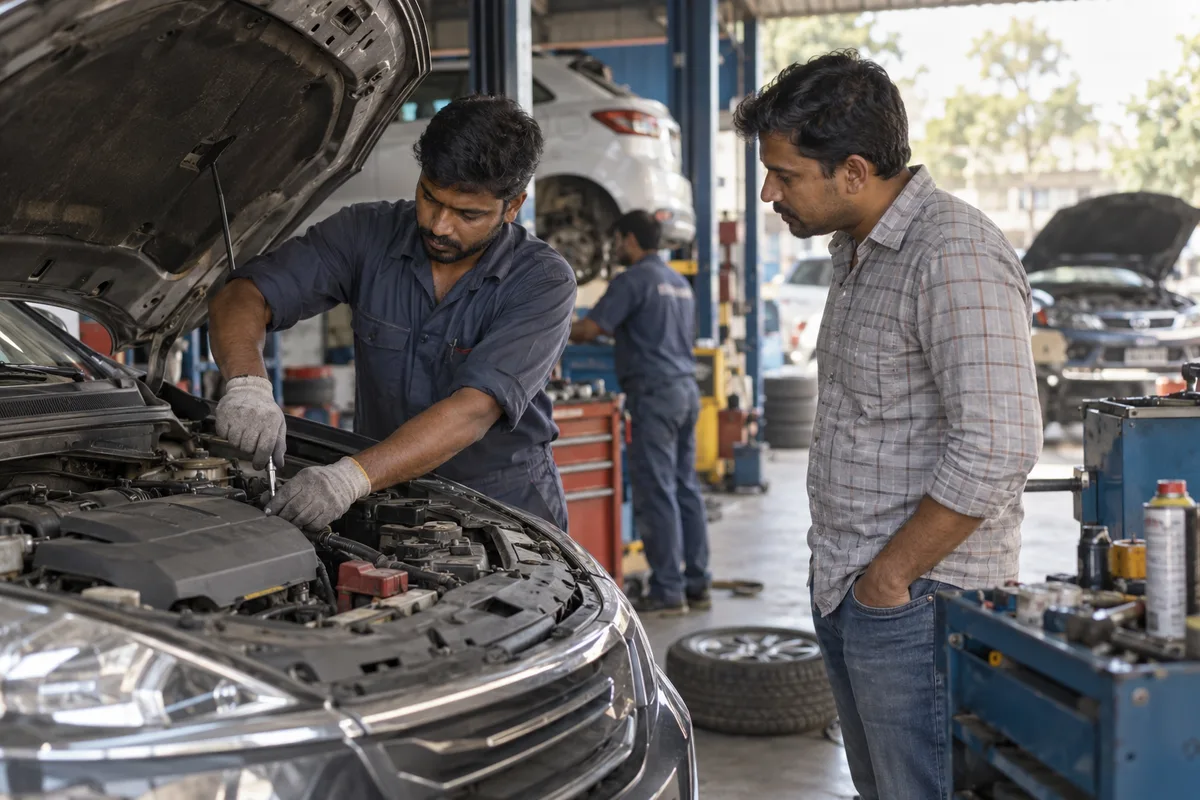
What website means
A website is the page a customer lands on after searching, clicking an advert or scanning a code, and it decides whether they call or leave. GullySales builds and maintains sites that load quickly, explain the offer plainly and make the enquiry form or phone number easy to find.
Last updated 5 Oct 2026.
For auto repair shops
Where it usually goes wrong, and what we would do.
“A quote request form beats a plain contact page”
A short form asking for the vehicle and the issue lets you respond with a relevant quote quickly, instead of a vague enquiry that needs a call to clarify.
“Mobile speed matters because most searches happen roadside”
A driver checking garages from their phone, sometimes at the roadside, will not wait for a slow page to load and will call the next result instead.
“A services and pricing page reduces unnecessary calls”
Listing common services with a typical price range answers a question many customers would otherwise call to ask, saving your counter staff time.
What we do
What we deliver for auto repair shops.
Every deliverable, what it covers for you, and the result it is there to produce. Nothing here is an extra.
Quote request form by vehicle and issue
A short form asking for the vehicle and the issue, letting you respond with a relevant quote quickly.
Result: A vague enquiry becomes a quote you can send without a call first.
Services and typical pricing page
A page listing common services with a typical price range, for the prices you are comfortable stating.
Result: Fewer calls come in just to ask a question the page already answers.
Mobile-speed fix for roadside browsing
Site speed and layout fixed for a driver checking garages from their phone, sometimes at the roadside.
Result: A driver waits for your page to load instead of trying the next result.
Self-editable services and hours
A website built so you can update services, offers or hours yourself without needing a developer each time.
Result: The site stays current without depending on outside help for small changes.
Booking or callback request option
A direct way to request a callback or a slot, alongside your phone number and WhatsApp.
Result: A driver who would not call gets a way to still reach you.
How the result is measured
- Page load time
- Bounce rate
- Enquiries from the website
Recorded as a baseline before work starts, so every later report has an honest comparison.
What the page must show
What a garage's website must show before a driver brings the car in.
- The makes and models you service
- List the makes you work on by name, and say if you handle diesel, CNG or hybrid. A line saying all brands makes the owner of a particular car call to check.
- Typical prices for the jobs people ask about
- Show a range for a basic service, brake pads, clutch work and AC gas by car class, and say what changes them. Say plainly that the written estimate comes after inspection.
- Which parts you use and what is guaranteed
- Say whether you fit genuine, OEM-equivalent or aftermarket parts, and let the customer choose. State the warranty on parts and on labour as you actually give it.
- Cashless insurance and claim handling
- Name the insurers you handle cashless claims for and list the papers a customer must bring. An accident customer is looking for exactly this one line.
- Pickup, drop and breakdown help
- Say if you offer pickup and drop, towing or a roadside call-out, the area covered and the number to ring. A driver stuck on the road reads this first.
- The workshop, the bays and the staff
- Photograph the covered bays, the lift, the scanner and the people who will handle the car. Show a sample job card so a first-time customer knows what they will be handed.
Who it is for
This is written for these auto repair shops.
- Multi-brand service garages
- Authorised brand service centres
- Denting and painting specialists
- Two-wheeler service centres
- Fleet and commercial vehicle service providers
- Insurance-claim repair specialists
Not for
It is not the right fit if.
- The garage has no photographs of its bay or staff and no clear list of services, so a site would repeat the Business Profile.
- No one will reply to a quote request the same day, so a form on the site would collect requests that go cold.
How it works
How the website work runs
The work itself, in order. How an engagement starts, from your brief to a written scope, is set out on our method page.
- 1
Confirm structure and content
We agree the page list, what each page must answer, and who supplies the text and photographs, before any design starts.
- 2
Design the templates
The home page, a service page, a location page and the enquiry page are designed first, on phone and desktop, and shown to you.
- 3
Build and test
The site is built and checked on real phones and the common browsers. Every form, call button and WhatsApp link is tested end to end.
- 4
Load real content
Actual copy, images and information replace placeholders. Pages are read through once by you, since you spot wrong details we cannot.
- 5
Check before launch
Tracking, page titles, the sitemap and the privacy page are checked on the staging site. If an old site exists, its addresses are mapped so old links still land somewhere.
- 6
Launch and hand over access
The site goes live and we record the domain, hosting, content login and analytics in your name. The first live enquiry is traced to confirm tracking works.
Where this fits
Three pieces of sales work, in this order.
This work sits inside sales process design, at stage 1, prospecting and lead generation. The audit comes before it, and sales management keeps it running.
Step 1
Sales audit
Find where deals are being lost and what to fix first.
Start here if you cannot say where orders are lost.
Step 2 · you are here
Sales process design
One written way to sell, from first enquiry to repeat order.
Start here if every salesperson sells differently.
Step 3
Sales management
A target, a review routine and someone who owns the number.
Start here if the team has targets and no routine.
FAQ
Questions owners ask before they call.
Not here? More answers, or ask on WhatsApp.
Do we need a large website for a single garage?
Can we update it ourselves later?
Parts prices keep changing. Should we still put service prices on the site?
How should the site handle a breakdown call at night?
How long is the contract?
How soon will we see results?
Who will actually do the work?
What do you need from us?
What if we are not happy with the work?
From the blog
Further reading for auto repair shops.
 5 min read · 11 Oct 2026Using due dates to bring vehicle owners back: service, insurance and pollution checksHow a workshop or dealer can record each vehicle's next service, insurance and pollution-check dates, then call owners with a real reason instead of a generic offer.
 6 min read · 6 Oct 2026How buyers choose a showroom, workshop or parts counterCar, bike, repair and parts buyers send one enquiry to several sellers and pick the first clear answer. This post lists what each buyer checks, and where a dealer or workshop quietly loses them.
 6 min read · 1 Oct 2026Serving the workshop trade and the walk-in buyer at the same parts counterHow an auto parts shop can run two lanes at one counter: an account lane for garages that buy on speed and credit, and a retail lane for walk-in owners who buy on price and advice.
More for auto repair shops
Everything else we would do for you.
Closest to this: search and visibility
Also for auto repair shops
Or start from the overview: sales and marketing for auto repair shops.
Your next practical step
Tell us what you are trying to grow, and we will read it before we call.
Eight short steps, mostly taps. Skip anything you would rather answer on the call.