Car dealers · Buyer persona
Write down who signs the cheque and who chooses the car before you plan any campaign.
A buyer persona for a car dealer describes the person or household that walks in for a particular kind of vehicle, what they have already decided and who else shapes the decision. GullySales builds one persona for each buyer type you sell to, from your own enquiry, booking and workshop records.
Scope, fee, reporting and term are agreed in writing after we have read your brief and spoken to you.
What buyer persona means
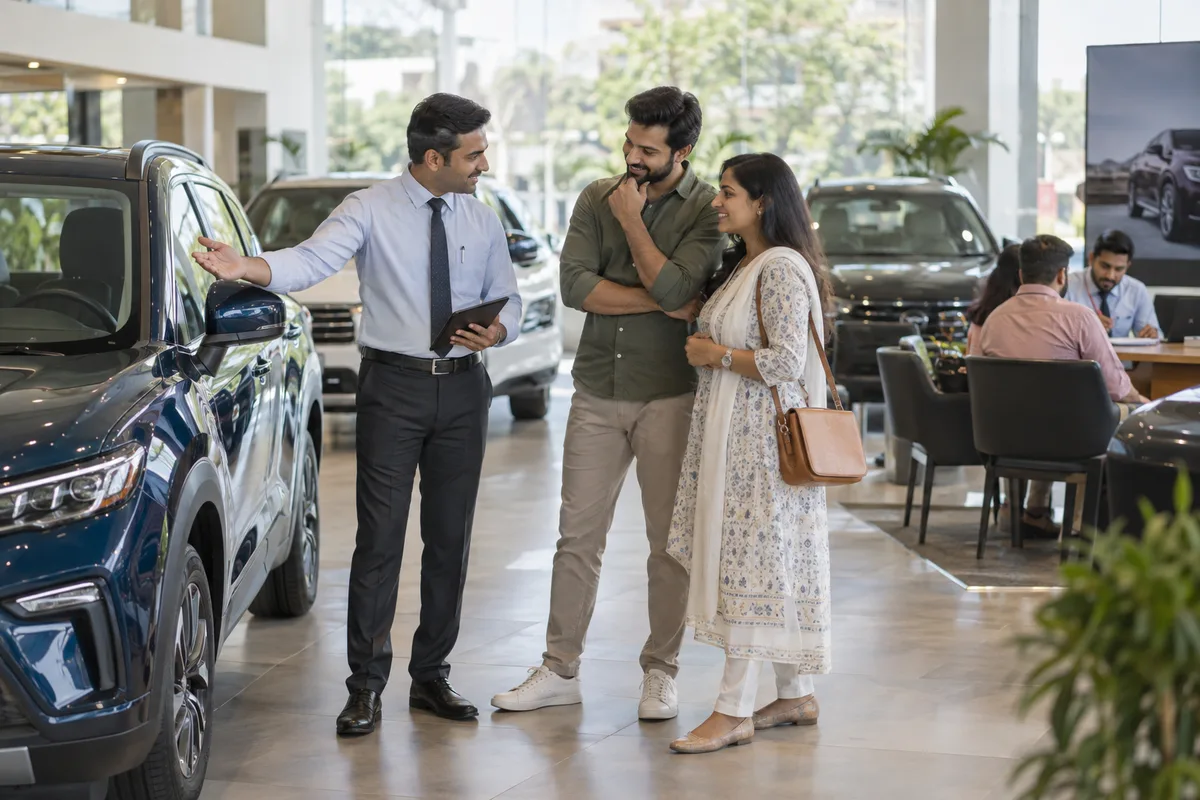
A buyer persona is a plain description of the kind of customer who actually buys from you. It includes what they search, what worries them and who else they ask before deciding. GullySales builds this from real enquiries and past sales rather than a generic template, then uses it to write every page and advert.
Last updated 5 Oct 2026.
For car dealers
Where it usually goes wrong, and what we would do.
“The family decides, and the person who calls is only one voice”
The enquiry comes from the earning member, but the spouse chooses the colour and boot space, and the parents ask about service cost. A salesperson who pitches only to the caller loses the second and third conversations at home.
“The first-time buyer and the upgrader ask different questions”
A first-time buyer wants the monthly instalment, the down payment and whether the model is easy to drive. A buyer replacing a seven-year-old car wants the exchange value first. One script for both answers neither of them.
“The fleet or taxi buyer is buying a business asset”
An owner adding vehicles for a taxi or transport business reads running cost, resale and the dealer's workshop reach. They decide on the numbers and do not care about the showroom lounge, so the pitch and the follow-up differ completely.
“The electric vehicle buyer arrives with a different worry list”
The question is charging at home or in the society, range on the usual route and what happens to the battery later. A dealer who answers only price and colour leaves the real objection standing.
What we do
What we deliver for car dealers.
Every deliverable, what it covers for you, and the result it is there to produce. Nothing here is an extra.
One persona for each buyer you actually sell to
A written profile for the first-time family, the upgrader, the fleet owner and the electric vehicle buyer, drawn from your booking and enquiry records.
Result: Every salesperson can say which persona is in front of them.
A map of who else is in the decision
For each persona, the spouse, parent, employer or finance partner who weighs in, and the question each of them asks.
Result: The follow-up message speaks to the person at home as well as the caller.
The first-call questions for each persona
A short set of questions that find the budget, the model shortlist, the exchange car and the finance route without sounding like a form.
Result: The first call collects what the quote needs.
Objections written down with plain answers
The recurring doubts, such as waiting period, resale, service cost and charging, with an answer the whole team gives the same way.
Result: Two salespeople no longer give a buyer two different answers.
A persona-to-message sheet
Which message, which model photograph and which offer goes to which persona on WhatsApp, ads and the website.
Result: Campaigns name a buyer instead of addressing everybody.
How the result is measured
- Enquiry match to persona
- Conversion rate by persona
- Content aligned to persona
Recorded as a baseline before work starts, so every later report has an honest comparison.
Who is asking
Each person in a car purchase asks something different before the visit.
- First-time buyer with a small budget
- Wants the EMI, the on-road price and the running cost, and does not know what to ask about insurance or registration.
- Upgrader exchanging an older car
- Wants the exchange value stated in writing first, and which variant adds enough to justify the change.
- Spouse or parent who joins the decision
- Asks about safety, boot space, comfort for older family members and how the service centre treats a family.
- Taxi owner or small fleet buyer
- Asks about the vehicle's running cost, finance terms and whether the workshop can take a breakdown at short notice.
- Electric vehicle buyer
- Asks where to charge at home, what the building society will permit and who services the battery.
Who it is for
This is written for these car dealers.
- Authorised new car dealerships for mass-market brands
- Premium and luxury car dealerships
- Electric vehicle dealers and experience centres
- Multi-brand pre-owned car dealers
- Manufacturer-certified used car outlets
- Commercial vehicle and taxi fleet dealers
- Dealer groups with several showrooms and workshops
- Rural and semi-urban dealer outlets
Not for
It is not the right fit if.
- You have no sales record to read, so the personas would describe buyers you imagine, not the ones who purchased.
- You sell one model to one kind of buyer and need no more than a single page of notes.
- You expect a persona sheet to replace the first call, when it only helps the caller ask better questions.
How it works
How the buyer persona work runs
The work itself, in order. How an engagement starts, from your brief to a written scope, is set out on our method page.
- 1
Understand the current view
We start with how your team currently describes the customer, since the gap between belief and reality is the finding itself.
- 2
Audit past enquiries and sales
We look at recent enquiries and closed deals to see who actually bought, not who was assumed to buy.
- 3
Interview customers and staff
Structured conversations with recent buyers, held as talk about the last purchase and not a questionnaire. We ask what happened before they called, who else was involved and what they compared. Customers agree before we contact them, and their answers are reported without names.
- 4
Build the personas
Findings are written into short, usable persona documents rather than a long report.
- 5
Apply to your marketing
We show where each persona should change a page, an ad or a script you already have. The sales team reads the drafts and says which ring true. A persona they do not recognise is rewritten.
Where this fits
Three pieces of sales work, in this order.
This work sits inside sales process design, at stage 0, foundation. The audit comes before it, and sales management keeps it running.
Step 1
Sales audit
Find where deals are being lost and what to fix first.
Start here if you cannot say where orders are lost.
Step 2 · you are here
Sales process design
One written way to sell, from first enquiry to repeat order.
Start here if every salesperson sells differently.
Step 3
Sales management
A target, a review routine and someone who owns the number.
Start here if the team has targets and no routine.
FAQ
Questions owners ask before they call.
Not here? More answers, or ask on WhatsApp.
How many personas should a dealership start with?
Where does the information come from if we have no research budget?
Do personas change by brand or by branch?
How does a showroom learn who really decides a purchase?
How long is the contract?
How soon will we see results?
Who will actually do the work?
What do you need from us?
What if we are not happy with the work?
From the blog
Further reading for car dealers.
 5 min read · 11 Oct 2026Using due dates to bring vehicle owners back: service, insurance and pollution checksHow a workshop or dealer can record each vehicle's next service, insurance and pollution-check dates, then call owners with a real reason instead of a generic offer.
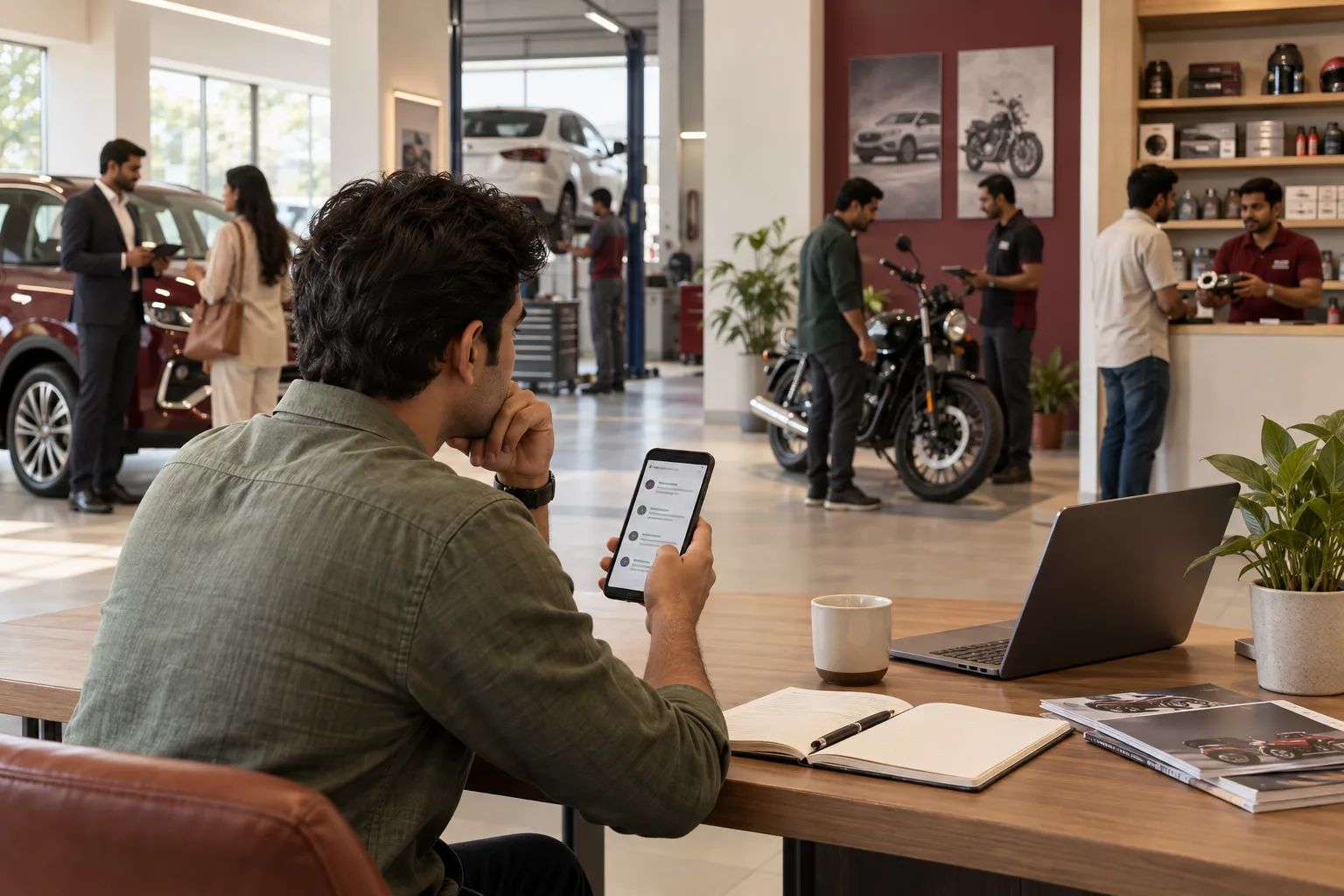 6 min read · 6 Oct 2026How buyers choose a showroom, workshop or parts counterCar, bike, repair and parts buyers send one enquiry to several sellers and pick the first clear answer. This post lists what each buyer checks, and where a dealer or workshop quietly loses them.
 6 min read · 5 Oct 2026Handling price negotiation in a vehicle showroomA give-and-get ladder for showroom price talks: what each salesperson may concede, in what order, and what to ask for in return, so buyers are treated alike and margin is kept.
More for car dealers
Everything else we would do for you.
Closest to this: strategy and research
Also for car dealers
Or start from the overview: sales and marketing for car dealers.
Your next practical step
Tell us what you are trying to grow, and we will read it before we call.
Eight short steps, mostly taps. Skip anything you would rather answer on the call.