Two-wheeler service centres · Content marketing
Write down what you tell riders at the counter, so the next rider can read it first.
Content marketing for a two-wheeler service centre is writing and filming the answers you already give riders at the counter. GullySales picks the questions your advisors hear most, turns each into a short post or video and puts it where riders search.
Scope, fee, reporting and term are agreed in writing after we have read your brief and spoken to you.

What content marketing means
Content marketing is writing articles, guides and pages that answer the questions buyers search before they are ready to enquire. This makes your business visible and trusted before the first call. GullySales plans this content from the first conversation onward, choosing topics that match real search demand rather than guesses.
Also for two-wheeler service centres
- Social media for bike workshops
- SEO for two-wheeler service centres
- Local SEO for two-wheeler service centres
- Reputation management for two-wheeler service centres
- WhatsApp marketing for two-wheeler service centres
- Review generation for two-wheeler service centres
- Customer retention for two-wheeler service centres
- Follow-up systems for two-wheeler service centres
Sales and marketing for two-wheeler service centres, the overview.
Last updated 14 Nov 2026.
For two-wheeler service centres
Where it usually goes wrong, and what we would do.
“The mechanics know the answers and none is written”
The advisor explains why engine oil needs changing, again and again, at the counter. None of it is on the website or the Profile.
“Copied car-maintenance articles do not fit a two-wheeler”
Posts about vehicle servicing ignore chain slack, kick-starts and scooter belts, and a rider can tell the author has never opened a bike.
“The rider's fear is being cheated and no page speaks to it”
Riders worry about the estimate growing and parts being swapped. A page that explains how your estimate and bill work answers the worry before the call.
What we do
What we deliver for two-wheeler service centres.
The work available for this need. We agree the deliverables and responsibilities for your engagement in writing.
A question list from the counter
The questions your advisors hear most, collected from a few days of job cards and calls and ranked by how frequently they come up.
Result: Content starts from real questions, not from guesses.
Short explainers in plain words
One page each on when to change engine oil, why a chain needs adjusting and lubricating, and what a periodic service includes.
Result: A rider gets an answer from you before ringing.
Phone videos at the bay
A mechanic shows a worn brake pad beside a new one, with no customer's face or number plate in the shot.
Result: Riders see what wear looks like.
A 'what is in our service' checklist
The checklist you really follow in a periodic service, published as a page and printed for the counter.
Result: Riders can compare what they get.
A seasonal piece before the monsoon
Brakes, tyres, chain, battery and electrics, written before the rains begin and kept for the next year.
Result: A reason to visit between services.
A report against the baseline
Calls and messages that began on a content page, set beside the baseline recorded before the work began.
Result: You can see which answers bring riders in.
How the result is measured
- Pages published
- Organic traffic
- Enquiries from content pages
Recorded as a baseline before work starts, so every later report has an honest comparison.
Questions buyers ask first
These are the questions riders ask first, and the piece that answers each.
- 'How often should I service my bike?'
- Answer from the service book first, then say what changes with city riding. A short post that tells the rider to confirm the interval in the service book, not rely on a number from you.
- 'Is an independent workshop safe while the bike is under warranty?'
- Say what you do and do not service, and tell the rider to read the terms in the service book. Do not tell the rider to ignore the authorised centre. Let the rider decide with the facts.
- 'Why is my bike giving less mileage?'
- List what a mechanic checks in order: air filter, spark plug, tyre pressure, chain, carburettor or injector. End with when to bring it in. A rider who finds this on a search remembers the workshop.
- 'Why is the bill different from the estimate?'
- Write how your estimate works: what the written estimate covers, what a call before extra work means and what the rider can ask for. This one page speaks to the fear that keeps riders away.
- 'What do you check in a periodic service?'
- Publish the checklist you follow, from engine oil and filter to brakes, chain, lights and tyres. A rider can set it beside the authorised centre's and see what they are getting.
- 'What should I check before the rains?'
- A seasonal piece on brakes, tyres, chain lubrication, battery and electrics, written before the rains begin. Keep it for next year, and change the date and anything that has changed.
Who it is for
This is written for these two-wheeler service centres.
- Independent two-wheeler workshops
- Multi-brand service centres
- Authorised service centres
- Workshops specialising in scooters
- Performance and customisation workshops
- Doorstep and pick-up service providers
- Electric two-wheeler service and battery specialists
- Workshops serving delivery riders and fleet owners
Before you decide
When this may not be the right fit.
- No mechanic or advisor can spare a short call to say what they tell riders, so the posts would be copied from elsewhere
- You plan to copy car-maintenance articles or the manufacturer's text, which neither fits a bike nor belongs to you
Before you decide
Agree the work. Know how to judge it.
Content marketing for two-wheeler service centres: use these checks to prepare, choose the scope, and review what changes.
Bring the right evidence
Bring questions from sales calls and examples of objections that delay a decision. Choose a subject expert who can check the substance, and identify evidence that can be published.
Make the scope clear
Agree the reader, buying question, format, and distribution route for each piece. Set the approval process and distinguish new research from rewriting material you already have.
Check the work in use
Ask a colleague to use the draft in a real buyer conversation. It should answer the question, support its claims, and make the next step clear without requiring a sales pitch to explain it.
Know when to change course
If the same unanswered question appears in several articles, improve the strongest page before commissioning another. More words are not a substitute for missing evidence.
These are discussion points, not a fixed package. GullySales confirms the deliverables, responsibilities, fee, and term in writing after reading your brief and speaking with you.
Before we start
What to have ready before the work starts.
The records, access and decisions this work needs from two-wheeler service centres. Anything missing is noted in the written scope, with who will supply it.
- A notebook at the counter for questions
- A simple notebook where staff write the questions riders ask is enough. It must be kept for a spell, with the question and the bike. Without it, we write from general topics about motorcycles, which any workshop could publish.
- A mechanic willing to be recorded
- One mechanic must be willing to explain jobs aloud on a phone recording. Some people go quiet on camera, and we respect that: audio alone is enough. If no mechanic is willing, pieces are written from your own words and read back by the person who knows the work.
- Your rule on what the workshop will not say
- Tell us the claims you will not make, such as the life of a part or the mileage a service will give. Content that promises more than the workshop can control invites complaints. Without this list, we avoid specific claims altogether, and the pieces stay general.
- Permission for any bike shown
- The owner of a bike filmed or photographed must agree. Please decide how this is asked at the counter and whether a verbal yes is enough. Without a rule, we film only the workshop's own demonstration bike, which limits what can be shown.
How it works
How the content marketing work runs
The work itself, in order. How an engagement starts, from your brief to a written scope, is set out on our method page.
- 1
Collect the questions riders ask at the counter
For a stretch, the counter writes down every question a rider asks, in the rider's words. We read the list with your service advisor and group the questions by topic: noise, mileage, starting trouble, cost. This list is the raw material for everything we write, so no topic is invented in an office.
- 2
Pick the questions the pages should answer
From the list, you choose the questions you want riders to read before they arrive. We prefer the ones that carry fear of being cheated, such as why a bill changed. You also strike anything that needs an expert opinion you cannot give. The remaining questions become a short plan.
- 3
Interview the mechanic who knows the answer
We sit with the mechanic, with a phone recording, and ask them to explain each answer as they would to a rider. We turn the recording into plain text and read it back. You approve every piece, and the mechanic corrects any detail that is slightly off before it goes out.
- 4
Time a piece before the monsoon
We write seasonal pieces that suit the rider's concerns before the rains arrive or before a long ride, using the real checks your workshop does. You confirm the checks. The pieces are published when the season begins, and each one links to the booking route.
- 5
Compare enquiries with the starting count
We look at which pieces were read, which brought calls or messages, and how that compares with the figures taken before publishing. You tell us which riders mentioned reading something. We keep the count in terms of enquiries and bookings, and we drop or revise the pieces nobody opened.
Where this fits
Three pieces of sales work, in this order.
This work sits inside sales process design, at stage 0, foundation. The audit comes before it, and sales management keeps it running.
Step 1
Sales audit
Find where deals are being lost and what to fix first.
Start here if you cannot say where orders are lost.
Step 2 · you are here
Sales process design
One written way to sell, from first enquiry to repeat order.
Start here if every salesperson sells differently.
Step 3
Sales management
A target, a review routine and someone who owns the number.
Start here if the team has targets and no routine.
FAQ
Questions owners ask before they call.
Not here? More answers, or ask on WhatsApp.
Who writes it if the mechanics cannot?
Should we make videos instead of writing?
Which language should the posts be in?
Can we use the manufacturer's photographs and manuals?
Do riders really read articles about bikes?
What if a mechanic explains something differently from our page?
How much does it cost?
How long is the contract?
How soon will we see results?
Who will actually do the work?
From the blog
Further reading for two-wheeler service centres.
 6 min read · 6 Oct 2026How buyers choose a showroom, workshop or parts counterCar, bike, repair and parts buyers send one enquiry to several sellers and pick the first clear answer. See what each buyer checks and where you lose them.
 5 min read · 6 Oct 2026How a two-wheeler workshop takes the first callThe first call from a rider decides whether the bike comes in. The questions to ask, what to write down and what to say about price on the phone.
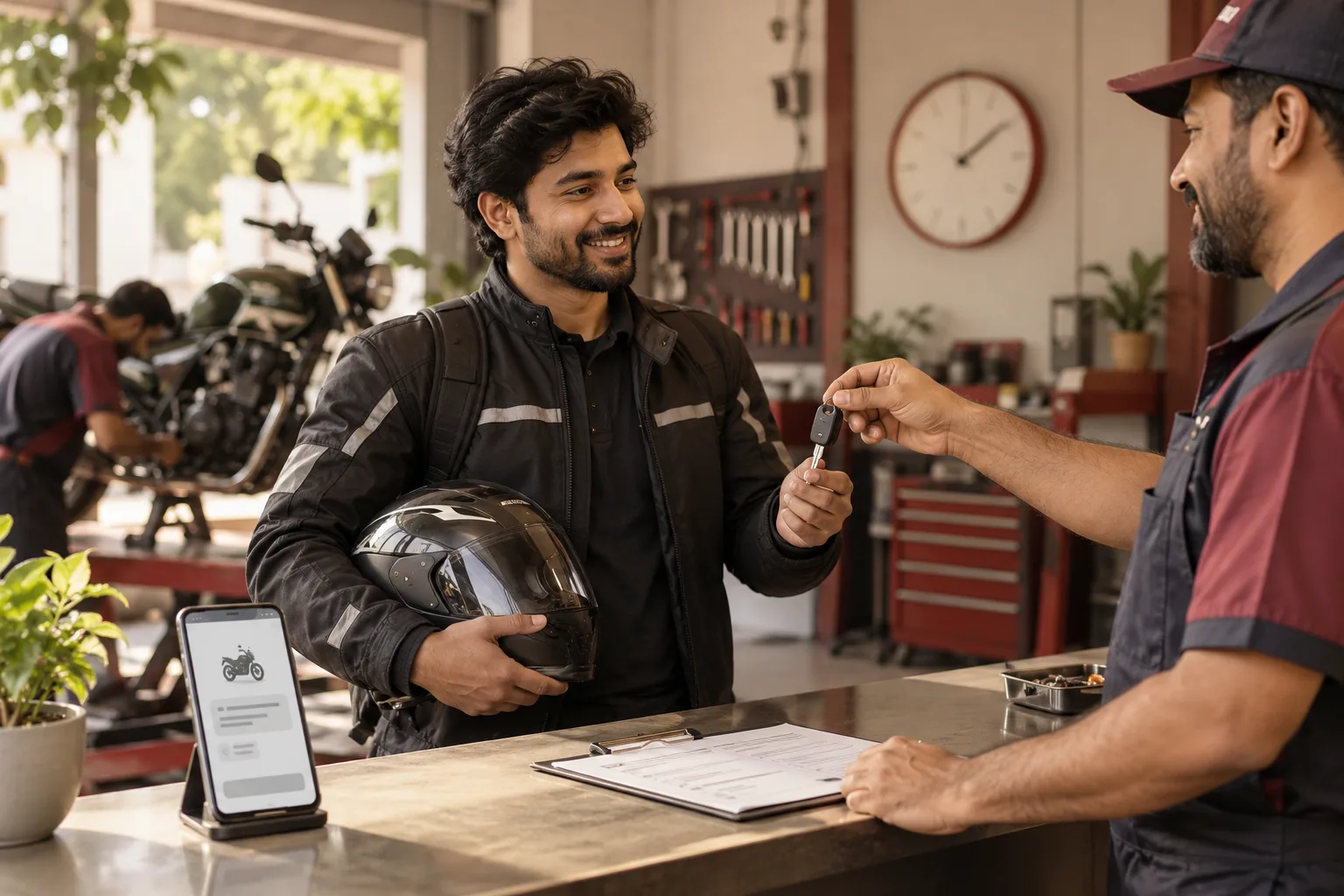 7 min read · 14 May 2026How bike workshops get riders to returnRiders return when the bill matches the estimate, the bike is ready on time and a message quotes the last reading. How a workshop builds that.
More for two-wheeler service centres
Related work to consider.
Closest to this: content and social
Also for two-wheeler service centres
Or start from the overview: sales and marketing for two-wheeler service centres.
Your next practical step
Tell us what you are trying to grow, and we will read it before we call.
Eight short steps, mostly taps. Skip anything you would rather answer on the call.