Two-wheeler service centres · Search engine optimisation
Be the workshop that comes up when a rider searches for a service near home.
SEO for a two-wheeler service centre makes your workshop appear for the searches riders type when a bike needs attention: a service, a brake noise, a puncture, a battery. GullySales builds a page for each job you do and each locality you serve, then counts the calls and WhatsApp messages those pages bring.
Scope, fee, reporting and term are agreed in writing after we have read your brief and spoken to you.

What search engine optimisation means
Search engine optimisation (SEO) is the work of getting your website to appear when a buyer searches Google for what you sell. GullySales builds pages around real search terms, fixes technical issues that block ranking, and tracks which searches actually bring enquiries.
Also for two-wheeler service centres
- Local SEO for two-wheeler service centres
- Website development for two-wheeler service centres
- Reputation management for two-wheeler service centres
- WhatsApp marketing for two-wheeler service centres
- Review generation for two-wheeler service centres
- Customer retention for two-wheeler service centres
- Follow-up systems for two-wheeler service centres
- Referral marketing for two-wheeler service centres
Sales and marketing for two-wheeler service centres, the overview.
Last updated 14 Nov 2026.
For two-wheeler service centres
Where it usually goes wrong, and what we would do.
“Riders search by symptom, not by service name”
A rider types 'bike not starting in the morning' or 'scooter jerks at low speed', not 'periodic maintenance'. A page called Services answers neither.
“One page cannot serve scooters and motorcycles”
A scooter owner and a 350cc owner want different things from the same workshop. A page that says 'all two-wheelers' matches neither search.
“Your lane and landmark are missing from the site”
Riders search with a locality, a college or a metro station. If your address is one line in the footer, a search for service near the college cannot find you.
What we do
What we deliver for two-wheeler service centres.
The work available for this need. We agree the deliverables and responsibilities for your engagement in writing.
A page for each repeat job
Periodic service, brake and clutch work, chain and sprocket, battery, puncture and tyre, each saying what is done, which parts are fitted and what the rider should bring.
Result: A rider searching for the exact job lands on a page about it.
Symptom pages in the rider's words
Short pages for a bike that will not start, an engine that heats, a brake that squeals and mileage that has dropped, with what the cause could be and when to bring it in.
Result: Riders who do not know the fault still find you.
Separate pages for scooters and motorcycles
One page for each kind of vehicle you service, and for electric two-wheelers only if you really do the work.
Result: Each rider sees their own kind of bike on the page.
Locality and landmark mentions
The streets, colleges and offices your job cards come from, written into the address block and the area pages.
Result: A search with a nearby landmark can match your workshop.
Page titles and headings checked
Every page given a title and a heading that use the words a rider would type, and no two pages competing for the same search.
Result: Search engines can tell what each page is for.
A report against the baseline
Calls, WhatsApp messages and walk-ins that started from search, set beside the baseline taken before the work began.
Result: You can see whether the pages bring jobs.
How the result is measured
- Ranking positions
- Organic traffic
- Enquiries from organic search
Recorded as a baseline before work starts, so every later report has an honest comparison.
Searches your buyers type
Here are the search shapes riders use, and the page that should answer each.
- Bike service near me
- A rider whose bike is due. Answer with the Business Profile and a service page showing the address, working hours, what a periodic service includes and a number that is picked up.
- Scooter not starting in the morning
- A symptom search from a rider who does not know the fault. Write a page on likely causes, such as the battery or the spark plug, and when to bring it in rather than push it.
- Brake noise or weak brakes
- A safety worry, so the reader wants a straight answer. Say what a brake check covers, which parts wear, and that you tell the rider before changing pads.
- Bike service after warranty ends
- A rider leaving the authorised centre asks if an independent workshop is safe. Say what you do for a bike out of warranty, which parts you fit and how the service book is stamped.
- Puncture repair near me
- A rider stranded on the road, searching on a phone. A short page with the address, a landmark, opening hours and a call button, because this search ends in a call or nothing.
- What a service for my model costs
- Riders compare before they call. Say what your labour charge covers and which parts are extra, without printing a rate you cannot hold for every bike.
Who it is for
This is written for these two-wheeler service centres.
- Independent two-wheeler workshops
- Multi-brand service centres
- Authorised service centres
- Workshops specialising in scooters
- Performance and customisation workshops
- Doorstep and pick-up service providers
- Electric two-wheeler service and battery specialists
- Workshops serving delivery riders and fleet owners
Before you decide
When this may not be the right fit.
- Your Business Profile still shows the wrong lane or a closed shutter, so fix the listing before paying for pages that point riders to it
- No one is free to answer the phone while bikes are on the ramp, so a rider who finds you by search would only reach a ringing line
Before you decide
Agree the work. Know how to judge it.
SEO for two-wheeler service centres: use these checks to prepare, choose the scope, and review what changes.
Bring the right evidence
Bring the pages for the products or services you want to sell, the search queries available in your reports, and examples of enquiries from search. Separate branded searches from buyers discovering you for the first time.
Make the scope clear
Agree which pages and technical fixes come first, who can publish changes, and who supplies subject knowledge. Link search work to a relevant enquiry route on each priority page.
Check the work in use
Follow the trail from a relevant query to its landing page and then to an enquiry. Review whether those enquiries fit your offer, alongside indexing and search visibility.
Know when to change course
A ranking movement alone is not a buying signal. If traffic grows but relevant enquiries do not, revisit page intent and the offer before producing more pages.
These are discussion points, not a fixed package. GullySales confirms the deliverables, responsibilities, fee, and term in writing after reading your brief and speaking with you.
Before we start
What to have ready before the work starts.
The records, access and decisions this work needs from two-wheeler service centres. Anything missing is noted in the written scope, with who will supply it.
- A spread of past job cards
- We need a handful of job cards from different months and different bike types, scanned or photographed, with rider names covered if you prefer. They tell us the real wording of complaints. Without them the pages are built from general guesses about two-wheeler problems, and general guesses read like every other workshop's page.
- The list of jobs you decline
- Tell us what you do not take: tuning for racing, a particular imported model, accident repair beyond a point. Pages are planned only around work you accept. If this list is missing, a page may attract riders you then have to refuse at the ramp, which wastes their trip and your goodwill.
- Your lead mechanic for one sitting
- One experienced mechanic must be present to check every explanation of a fault and its usual remedy. We write plainly, but only the person who handles the spanner knows where a sentence is slightly wrong. If this person is unavailable, we publish less, and the pages wait until their time is free.
- Control of the website login
- We need an admin login to the site, or the name of the person who holds it, to publish pages and fix titles. If an earlier developer holds the only key, we first settle that with you. Without access we can only hand you documents to forward, and that slows every change.
- A record of where enquiries land
- Show us the phone log, the WhatsApp Business inbox and the counter notebook, in whatever condition they are. Even a rough record lets us compare before and after. If nothing is recorded, we begin by setting up a simple tally, and the first stretch of work is spent on counting.
How it works
How the search engine optimisation work runs
The work itself, in order. How an engagement starts, from your brief to a written scope, is set out on our method page.
- 1
Read a stack of old job cards
We start with the job cards you already keep, because they show what riders actually bring in: the squeal from the front brake, the scooter that will not self-start, the chain that needs adjusting. You hand us a spread across the seasons. We sort them by complaint, not by service name, and that list becomes the set of searches the site must answer.
- 2
Record today's calls and map views
Before a single page changes, we note how many calls, WhatsApp messages and walk-ins you can already trace to Google, using your phone log and the counter notebook. You tell us which numbers are reliable and which are guesses. We write down the starting figures in one sheet so that nothing later is judged by memory or by mood.
- 3
Split scooter work from motorcycle work
Scooter riders worry about the belt, the variator and the self-start, while motorcycle riders ask about chains and clutch plates. We sit with your lead mechanic and mark which jobs you truly do well on each type. Pages are planned only for work you will happily take at the ramp, so a rider never arrives for something you turn away.
- 4
Write each page in the mechanic's words
We draft every page from what your mechanics say at the counter, then read it back to them. They correct a part name, strike a promise they cannot keep and add the warning they always give. You approve the final wording page by page. Nothing goes live until the person who will answer the rider's call has read the page and agreed.
- 5
Name the lane and the landmark
Riders search with the area they know, so we place the lane, the nearby signal, the college gate or the petrol pump on the right pages, in the way a neighbour would give directions. You confirm each landmark is still standing and still the one people use. Wrong directions cost a visit, so we check them against a drive from the main road.
- 6
Compare calls with the starting sheet
Once the pages have been live through a few service seasons, we open the starting sheet beside the present call log, the messages and the new walk-ins who say they found you online. We show which pages brought enquiries and which brought none. You decide, with us, which pages to deepen and which to merge or drop.
Where this fits
Three pieces of sales work, in this order.
This work sits inside sales process design, at stage 1, prospecting and lead generation. The audit comes before it, and sales management keeps it running.
Step 1
Sales audit
Find where deals are being lost and what to fix first.
Start here if you cannot say where orders are lost.
Step 2 · you are here
Sales process design
One written way to sell, from first enquiry to repeat order.
Start here if every salesperson sells differently.
Step 3
Sales management
A target, a review routine and someone who owns the number.
Start here if the team has targets and no routine.
FAQ
Questions owners ask before they call.
Not here? More answers, or ask on WhatsApp.
Do we need a page for every bike model?
Is a blog worth the trouble for a workshop?
Should we have a page for each locality we serve?
Can we copy service descriptions from the authorised centre's site?
Will SEO bring riders who only want the cheapest service?
How much does it cost?
How long is the contract?
How soon will we see results?
Who will actually do the work?
What do you need from us?
From the blog
Further reading for two-wheeler service centres.
 6 min read · 6 Oct 2026How buyers choose a showroom, workshop or parts counterCar, bike, repair and parts buyers send one enquiry to several sellers and pick the first clear answer. See what each buyer checks and where you lose them.
 5 min read · 6 Oct 2026How a two-wheeler workshop takes the first callThe first call from a rider decides whether the bike comes in. The questions to ask, what to write down and what to say about price on the phone.
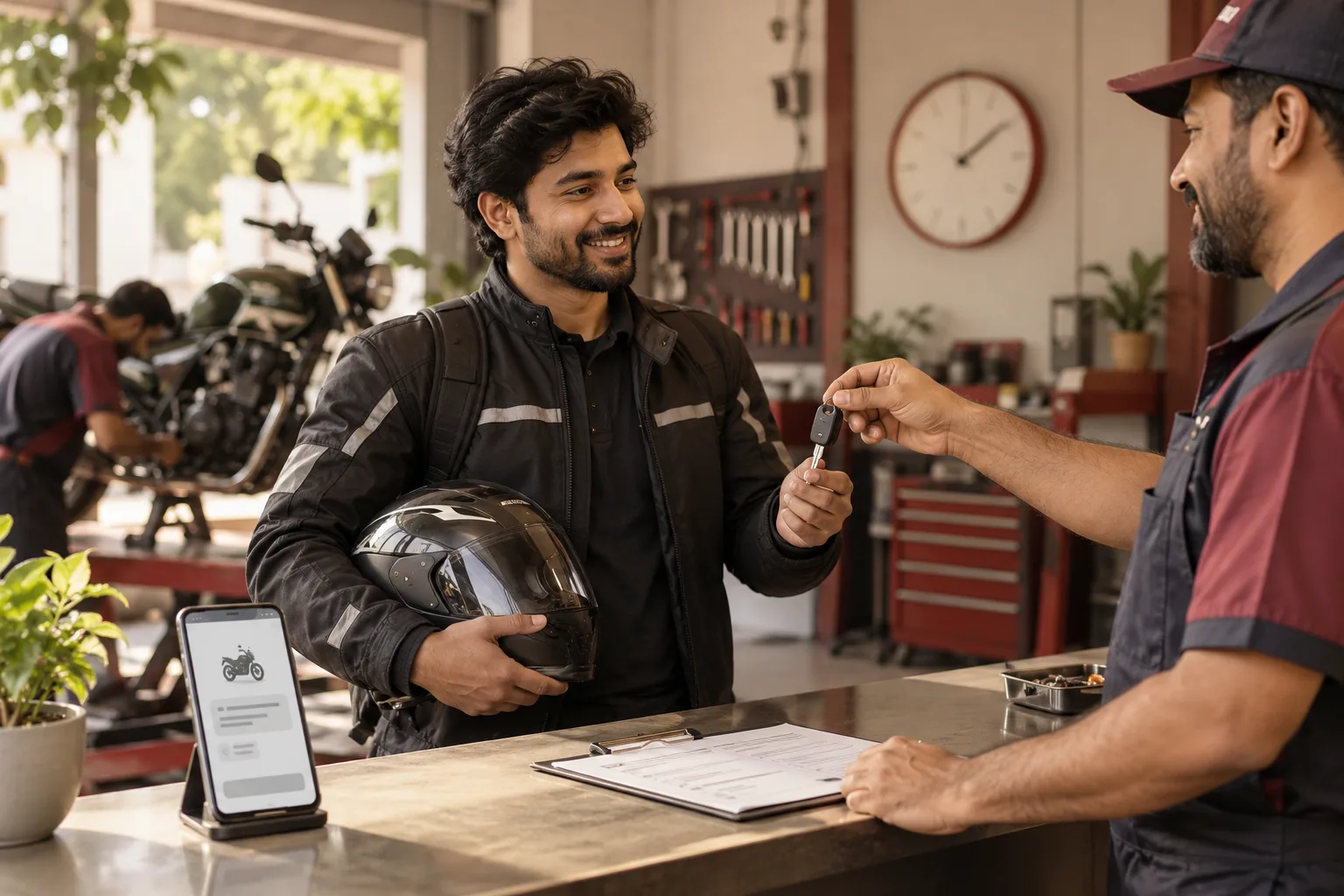 7 min read · 14 May 2026How bike workshops get riders to returnRiders return when the bill matches the estimate, the bike is ready on time and a message quotes the last reading. How a workshop builds that.
More for two-wheeler service centres
Related work to consider.
Closest to this: search and visibility
Also for two-wheeler service centres
- Reputation management for two-wheeler service centres
- WhatsApp marketing for two-wheeler service centres
- Review generation for two-wheeler service centres
- Customer retention for two-wheeler service centres
- Follow-up systems for two-wheeler service centres
- Referral marketing for two-wheeler service centres
Or start from the overview: sales and marketing for two-wheeler service centres.
Your next practical step
Tell us what you are trying to grow, and we will read it before we call.
Eight short steps, mostly taps. Skip anything you would rather answer on the call.