Two-wheeler service centres · Referral marketing
Make it easy for a happy rider to name you when a colleague asks where to get the bike serviced.
Referral marketing for a two-wheeler service centre is how new riders arrive because someone they trust named your workshop. GullySales finds where your referrals already come from, makes each one easy to give and records the source on the job card.
Scope, fee, reporting and term are agreed in writing after we have read your brief and spoken to you.
What referral marketing means
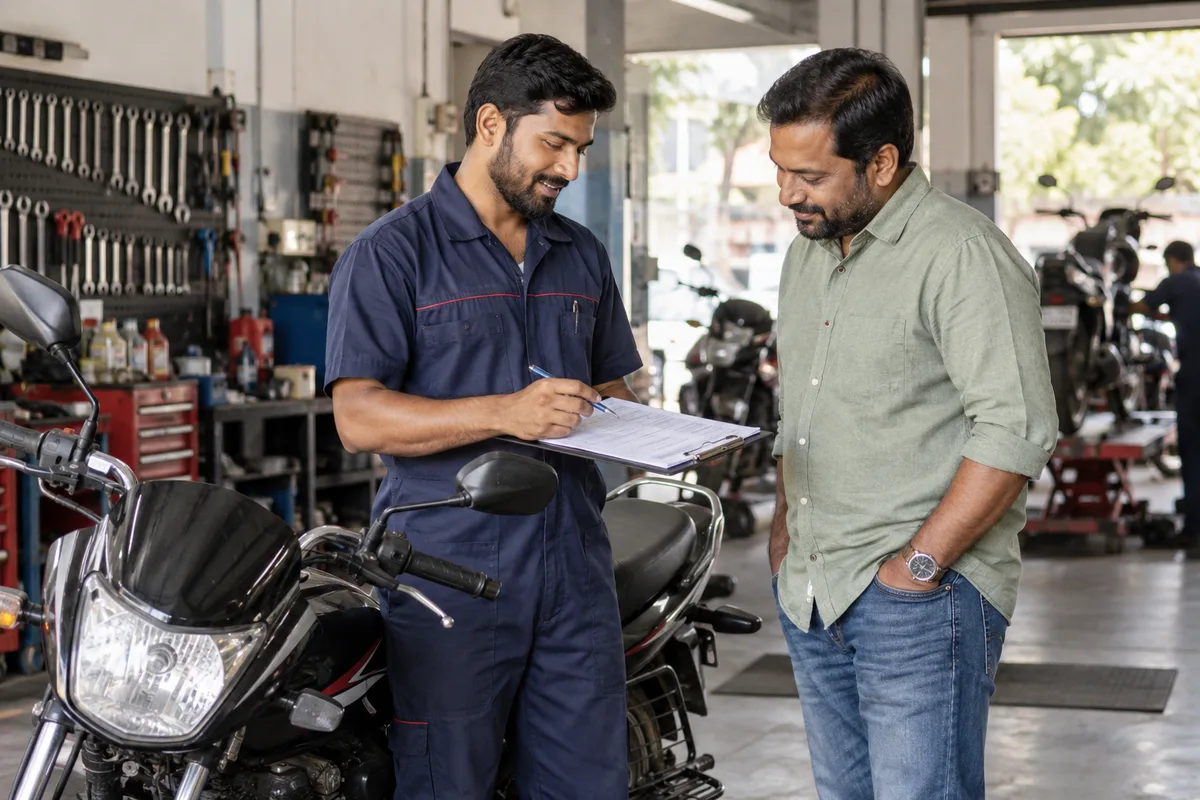
Referral marketing is asking an existing customer to recommend you to someone they know, usually with a reward for both sides. It differs from a loyalty scheme because it brings in a new customer rather than a repeat purchase. GullySales builds the ask and the reward into a point where a customer is already satisfied.
Also for two-wheeler service centres
- Customer retention for two-wheeler service centres
- SEO for two-wheeler service centres
- Local SEO for two-wheeler service centres
- Reputation management for two-wheeler service centres
- WhatsApp marketing for two-wheeler service centres
- Review generation for two-wheeler service centres
- Follow-up systems for two-wheeler service centres
- Content marketing for two-wheeler service centres
Sales and marketing for two-wheeler service centres, the overview.
Last updated 14 Nov 2026.
For two-wheeler service centres
Where it usually goes wrong, and what we would do.
“Riders refer you and nobody records who”
A new rider says a friend sends the bike here, and the job card does not say who. The friend never hears thanks.
“Used-bike dealers and parts counters name a workshop and are never thanked”
A dealer whose buyer needs a first service, or a parts counter asked who fixes this, names the workshop they remember. They are rarely visited.
“Delivery fleets decide as a group”
Delivery partners ask each other which workshop is honest and gets them back on the road. One regular can bring the rest, or take them away.
What we do
What we deliver for two-wheeler service centres.
The work available for this need. We agree the deliverables and responsibilities for your engagement in writing.
A source line on the job card
A 'heard of us through' field with a short list: a rider, a dealer, a society, Google, the signboard, with the referrer's name beside it.
Result: Every new rider is traced to a source.
A referral card for riders
A small card with the workshop name, address and a blank for the referrer's name, which the new rider hands over at the counter.
Result: A recommendation arrives with a name attached.
A partner list and visit plan
Used-bike dealers, parts counters, tyre shops, insurance agents and fleet supervisors in your area, with one visit planned for each.
Result: The people who are asked get to know you.
A thank-you routine
A message, a word at the counter or a small gesture for riders and partners who refer, decided once and written down.
Result: People who refer hear that it mattered.
An approach for fleets and societies
A short pitch and a few bikes looked at for a delivery fleet supervisor, and a notice or a request to the residents' group, with permission.
Result: A group of riders is a conversation, not a cold call.
A report against the baseline
New riders by source, referrals by referrer and repeat visits from referred riders, set beside the baseline recorded before the work began.
Result: You can see which referrers are worth looking after.
How the result is measured
- Referrals received
- Referral conversion rate
- Cost per referred customer
Recorded as a baseline before work starts, so every later report has an honest comparison.
How referrals work in this trade
These are the people who send riders to a workshop, and what to do with each.
- Riders you have already served
- They refer when the bike runs right and the bill matched the estimate. Hand over a card at collection, and write the referrer's name on the job card of whoever shows it.
- Used-bike dealers
- A dealer's buyer needs a first service and a workshop they can trust. Show the dealer your work on a bike the dealer sold, ask the dealer to name you, and record the dealer as the source when the buyer arrives.
- Insurance agents and surveyors
- They can send accident and claim work, but their own firms limit what they may accept. Ask what is allowed before offering any thanks, and keep your estimates and photographs plain.
- Fleet supervisors and delivery partners
- A supervisor who manages riders picks one workshop for the group. Offer to look at a few bikes, give a written estimate for each, and note which riders came through the supervisor.
- Housing societies and offices
- A residents' group message asking who services scooters nearby is a referral waiting to happen. Ask the committee for a notice or a stall; rules differ by community.
- What never to do
- Do not pay riders a cash fee per head, promise a free service you cannot honour, or post testimonials from referrers who do not exist. Each one costs more trust than the rider brings.
Who it is for
This is written for these two-wheeler service centres.
- Independent two-wheeler workshops
- Multi-brand service centres
- Authorised service centres
- Workshops specialising in scooters
- Performance and customisation workshops
- Doorstep and pick-up service providers
- Electric two-wheeler service and battery specialists
- Workshops serving delivery riders and fleet owners
Before you decide
When this may not be the right fit.
- The bikes you return still come back with the same fault, since a referral sends the next rider to the same problem
- You have no plan to thank a referrer or to note who sent whom, so the source of new riders stays unknown
Before you decide
Agree the work. Know how to judge it.
Referral marketing for two-wheeler service centres: use these checks to prepare, choose the scope, and review what changes.
Bring the right evidence
Review repeat orders, inactive customers, and reasons for leaving. Separate a normal buying interval from a customer who stopped because of an unresolved problem.
Make the scope clear
Choose the customer group and the reason to contact them. Agree how complaints, renewal decisions, and additional offers are handled, including when a sales message is inappropriate.
Check the work in use
Track the response through to a retained or repeat order, with discounts and service costs visible. Record why the customer returned rather than crediting every repeat purchase to the campaign.
Know when to change course
If customers leave because delivery is unreliable, fix that before offering a loyalty reward. Repeated promotions can hide the cause without improving the experience.
These are discussion points, not a fixed package. GullySales confirms the deliverables, responsibilities, fee, and term in writing after reading your brief and speaking with you.
Before we start
What to have ready before the work starts.
The records, access and decisions this work needs from two-wheeler service centres. Anything missing is noted in the written scope, with who will supply it.
- The source line on your job card
- Your job card needs a place to write who sent the rider. If it is a printed form, we help you add the line or a stamp. Without it, referrals are invisible and the plan rests on guesses about who sends the work.
- A list of dealers and parts shops nearby
- Write down the used-bike dealers, parts counters and tyre shops within reach, and any that already send you riders. We use the list to plan visits. Without it, we start with a drive around the area, and the plan waits for that drive.
- Your decision on any reward
- Decide whether you will give a token to a referrer, and what. A reward that is promised and then forgotten is worse than none. If you prefer not to give one, the plan relies on thanks and good service alone, which is acceptable.
- A fleet or society contact
- If you want to reach a delivery fleet or a housing society, you need a name there, even a distant one. Cold approaches to a group decision-maker rarely get a reply. Without a contact, we leave that stream for later and begin with individual riders.
How it works
How the referral marketing work runs
The work itself, in order. How an engagement starts, from your brief to a written scope, is set out on our method page.
- 1
Ask each rider how they found you
We add one line to the job card, asking who sent the rider, and put it into practice at the counter. You agree the wording with staff. Over the first batch of cards, we see how many riders came through a friend, a parts shop or a map search. This is the first record of where referrals really come from.
- 2
List the people who already send riders
From the source line and your own memory, we make a list of used-bike dealers, parts counters, tyre shops and loyal riders who have sent work. You rank them by how much they have sent. Nobody has thanked several of them properly, so the list is also the plan for who to visit.
- 3
Design the card a rider hands on
We draft a small card with the workshop's name, location and one line a rider can say aloud. You read it for anything that sounds like a claim you cannot support. The card carries a space for the referrer's name, so the counter can record who sent the new rider.
- 4
Plan the visits to dealers and societies
We write a short approach for a used-bike dealer, a delivery fleet manager and a residents' society office, each in their own terms. You choose which to visit first and who goes. The note says what the workshop offers and what it asks for, and it avoids any payment for a rider sent.
- 5
Set the thank-you routine
We agree how the referrer is thanked: a message, a call or a small token you are comfortable giving. You decide what is fair and consistent. The rule applies to everyone, so no partner feels passed over, and it never depends on a review being posted.
Where this fits
Three pieces of sales work, in this order.
This work sits inside sales process design, at stage 7, after the sale. The audit comes before it, and sales management keeps it running.
Step 1
Sales audit
Find where deals are being lost and what to fix first.
Start here if you cannot say where orders are lost.
Step 2 · you are here
Sales process design
One written way to sell, from first enquiry to repeat order.
Start here if every salesperson sells differently.
Step 3
Sales management
A target, a review routine and someone who owns the number.
Start here if the team has targets and no routine.
FAQ
Questions owners ask before they call.
Not here? More answers, or ask on WhatsApp.
Should we reward riders who refer someone?
How do we know who sent whom?
Can we ask an insurance surveyor to send us claim work?
A regular brought three friends and one had a bad experience. What now?
How do we handle a referrer who expects a commission?
What if a referred rider has a bad experience?
How much does it cost?
How long is the contract?
How soon will we see results?
Who will actually do the work?
From the blog
Further reading for two-wheeler service centres.
 6 min read · 6 Oct 2026How buyers choose a showroom, workshop or parts counterCar, bike, repair and parts buyers send one enquiry to several sellers and pick the first clear answer. See what each buyer checks and where you lose them.
 5 min read · 6 Oct 2026How a two-wheeler workshop takes the first callThe first call from a rider decides whether the bike comes in. The questions to ask, what to write down and what to say about price on the phone.
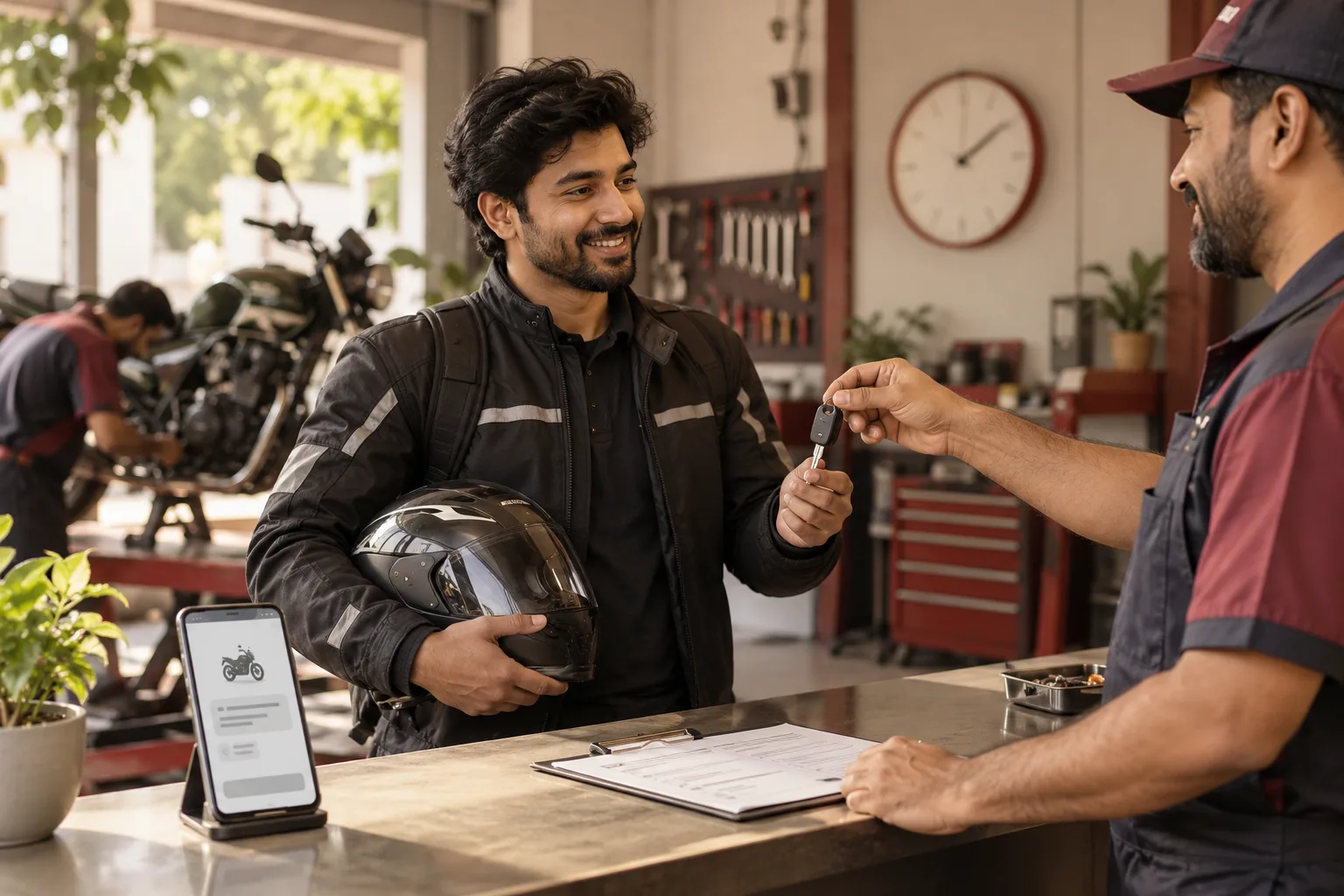 7 min read · 14 May 2026How bike workshops get riders to returnRiders return when the bill matches the estimate, the bike is ready on time and a message quotes the last reading. How a workshop builds that.
More for two-wheeler service centres
Related work to consider.
Closest to this: customers after the sale
Also for two-wheeler service centres
Or start from the overview: sales and marketing for two-wheeler service centres.
Your next practical step
Tell us what you are trying to grow, and we will read it before we call.
Eight short steps, mostly taps. Skip anything you would rather answer on the call.