Two-wheeler service centres · Review generation
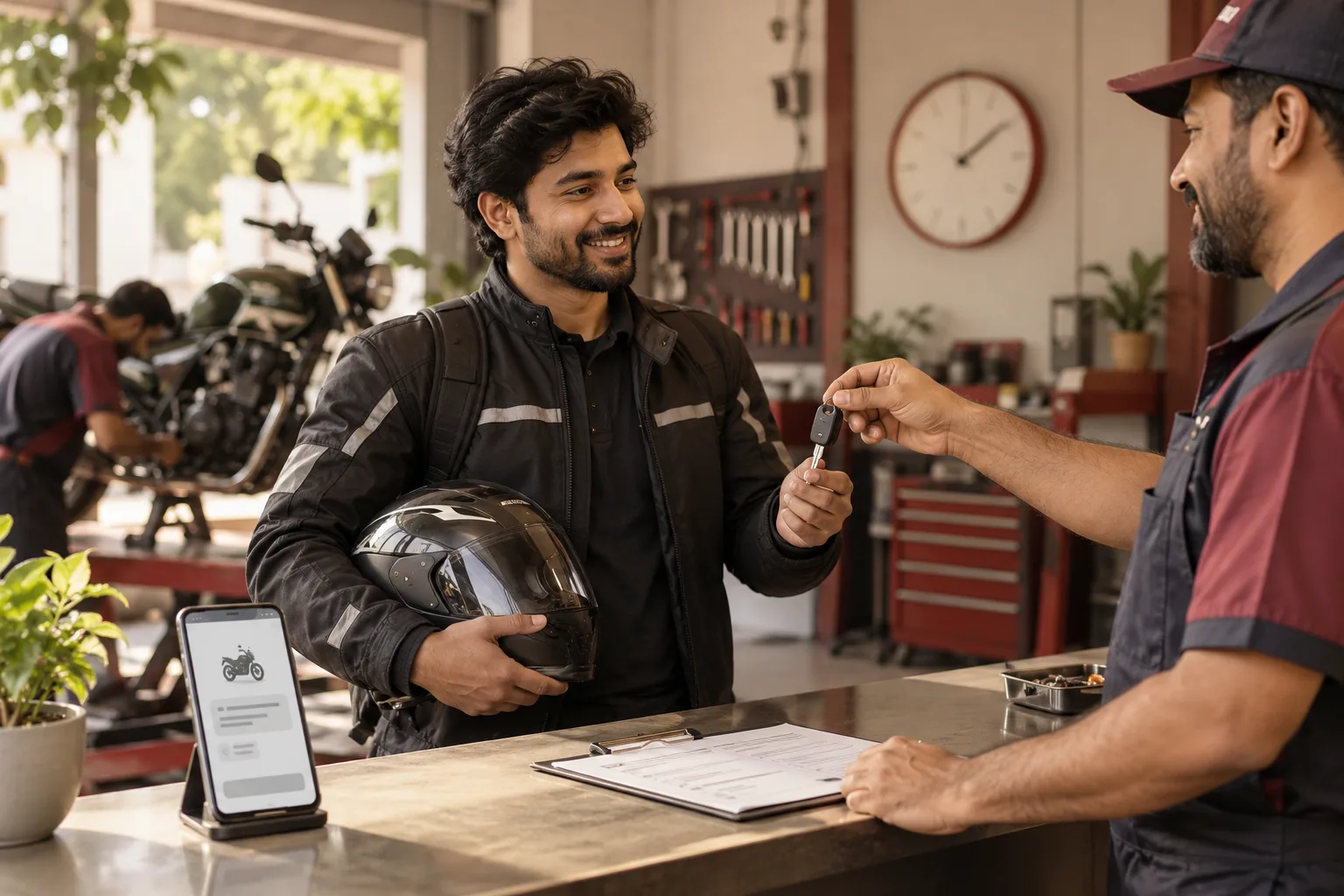
Ask for the review when the rider is wheeling out a bike that rides right.
Review generation for a two-wheeler service centre is asking riders who are pleased with a job to say so on Google, at the moment they are most ready to. GullySales sets up that moment, the link and the rule on who asks, within each platform's current rules.
Scope, fee, reporting and term are agreed in writing after we have read your brief and spoken to you.

What review generation means
Review generation is the routine of asking satisfied customers to leave a Google or platform review at the moment they are happiest, rather than hoping they remember later. GullySales builds the request into your existing follow-up steps and tracks how many turn into a review.
Also for two-wheeler service centres
- Reputation management for two-wheeler service centres
- SEO for two-wheeler service centres
- Local SEO for two-wheeler service centres
- WhatsApp marketing for two-wheeler service centres
- Customer retention for two-wheeler service centres
- Follow-up systems for two-wheeler service centres
- Referral marketing for two-wheeler service centres
- Content marketing for two-wheeler service centres
Sales and marketing for two-wheeler service centres, the overview.
Last updated 14 Nov 2026.
For two-wheeler service centres
Where it usually goes wrong, and what we would do.
“The handover is the moment, and it is rushed”
The rider pays, starts the bike and leaves. Nobody asks. By the time the rider is home the relief has gone.
“Only the angry write without being asked”
A rider who got a clean job tells a friend, not Google. The unhappy one writes that evening, so the public record tilts the wrong way.
“Staff worry that asking looks odd”
A mechanic who is unsure fears a rider will think something is wrong. A set line, practised once, removes the awkwardness.
What we do
What we deliver for two-wheeler service centres.
The work available for this need. We agree the deliverables and responsibilities for your engagement in writing.
The moment to ask
A fixed point at handover, after the rider has seen the bike run, when the advisor hands over the key and says one line.
Result: Asking becomes part of handover, not an extra task.
A QR code and a short link at the counter
The Profile's own review link as a QR code on the key tag, the invoice and the counter, plus a short link to send.
Result: A rider can review in a few taps.
A message after collection
A WhatsApp message to riders who agreed to messages, with the link and one line naming the job.
Result: Riders who were in a hurry still get asked.
A script for counter staff
The exact words for asking, for a rider who says no and for one who raises a complaint instead.
Result: Everyone asks in the same calm way.
A rule against gating, paying and quotas
Every rider served is asked, nothing is offered in return, and no mechanic has a target number.
Result: The reviews stay within the platform's rules.
A tally of reviews by job type
Reviews counted against periodic service, repair and accident work, set beside the baseline.
Result: You see which kind of job earns trust.
How the result is measured
- Reviews received
- Average rating
- Response rate to requests
Recorded as a baseline before work starts, so every later report has an honest comparison.
Asking for reviews the right way
A workshop has a few natural moments to ask, and a few things never to do.
- After the test ride at handover
- The rider has just seen the bike run well and feels relief. The person returning the key says one line, 'if the service was good, would you say so on Google?', and shows the QR.
- Who asks
- The service advisor or the owner, not the mechanic under the bike. Name one person for each day so it gets done, and have them mark on the job card that the rider was asked.
- The link or QR code
- Use the Business Profile's own review link, printed as a QR on the key tag or the invoice. Send the link too, since a rider with a weak signal at the counter can do it at home.
- Ask every rider, not only the pleased
- Filtering out the unhappy before they reach the review box is called gating, and platforms' current rules do not allow it. Ask everyone you served, and take what comes.
- No payment, discount or staff quota
- Do not give a free wash or a discount for a review, and do not set a target for a mechanic. Both get reviews removed and leave the rider feeling bought. Check the platform's current rules.
- Reply to every review
- A thank-you that names the job. Riders reading the page see a workshop that listens, and the person who wrote the review hears back from a real person.
Who it is for
This is written for these two-wheeler service centres.
- Independent two-wheeler workshops
- Multi-brand service centres
- Authorised service centres
- Workshops specialising in scooters
- Performance and customisation workshops
- Doorstep and pick-up service providers
- Electric two-wheeler service and battery specialists
- Workshops serving delivery riders and fleet owners
Before you decide
When this may not be the right fit.
- Bikes leave the ramp with the same fault or a bill nobody explained, so a request for reviews would invite the complaint in public
- Your counter staff are not willing to ask, and a link pinned on the wall without a word asked would sit unused
Before you decide
Agree the work. Know how to judge it.
Review generation for two-wheeler service centres: use these checks to prepare, choose the scope, and review what changes.
Bring the right evidence
Collect recurring public feedback and the internal record of how the issue was handled. Separate factual corrections from genuine complaints that need a response.
Make the scope clear
Agree who checks facts, approves replies, and resolves problems outside marketing. Any request for reviews or testimonials must fit the trade's rules and the customer's permission.
Check the work in use
Read the response from the customer's point of view. It should address the issue without exposing private information or promising an outcome the team cannot provide.
Know when to change course
Do not buy or invent reviews. If the same complaint keeps returning, resolve its cause before publishing more positive material.
These are discussion points, not a fixed package. GullySales confirms the deliverables, responsibilities, fee, and term in writing after reading your brief and speaking with you.
Before we start
What to have ready before the work starts.
The records, access and decisions this work needs from two-wheeler service centres. Anything missing is noted in the written scope, with who will supply it.
- The Google review link for your listing
- We need the working link or the access to generate it. Without the right link, the QR code leads to a blank page and the rider gives up. If the listing is not yet claimed, review work waits behind it, and we recommend fixing that first.
- A place at the counter for the code
- Choose a spot where riders stand for a moment: near the billing screen or the key rack. The code must be visible without anyone pointing at it. If the counter is cramped, we plan a printed key tag instead, which leaves the desk clear.
- Consent to message after the job
- Staff must record whether the rider agreed to a follow-up message. Without that record, we do not send one, and the review request rests on the counter ask alone. Please agree the wording of the consent line with us before the first collection.
- A list of open complaints
- Give us the names of riders who are still unhappy about a job. We hold them out of any review request until the matter is settled. If the list is not kept, a message arrives at the worst moment and produces exactly the review you hoped to avoid.
How it works
How the review generation work runs
The work itself, in order. How an engagement starts, from your brief to a written scope, is set out on our method page.
- 1
Watch the handover at the counter
We stand at the counter during a busy hour and watch the moment a rider collects a bike: the payment, the keys, the quick test ride, the thanks. You show us where the exchange is calmest. That moment becomes the place for the request, and we rule out any point where the rider is hurried or annoyed.
- 2
Print the QR code for the bay
We produce a QR code and a short link that open your review page directly, then agree where it sits: the billing desk, the key tag and the waiting corner. You test it on your own phone. If it takes more than one tap to reach the review box, we simplify the link until it does not.
- 3
Rehearse the ask with the counter staff
We give your staff a simple sentence in the rider's language and let them practise it on each other, including the answer to a rider who says no. You decide who asks. We write the rule that nobody offers a discount or a gift for a review, and we say why.
- 4
Send a follow-up to riders who agreed
For riders who have given consent, we write a short message after collection that thanks them and repeats the link. You approve the wording and choose which jobs trigger it, leaving out any ride-in that ended in an argument. A rider with an open complaint receives a call first.
- 5
Tally the reviews by job type
We count the reviews received, record which job each came from, and set them beside the figures noted at the start. You see whether the counter ask is working and which kind of job brings the greatest number of comments. We report what riders wrote, not the star average.
Where this fits
Three pieces of sales work, in this order.
This work sits inside sales process design, at stage 7, after the sale. The audit comes before it, and sales management keeps it running.
Step 1
Sales audit
Find where deals are being lost and what to fix first.
Start here if you cannot say where orders are lost.
Step 2 · you are here
Sales process design
One written way to sell, from first enquiry to repeat order.
Start here if every salesperson sells differently.
Step 3
Sales management
A target, a review routine and someone who owns the number.
Start here if the team has targets and no routine.
FAQ
Questions owners ask before they call.
Not here? More answers, or ask on WhatsApp.
Is it better to ask in person or by message?
Which language should the ask be in?
What if a rider says no?
A rider posted a bad review right after we asked. What now?
Can we ask riders to mention a mechanic's name?
What do we do with a review we think is unfair?
How much does it cost?
How long is the contract?
How soon will we see results?
Who will actually do the work?
From the blog
Further reading for two-wheeler service centres.
 6 min read · 6 Oct 2026How buyers choose a showroom, workshop or parts counterCar, bike, repair and parts buyers send one enquiry to several sellers and pick the first clear answer. See what each buyer checks and where you lose them.
 7 min read · 14 May 2026How bike workshops get riders to returnRiders return when the bill matches the estimate, the bike is ready on time and a message quotes the last reading. How a workshop builds that.
 5 min read · 6 Oct 2026How a two-wheeler workshop takes the first callThe first call from a rider decides whether the bike comes in. The questions to ask, what to write down and what to say about price on the phone.
More for two-wheeler service centres
Related work to consider.
Closest to this: reputation
Also for two-wheeler service centres
Or start from the overview: sales and marketing for two-wheeler service centres.
Your next practical step
Tell us what you are trying to grow, and we will read it before we call.
Eight short steps, mostly taps. Skip anything you would rather answer on the call.