Microfinance companies · Lead generation
Find the women's groups and village leaders who are ready to borrow.
Lead generation for a microfinance company means finding villages, group leaders and individual borrowers before a competing lender reaches them, and recording each one the officer meets. GullySales works on the sources of leads, the field record that holds them and the follow-up that turns a first meeting into a formed group.
Scope, fee, reporting and term are agreed in writing after we have read your brief and spoken to you.
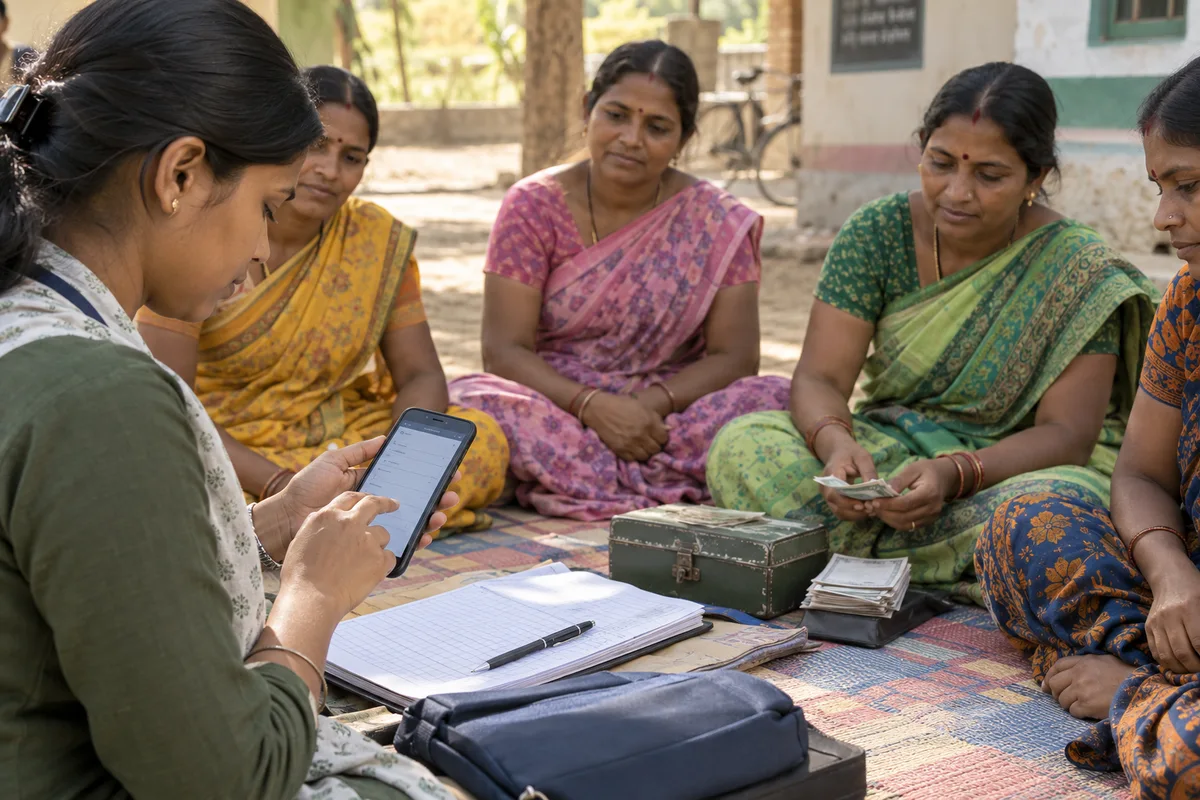
What lead generation means
Lead generation is the combined work of every channel that brings in a new enquiry, whether from search, adverts, referrals or a stall at an exhibition. GullySales runs these channels together and reports the number of enquiries each one produced, not the activity behind it.
Also for microfinance companies
- CRM for microfinance companies
- Follow-up systems for microfinance companies
- SEO for microfinance companies
- Local SEO for microfinance companies
- Social media marketing for microfinance companies
- Content marketing for microfinance companies
- Buyer personas for microfinance companies
- WhatsApp marketing for microfinance companies
Sales and marketing for microfinance companies, the overview.
Plan the next part of the work
Last updated 21 Nov 2026. Rules for this trade differ by state and professional body, and they change. We describe restrictions in general terms, so check the current position with your own council or adviser before you publish anything.
For microfinance companies
Where it usually goes wrong, and what we would do.
“The best lead is a name from an existing borrower”
A woman who has repaid well knows three neighbours who want a loan. If the officer never asks, that introduction goes to whichever lender asks first. The company needs a plain way to record who suggested whom.
“A village leader opens a whole group”
The sarpanch, the anganwadi worker or the leader of a self-help group can bring ten households in one meeting. Marketing that only targets the individual borrower misses the person who decides whether the company is welcome.
“Leads die in the officer's diary”
A household that said come back after the festival is written in one notebook. When the officer is transferred, the lead leaves too. A shared record keeps the promise with the branch, not with the person.
What we do
What we deliver for microfinance companies.
The work available for this need. We agree the deliverables and responsibilities for your engagement in writing.
Village and leader map
A list of villages in each branch area with the leaders, groups and rival lenders noted by the field staff.
Result: The branch manager sees which villages have no contact yet.
Lead source record
A short field entry showing whether a lead came from a borrower, a leader, a Maps listing or a walk-in.
Result: You can see which source produces groups that complete training.
Referral ask for the group meeting
A line in the officer's meeting routine asking existing members who else in the lane needs a loan, with no reward attached.
Result: Introductions are written down at the meeting, not remembered later.
Language enquiry sheet
A one-page explanation in the district's language that the officer leaves with a household that wants to think.
Result: The household can show the sheet to the family before the next visit.
Compliance-cleared wording
Every message and sheet goes to your compliance head before use.
Result: Nothing reaches a village that your own team has not cleared.
How the result is measured
- Relevant enquiries by source
- Duplicate and unsuitable enquiries
- Time to the first response
- Accepted enquiries reaching an agreed next step
Recorded as a baseline before work starts, so every later report has an honest comparison.
What to capture or send
Each village meeting leaves six facts in the field record.
- Village, taluk and the leader's name
- Written by the officer at the meeting, so the next officer to cover the area knows whom to ask for and which leader opened the door.
- Who made the introduction
- An existing borrower, a leader, a dairy society or a walk-in. Without the source you cannot tell which door produces groups.
- Household business in the borrower's words
- Vegetable stall, goat rearing, tailoring. It lets the officer open the next visit on the borrower's work and not on a loan product.
- Language the household prefers
- Kannada, Telugu, Hindi or a local dialect. The follow-up note, the leaflet and the voice message then go out in the right one.
- What the household said they would decide
- Whether the husband, the mother-in-law or the group must agree first. It names who the next visit has to include.
- Reason a lead did not become a group
- Too few members, a rival lender already present, or a leader who declined. These reasons tell the branch where to stop going.
Who it is for
This is written for these microfinance companies.
- NBFC-MFIs working through joint liability groups
- Self-help group linkage lenders
- Microfinance companies in rural Karnataka and neighbouring states
- Urban microfinance for small shopkeepers and home-based workers
- Small finance bank microfinance arms
- Microfinance companies adding individual business loans
- Women's livelihood and dairy-linked lenders
- Company branches opening in a new taluk
Before you decide
When this may not be the right fit.
- You have no officer free to visit a village after an enquiry, so the lead would sit unattended and the household would hear nothing back.
- Your core lending system cannot yet record a lead against a village, so the source of each group would be lost the day the officer is transferred.
- Referral rewards for borrowers are the only idea on the table, which raises over-borrowing concerns and is not something GullySales builds.
Before you decide
Agree the work. Know how to judge it.
Lead generation for microfinance companies: use these checks to prepare, choose the scope, and review what changes.
Bring the right evidence
Define the organisations or buyers you can serve and the reasons they would consider a conversation. Bring examples of accepted and rejected prospects so the selection rule is visible.
Make the scope clear
Agree the research sources, contact approach, qualification rules, and handover. Clarify which meetings count as accepted and what happens to replies that are not ready to buy.
Check the work in use
Review why a prospect was selected and what was learned from the response. Count held, relevant conversations separately from contacts found, messages sent, or meetings booked.
Know when to change course
If the same objection appears repeatedly, adjust the offer or buyer group before increasing outreach. Respect a request to stop contact and keep the exclusion in the record.
These are discussion points, not a fixed package. GullySales confirms the deliverables, responsibilities, fee, and term in writing after reading your brief and speaking with you.
Before we start
What to have ready before the work starts.
The records, access and decisions this work needs from microfinance companies. Anything missing is noted in the written scope, with who will supply it.
- Officer diaries for recent group cycles
- We need the paper or phone diaries to trace where past groups came from. Photographs of the pages are acceptable if names of borrowers are covered. If the diaries are missing, we begin with interviews instead, and the baseline of lead sources is weaker.
- The list of villages in each branch
- A plain list of villages with the officer assigned to each is enough, even in a notebook. The village map is built on it. Without it, we cannot tell a village that was never visited from one that was visited and refused.
- The area manager for one working session
- Someone who knows which leaders matter and which villages are held by rivals must sit with us once. Their knowledge is not written anywhere else. If they cannot attend, the map is drawn from the diaries alone and misses the leaders nobody wrote down.
- Your compliance head's view on introductions
- Whether an existing borrower may be thanked, and how, is a decision only your compliance head can make. We need it in writing before the ask is finalised. Without it, the ask is limited to a plain request for a name and offers nothing back.
- One officer willing to test the sheet
- An officer who works the village and will tell us what annoys them is worth more than a polite one. Choose someone who can spare the visits for the trial. If no officer is free, the sheet goes live untested and the first week of use becomes the test.
How it works
How the lead generation work runs
The work itself, in order. How an engagement starts, from your brief to a written scope, is set out on our method page.
- 1
Read the officers' diaries with the manager
We start with the field officers' diaries and the group formation register, with the branch manager beside us. You tell us which entries became groups and which stalled, and we copy the source of each name into one sheet: a leader, an existing borrower, a shopkeeper or a walk-in. That shows where your groups really came from, not where people remember them coming from.
- 2
Mark leaders on the village map
With the area manager we draw the villages the branch serves and mark each leader who has brought a group before, each village a competitor already holds, and each village nobody has visited. You decide which villages the branch should open next. The map that results is the list the officers work from, and it replaces guesses made at the morning meeting.
- 3
Write the ask for the group meeting
We sit in on a centre meeting, with permission from the leader, and listen for the moment a borrower could introduce a neighbour. Then we write the short ask the officer makes there, in the local language, and have your compliance head read it. Nothing is offered in return for an introduction unless your compliance head approves it in writing.
- 4
Set up the language enquiry sheet
We build one sheet the officer fills at a doorstep or a market stall, in Kannada, Telugu, Hindi or whichever language the district speaks. It holds the name, the village, who sent the person, and the next visit agreed. We test it on a phone with weak signal, because an entry that waits for network does not get made.
- 5
Run one village as a trial
We pick a single village with the officer and the leader, and use the new sheet and the ask for one formation attempt. You watch what the officer finds awkward and what the households ask. We change the wording and the sheet where they got in the way, and the trial village tells us more than any plan on paper.
- 6
Read the sources against the old sheet
After the officers have used the sheet across the branch, we compare it with the source sheet we made in the first step. We count how many names came from leaders, borrowers and walk-ins now, and how many became groups, then sit with you and decide where the officers' time goes next. We report what the figures show and promise no number.
Where this fits
Three pieces of sales work, in this order.
This work sits inside sales process design, at stage 1, prospecting and lead generation. The audit comes before it, and sales management keeps it running.
Step 1
Sales audit
Find where deals are being lost and what to fix first.
Start here if you cannot say where orders are lost.
Step 2 · you are here
Sales process design
One written way to sell, from first enquiry to repeat order.
Start here if every salesperson sells differently.
Step 3
Sales management
A target, a review routine and someone who owns the number.
Start here if the team has targets and no routine.
FAQ
Questions owners ask before they call.
Not here? More answers, or ask on WhatsApp.
Do online ads find microfinance borrowers?
Can we pay existing borrowers for introductions?
What counts as a lead for us?
Should we buy a list of village households?
Who fills in the lead sheet, the officer or the branch clerk?
What if two officers claim the same village leader?
How much does it cost?
How long is the contract?
How soon will we see results?
Who will actually do the work?
More for microfinance companies
Related work to consider.
Closest to this: leads and follow-up
Also for microfinance companies
Or start from the overview: sales and marketing for microfinance companies.
Your next practical step
Tell us what you are trying to grow, and we will read it before we call.
Eight short steps, mostly taps. Skip anything you would rather answer on the call.