Microfinance companies · Buyer persona
Write down who decides: the borrower, the household, the leader or the group.
A buyer persona for a microfinance company describes the person who decides to join a group and the others who influence that decision. GullySales builds a short persona for each borrower type from your field officers' own experience.
Scope, fee, reporting and term are agreed in writing after we have read your brief and spoken to you.
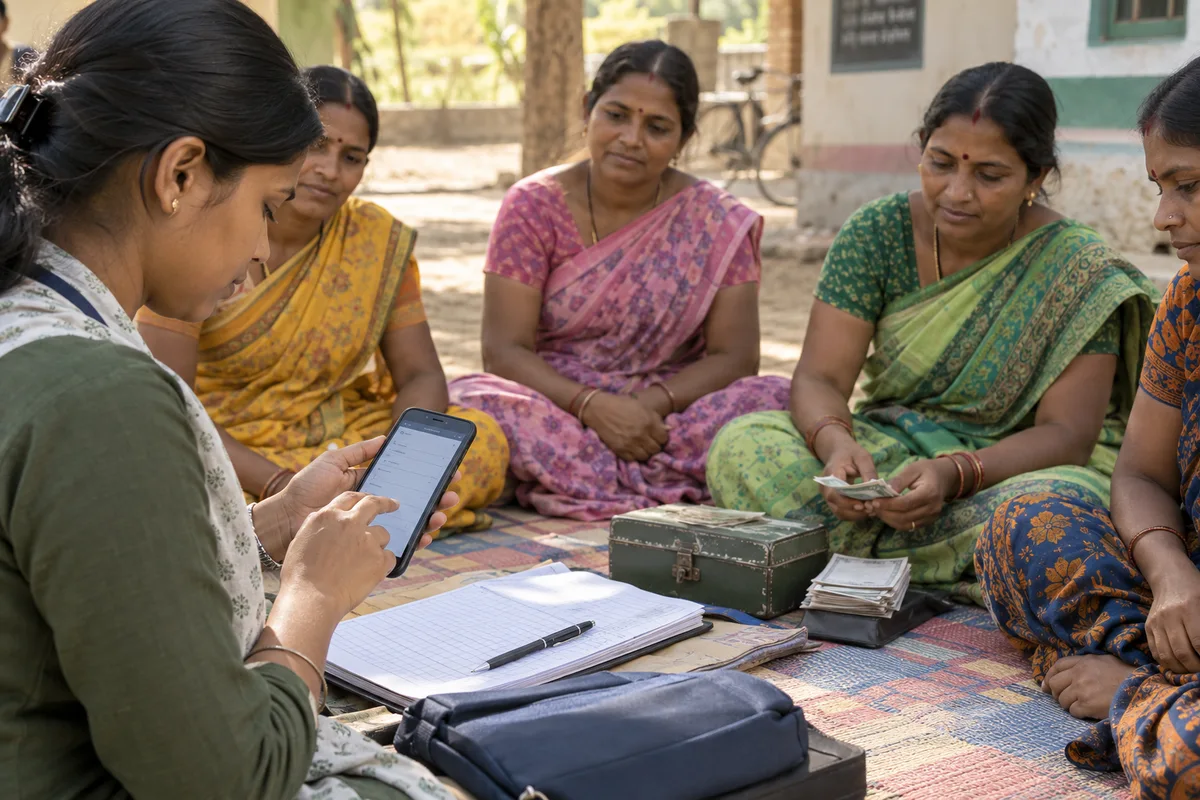
What buyer persona means
A buyer persona is a plain description of the kind of customer who actually buys from you. It includes what they search, what worries them and who else they ask before deciding. GullySales builds this from real enquiries and past sales rather than a generic template, then uses it to write every page and advert.
Also for microfinance companies
- Digital marketing for microfinance companies
- Lead generation for microfinance companies
- SEO for microfinance companies
- Local SEO for microfinance companies
- Social media marketing for microfinance companies
- Content marketing for microfinance companies
- CRM for microfinance companies
- Follow-up systems for microfinance companies
Sales and marketing for microfinance companies, the overview.
Last updated 14 Nov 2026. Rules for this trade differ by state and professional body, and they change. We describe restrictions in general terms, so check the current position with your own council or adviser before you publish anything.
For microfinance companies
Where it usually goes wrong, and what we would do.
“The woman borrower and the household decide together”
The loan is in the woman's name, but the husband, the mother-in-law or a son may decide what happens to the money. An officer who explains only to the borrower can lose the household.
“The group leader is a persona in their own right”
The leader carries the risk of a member who misses an instalment. The wish is for members who can be trusted and an officer who turns up on time, not a better rate pitch.
“The urban shopkeeper is a different buyer”
A home-based worker or small shopkeeper in town compares lenders on a phone, wants an individual loan and decides alone. Messages built for village groups do not reach this buyer.
What we do
What we deliver for microfinance companies.
The work available for this need. We agree the deliverables and responsibilities for your engagement in writing.
Woman borrower persona
A written profile of the borrower's business, season, worries and who else in the household weighs in.
Result: The officer knows who to speak to at the visit.
Group leader persona
A profile of what a leader needs from the company and what makes the leader stop recommending it.
Result: Leaders are treated as partners, not as a route to numbers.
Repeat-loan borrower persona
A profile of the borrower returning after repayment and what to expect the second time.
Result: The offer for a returning borrower is thought out, not improvised.
Urban individual borrower persona
A profile of the shopkeeper or home-based worker who searches before approaching.
Result: Online pages answer what this buyer actually asks.
Persona check with field staff
Each profile is read by officers and branch managers and corrected.
Result: Personas reflect the field, not the head office's guess.
How the result is measured
- Enquiry match to persona
- Conversion rate by persona
- Content aligned to persona
Recorded as a baseline before work starts, so every later report has an honest comparison.
Who is asking
The people whose view settles a loan decision in a village.
- A woman borrower running a stall
- Wants to know the weekly instalment in rupees and whether the group will cover a missed payment. Asks quietly, and only when the officer is not surrounded by men.
- A husband deciding whether the wife may join
- Wants to know who visits the house, who holds the money and what happens if the business slows. The officer rarely meets the husband unless the husband is asked to come.
- A group leader with fifteen women to answer to
- Wants a lender who keeps meeting times, answers a call and does not embarrass any member in front of the group. The leader's word decides whether the group forms.
- A returning borrower after the first loan
- Wants to know whether the second amount is larger and whether the paperwork repeats. Has opinions about the last officer, good or bad.
- An urban shopkeeper wanting an individual loan
- Compares the company with a bank and a local financier. Wants to see the branch address and a written list of documents before agreeing to a visit.
Who it is for
This is written for these microfinance companies.
- NBFC-MFIs working through joint liability groups
- Self-help group linkage lenders
- Microfinance companies in rural Karnataka and neighbouring states
- Urban microfinance for small shopkeepers and home-based workers
- Small finance bank microfinance arms
- Microfinance companies adding individual business loans
- Women's livelihood and dairy-linked lenders
- Company branches opening in a new taluk
Before you decide
When this may not be the right fit.
- You have not yet spoken to the field officers about the last groups that formed and failed, so the persona would be guesswork written at head office.
- You plan to put borrower income into the persona, which the sales side does not collect and credit policy keeps apart.
- Only one branch has been consulted and the others work in a different language, so a single persona would misdescribe most of your field.
Before you decide
Agree the work. Know how to judge it.
Buyer personas for microfinance companies: use these checks to prepare, choose the scope, and review what changes.
Bring the right evidence
Write the decision the research must support, such as entering a market or choosing a buyer group. Separate what you know from sales records from what the team currently assumes.
Make the scope clear
Agree which buyers to speak to, which sources to review, and what access you can provide. Include lost enquiries and people who chose another supplier, where they are willing to take part.
Check the work in use
Look for source dates, sample limitations, and evidence that disagrees with the preferred answer. A recommendation should show how it follows from the findings.
Know when to change course
Do not treat a few positive conversations as proof of demand. Test the proposed offer with an actual buying decision before committing to a wider launch.
These are discussion points, not a fixed package. GullySales confirms the deliverables, responsibilities, fee, and term in writing after reading your brief and speaking with you.
Before we start
What to have ready before the work starts.
The records, access and decisions this work needs from microfinance companies. Anything missing is noted in the written scope, with who will supply it.
- The drop-out list with reasons
- A list of borrowers who left a group, with the reason the officer recorded, tells us what the personas must warn against. Names can be covered. Where no reasons were written, we ask officers to recall them, which is less exact.
- Time with four or five field officers
- Each officer should be free for a long conversation away from the branch manager. Pick people who work different villages. If only managers are available, the personas will describe how managers think a borrower decides.
- A decision on what borrower detail we may see
- Your compliance head must tell us in writing which registers we may read and what must be covered. We work only within it. Without that decision, the personas rest on the officers' accounts alone.
- A recent group formation story from the field
- Ask one officer to tell us how the latest group came together, step by step, who was met and who objected. This story anchors the pages in real order. If the officers cannot recall one, we shadow the next formation.
- The list of products currently offered
- Persona pages refer to the loan the person is deciding about. We need the current product list with the field names officers use. When a product is about to change, tell us, so the persona does not describe a loan that is ending.
How it works
How the buyer persona work runs
The work itself, in order. How an engagement starts, from your brief to a written scope, is set out on our method page.
- 1
Choose which borrowers the personas describe
We begin with a short talk with the head of operations about which borrower types the company wants to understand: the first-time woman borrower, the group leader, the repeat borrower and the urban shopkeeper. You decide how many to build. We do not write one for a type the company has no plan to serve, because an unused persona is a document nobody opens.
- 2
Read the group and loan registers
With your permission, we read the group formation register, the repeat-loan list and the drop-out list with names covered. We look for what the borrowers who stayed have in common and what the ones who left said. We take no income or household detail beyond what the register already holds. Your compliance head sets what we may see.
- 3
Talk to officers in the field
We spend time with four or five field officers, in their villages if possible, and ask how a decision to join a group is made, who is in the room, and who is asked. Their own phrasing goes into the notes unchanged. You choose which officers; we suggest a mix of new and old hands. Borrowers are not interviewed unless you agree.
- 4
Draft each persona on one page
We write each persona as a single page: who the person is, who advises them, what worries them, what they ask the officer and what would make them leave. We use the officers' words and never a real borrower's name. A group leader's page differs from the borrower's page because the leader worries about different things.
- 5
Read the pages back to the officers
We read each persona aloud to the officers who gave us the material and ask what is wrong. Officers correct us more sharply than managers do. We change the pages until the officers say that is the woman at the centre meeting. Your head of operations then approves the final versions.
- 6
Set the personas against the record
Once the personas have been used in the meeting plans and the lead sheet, we compare the borrowers who joined with the persona descriptions, and note where the persona was wrong. You see which pages to revise and which to retire. We record this against the group register from the first step and promise no result.
Where this fits
Three pieces of sales work, in this order.
This work sits inside sales process design, at stage 0, foundation. The audit comes before it, and sales management keeps it running.
Step 1
Sales audit
Find where deals are being lost and what to fix first.
Start here if you cannot say where orders are lost.
Step 2 · you are here
Sales process design
One written way to sell, from first enquiry to repeat order.
Start here if every salesperson sells differently.
Step 3
Sales management
A target, a review routine and someone who owns the number.
Start here if the team has targets and no routine.
FAQ
Questions owners ask before they call.
Not here? More answers, or ask on WhatsApp.
Can we build a persona without asking borrowers to fill in forms?
Do personas include income details?
How many personas do we need?
Should the persona name a real borrower?
Do we need a separate persona for each state or language?
Will the personas be shown to borrowers or only used inside?
How much does it cost?
How long is the contract?
How soon will we see results?
Who will actually do the work?
More for microfinance companies
Related work to consider.
Closest to this: strategy and research
Also for microfinance companies
Or start from the overview: sales and marketing for microfinance companies.
Your next practical step
Tell us what you are trying to grow, and we will read it before we call.
Eight short steps, mostly taps. Skip anything you would rather answer on the call.