Orthopaedic hospitals · Follow up systems
Call back the patient who was advised surgery and went home to think.
A follow-up system for an orthopaedic hospital is the routine of calls and messages that reaches a patient after the consultation, the estimate, the scan or the discharge. GullySales writes the routine, the scripts and the record so each call has an owner and a reason.
Scope, fee, reporting and term are agreed in writing after we have read your brief and spoken to you.
What follow up systems means
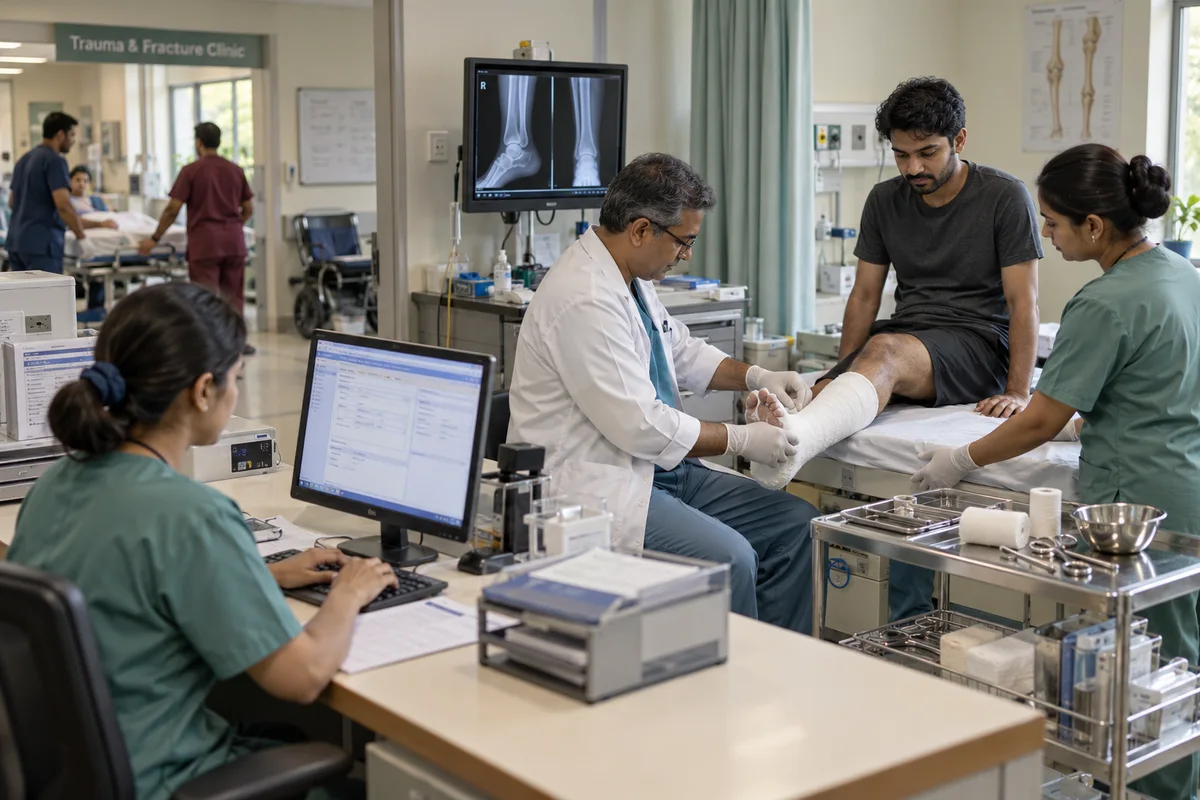
A follow-up system is the set routine for calling, messaging or emailing an enquiry more than once, since most buyers do not decide on the first conversation. GullySales sets the number and timing of follow-ups so an undecided buyer keeps hearing from you until they decide either way.
Also for orthopaedic hospitals
- Lead generation for orthopaedic hospitals
- CRM for orthopaedic hospitals
- SEO for orthopaedic hospitals
- Local SEO for orthopaedic hospitals
- Social media marketing for orthopaedic hospitals
- Content marketing for orthopaedic hospitals
- Buyer persona for orthopaedic hospitals
- WhatsApp marketing for orthopaedic hospitals
Sales and marketing for orthopaedic hospitals, the overview.
Last updated 18 Oct 2026. Rules for this trade differ by state and professional body, and they change. We describe restrictions in general terms, so check the current position with your own council or adviser before you publish anything.
For orthopaedic hospitals
Where it usually goes wrong, and what we would do.
“Hesitation has a reason, and the reason is not written”
The patient advised a knee replacement says they will think. The reason may be cost, fear of the operation, a second opinion, a son abroad or a wedding in the family. Without the reason noted, the callback is generic and gets a generic reply.
“The estimate is handed over and then forgotten”
A printed estimate goes home in a folder. Nobody asks whether it was understood, whether the insurer has seen it, or whether the family compared it with another hospital. That call is the follow-up that matters.
“Rehabilitation visits lapse after discharge”
The patient leaves with a list of exercises and a review date. When the first physiotherapy visit is missed, the recovery slips and the surgeon's work is judged by a poor result. A reminder with a kind voice protects both.
“Persistence turns into pressure”
A patient called every few days about surgery feels chased. The routine sets a limit on attempts, asks permission for the next call, and stops when the patient says no.
What we do
What we deliver for orthopaedic hospitals.
Every deliverable, what it covers for you, and the result it is there to produce. Nothing here is an extra.
Advised-surgery follow-up routine
A written sequence of calls and messages after the surgeon advises an operation, with the reason for hesitation noted at each step.
Result: A routine sheet the coordinator follows for every advised patient.
Estimate follow-up script
Questions to ask after an estimate is given: was it clear, has the insurer been informed, what is still undecided.
Result: A script that gets the open question into the record.
Post-discharge reminders
Reminders for the first physiotherapy visit and the review with the surgeon, sent only to patients who agreed to them.
Result: Each discharged patient has a booked review and a reminder.
Stop rules
A limit on attempts and a clear stop when the patient declines, recorded with the date.
Result: No patient is called after saying no.
Daily list for the coordinator
A list of patients due a call today, with the last note beside each name.
Result: The coordinator opens one list and starts calling.
How the result is measured
- Follow-up completion rate
- Average number of follow-ups before close
- Enquiries closed after repeat follow-up
Recorded as a baseline before work starts, so every later report has an honest comparison.
Who it is for
This is written for these orthopaedic hospitals.
- Joint replacement and arthroscopy hospitals
- Spine surgery centres with inpatient beds
- Trauma and fracture hospitals on highways and ring roads
- Sports medicine hospitals with rehabilitation
- Orthopaedic hospitals run by a group of surgeons
- Orthopaedic and neuro hospitals with a combined spine unit
- Orthopaedic nursing homes expanding to larger hospitals
- Orthopaedic wings of multi-branch hospital groups
How it works
From your first message to the first report.
No open-ended retainer. Every step gives you something in writing.
First
Your brief
You tell us what you need in a few short steps: your business, what you want, where enquiries come from and how they are handled.
After the brief
A conversation and a written scope
We read it, then talk with whoever handles your enquiries. If you want our help, the scope, the fee and the reporting come in writing, and nothing starts before you have read them.
Before work starts
Baseline recorded
The numbers this work is meant to move, such as enquiries, quotations, orders, visits or renewals, written down so every later report has an honest comparison.
After the baseline
The first fix goes live
The fix we agreed to start with is put in place and measured against the baseline, whether that is a reply, a follow-up, a page, a listing or the handover between marketing and sales.
As agreed
Report against the baseline
What moved, what did not, and what changes next, in plain words. How often you get it is set in writing before work starts.
At renewal
Renew on the numbers
The term ends and you decide whether to continue from the results. The length is agreed in writing before anything starts.
How the follow up systems work runs
- 1
Measure today's reply time
From last month's enquiries, we measure how long each waited for a first reply and how many follow-ups it got.
- 2
Agree targets and the sequence
We set reply targets and the follow-up sequence with your team, based on its real hours and workload.
- 3
Set up templates, tasks and ownership
Templates, first-call questions, CRM tasks and named owners go live, with cover for leave and weekends.
- 4
Track and adjust every month
Reply time and follow-up completion are reported against the baseline, and the routine is changed where it is not kept.
Why us
Why owners pick GullySales over an agency.
Marketing and sales, as one job
Most agencies stop at the enquiry. We also fix what happens after it: the reply, the follow-up, the quote and the CRM.
The person on the first call does the work
No account managers in between. You are never handed to someone you have not met.
A baseline before anything starts
Your numbers are written down on day one, so every later report compares against something honest.
The fee in writing, split three ways
Our time, your media spend and production on separate lines. You always see what goes to us.
No guarantees we cannot keep
The term is agreed in writing and never a default twelve months. We never promise a ranking or a lead count, because nobody controls those.
One office, and we say so
Nagarbhavi, Bengaluru. We work across India by call and WhatsApp and travel when a session needs to be in person.
#257, 3rd floor, Sri Nanjundeshwara Complex, Nagarbhavi 8th Block, Outer Ring Road. How we work.
Your brief
Tell us what you need, and we will read it before we call.
Eight short steps about your business, what you want and who decides. Most questions are a tap, and you can skip any you would rather answer on the call.
FAQ
Questions owners ask before they call.
Not here? More answers, or ask on WhatsApp.
How many times should we call a patient advised surgery?
Should the surgeon make the follow-up calls?
Is it right to follow up a patient who chose another hospital?
How much does it cost?
How long is the contract?
How soon will we see results?
Who will actually do the work?
What do you need from us?
What if we are not happy with the work?
More for orthopaedic hospitals
Everything else we would do for you.
Closest to this: leads and follow-up
Also for orthopaedic hospitals
Or start from the overview: sales and marketing for orthopaedic hospitals.
Your next practical step
Tell us what you are trying to grow, and we will read it before we call.
Eight short steps, mostly taps. Skip anything you would rather answer on the call.