Orthopaedic hospitals · Buyer persona
Know who in the family searches, who pays and who decides on the surgeon.
A buyer persona for an orthopaedic hospital describes the real people in each decision: the patient in pain, the family member who searches, the person who holds the mediclaim and the doctor who referred. GullySales writes them from your enquiry records and conversations at the counter, not from guesses.
Scope, fee, reporting and term are agreed in writing after we have read your brief and spoken to you.
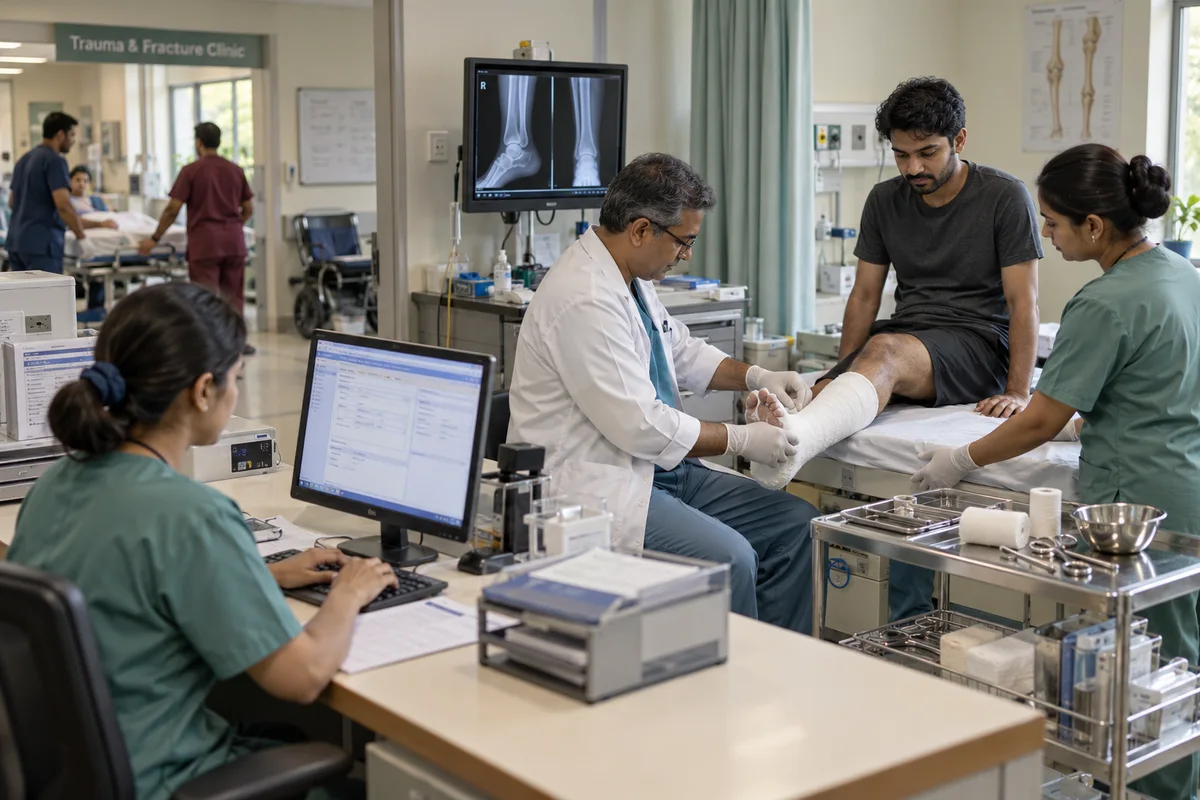
What buyer persona means
A buyer persona is a plain description of the kind of customer who actually buys from you. It includes what they search, what worries them and who else they ask before deciding. GullySales builds this from real enquiries and past sales rather than a generic template, then uses it to write every page and advert.
Also for orthopaedic hospitals
- Digital marketing for orthopaedic hospitals
- Lead generation for orthopaedic hospitals
- SEO for orthopaedic hospitals
- Local SEO for orthopaedic hospitals
- Social media marketing for orthopaedic hospitals
- Content marketing for orthopaedic hospitals
- CRM for orthopaedic hospitals
- Follow-up systems for orthopaedic hospitals
Sales and marketing for orthopaedic hospitals, the overview.
Last updated 18 Oct 2026. Rules for this trade differ by state and professional body, and they change. We describe restrictions in general terms, so check the current position with your own council or adviser before you publish anything.
For orthopaedic hospitals
Where it usually goes wrong, and what we would do.
“The patient is not the only buyer”
A retired patient in pain may leave the choice to a daughter living in another city. The daughter searches, reads estimates and calls. The page and the phone script have to answer the daughter's questions, not only the patient's.
“Planned surgery and trauma are two different people”
The family comparing hospitals for a spine operation has time and a list of questions. The family at casualty has neither. One persona sheet for both produces copy that suits neither.
“The insurance question comes before the surgeon question”
A patient with a cashless policy asks first whether the hospital is on the insurer's list and when approval arrives. A patient without cover asks about the package. The two conversations start differently.
“The referrer is a buyer too”
A physiotherapist, general physician or scan centre chooses the hospital to which they send a patient. Their persona asks whether the surgeon will explain things calmly and whether a letter comes back.
What we do
What we deliver for orthopaedic hospitals.
Every deliverable, what it covers for you, and the result it is there to produce. Nothing here is an extra.
Persona sheets for each decision
One sheet each for the planned-surgery patient, the searching family member, the trauma family and the referring practice.
Result: Four sheets in plain words, each with the questions that person asks.
Questions each persona asks
A list drawn from the counter, the phone log and the estimate desk, written in the words people use.
Result: A question list the front office can check against real calls.
Insurance and no-insurance paths
Two conversation paths, one for cashless patients and one for self-paying patients, with the documents each needs.
Result: The counsellor has a path for each case.
Persona-matched page and script changes
Changes to pages and call scripts so that each persona finds its own question answered early.
Result: A marked-up copy of the pages and scripts.
Review with the surgeons
A session in which the surgeons correct the personas from their own consulting rooms.
Result: Personas the surgeons have read and corrected.
How the result is measured
- Enquiry match to persona
- Conversion rate by persona
- Content aligned to persona
Recorded as a baseline before work starts, so every later report has an honest comparison.
Who it is for
This is written for these orthopaedic hospitals.
- Joint replacement and arthroscopy hospitals
- Spine surgery centres with inpatient beds
- Trauma and fracture hospitals on highways and ring roads
- Sports medicine hospitals with rehabilitation
- Orthopaedic hospitals run by a group of surgeons
- Orthopaedic and neuro hospitals with a combined spine unit
- Orthopaedic nursing homes expanding to larger hospitals
- Orthopaedic wings of multi-branch hospital groups
How it works
From your first message to the first report.
No open-ended retainer. Every step gives you something in writing.
First
Your brief
You tell us what you need in a few short steps: your business, what you want, where enquiries come from and how they are handled.
After the brief
A conversation and a written scope
We read it, then talk with whoever handles your enquiries. If you want our help, the scope, the fee and the reporting come in writing, and nothing starts before you have read them.
Before work starts
Baseline recorded
The numbers this work is meant to move, such as enquiries, quotations, orders, visits or renewals, written down so every later report has an honest comparison.
After the baseline
The first fix goes live
The fix we agreed to start with is put in place and measured against the baseline, whether that is a reply, a follow-up, a page, a listing or the handover between marketing and sales.
As agreed
Report against the baseline
What moved, what did not, and what changes next, in plain words. How often you get it is set in writing before work starts.
At renewal
Renew on the numbers
The term ends and you decide whether to continue from the results. The length is agreed in writing before anything starts.
How the buyer persona work runs
- 1
Understand the current view
We start with how your team currently describes the customer, since the gap between belief and reality is often the finding itself.
- 2
Audit past enquiries and sales
We look at recent enquiries and closed deals to see who actually bought, not who was assumed to buy.
- 3
Interview customers and staff
Short, structured conversations surface the real language, worries and triggers behind a purchase.
- 4
Build the personas
Findings are written into short, usable persona documents rather than a long report.
- 5
Apply to your marketing
We show exactly where each persona should change a page, an ad or a script you already have.
Why us
Why owners pick GullySales over an agency.
Marketing and sales, as one job
Most agencies stop at the enquiry. We also fix what happens after it: the reply, the follow-up, the quote and the CRM.
The person on the first call does the work
No account managers in between. You are never handed to someone you have not met.
A baseline before anything starts
Your numbers are written down on day one, so every later report compares against something honest.
The fee in writing, split three ways
Our time, your media spend and production on separate lines. You always see what goes to us.
No guarantees we cannot keep
The term is agreed in writing and never a default twelve months. We never promise a ranking or a lead count, because nobody controls those.
One office, and we say so
Nagarbhavi, Bengaluru. We work across India by call and WhatsApp and travel when a session needs to be in person.
#257, 3rd floor, Sri Nanjundeshwara Complex, Nagarbhavi 8th Block, Outer Ring Road. How we work.
Your brief
Tell us what you need, and we will read it before we call.
Eight short steps about your business, what you want and who decides. Most questions are a tap, and you can skip any you would rather answer on the call.
FAQ
Questions owners ask before they call.
Not here? More answers, or ask on WhatsApp.
Where do the personas come from?
How many personas does a hospital need?
Do we need patient data for this?
How much does it cost?
How long is the contract?
How soon will we see results?
Who will actually do the work?
What do you need from us?
What if we are not happy with the work?
More for orthopaedic hospitals
Everything else we would do for you.
Closest to this: strategy and research
Also for orthopaedic hospitals
Or start from the overview: sales and marketing for orthopaedic hospitals.
Your next practical step
Tell us what you are trying to grow, and we will read it before we call.
Eight short steps, mostly taps. Skip anything you would rather answer on the call.