Dental clinics · Pay per click advertising
Put the ad budget behind the one treatment with spare chair time.
Google Ads for dentists work best aimed at one treatment with spare capacity, such as implants or aligners, in a few kilometres around the clinic, rather than promoting the clinic as a whole. This pay per click advertising for a dental clinic costs less when the page matches the search. GullySales runs search ads for the treatment and traces every enquiry back to whether it became a booking.
Scope, fee, reporting and term are agreed in writing after we have read your brief and spoken to you.

What pay per click advertising means
Pay per click advertising (PPC) is paying a fee each time someone clicks your advert on Google or another platform. It puts you at the top of a search page immediately, instead of waiting for ranking to build. GullySales sets the targeting, writes the ad text and checks spend against enquiries received.
Last updated 8 Nov 2026. Rules for this trade differ by state and professional body, and they change. We describe restrictions in general terms, so check the current position with your own council or adviser before you publish anything.
For dental clinics
Where it usually goes wrong, and what we would do.
“Treatment searches convert better than clinic name searches”
Someone searching for implant cost is a warmer enquiry than someone searching for your clinic's name directly.
“The landing page needs to match the ad's promise”
An ad for aligner cost that lands on a general homepage loses the enquiry before the front desk ever calls back.
“A tight locality radius avoids wasted spend”
A dental clinic serves a small radius, so targeting a few kilometres around it makes the budget work harder.
“Meta ads reach people who are not searching yet”
A Facebook or Instagram advert can show a smile-change idea to a person who has not typed anything. Judge it on consultations kept, not on form fills, because the intent is weaker than a search.
What we do
What we deliver for dental clinics.
Every deliverable, what it covers for you, and the result it is there to produce. Nothing here is an extra.
A campaign built around one spare-capacity treatment
A campaign aimed at implant, aligner or another specific treatment search rather than the clinic's name, matched to which treatment has room this period.
Result: The budget goes toward the treatment the clinic actually has room for.
A landing page matching the ad clicked
A page matching the ad's promise, such as aligner cost, instead of sending the click to a general homepage.
Result: The enquiry does not fall away before the front desk ever calls back.
A radius set to who can realistically visit
Ad targeting limited to a few kilometres around the clinic, matched to how far a patient will actually travel for that treatment.
Result: Spend is not wasted reaching people unlikely to book a visit.
Enquiry tracing from click to booked appointment
Every ad enquiry recorded against your call log and CRM so it can be traced through to whether it became a booking.
Result: You can see which campaign actually filled a chair, not just which got clicks.
Spend and enquiry report against the baseline
A report showing spend, enquiries and bookings for each campaign against the baseline recorded before the campaign began.
Result: You know exactly what the advertising spend is actually producing here.
How the result is measured
- Cost per click
- Cost per enquiry
- Enquiries from paid search
Recorded as a baseline before work starts, so every later report has an honest comparison.
Searches to bid on and block
The searches worth paying for at a dental clinic, and the ones to keep out.
- Emergency searches, such as tooth pain or dentist open now
- Bid. The patient is in pain and will book the first clinic that answers. Show your hours and a call button, and switch the call off when nobody can pick up.
- Routine treatment plus area, such as root canal near me
- Bid on one treatment at a time, with the locality. Pick the one with spare chair time, and send it to a page about that treatment and the dentist who does it.
- Aligner, implant and smile design searches, including cost
- Bid in separate campaigns. These patients compare several clinics, so the page should explain the process and what the price depends on, without figures or promises about results.
- Dental college, course, job, home remedy and toothpaste searches
- Block. Add dental college, BDS, course, vacancy, home remedy, toothpaste and clove oil as negatives. Students and people treating pain at home click on dental words.
- Where the click lands
- Send the click to the treatment page with the dentist's name and qualification, the address, timings and a booking form or call button. Do not use the home page.
- Counting a real enquiry
- Use a call-tracking number or call-button count for each campaign. Count an answered call or a booking, then whether the appointment was kept and treatment started. Count Practo bookings apart from website ones.
Who it is for
This is written for these dental clinics.
- Single-dentist clinics
- Multi-chair general dental clinics
- Orthodontic and aligner-only practices
- Implant and oral surgery centres
- Cosmetic and smile-design clinics
- Paediatric dental clinics
- Dental clinics inside a multi-speciality centre
- Multi-branch dental groups
- New clinics in their first year
Not for
It is not the right fit if.
- The website has no page for the treatment the ad would promote, so clicks would land on a general home page.
- Calls from ads cannot be answered within the working day.
- The clinic has not checked the platform's current rules for health advertising.
How it works
How the pay per click advertising work runs
The work itself, in order. How an engagement starts, from your brief to a written scope, is set out on our method page.
- 1
Agree the whole budget
We fix the total paid budget across platforms, who owns each ad account, and how much is open to moving.
- 2
Audit tracking and accounts
We check that conversions fire once, that calls and WhatsApp chats are counted, and that your enquiry sheet matches what the platforms say.
- 3
Set one definition of success
You and we agree what a qualified enquiry is and what an order is, so every platform is judged the same way.
- 4
Build and launch the plan
Campaigns are structured across platforms with shared naming and tags from day one.
- 5
Read search terms and lead quality
We review the queries that triggered ads and the enquiries that arrived, and remove waste before moving money.
- 6
Reallocate and report
Budget moves toward what is earning, within agreed limits. Results are reported against the baseline, at the frequency agreed in writing.
Where this fits
Three pieces of sales work, in this order.
This work sits inside sales process design, at stage 1, prospecting and lead generation. The audit comes before it, and sales management keeps it running.
Step 1
Sales audit
Find where deals are being lost and what to fix first.
Start here if you cannot say where orders are lost.
Step 2 · you are here
Sales process design
One written way to sell, from first enquiry to repeat order.
Start here if every salesperson sells differently.
Step 3
Sales management
A target, a review routine and someone who owns the number.
Start here if the team has targets and no routine.
FAQ
Questions owners ask before they call.
Not here? More answers, or ask on WhatsApp.
How do Google Ads work for a dental clinic?
Which treatment should we advertise first?
Do ads replace SEO for a clinic?
Should a dentist bid on their own name?
Is Google Ads or Meta better for aligner patients?
What must be ready before the first dental ad goes live?
How much does it cost?
How long is the contract?
How soon will we see results?
Who will actually do the work?
From the blog
Further reading for dental clinics.
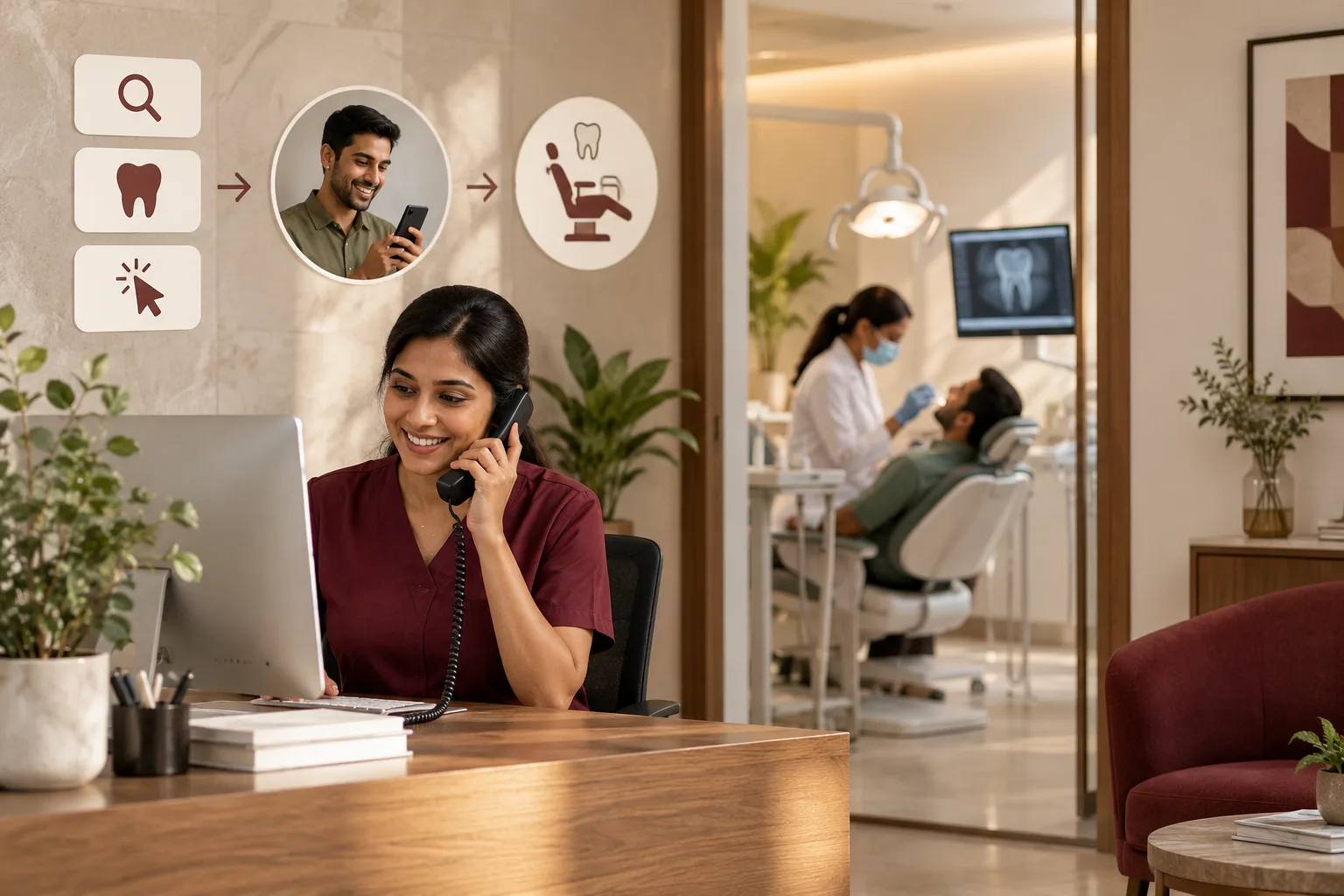 6 min read · 19 Aug 2025Why PPC marketing matters for dental clinicsDental PPC marketing reaches the patient who has already decided to get treated, so the treatments you bid on and who answers the phone decide the result.
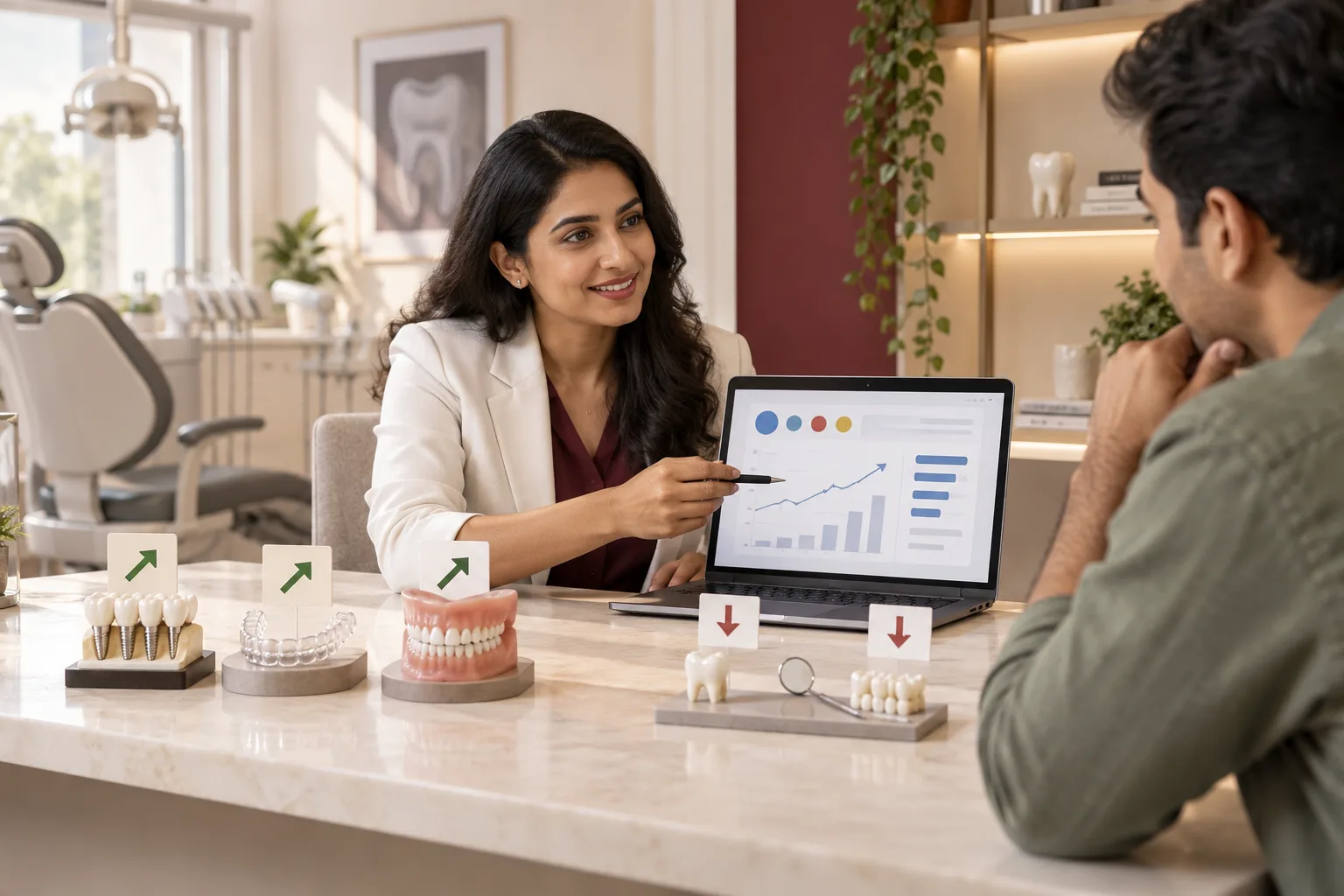 7 min read · 10 Dec 2024Why are Google Ads important for dental marketing?Google Ads for a dental clinic pays for itself on implants, aligners and full-mouth work, and wastes money on scaling, check-ups and small fillings.
 6 min read · 17 Sept 2024Google Ads vs Meta ads: which platform should you choose?Google reaches people already looking for what you sell. Meta interrupts people who might want it once they see it.
More for dental clinics
Everything else we would do for you.
Closest to this: paid and media
Also for dental clinics
Or start from the overview: sales and marketing for dental clinics.
Your next practical step
Tell us what you are trying to grow, and we will read it before we call.
Eight short steps, mostly taps. Skip anything you would rather answer on the call.