Hospitals · CRM
The enquiry record is not the case sheet, and must never become one.
A CRM for a hospital records enquiries and referrals: who called, for which department, where they came from, which doctor sent them, and whether they reached an appointment. Clinical notes stay in the hospital information system. GullySales sets up that record and keeps the two firmly apart.
Scope, fee, reporting and term are agreed in writing after we have read your brief and spoken to you.

What CRM means
A CRM is the record where every enquiry, call and quote is kept against a customer, replacing separate notebooks, spreadsheets and memory. GullySales sets up or cleans an existing CRM and reports from it by enquiry outcome rather than by activity logged.
Last updated 5 Oct 2026. Rules for this trade differ by state and professional body, and they change. We describe restrictions in general terms, so check the current position with your own council or adviser before you publish anything.
For hospitals
Where it usually goes wrong, and what we would do.
“Keep it to the enquiry and keep the case sheet out”
Name, number, department, source and whether the patient attended is enough to run marketing on. A diagnosis in a marketing system is a privacy problem with no use attached. Draw that line before you buy any software.
“Department is the field that changes decisions”
A hospital that can see orthopaedic enquiries rising while maternity falls moves its spend that week. A hospital counting total calls cannot tell which ward is filling.
“The referring doctor deserves a field of their own”
Every enquiry marked with the GP, diagnostic centre or consultant behind it, so you can see which relationships are working. This is a record of who referred, not of anything paid.
What we do
What we deliver for hospitals.
Every deliverable, what it covers for you, and the result it is there to produce. Nothing here is an extra.
An enquiry record with department and source on every line
Channel, department, the doctor asked for, whether an appointment was booked and whether the patient attended.
Result: You can see which ward the marketing is filling.
A referral register kept separately
The GP, diagnostic centre or consultant behind each enquiry, with a contact person and the date of the last conversation.
Result: A quiet referrer is noticed while it still matters.
A privacy line written into the setup
What may be recorded, what stays in the hospital information system, who has access and how long enquiry records are kept, settled with your compliance adviser.
Result: The marketing record cannot turn into a clinical one.
Stages named after the hospital's own steps
Enquiry, appointment booked, attended, admitted, and not proceeded with a reason, agreed with the front desk before anything is configured.
Result: The pipeline matches what the desk actually does.
Insurer and TPA status where the desk can see it
The panel, the approval position and who is chasing it, held against the enquiry instead of in a separate file.
Result: A family gets a straight answer at the counter.
A read-out the management committee can use
Enquiries by department and source, reply time, appointments attended and referrals by doctor, set against the baseline recorded before the work starts.
Result: Department heads argue from the same numbers.
How the result is measured
- Enquiries logged in the CRM
- Data completeness
- Reports generated from CRM data
Recorded as a baseline before work starts, so every later report has an honest comparison.
What to record, and when
What a hospital's enquiry desk should record about every call, and whether it needs software yet.
- Department and the need, in one line
- Choose the department from a fixed list and write the need in one line, such as a second opinion on knee pain or a maternity booking. The clinical detail stays in the hospital system.
- Source and referring doctor
- Record whether the enquiry came from Google, a doctor's referral, a corporate tie-up, an insurer or a walk-in, and name the referring doctor. This register shows which doctors rely on you, and should be kept apart from patient notes.
- Insurer, TPA and cashless status
- Note whether the family has insurance, the insurer or TPA and whether pre-authorisation was requested. Families call back for this answer more than for any other, so the desk should find it without asking.
- Appointment or admission reached
- Record whether the enquiry became a booked appointment, a visit or an admission. A call that never reaches an appointment is where the hospital learns what its pages and its desk are missing.
- Who may see what
- List which staff can open the enquiry record and which cannot. Phone numbers linked to a health concern are personal data, so use the hospital's own policy and have the privacy lead approve the fields.
- Do you need software yet?
- A hospital information system is not a CRM, and should not be asked to be one. A controlled sheet can work for a nursing home. A larger hospital needs a proper shared system, agreed with the IT head and the privacy lead.
Who it is for
This is written for these hospitals.
- Multi-speciality hospitals
- Single-speciality hospitals, maternity, orthopaedic or eye
- Nursing homes
- Day-care surgery centres
- Corporate hospital chains with several branches
- Diagnostic-centre-led hospitals
- Hospitals attached to medical colleges
- Government-empanelled private hospitals
Not for
It is not the right fit if.
- The hospital wants clinical notes or test results stored in the same record, which an enquiry record must not hold.
- No one has agreed which desk logs an enquiry, so the record would be filled by some staff and ignored by others.
- The staff are still using the hospital information system for enquiries and have not agreed to change.
How it works
How the CRM work runs
The work itself, in order. How an engagement starts, from your brief to a written scope, is set out on our method page.
- 1
Map the sales process
We sit with the people who sell and write down how a deal moves from enquiry to payment, including where it stalls.
- 2
Agree stages, fields and owners
Each stage gets a name your team already uses and a proof that the deal has left it. We agree which fields are required at which stage, and who may change what.
- 3
Build on a copy
Pipeline, fields and views are built on a trial copy where the CRM offers one, or in a separate pipeline where the plan allows. Live work stays untouched.
- 4
Connect channels, then switch on automations
Channels are connected first. Each automation is then switched on separately, so a misfiring rule is easy to find.
- 5
Test with real deals
The people who will use the CRM run open deals through it. Gaps are fixed before the whole team switches over.
- 6
Switch over and trim
Once real use shows which fields stay empty and which stages nobody uses, those are cut and the handover record is updated.
Proof
What happened when owners fixed this.
Real clients, the work we did, and the result as it was recorded. Where no number was recorded, none is claimed.
Chord Road Hospital
- Situation
- Patients who knew the hospital trusted it. Patients who searched for a department or a treatment in the area did not find it.
- What we did
- Website rebuilt around patient needs
- Search visibility
- Social media on a schedule
- Review management
- Result
- Organic traffic increased 60% within six months
- Online appointment bookings increased 40%
- Social following grew 45%, and engagement on it rose 70%
Nanda Arthritis and Rheumatology Center
- Situation
- There was no website, so a patient looking for a rheumatologist had no way to learn about the centre. Enquiries were few, and the ones that arrived came by word of mouth.
- What we did
- A website for patients
- Search work
- Google Business and reviews
- Lead capture and advertising
- Result
- No numbers were recorded for this engagement. The work is described in full in the case study.
Also worked with
Curtain Label · Difesa Security Services · Felicity Inn · Hands On CSR · Implevista · Kambar Group · Kalessi · Kerur Pain Clinic · LL Trust · Lucky Deals · Natural Gases · NavaShakthi Souhardha · NewCom Logistics · Proton Technical Services · SB Engineering · Shakthi Foundation · Shakthi Group · Urbanest · Insyde Studio · Venkateshwara Laser Tech · Vivara Studios
Where this fits
Three pieces of sales work, in this order.
This work sits inside sales management. A target, a review routine and someone who owns the number.
Step 1
Sales audit
Find where deals are being lost and what to fix first.
Start here if you cannot say where orders are lost.
Step 2
Sales process design
One written way to sell, from first enquiry to repeat order.
Start here if every salesperson sells differently.
Step 3 · you are here
Sales management
A target, a review routine and someone who owns the number.
Start here if the team has targets and no routine.
FAQ
Questions owners ask before they call.
Not here? More answers, or ask on WhatsApp.
Can we use our hospital information system as the CRM?
Who should own the enquiry record?
How do we log an enquiry without keeping clinical details in it?
Can WhatsApp chats and call recordings be filed against the enquiry?
How much does it cost?
How long is the contract?
How soon will we see results?
Who will actually do the work?
What do you need from us?
What if we are not happy with the work?
From the blog
Further reading for hospitals.
 6 min read · 6 Oct 2026What healthcare buyers check before they choose youA patient, a referring doctor and a hospital purchase team each check something different before choosing a provider. This post lists what each one looks at and where a clinic, lab or supplier loses them.
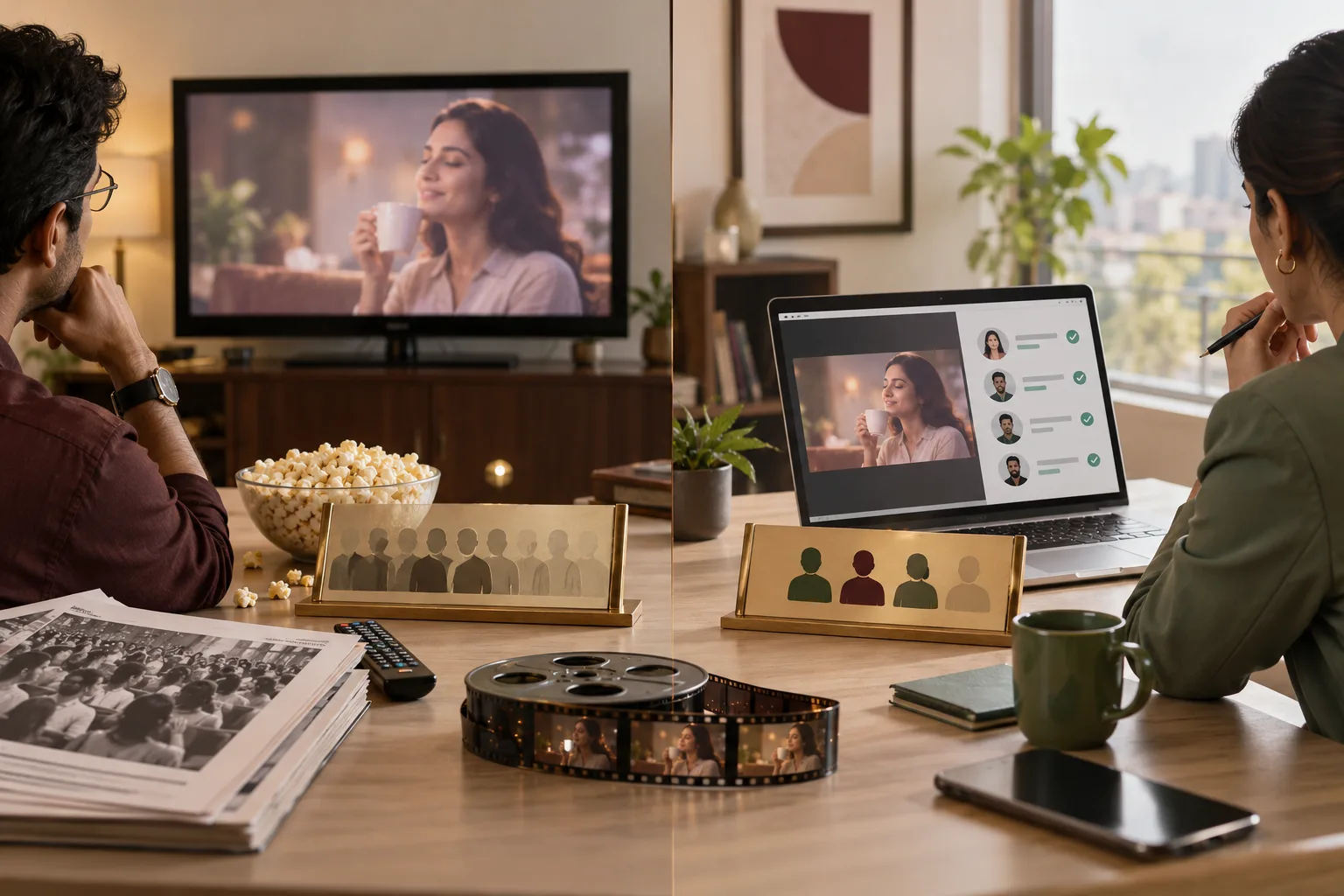 6 min read · 21 Sept 2026TV advertising vs OTT advertising: what are you actually buying?Television sells slots against ratings and prices the wastage in. OTT sells impressions to chosen people and charges for the choosing. Same film, two shops.
 8 min read · 21 Sept 2026Tamil advertising creative: what actually changesTamil is written one way and spoken another, and its script cannot tell b from p. What that means for your line, voice artist and brand spelling.
More for hospitals
Everything else we would do for you.
Closest to this: leads and follow-up
Also for hospitals
Or start from the overview: sales and marketing for hospitals.
Your next practical step
Tell us what you are trying to grow, and we will read it before we call.
Eight short steps, mostly taps. Skip anything you would rather answer on the call.