Pharmacies · Buyer persona
Know the three people behind every regular order before you plan a single message.
A buyer persona for a pharmacy is a written picture of the household that fills its prescriptions with you, including the person who pays and the person who collects. GullySales builds that picture from your billing records and counter conversations, then ties each persona to a message the drug laws allow.
Scope, fee, reporting and term are agreed in writing after we have read your brief and spoken to you.

What buyer persona means
A buyer persona is a plain description of the kind of customer who actually buys from you. It includes what they search, what worries them and who else they ask before deciding. GullySales builds this from real enquiries and past sales rather than a generic template, then uses it to write every page and advert.
Last updated 17 Oct 2026. Rules for this trade differ by state and professional body, and they change. We describe restrictions in general terms, so check the current position with your own council or adviser before you publish anything.
For pharmacies
Where it usually goes wrong, and what we would do.
“The patient is rarely the buyer”
An elderly parent takes the tablets, a son in another city pays, and a domestic helper collects them from the counter. Three people ask three different questions: is it in stock, can I pay online, will it reach the door. A persona that names only the patient misses two of them.
“The urgent walk-in and the regular household are different customers”
Someone holding a fresh prescription from the clinic next door wants the nearest open counter and forgets your name by evening. A household with a standing prescription weighs reliability, delivery and the pharmacist's memory of the family. A message written for one bores the other.
“The device and baby care shopper has another mindset”
A person choosing a BP monitor or a pack of diapers compares you with an instant-delivery app, not with the chemist across the road. They want a visible price, a demonstration and a reason to buy from a person. This persona never arrives through a prescription.
“Institutional buyers decide on delivery, not on a brand”
A care home manager, a home nursing coordinator or an office administrator orders supplies on behalf of others. They ask about billing terms, reliable delivery and whom to phone when an item runs out. Their habits differ from a household's, and the persona has to record that.
What we do
What we deliver for pharmacies.
Every deliverable, what it covers for you, and the result it is there to produce. Nothing here is an extra.
A household map read from your billing data
Regular customers grouped by what they buy and how they pay, drawn from the billing software with names kept private and out of any outside file.
Result: You can see which kinds of household make up your regular counter.
Payer and collector notes
For each persona, who decides, who pays and who collects, written from what your counter staff already know about the families.
Result: Staff know whom they are really talking to.
The questions each persona asks
The real questions heard at the counter and on WhatsApp, listed by persona: stock, substitute, delivery slot, payment.
Result: Replies answer the question that was asked.
A message limits sheet
For every persona, what can be said about service, delivery and devices, and what stays out because it would promote a prescription medicine.
Result: Nobody on your staff has to guess what is allowed.
A profile of the regular who stopped buying
A description of the household that left, with reasons collected from conversations instead of assumed.
Result: You can name why households leave you.
How the result is measured
- Enquiry match to persona
- Conversion rate by persona
- Content aligned to persona
Recorded as a baseline before work starts, so every later report has an honest comparison.
Who is asking
Who is behind a regular order at the chemist, and what each wants to know.
- An adult child ordering for a parent in another city
- Wants to know whether the shop delivers, takes a prescription photo, accepts online payment and tells them when the strips run low.
- The elderly patient collecting the monthly strips
- Wants the same pharmacist, a clear bill and no change of brand without being told. Responds to a call, not an app.
- A carer buying for a bedridden patient
- Wants delivery to the door, supplies such as dressings or a bed pad kept in stock, and a number that someone answers in the evening.
- A new mother buying baby care
- Wants to ask the pharmacist what to buy and what to avoid, and trusts a chemist who says when to see the paediatrician.
- A care home or clinic manager
- Wants a stated delivery route, a named contact and a consistent bill. Cares about reliability more than a discount.
Who it is for
This is written for these pharmacies.
- Independent neighbourhood chemists
- Pharmacies attached to a clinic or nursing home
- Hospital pharmacies serving outpatients
- Pradhan Mantri Bhartiya Janaushadhi Kendras and generic medicine stores
- Multi-outlet local pharmacy chains
- Franchise outlets of national pharmacy brands
- Surgical and medical equipment stores
- Pharmacies stocking Ayurvedic and homoeopathic medicines
- Twenty-four hour and late-night pharmacies
Not for
It is not the right fit if.
- Your billing data holds no repeat customers yet, so the cards would be guesses rather than a picture of your own households.
- You want a persona that names a medical condition; that turns a marketing aid into a record of health information.
- The shop has one kind of customer and one counter, where the owner already knows each household by name.
How it works
How the buyer persona work runs
The work itself, in order. How an engagement starts, from your brief to a written scope, is set out on our method page.
- 1
Understand the current view
We start with how your team currently describes the customer, since the gap between belief and reality is the finding itself.
- 2
Audit past enquiries and sales
We look at recent enquiries and closed deals to see who actually bought, not who was assumed to buy.
- 3
Interview customers and staff
Structured conversations with recent buyers, held as talk about the last purchase and not a questionnaire. We ask what happened before they called, who else was involved and what they compared. Customers agree before we contact them, and their answers are reported without names.
- 4
Build the personas
Findings are written into short, usable persona documents rather than a long report.
- 5
Apply to your marketing
We show where each persona should change a page, an ad or a script you already have. The sales team reads the drafts and says which ring true. A persona they do not recognise is rewritten.
Where this fits
Three pieces of sales work, in this order.
This work sits inside sales process design, at stage 0, foundation. The audit comes before it, and sales management keeps it running.
Step 1
Sales audit
Find where deals are being lost and what to fix first.
Start here if you cannot say where orders are lost.
Step 2 · you are here
Sales process design
One written way to sell, from first enquiry to repeat order.
Start here if every salesperson sells differently.
Step 3
Sales management
A target, a review routine and someone who owns the number.
Start here if the team has targets and no routine.
FAQ
Questions owners ask before they call.
Not here? More answers, or ask on WhatsApp.
Do we need personas if we know our customers by name?
Can a persona include a customer's health condition?
How many personas should one chemist write?
Where do we keep the cards so staff use them?
How much does it cost?
How long is the contract?
How soon will we see results?
Who will actually do the work?
What do you need from us?
What if we are not happy with the work?
From the blog
Further reading for pharmacies.
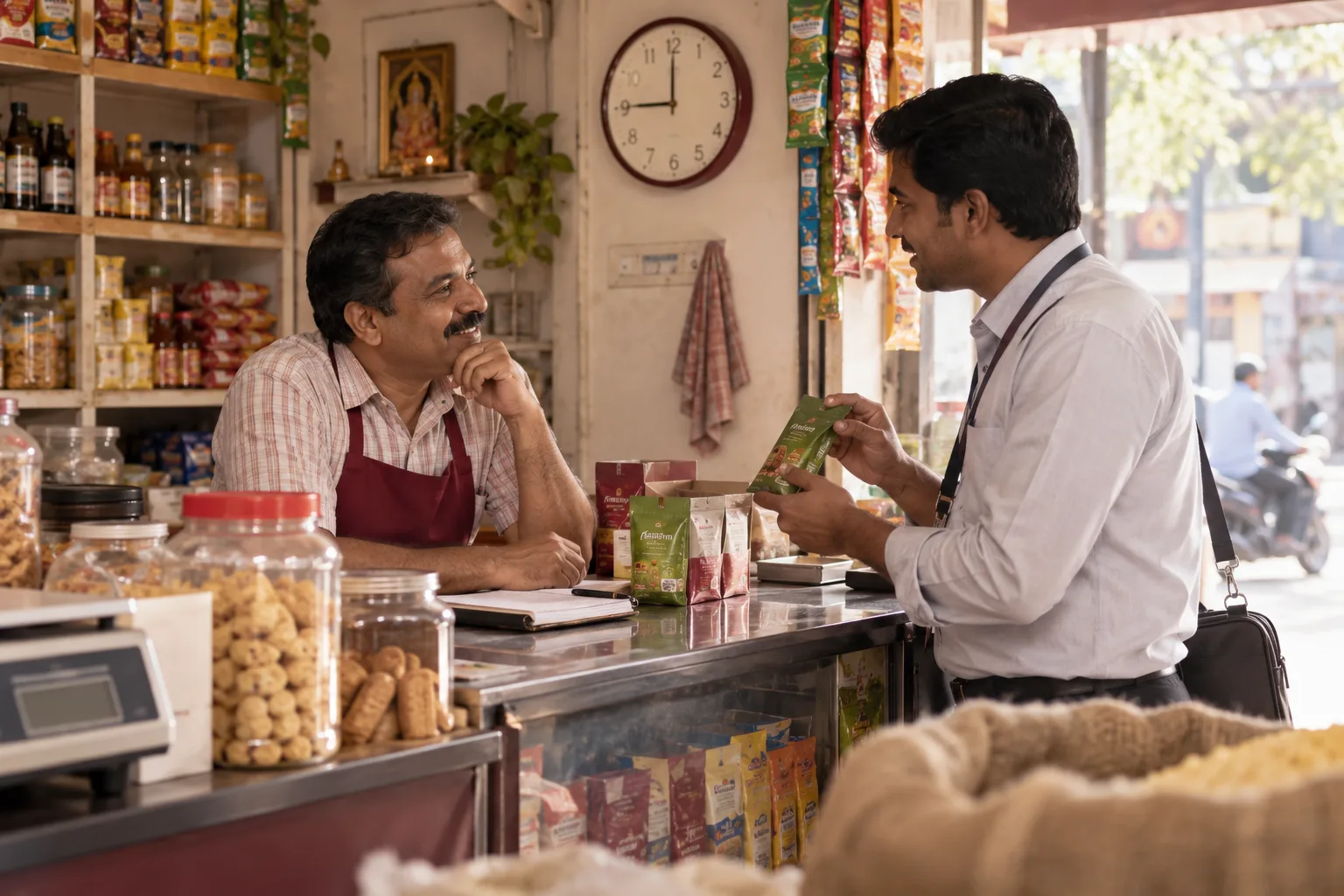 8 min read · 21 Sept 2026How to advertise to retail business ownersA shop owner is behind the counter from ten to nine and cannot leave it. That single fact rules out most media, and it makes the lean afternoon hour and the distributor's salesman worth more than any campaign.
 7 min read · 18 Feb 2025Best advertising channels for diagnostic centresMost tests are decided by a prescribing doctor, so advertising has a ceiling. The channels that pay are Maps, the referral round, home collection and a small number of honest packages.
More for pharmacies
Everything else we would do for you.
Closest to this: strategy and research
Also for pharmacies
Or start from the overview: sales and marketing for pharmacies.
Your next practical step
Tell us what you are trying to grow, and we will read it before we call.
Eight short steps, mostly taps. Skip anything you would rather answer on the call.