Veterinary clinics · Sales process
Turn a booked check-up into a completed treatment plan.
A sales process for a veterinary clinic is the fixed set of steps from a booked appointment to a completed recommended treatment. It covers how a diagnosis and cost are explained, and how an undecided owner is followed up. GullySales writes this with your vets and front desk.
Scope, fee, reporting and term are agreed in writing after we have read your brief and spoken to you.
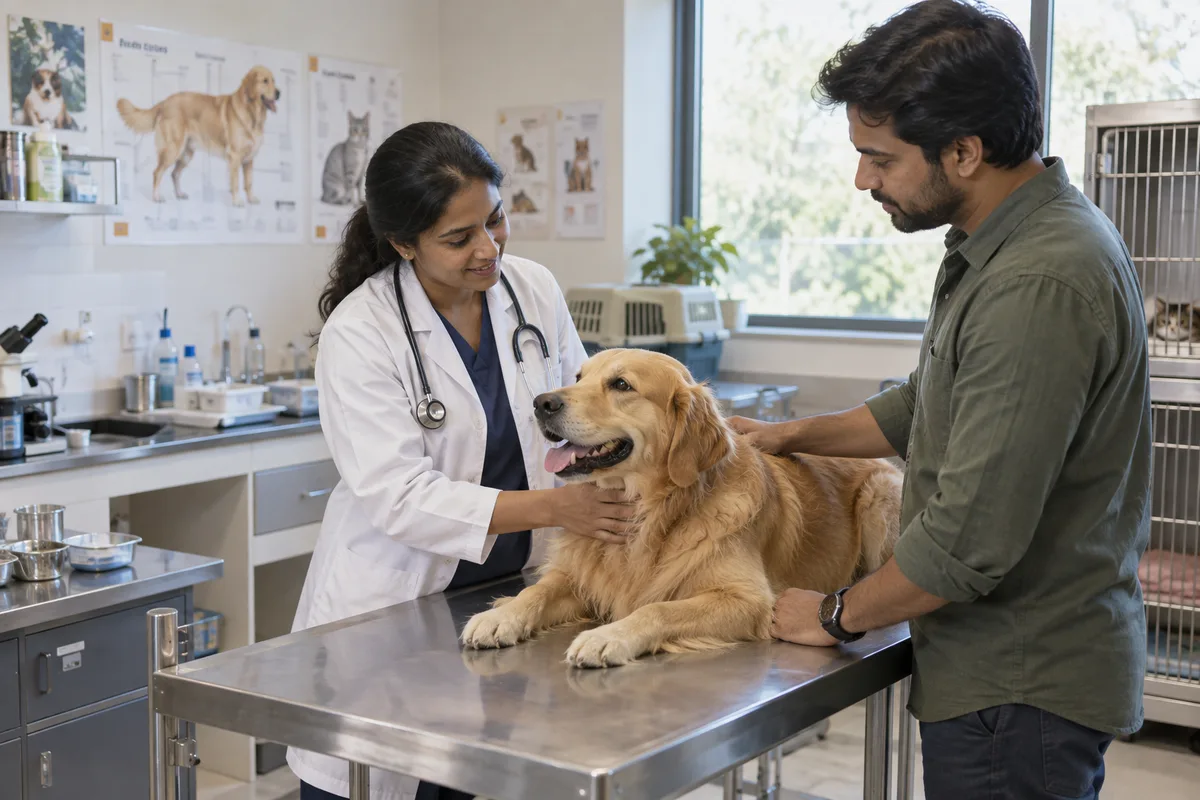
What sales process means
A sales process is the fixed sequence of steps, such as enquiry, site visit, quote and order, that every deal is expected to pass through in the same order. GullySales writes this sequence down for your business and checks that every salesperson actually follows it.
Also for veterinary clinics
- Sales enablement for veterinary clinics
- Sales management for veterinary clinics
- Sales training for veterinary clinics
- Apartment advertising for veterinary clinics
- Branding for veterinary clinics
- Buyer journey for veterinary clinics
- Buyer personas for veterinary clinics
- Content marketing for veterinary clinics
Sales and marketing for veterinary clinics, the overview.
Last updated 8 Nov 2026. Rules for this trade differ by state and professional body, and they change. We describe restrictions in general terms, so check the current position with your own council or adviser before you publish anything.
For veterinary clinics
Where it usually goes wrong, and what we would do.
“The cost conversation needs a consistent structure”
Explaining a diagnosis, the recommended treatment and its cost in a set order, calmly, helps an owner absorb difficult news and make a decision rather than panic and delay.
“An undecided owner needs a scheduled follow-up call”
An owner who leaves without booking a recommended procedure should be called within a few days, since many are simply overwhelmed, not uninterested.
“A missed follow-up appointment needs a same-day reach-out”
A pet due for a post-surgery check that does not show up should prompt a quick call, since owners sometimes assume no news means all is well.
What we do
What we deliver for veterinary clinics.
Every deliverable, what it covers for you, and the result it is there to produce. Nothing here is an extra.
A set structure for the cost conversation
A consistent order for explaining a diagnosis, the recommended treatment and its cost, calmly, so an owner can absorb difficult news and decide.
Result: An owner facing a hard decision hears it explained the same careful way each time.
A scheduled follow-up call for undecided owners
A call placed within a few days of an owner leaving without booking a recommended procedure, on the basis that many are overwhelmed, not uninterested.
Result: An owner who needed time is not mistaken for one who said no.
A same-day reach-out for a missed follow-up appointment
A quick call placed the same day a post-surgery check is missed, since an owner often assumes no news means all is well.
Result: A missed check-up is caught before it becomes a bigger problem unnoticed.
A written process from booking to completed treatment
A documented sequence covering the booked appointment, the diagnosis conversation and the completed treatment, for vets and front desk to follow consistently.
Result: The same careful process happens whichever vet or staff member is involved.
Drop-out review by process stage
A monthly look at where owners are lost between a booked appointment and a completed treatment, compared with the previous month.
Result: You can see which part of the process still loses owners.
How the result is measured
- Deals following the process
- Time spent at each step
- Drop-off rate by step
Recorded as a baseline before work starts, so every later report has an honest comparison.
Steps of a sale
Take a pet owner from the first call to a completed treatment plan in the same order.
- Call or WhatsApp enquiry
- Ask the species, breed, age, the symptom and since when. For signs such as bloating, suspected poisoning or laboured breathing, give the earliest slot. Record the pet and owner in the register.
- Examination and tests
- After the exam, show the owner what you found and which tests are needed, such as a blood test or an X-ray. Note the tests they agreed to and any they declined.
- Estimate for treatment or surgery
- Write the surgery, anaesthesia, medicines and hospital stay as separate lines. Record the option the owner chose, or the reason they wanted time.
- Procedure booking
- Book the date, give the fasting instructions and take the signed consent form. Note who will collect the pet and how to reach them.
- Discharge and home care
- Explain medicines, cone or bandage care and warning signs, with a printed sheet to take home. Record the suture removal or recheck date.
- Vaccination card
- Before the pet leaves, fill in the vaccination card and add the next booster and deworming due dates to the reminder list.
Who it is for
This is written for these veterinary clinics.
- Small animal clinics
- Multi-vet veterinary hospitals
- Mobile and home-visit vet services
- Exotic and avian veterinary practices
- Farm and large animal veterinary services
- Pet grooming and wellness clinics with vet services
- 24-hour emergency veterinary hospitals
- Veterinary diagnostic and referral centres
Not for
It is not the right fit if.
- The vets do not agree on who gives the estimate, so a written process would be ignored from the first case.
- Most of the work is walk-in emergency care where the owner decides on the spot, and stages would only slow a visit that cannot wait.
How it works
How the sales process work runs
The work itself, in order. How an engagement starts, from your brief to a written scope, is set out on our method page.
- 1
Study current deal flow
We trace how deals actually move today, comparing across reps and outcomes.
- 2
Define the stages
Clear stages and criteria are designed to match how deals genuinely progress and close.
- 3
Configure the CRM
The process is built into your CRM so it is enforced structurally, not just documented.
- 4
Train the team
Reps are trained on the new process and why each stage exists.
- 5
Review adoption
We check after rollout whether the process is being followed and adjust where it is not.
Where this fits
Three pieces of sales work, in this order.
This work sits inside sales process design, at stage 1, prospecting and lead generation. The audit comes before it, and sales management keeps it running.
Step 1
Sales audit
Find where deals are being lost and what to fix first.
Start here if you cannot say where orders are lost.
Step 2 · you are here
Sales process design
One written way to sell, from first enquiry to repeat order.
Start here if every salesperson sells differently.
Step 3
Sales management
A target, a review routine and someone who owns the number.
Start here if the team has targets and no routine.
FAQ
Questions owners ask before they call.
Not here? More answers, or ask on WhatsApp.
Can a small clinic run a formal process without more staff?
Does this apply to routine visits too?
An owner asks for a surgery price over the phone. What do we tell them?
Should the vet or the front desk talk to the owner about money?
How long is the contract?
How soon will we see results?
Who will actually do the work?
What do you need from us?
What if we are not happy with the work?
From the blog
Further reading for veterinary clinics.
 6 min read · 26 Aug 2026Pet grooming marketing: how to get grooming and boarding customersPet grooming marketing works on Maps, reviews, before and after photographs and fast replies. Boarding is won on trust. Here is how to fill both, and what a plan should cover.
 8 min read · 19 Aug 2026The pet parent journey: from the first search to regular visitsThe pet parent journey runs from the first anxious search to years of repeat visits. Here are the stages, and where Indian clinics lose owners.
 7 min read · 20 May 2026Loyalty programmes for pet clinics: the ones owners actually useA loyalty programme for a pet clinic is not a points card. It is a wellness plan paid up front, reminders for care that is already due, and one small standing benefit a regular notices.
More for veterinary clinics
Everything else we would do for you.
Closest to this: sales craft
Also for veterinary clinics
Or start from the overview: sales and marketing for veterinary clinics.
Your next practical step
Tell us what you are trying to grow, and we will read it before we call.
Eight short steps, mostly taps. Skip anything you would rather answer on the call.