Roofing contractors · Pay per click advertising
Pay for the shed and sheet enquiries you can serve, and block the rest.
Paid search for a roofing contractor buys the searches an owner makes when a shed needs a roof or a roof starts to leak. GullySales separates leak calls from new roof enquiries, aims the spend at industrial areas and counts site visits booked rather than clicks.
Scope, fee, reporting and term are agreed in writing after we have read your brief and spoken to you.
What pay per click advertising means
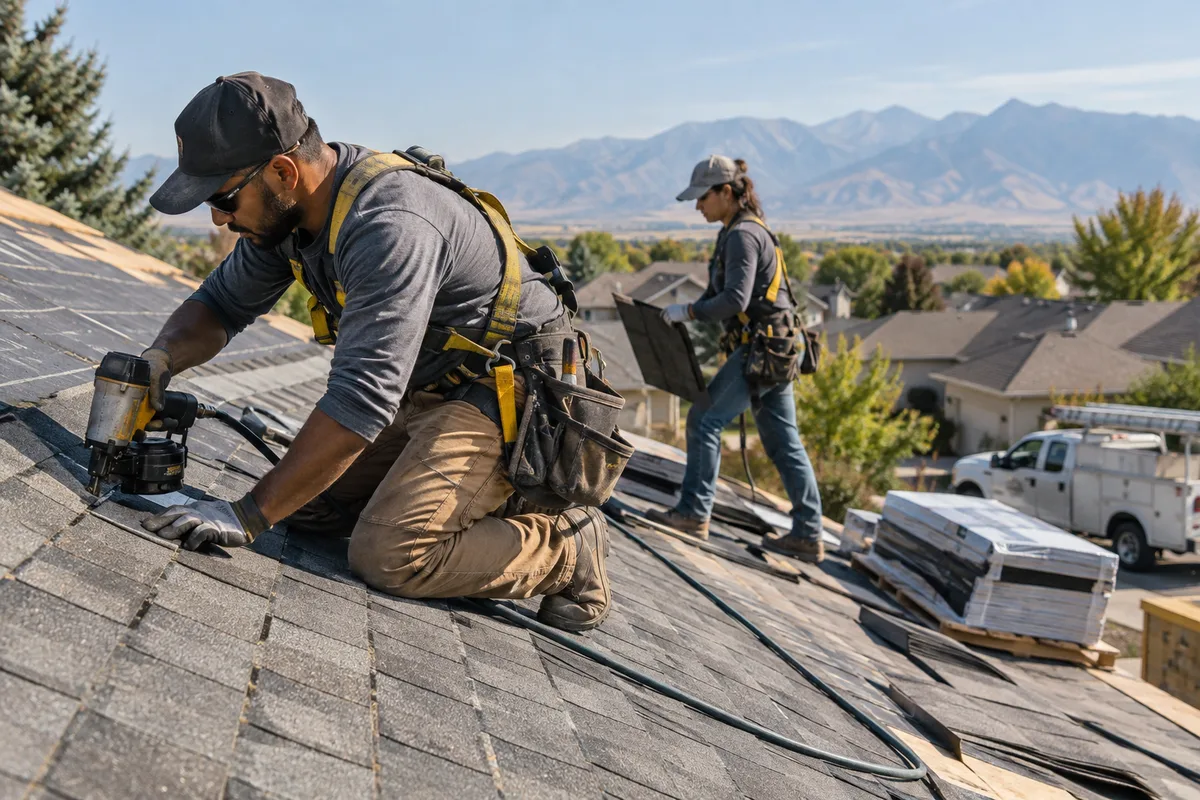
Pay per click advertising (PPC) is paying a fee each time someone clicks your advert on Google or another platform. It puts you at the top of a search page immediately, instead of waiting for ranking to build. GullySales sets the targeting, writes the ad text and checks spend against enquiries received.
Also for roofing contractors
- SEO for roofing contractors
- Lead generation for roofing contractors
- Digital marketing for roofing contractors
- Reputation management for roofing contractors
- Local SEO for roofing contractors
- Branding for roofing contractors
- Social media marketing for roofing contractors
- Content marketing for roofing contractors
Sales and marketing for roofing contractors, the overview.
Last updated 17 Oct 2026.
For roofing contractors
Where it usually goes wrong, and what we would do.
“A leak call and a new shed are different advertisements”
Somebody typing roof leaking in godown wants a crew soon. Somebody typing PEB shed roofing cost wants a quotation on a drawing, and will wait for it.
“Sheet rate hunters spend your budget”
A click from a person asking for the price of one sheet is a dealer enquiry. The advertisement should say you roof buildings and do not sell sheets by the piece.
“Spend should follow the monsoon deadline”
Factory owners decide in the weeks before the rains. Budget raised in April and May buys more than the same money in July.
What we do
What we deliver for roofing contractors.
Every deliverable, what it covers for you, and the result it is there to produce. Nothing here is an extra.
Separate campaigns for leaks, new sheds and terrace roofs
An urgent repair campaign, a new shed campaign and a terrace and polycarbonate campaign, each with its own budget and landing page.
Result: A homeowner's click cannot spend the factory money.
Budget moved ahead of the monsoon
Spend raised in the weeks before the rains, held low when crews are full, and raised again for the winter shed season.
Result: You buy the enquiry you can actually take.
A landing page that books a site visit
A page matching the advertisement, asking for roof area, building use, current sheet and a photograph, with a call and WhatsApp button.
Result: The first call starts with the facts.
Negative keywords against sheet buying and jobs
Blocks on sheet price per piece, roofing sheet dealer, roofing contractor job and second hand sheets, checked against the search terms report.
Result: Your budget stops paying for people buying one sheet.
Industrial areas and locations picked by building type
Targeting set to estates and zones with factories, warehouses and godowns, with city lists for housing and terrace work.
Result: The money goes where the roofs are.
Spend reported against visits and jobs
Cost per call, per site visit and per job won, by campaign, set against the baseline recorded before work starts.
Result: You can see what a booked shed costs to win.
How the result is measured
- Cost per click
- Cost per enquiry
- Enquiries from paid search
Recorded as a baseline before work starts, so every later report has an honest comparison.
Searches to bid on and block
The searches worth paying for as a roofing contractor, and the ones to keep out.
- Leak repair searches, such as roof leakage repair factory
- Bid through the year with a call button. The caller has water on stock or machines. Ask for the area and a photograph on the page.
- New shed and PEB roofing searches
- Bid in their own campaign. These are bigger jobs and a slower decision. The page should show past sheds and ask for a drawing or the dimensions.
- Polycarbonate and terrace shed searches
- Bid separately for homeowners and housing societies. The jobs are smaller and quick to quote. Ask for the terrace size and the use of the shed.
- Sheet rate and material searches, such as colour coated sheet price per kg
- Block unless you sell sheets. Block roofing sheet dealer, second hand sheet and roofing work vacancy too, since each one is a person who will not hire a crew.
- Where the click lands
- Send each click to a page for that roof, with photographs of finished work. The form asks the area, the building use and the sheet now fitted, so the visit is booked on facts.
- Counting a real enquiry
- Count a call that ends in a site visit booked, or a form with an area and a photograph. Log calls for rain water pipes, painting and sheets alone as a separate group.
Who it is for
This is written for these roofing contractors.
- Metal and colour coated sheet roofing contractors
- PEB and factory shed roofing contractors
- Polycarbonate and skylight roofing installers
- Terrace shed and car park roof installers
- Tile roofing and truss contractors
- Roof insulation and cool roof specialists
- Roof leak repair and maintenance crews
- Structural steel and roofing combined fabricators
- Warehouse and cold storage roofing contractors
How it works
From your first message to the first report.
No open-ended retainer. Every step gives you something in writing.
First
Your brief
You tell us what you need in a few short steps: your business, what you want, where enquiries come from and how they are handled.
After the brief
A conversation and a written scope
We read it, then talk with whoever handles your enquiries. If you want our help, the scope, the fee and the reporting come in writing, and nothing starts before you have read them.
Before work starts
Baseline recorded
The numbers this work is meant to move, such as enquiries, quotations, orders, visits or renewals, written down so every later report has an honest comparison.
After the baseline
The first fix goes live
The fix we agreed to start with is put in place and measured against the baseline, whether that is a reply, a follow-up, a page, a listing or the handover between marketing and sales.
As agreed
Report against the baseline
What moved, what did not, and what changes next, in plain words. How often you get it is set in writing before work starts.
At renewal
Renew on the numbers
The term ends and you decide whether to continue from the results. The length is agreed in writing before anything starts.
How the pay per click advertising work runs
- 1
Understand the total budget
We agree the full paid advertising budget available across all platforms, rather than planning each one separately.
- 2
Audit current platform performance
We compare existing campaigns on a shared basis to see where the budget currently performs best and worst.
- 3
Build the cross-platform plan
Campaigns are structured across platforms with a shared measurement standard from the outset.
- 4
Implement and monitor
Campaigns run with budget allocated dynamically based on real-time performance.
- 5
Measure and reallocate
We report performance and shift budget toward what is working, within agreed limits.
Why us
Why owners pick GullySales over an agency.
Marketing and sales, as one job
Most agencies stop at the enquiry. We also fix what happens after it: the reply, the follow-up, the quote and the CRM.
The person on the first call does the work
No account managers in between. You are never handed to someone you have not met.
A baseline before anything starts
Your numbers are written down on day one, so every later report compares against something honest.
The fee in writing, split three ways
Our time, your media spend and production on separate lines. You always see what goes to us.
No guarantees we cannot keep
The term is agreed in writing and never a default twelve months. We never promise a ranking or a lead count, because nobody controls those.
One office, and we say so
Nagarbhavi, Bengaluru. We work across India by call and WhatsApp and travel when a session needs to be in person.
#257, 3rd floor, Sri Nanjundeshwara Complex, Nagarbhavi 8th Block, Outer Ring Road. How we work.
Your brief
Tell us what you need, and we will read it before we call.
Eight short steps about your business, what you want and who decides. Most questions are a tap, and you can skip any you would rather answer on the call.
FAQ
Questions owners ask before they call.
Not here? More answers, or ask on WhatsApp.
Should we advertise during the monsoon?
What should the advertisement ask for?
Is WhatsApp a good place to send the click?
Can we name a sheet maker in the advertisement?
How much does it cost?
How long is the contract?
How soon will we see results?
Who will actually do the work?
What do you need from us?
What if we are not happy with the work?
More for roofing contractors
Everything else we would do for you.
Or start from the overview: sales and marketing for roofing contractors.
Your next practical step
Tell us what you are trying to grow, and we will read it before we call.
Eight short steps, mostly taps. Skip anything you would rather answer on the call.