Home and office automation · Branding
Look like the integrator worth recommending to a client with a large budget.
Branding for a home and office automation company is the consistent, premium presentation across your showroom, website and printed material. Architects and high-budget homeowners expect this before they commit to a long, expensive project. GullySales builds this so your name signals capability, not just another electrician with extra equipment.
Scope, fee, reporting and term are agreed in writing after we have read your brief and spoken to you.
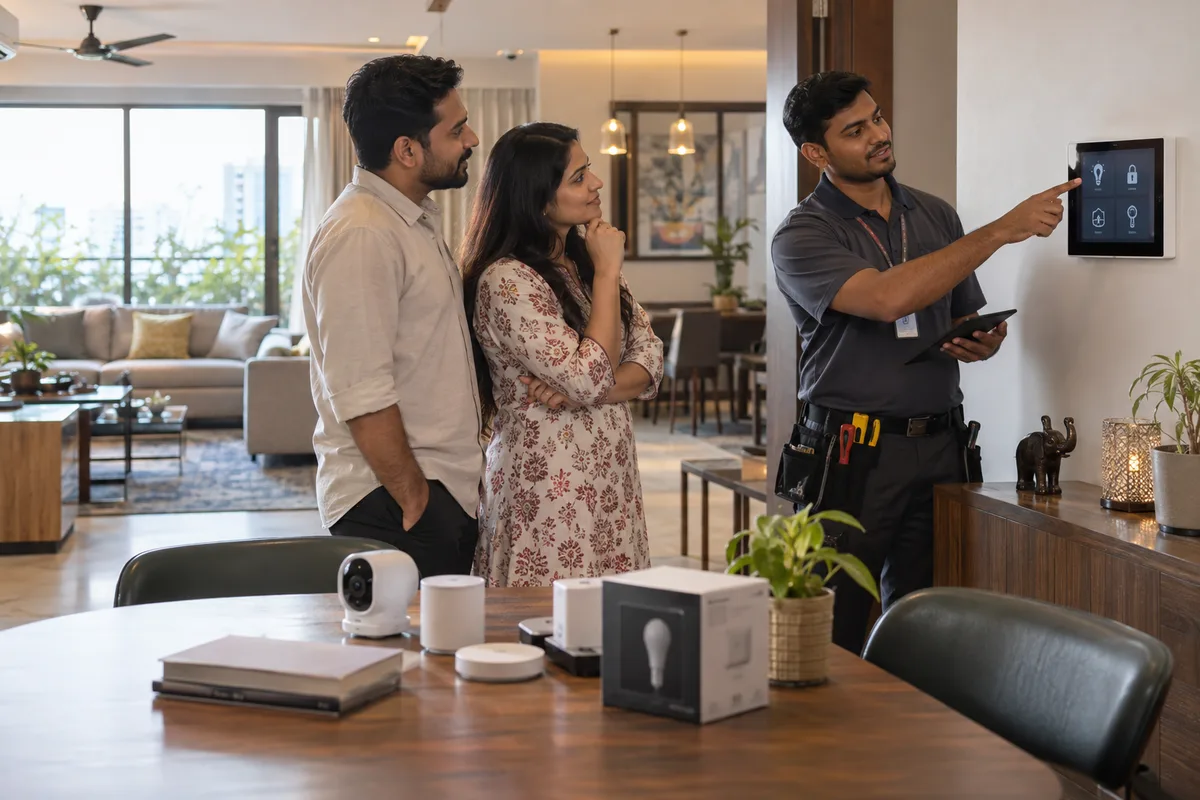
What branding means
Branding is what a customer remembers about your business beyond the product, including your name, colours, tone of voice and what you are known for locally. GullySales sets or corrects this once and applies it consistently across your website, signage and adverts so the business looks like one company everywhere.
Also for home and office automation
- Buyer journey for home and office automation companies
- Buyer personas for home and office automation companies
- Content marketing for home and office automation companies
- Digital marketing for home and office automation companies
- Lead generation for home and office automation companies
- PPC for home and office automation companies
- Public relations for home and office automation companies
- Reputation management for home and office automation companies
Sales and marketing for home and office automation, the overview.
Last updated 5 Oct 2026.
For home and office automation
Where it usually goes wrong, and what we would do.
“Architects refer a brand, not just a technician”
An architect recommending you to a client is putting their own reputation on the line, and a polished, consistent brand makes that recommendation easier to make.
“The showroom is the brand experience that closes the sale”
A buyer who has researched for weeks makes the final decision partly on how the showroom looks and feels, since it previews what their own home or office will become.
“Residential and office branding need a different tone”
A homeowner responds to warmth and lifestyle imagery, while an office buyer responds to reliability, integration capability and case studies from similar workplaces.
What we do
What we deliver for home and office automation.
Every deliverable, what it covers for you, and the result it is there to produce. Nothing here is an extra.
Positioning line beyond a basic electrician
A clear line on what makes your integration work different, agreed with you and used across the website, quotations and showroom.
Result: A buyer stops comparing your quote to a basic electrician's.
Identity kit for showroom, website and print
Logo, colours and layout rules applied consistently across the showroom signage, website and quotation documents.
Result: An architect sees the same polished business at every touchpoint.
Separate tone for residential and commercial material
Warm, lifestyle-led material for homeowners and a more technical, reliability-led version for office buyers, from the same brand base.
Result: Each buyer sees material that speaks to what they actually care about.
Showroom presentation review
A walkthrough of the showroom's layout, signage and demonstration flow, with a written list of what to fix first.
Result: The showroom itself does more of the convincing during a visit.
Architect-facing credibility document
A short, professional profile document architects can pass to their own clients when recommending you.
Result: An architect can vouch for you with something concrete in hand.
How the result is measured
- Recognition in customer feedback
- Consistency across channels
- Repeat enquiries by name
Recorded as a baseline before work starts, so every later report has an honest comparison.
Positioning in one sentence
Fill this sentence in for the firm, and the showroom, the quote and the architect's file will say you do more than wiring.
- Who it is for, as a client and a referrer
- Write one line for the villa or apartment owner and one for the architect or builder who recommends you. The first wants comfort, and the second wants a firm that will not embarrass them.
- What you do, in the architect's terms
- Use the work names an architect writes into a drawing: lighting control, motorised curtains, multi-room audio, video door phone, CCTV, boardroom AV. Say which protocol or brand you design with.
- What a client gets that an electrician does not
- Choose one: a design done before the walls are chased, a single point of support after handover, a system that still works if the internet fails. Show a real example.
- The proof you can show
- Show installed homes and offices with consent, the brands you are authorised to install, and an architect who will take a reference call. A demo corner in the showroom helps a visitor believe you.
- Words every integrator uses
- Smart living, luxury experience and future-ready appear on every page. Replace one with what the client touches, such as a single scene button that dims lights and closes curtains.
- The name and tagline test
- The name appears in an architect's consultant list. Check that it does not sound like an electrical shop, a security-only firm or a gadget seller if you design full-home systems.
Who it is for
This is written for these home and office automation.
- Residential smart-home integrators
- Office and boardroom automation specialists
- Villa and apartment builder tie-up specialists
- Security and CCTV integration specialists
- Home theatre and AV specialists
- Motorised curtain and gate automation specialists
Not for
It is not the right fit if.
- You have no finished project you can show a client with a large budget, so a new identity would promise work you cannot yet picture.
- You win work only through two architects who already know you, and a rebrand would change nothing they think of you.
- Your showroom is not ready for a visitor, and a polished name would send people to a room that does not match it.
How it works
How the branding work runs
The work itself, in order. How an engagement starts, from your brief to a written scope, is set out on our method page.
- 1
Interview customers and team
We talk to real buyers, won and lost, and to people inside the business who deal with customers daily.
- 2
Review the competitive field
We look at how the nearest competitors present themselves so the position is not accidentally identical.
- 3
Draft the position
A first version of the positioning statement and messaging pillars is written and checked against what customers actually said.
- 4
Test it against real conversations
The draft is tried out in a real sales call or two before it is finalised, since a position that does not survive a real conversation needs rework.
- 5
Hand over the rollout brief
The final position, pillars and not-for list are documented for your team and any agency to apply consistently.
Where this fits
Three pieces of sales work, in this order.
This work sits inside sales process design, at stage 1, prospecting and lead generation. The audit comes before it, and sales management keeps it running.
Step 1
Sales audit
Find where deals are being lost and what to fix first.
Start here if you cannot say where orders are lost.
Step 2 · you are here
Sales process design
One written way to sell, from first enquiry to repeat order.
Start here if every salesperson sells differently.
Step 3
Sales management
A target, a review routine and someone who owns the number.
Start here if the team has targets and no routine.
FAQ
Questions owners ask before they call.
Not here? More answers, or ask on WhatsApp.
Do we need a new logo?
How does branding help with architect referrals?
Should we market the brands we install or our own name?
Can a showroom demo count as branding?
How much does it cost?
How long is the contract?
How soon will we see results?
Who will actually do the work?
What do you need from us?
What if we are not happy with the work?
From the blog
Further reading for home and office automation.

More for home and office automation
Everything else we would do for you.
- Buyer journey for home and office automation companies
- Buyer personas for home and office automation companies
- Content marketing for home and office automation companies
- Digital marketing for home and office automation companies
- Lead generation for home and office automation companies
- PPC for home and office automation companies
Or start from the overview: sales and marketing for home and office automation.
Your next practical step
Tell us what you are trying to grow, and we will read it before we call.
Eight short steps, mostly taps. Skip anything you would rather answer on the call.