Home and office automation · Content marketing
Show the finished project the way a buyer imagines their own home before they call.
Content marketing for home and office automation means detailed project pages, process explainers and photography that support a long research phase, rather than short promotional posts. GullySales builds this so a buyer researching for weeks finds real answers on your site instead of leaving for a competitor's.
Scope, fee, reporting and term are agreed in writing after we have read your brief and spoken to you.
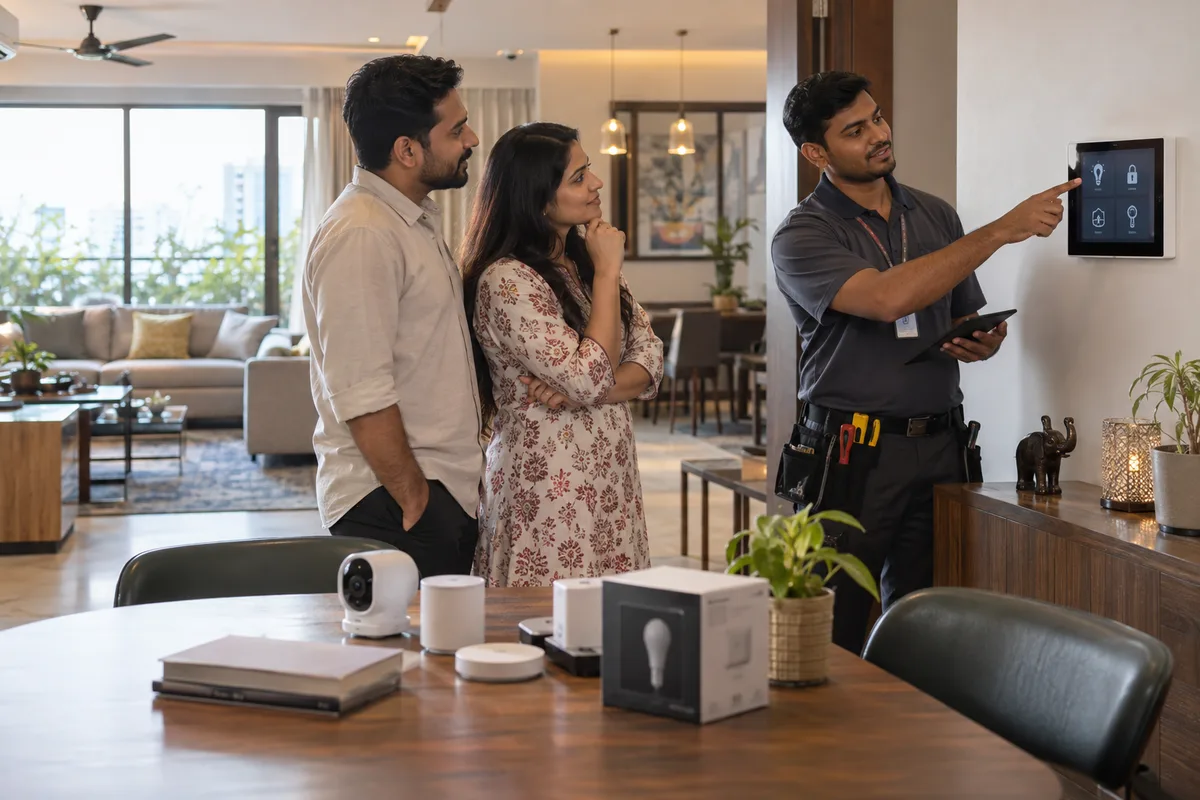
What content marketing means
Content marketing is writing articles, guides and pages that answer the questions buyers search before they are ready to enquire. This makes your business visible and trusted before the first call. GullySales plans this content from the first conversation onward, choosing topics that match real search demand rather than guesses.
Also for home and office automation
- Social media for home and office automation companies
- Video marketing for home and office automation companies
- Branding for home and office automation companies
- Buyer journey for home and office automation companies
- Buyer personas for home and office automation companies
- Digital marketing for home and office automation companies
- Lead generation for home and office automation companies
- PPC for home and office automation companies
Sales and marketing for home and office automation, the overview.
Last updated 5 Oct 2026.
For home and office automation
Where it usually goes wrong, and what we would do.
“A finished-project page is worth more than a generic services page”
A page showing an actual villa's automation setup, with photographs and a brief on what was installed, helps a buyer picture their own project. A list of features does not.
“Process content reduces anxiety about a big purchase”
A clear explainer on installation timeline, disruption during work and after-sales support answers the practical worry that stops a buyer from committing.
“Office-focused content needs a business case, not lifestyle photography”
A page for boardroom automation should show integration with existing systems and gains in usability, not the same warm, home-focused imagery.
What we do
What we deliver for home and office automation.
Every deliverable, what it covers for you, and the result it is there to produce. Nothing here is an extra.
Finished project pages by home or office
A detailed page per completed project showing what was installed and real photographs, rather than a generic features list.
Result: A buyer pictures their own project through someone else's finished one.
Installation process explainer
A clear page covering timeline, disruption during work and what after-sales support looks like.
Result: A buyer's practical worries are answered before they raise them.
Office-focused business case content
Content for boardroom and office automation covering integration with existing systems and usability gains, not home-style lifestyle photography.
Result: A facilities head sees the case made in the language leadership expects.
Photography and video coordination
A coordinated shoot of finished projects, arranged with the client's consent, to build the library this content depends on.
Result: New content keeps coming from real, recent work rather than running dry.
Content organised by project type and budget
Pages structured so a buyer can find a project close to their own scale and style quickly.
Result: A researching buyer stays on the site instead of giving up.
How the result is measured
- Pages published
- Organic traffic
- Enquiries from content pages
Recorded as a baseline before work starts, so every later report has an honest comparison.
Questions buyers ask first
The questions a homeowner, architect or office head asks before choosing an integrator, and the page that answers each.
- What would my home look like with automation, and what did it involve?
- A finished-project page: the rooms, what is controlled, which protocol and brands, and what the owner uses daily. Publish with the owner's permission.
- Do I need to break walls, or can it be retrofitted?
- A retrofit and new-build page: neutral wires at switch boxes, conduits, wireless options, and what must be opened. An honest answer wins the owner of an occupied home.
- What if the internet goes down?
- A reliability page: what keeps working locally, what stops, and the backup. Buyers worry about this and rarely say it.
- What does the boardroom need from the interiors?
- A boardroom page: room size, display and microphone placement, cabling and power points, what the architect must provide and when.
- Who maintains it after handover?
- An AMC page: what is covered, remote support, software updates and what is extra. A buyer expects the system to age and wants to know who answers.
- How do I brief you at the design stage?
- A designer's checklist: switch plan, conduit points, and the date by which false ceiling and electrical work lock. It is the page that earns the referral.
Who it is for
This is written for these home and office automation.
- Residential smart-home integrators
- Office and boardroom automation specialists
- Villa and apartment builder tie-up specialists
- Security and CCTV integration specialists
- Home theatre and AV specialists
- Motorised curtain and gate automation specialists
Not for
It is not the right fit if.
- You have no finished project with the client's agreement to show, so a piece would use brand images that any dealer could post.
- Nobody can take photographs or video inside a finished home, and a written piece alone cannot show a buyer how a room feels.
- You want showroom visits next week, but a project piece is found and read over a longer decision.
How it works
How the content marketing work runs
The work itself, in order. How an engagement starts, from your brief to a written scope, is set out on our method page.
- 1
Agree the plan
Topics and formats come from the content strategy and the buyer-question list. The volume goes into the written scope, agreed with you, not into a number quoted on a call.
- 2
Brief and draft
Each piece starts from its one-page brief and a short conversation with your technical person, recorded if they allow it, so the draft uses their words.
- 3
Check the facts
Your person marks the draft for accuracy and we correct it. Regulated subjects also go to your own adviser, because restrictions on claims apply to articles as much as to advertisements.
- 4
Publish and distribute
The piece goes live on your site, then out through the channels where your buyers already are.
- 5
Read the enquiries and adjust
Results are reported against the baseline recorded before work began. Topics that brought readers but no enquiries are changed or dropped. How often you are reported to is agreed in writing.
Where this fits
Three pieces of sales work, in this order.
This work sits inside sales process design, at stage 0, foundation. The audit comes before it, and sales management keeps it running.
Step 1
Sales audit
Find where deals are being lost and what to fix first.
Start here if you cannot say where orders are lost.
Step 2 · you are here
Sales process design
One written way to sell, from first enquiry to repeat order.
Start here if every salesperson sells differently.
Step 3
Sales management
A target, a review routine and someone who owns the number.
Start here if the team has targets and no routine.
FAQ
Questions owners ask before they call.
Not here? More answers, or ask on WhatsApp.
How much content do we need before it helps?
Who provides the photography?
Should the pages be written for the homeowner or the architect?
Should we show package prices?
How long is the contract?
How soon will we see results?
Who will actually do the work?
What do you need from us?
What if we are not happy with the work?
From the blog
Further reading for home and office automation.

More for home and office automation
Everything else we would do for you.
Closest to this: content and social
Also for home and office automation
- Branding for home and office automation companies
- Buyer journey for home and office automation companies
- Buyer personas for home and office automation companies
- Digital marketing for home and office automation companies
- Lead generation for home and office automation companies
- PPC for home and office automation companies
Or start from the overview: sales and marketing for home and office automation.
Your next practical step
Tell us what you are trying to grow, and we will read it before we call.
Eight short steps, mostly taps. Skip anything you would rather answer on the call.