Home and office automation · Pay per click advertising
Reach the homeowner already searching for smart home automation, not a browsing crowd.
PPC for home and office automation means paid search aimed at specific, high-intent terms such as home automation company or office boardroom automation. It supports a buyer already in the research phase. GullySales runs this to build awareness through a long decision rather than chase an immediate click.
Scope, fee, reporting and term are agreed in writing after we have read your brief and spoken to you.
What pay per click advertising means
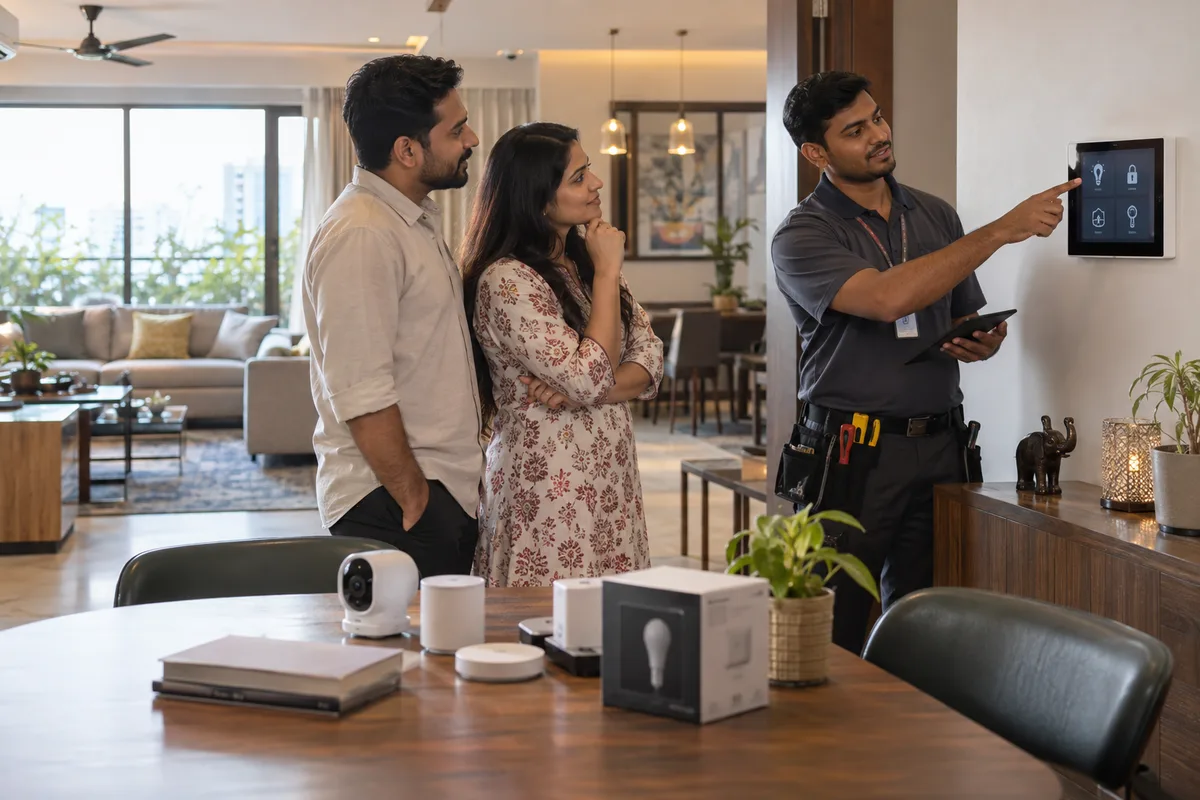
Pay per click advertising (PPC) is paying a fee each time someone clicks your advert on Google or another platform. It puts you at the top of a search page immediately, instead of waiting for ranking to build. GullySales sets the targeting, writes the ad text and checks spend against enquiries received.
Also for home and office automation
- Branding for home and office automation companies
- Buyer journey for home and office automation companies
- Buyer personas for home and office automation companies
- Content marketing for home and office automation companies
- Digital marketing for home and office automation companies
- Lead generation for home and office automation companies
- Public relations for home and office automation companies
- Reputation management for home and office automation companies
Sales and marketing for home and office automation, the overview.
Last updated 5 Oct 2026.
For home and office automation
Where it usually goes wrong, and what we would do.
“Awareness advertising during research matters more than a direct call to action”
A buyer weeks away from deciding responds better to a well-made project showcase than to an advertisement demanding an immediate call.
“Commercial and residential searches need separate campaigns”
A facilities head searching for office automation and a homeowner searching for smart lighting are looking for entirely different proof, and one landing page cannot serve both.
“Retargeting supports the long consideration period”
A visitor who viewed a project page but did not enquire is worth reaching again with a different project a few weeks later, matching the pace of their decision.
What we do
What we deliver for home and office automation.
Every deliverable, what it covers for you, and the result it is there to produce. Nothing here is an extra.
Awareness campaign built around project showcases
Ads featuring a real finished project rather than a demand for an immediate call, aimed at a buyer still weeks from deciding.
Result: A homeowner still weeks from deciding keeps seeing work you have actually finished.
Separate campaigns for residential and commercial searches
Distinct campaigns and landing pages for a homeowner searching smart lighting and a facilities head searching office automation.
Result: Each buyer lands on proof built for their own decision.
Retargeting for project page visitors
A campaign reaching a visitor again after they viewed a project page without enquiring.
Result: A slow decision stays warm instead of going cold after one visit.
High-intent search term targeting
Campaigns aimed at specific terms such as home automation company or office boardroom automation, rather than broad category terms.
Result: Ad spend reaches people already in the research phase.
Enquiry to quotation stage report
Enquiries from ads tracked through to showroom visits and quotations, reported, not just measured by clicks.
Result: You see whether spend is reaching real decision-stage buyers.
How the result is measured
- Cost per click
- Cost per enquiry
- Enquiries from paid search
Recorded as a baseline before work starts, so every later report has an honest comparison.
Searches to bid on and block
The searches worth paying for as an automation integrator, and the ones to keep out.
- Smart home automation company in your city
- Bid. A homeowner who types company is looking for an installer, not a gadget. Show finished homes and the systems used, and offer a site visit or a showroom demo.
- Home theatre and media room installation
- Bid, as its own ad group. These buyers have a room or a plan. Ask for the room size and the budget range, and show a finished room with its equipment.
- Office boardroom and conference room automation
- Bid, as a separate campaign aimed at companies. Show boardrooms you have fitted. The buyer is an admin or IT head, so ask for the number of rooms and the start date.
- Smart lock, video door phone and curtain motor searches
- Bid, for the products you install. Say that you supply and fit, and offer a visit. A buyer who wants only the product online will not convert, and will not stay.
- DIY, app setup, price list, job and course searches
- Block. How to set up Alexa, smart bulb price, home automation course and installer job come from hobbyists, students and shoppers. Add them as negatives.
- Where the click lands, and what to count
- Send the click to a page for the room or system, with finished projects and a form that asks the type of property and the stage of construction. Count a site visit booked, then log quotes and orders separately.
Who it is for
This is written for these home and office automation.
- Residential smart-home integrators
- Office and boardroom automation specialists
- Villa and apartment builder tie-up specialists
- Security and CCTV integration specialists
- Home theatre and AV specialists
- Motorised curtain and gate automation specialists
Not for
It is not the right fit if.
- You cannot answer a homeowner who searches for a quote the same day, so the click would be paid for and wasted.
- Your decision cycle depends on the architect, and an advertisement to the homeowner alone reaches half the decision.
- You have not set up a way to record where a showroom visitor came from, so spending could not be matched to an order.
How it works
How the pay per click advertising work runs
The work itself, in order. How an engagement starts, from your brief to a written scope, is set out on our method page.
- 1
Agree the whole budget
We fix the total paid budget across platforms, who owns each ad account, and how much is open to moving.
- 2
Audit tracking and accounts
We check that conversions fire once, that calls and WhatsApp chats are counted, and that your enquiry sheet matches what the platforms say.
- 3
Set one definition of success
You and we agree what a qualified enquiry is and what an order is, so every platform is judged the same way.
- 4
Build and launch the plan
Campaigns are structured across platforms with shared naming and tags from day one.
- 5
Read search terms and lead quality
We review the queries that triggered ads and the enquiries that arrived, and remove waste before moving money.
- 6
Reallocate and report
Budget moves toward what is earning, within agreed limits. Results are reported against the baseline, at the frequency agreed in writing.
Where this fits
Three pieces of sales work, in this order.
This work sits inside sales process design, at stage 1, prospecting and lead generation. The audit comes before it, and sales management keeps it running.
Step 1
Sales audit
Find where deals are being lost and what to fix first.
Start here if you cannot say where orders are lost.
Step 2 · you are here
Sales process design
One written way to sell, from first enquiry to repeat order.
Start here if every salesperson sells differently.
Step 3
Sales management
A target, a review routine and someone who owns the number.
Start here if the team has targets and no routine.
FAQ
Questions owners ask before they call.
Not here? More answers, or ask on WhatsApp.
Is PPC worth it for such an expensive, considered purchase?
How do we measure success given the long sales cycle?
Should we advertise to builders and interior designers?
How long should a campaign run before we judge it?
How much does it cost?
How long is the contract?
Who will actually do the work?
What do you need from us?
What if we are not happy with the work?
From the blog
Further reading for home and office automation.

More for home and office automation
Everything else we would do for you.
- Branding for home and office automation companies
- Buyer journey for home and office automation companies
- Buyer personas for home and office automation companies
- Content marketing for home and office automation companies
- Digital marketing for home and office automation companies
- Lead generation for home and office automation companies
Or start from the overview: sales and marketing for home and office automation.
Your next practical step
Tell us what you are trying to grow, and we will read it before we call.
Eight short steps, mostly taps. Skip anything you would rather answer on the call.