Home and office automation · Digital marketing
Support a multi-week decision instead of chasing a same-day booking.
Digital marketing for home and office automation connects search, referral tracking and follow-up into one system. It is built for a long, considered purchase, not tactics borrowed from a same-day local service. GullySales builds this around the actual pace this business moves at.
Scope, fee, reporting and term are agreed in writing after we have read your brief and spoken to you.
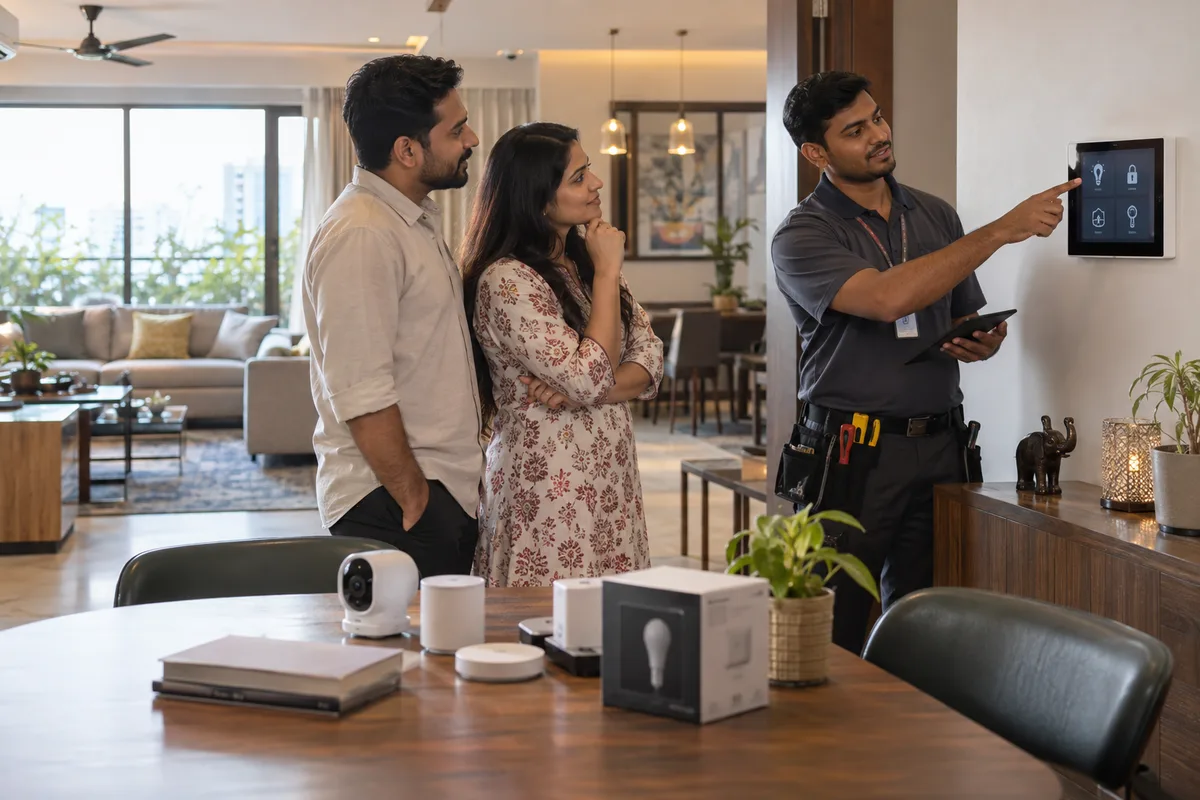
What digital marketing means
Digital marketing is the combined work of search, social media, advertising and website channels running together rather than as separate projects with separate people. GullySales runs these as one connected system so a change in one channel, such as a new offer, is reflected everywhere at once.
Also for home and office automation
- Buyer journey for home and office automation companies
- Buyer personas for home and office automation companies
- Marketing strategy for home and office automation companies
- Branding for home and office automation companies
- Content marketing for home and office automation companies
- Lead generation for home and office automation companies
- PPC for home and office automation companies
- Public relations for home and office automation companies
Sales and marketing for home and office automation, the overview.
Last updated 5 Oct 2026.
For home and office automation
Where it usually goes wrong, and what we would do.
“This is a considered purchase, not an impulse search”
A buyer researching automation looks at multiple sources over weeks, so the goal is staying visible and credible through that period, not winning a single search click.
“Referral tracking belongs in digital marketing here”
Knowing which architect or builder sent an enquiry matters as much as knowing which search term did, and both should be tracked in the same system.
“Retargeting suits this business better than most local trades”
A buyer who visited your site once during their research phase is worth showing a relevant project or offer again weeks later, since the decision genuinely takes that long.
What we do
What we deliver for home and office automation.
Every deliverable, what it covers for you, and the result it is there to produce. Nothing here is an extra.
Referral and search enquiries tracked in one system
Every enquiry recorded by source, whether an architect referral or a search term, in the same tracked system.
Result: You see the full picture of where business actually comes from.
Retargeting campaign for researching visitors
A campaign showing a relevant project or offer again to someone who visited earlier during their research phase.
Result: A slow-deciding visitor stays aware of you through their long research.
Website built as the credibility anchor
A website prioritised as the place every channel points to, since it carries the process and project detail the decision leans on.
Result: Every other channel gets a stronger landing point to send buyers to.
Enquiry and stage report
Enquiries by source and by stage reported to you, including which are progressing, not only final sales.
Result: You can tell a stalled quarter from one where six quotations are still moving.
How the result is measured
- Enquiries across channels
- Cost per enquiry overall
- Channel mix by contribution
Recorded as a baseline before work starts, so every later report has an honest comparison.
Where to start for an integrator
Build the proof an architect checks, then follow every demo to a decision.
- A finished-project video library
- Film each installation with the owner's permission, showing the switch panel, the app and the finished rooms. Record who you sent each video to.
- A referral list of architects and builders
- List the architects, interior designers and builders who introduced work, with the project and the date. Visit them with a new project and record what they said.
- A page on what installation involves
- Explain the wiring stage, the site visit, the testing and the handover in plain words. Record the questions it answers and the ones it misses.
- A demo-to-quote tracker
- Log every showroom demo with the contact, the home, the quote date and the next call. Write down the reason a quote stalled.
- AMC list
- List each client with the system installed and the contract end date. Call before it ends, and record who renewed.
- What to leave until later
- Broad paid search for smart home and social contests. Search ads suit people who already know the word, and a long sale rests on trust.
Who it is for
This is written for these home and office automation.
- Residential smart-home integrators
- Office and boardroom automation specialists
- Villa and apartment builder tie-up specialists
- Security and CCTV integration specialists
- Home theatre and AV specialists
- Motorised curtain and gate automation specialists
Not for
It is not the right fit if.
- You have no one to follow up a showroom demo, so enquiries from search would meet a showroom that forgets them.
- Your whole business comes from three architects, and spending on homeowner search would reach people who never decide without them.
- You cannot say which projects you want, and the channels would bring requests for a bulb and a switch.
How it works
How the digital marketing work runs
The work itself, in order. How an engagement starts, from your brief to a written scope, is set out on our method page.
- 1
Agree the one aim
We settle what the campaign must achieve, such as enquiries for a launch or footfall for an event, and the date it must be live.
- 2
Check what is ready
We list the channels you already run, who runs them, and what each can produce in the time available. Anything that cannot be done properly is left out.
- 3
Write the idea and the message sheet
We draft the one-sentence idea, test it against each planned format, and fix the wording that all channels will copy.
- 4
Brief every channel from the same sheet
Your agency, freelancer or in-house person receives the message sheet and calendar. Their work is checked against the sheet before it goes out.
- 5
Run on the shared calendar
Channels go live together. If the offer changes, every channel is changed on the same day from the same sheet.
- 6
Measure as one campaign
Enquiries and orders are read against the baseline. The reporting schedule is agreed in writing with the scope.
Where this fits
Three pieces of sales work, in this order.
This work sits inside sales process design, at stage 0, foundation. The audit comes before it, and sales management keeps it running.
Step 1
Sales audit
Find where deals are being lost and what to fix first.
Start here if you cannot say where orders are lost.
Step 2 · you are here
Sales process design
One written way to sell, from first enquiry to repeat order.
Start here if every salesperson sells differently.
Step 3
Sales management
A target, a review routine and someone who owns the number.
Start here if the team has targets and no routine.
FAQ
Questions owners ask before they call.
Not here? More answers, or ask on WhatsApp.
Where should budget go first?
How do we measure this if the sales cycle is long?
How do we show a customer what the home will feel like before they buy?
Should we pay architects for introductions?
How long is the contract?
How soon will we see results?
Who will actually do the work?
What do you need from us?
What if we are not happy with the work?
From the blog
Further reading for home and office automation.

More for home and office automation
Everything else we would do for you.
Closest to this: strategy and research
Also for home and office automation
- Branding for home and office automation companies
- Content marketing for home and office automation companies
- Lead generation for home and office automation companies
- PPC for home and office automation companies
- Public relations for home and office automation companies
- Reputation management for home and office automation companies
Or start from the overview: sales and marketing for home and office automation.
Your next practical step
Tell us what you are trying to grow, and we will read it before we call.
Eight short steps, mostly taps. Skip anything you would rather answer on the call.