Home and office automation · Buyer persona
Write differently for the homeowner, the architect and the facilities head.
A buyer persona for home and office automation describes the different people who influence a purchase: a homeowner, an architect, an interior designer or an office facilities head. Each one has a different concern. GullySales builds messaging around each of these instead of one generic pitch.
Scope, fee, reporting and term are agreed in writing after we have read your brief and spoken to you.
What buyer persona means
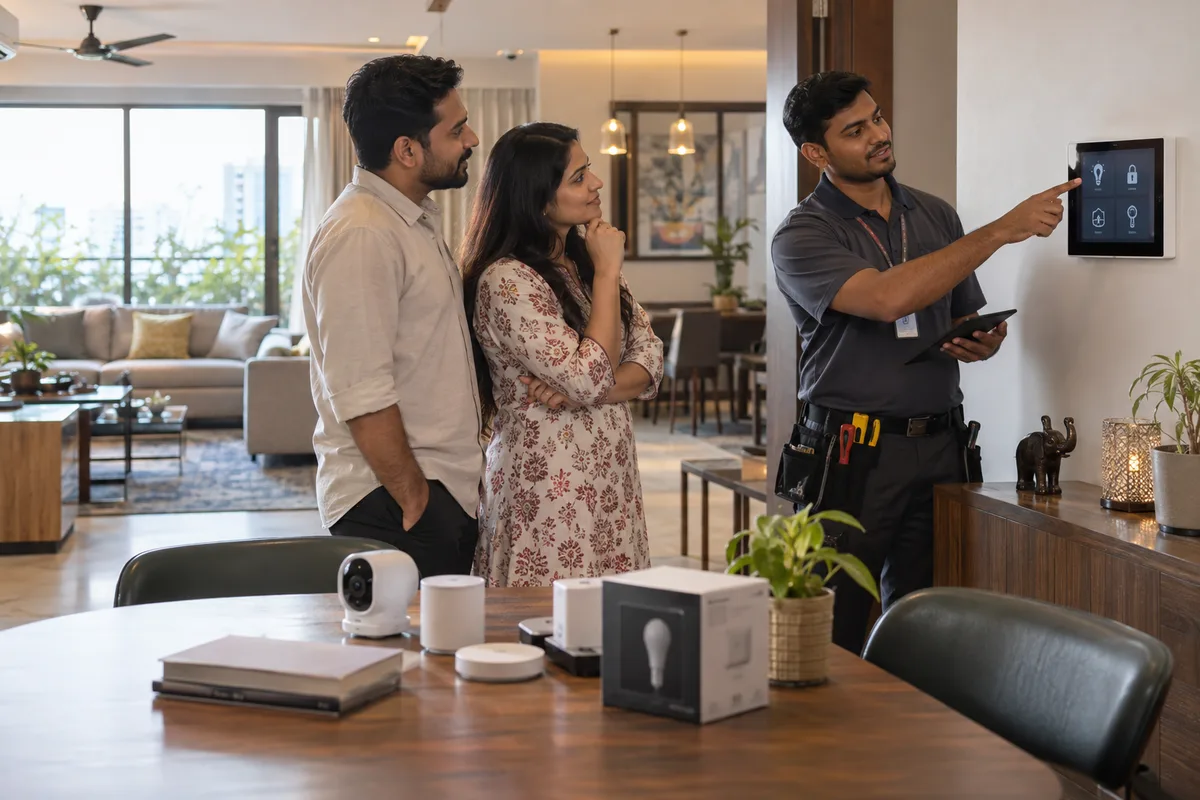
A buyer persona is a plain description of the kind of customer who actually buys from you. It includes what they search, what worries them and who else they ask before deciding. GullySales builds this from real enquiries and past sales rather than a generic template, then uses it to write every page and advert.
Also for home and office automation
- Buyer journey for home and office automation companies
- Digital marketing for home and office automation companies
- Marketing strategy for home and office automation companies
- Branding for home and office automation companies
- Content marketing for home and office automation companies
- Lead generation for home and office automation companies
- PPC for home and office automation companies
- Public relations for home and office automation companies
Sales and marketing for home and office automation, the overview.
Last updated 5 Oct 2026.
For home and office automation
Where it usually goes wrong, and what we would do.
“The architect wants ease of specification, not a sales pitch”
An architect recommending you wants clear technical documentation and a reliable installation process, which is a different message from the lifestyle pitch aimed at the homeowner.
“The homeowner buys an experience, not a specification sheet”
A homeowner responds to how a room will feel, lit and controlled with one tap, more than to a list of protocols and panel models.
“The office buyer wants a business case”
A facilities head evaluating boardroom automation wants a clear cost, a maintenance plan and a reference from a similar company, not a lifestyle argument.
What we do
What we deliver for home and office automation.
Every deliverable, what it covers for you, and the result it is there to produce. Nothing here is an extra.
Written profile for each buyer type
A short, working description of the homeowner, the architect or designer, and the facilities head, covering what each actually needs to decide.
Result: Every piece of material is written for someone real, not a generic buyer.
Architect specification document
Clear technical documentation built for how an architect specifies and recommends products, separate from consumer-facing material.
Result: An architect can recommend you without extra back and forth.
Homeowner experience material
Content built around how a room will feel and respond, rather than a list of protocols and panel models.
Result: A homeowner pictures the result instead of reading a specification sheet.
Office buyer business case document
A document covering cost, maintenance and a comparable reference site, built for a facilities head reporting up to leadership.
Result: An office buyer has what they need to justify the purchase internally.
Separate website paths for each persona
Distinct sections or pages for residential and commercial visitors, so each finds proof relevant to their own decision.
Result: A visitor finds their own concern answered without wading through the rest.
How the result is measured
- Enquiry match to persona
- Conversion rate by persona
- Content aligned to persona
Recorded as a baseline before work starts, so every later report has an honest comparison.
A persona card for this owner
Here is a typical card for the owner of a finished flat who wants to retrofit automation.
An example, not a fact about your clients. Compare each line with your quotations and demonstration notes, and change what does not match.
- Who they are
- Typical: the owner of a finished flat or villa who wants smart switches, a video door phone or curtain motors without breaking walls. Check against enquiries that mention retrofit.
- What starts the search
- Typical: a break-in in the building, elderly parents moving in, or a friend's home demonstration. Ask what the owner saw or heard just before enquiring.
- What worries them
- Typical: broken plaster, a system that stops when the internet fails and nobody to call afterwards. Collect the doubts raised during demonstrations.
- What they compare you with
- Typical: a do-it-yourself kit from an online store, the electrician who did the wiring and a brand's authorised partner. Ask which of these they priced.
- Who else decides
- Typical: the spouse who uses the switches daily, the interior designer who owns the walls and a society that approves drilling. Ask who must say yes.
- What makes them say yes
- Typical: a demonstration in a similar home, a clear list of what is wired and what is wireless, and a named engineer for service. Review closed jobs for what the buyer asked to see first.
Who it is for
This is written for these home and office automation.
- Residential smart-home integrators
- Office and boardroom automation specialists
- Villa and apartment builder tie-up specialists
- Security and CCTV integration specialists
- Home theatre and AV specialists
- Motorised curtain and gate automation specialists
Not for
It is not the right fit if.
- You have never spoken to the architect, homeowner or facilities head after a job, so each card would be invented.
- You sell to one kind of buyer only, and a second card would describe a person you do not meet.
- Your sales people write every proposal from habit and would not read a card, however well it is written.
How it works
How the buyer persona work runs
The work itself, in order. How an engagement starts, from your brief to a written scope, is set out on our method page.
- 1
Understand the current view
We start with how your team currently describes the customer, since the gap between belief and reality is the finding itself.
- 2
Audit past enquiries and sales
We look at recent enquiries and closed deals to see who actually bought, not who was assumed to buy.
- 3
Interview customers and staff
Structured conversations with recent buyers, held as talk about the last purchase and not a questionnaire. We ask what happened before they called, who else was involved and what they compared. Customers agree before we contact them, and their answers are reported without names.
- 4
Build the personas
Findings are written into short, usable persona documents rather than a long report.
- 5
Apply to your marketing
We show where each persona should change a page, an ad or a script you already have. The sales team reads the drafts and says which ring true. A persona they do not recognise is rewritten.
Where this fits
Three pieces of sales work, in this order.
This work sits inside sales process design, at stage 0, foundation. The audit comes before it, and sales management keeps it running.
Step 1
Sales audit
Find where deals are being lost and what to fix first.
Start here if you cannot say where orders are lost.
Step 2 · you are here
Sales process design
One written way to sell, from first enquiry to repeat order.
Start here if every salesperson sells differently.
Step 3
Sales management
A target, a review routine and someone who owns the number.
Start here if the team has targets and no routine.
FAQ
Questions owners ask before they call.
Not here? More answers, or ask on WhatsApp.
How many personas do we actually need?
Does this change our website?
How do we check the card when most jobs come through referrals?
Is a persona useful for an office buyer who runs a tender?
How much does it cost?
How long is the contract?
How soon will we see results?
Who will actually do the work?
What do you need from us?
What if we are not happy with the work?
From the blog
Further reading for home and office automation.

More for home and office automation
Everything else we would do for you.
Closest to this: strategy and research
Also for home and office automation
- Branding for home and office automation companies
- Content marketing for home and office automation companies
- Lead generation for home and office automation companies
- PPC for home and office automation companies
- Public relations for home and office automation companies
- Reputation management for home and office automation companies
Or start from the overview: sales and marketing for home and office automation.
Your next practical step
Tell us what you are trying to grow, and we will read it before we call.
Eight short steps, mostly taps. Skip anything you would rather answer on the call.