Home and office automation · Customer retention
Win the second phase: the guest room, the gate and the contract nobody renewed.
Retention for an automation integrator is the work that comes after handover: the rooms added later, the office floor that follows the boardroom, and the maintenance contract that keeps you inside the account. GullySales tracks the renewal dates and the expansion, so neither is noticed only after it is lost.
Scope, fee, reporting and term are agreed in writing after we have read your brief and spoken to you.
What customer retention means
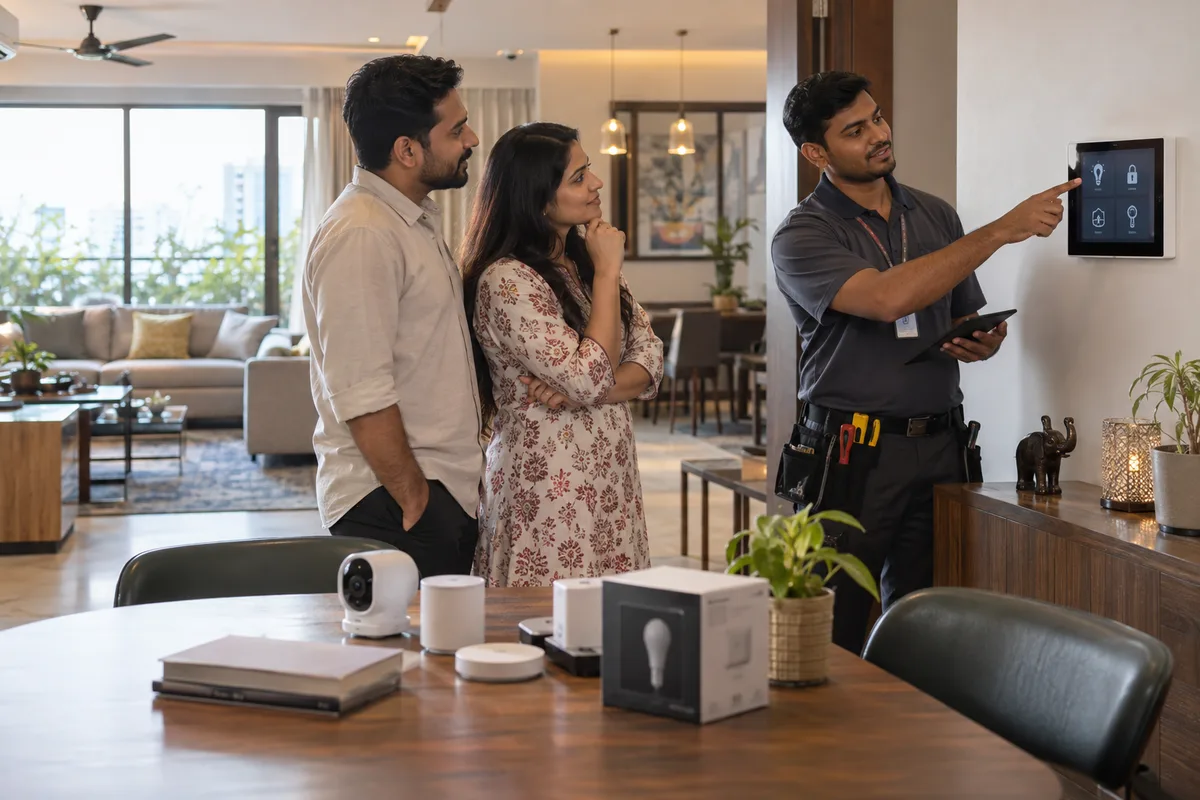
Customer retention is keeping an existing customer buying again rather than losing them to a competitor after the first purchase, usually cheaper than winning a new customer. GullySales sets a routine of check-ins and renewal reminders aimed at customers before they show signs of leaving.
Also for home and office automation
- Referral marketing for home and office automation
- Branding for home and office automation companies
- Buyer journey for home and office automation companies
- Buyer personas for home and office automation companies
- Content marketing for home and office automation companies
- Digital marketing for home and office automation companies
- Lead generation for home and office automation companies
- PPC for home and office automation companies
Sales and marketing for home and office automation, the overview.
Last updated 5 Oct 2026.
For home and office automation
Where it usually goes wrong, and what we would do.
“Half of next year's work is inside houses you have already wired”
The client who did lighting in phase one wants curtains, then the gate, then a camera at the back door. The conduit for all of it is already in the client's wall and nobody on your side is keeping a list.
“The maintenance contract lapses quietly and a local electrician inherits your panel”
A keypad stops working, the contract expired months ago, and the client calls whoever answers. Once another technician has opened your panel and changed a setting, the account is theirs and the next fault is your fault.
“A loyalty scheme is meaningless on a once-in-a-decade purchase”
Nobody collects points on a home automation system. A service visit before the monsoon, a call when a firmware update changes something, and an engineer whose number the client has saved is the whole of retention in this trade.
What we do
What we deliver for home and office automation.
Every deliverable, what it covers for you, and the result it is there to produce. Nothing here is an extra.
An expansion list per completed site
The rooms, gates and devices discussed and dropped from phase one, kept against the address with what conduit is already in place for them.
Result: Your team rings with a specific proposal, not a general hello.
Renewal dates worked before they expire
Maintenance and warranty dates pulled out as a working list, with the client contacted while the contract is still live.
Result: The renewal conversation happens before something breaks.
A service visit that produces a written record
A short report left with the client after every visit, saying what was checked, what was replaced and what will need attention.
Result: The client can see what the contract bought.
A handover pack for a house that changes owner
System details, app access and your contact left with the property, so a new owner inherits the integrator along with the panel.
Result: A resale does not cost you the account.
Repeat revenue reported separately
Expansion orders and renewals counted apart from new projects, by site and by referring designer.
Result: You can see how much of the year came from work you already did.
How the result is measured
- Retention rate
- Repeat purchase rate
- Customers won back
Recorded as a baseline before work starts, so every later report has an honest comparison.
Work it out from your records
Your installation files show which sites are due for the next phase and which contracts need renewing.
- Rooms installed against rooms quoted
- For each completed site compare what you automated with what was in the first quote or discussed. The rooms left for later are the expansion list, with the owner's own reasons noted.
- AMC end dates and renewal status
- List every maintenance contract with its end date and mark who has renewed, who is yet to be called and who has lapsed. Work the list well before the dates, not after.
- Sites with no service visit on record
- List completed sites with no visit since handover. A house nobody has checked is the likeliest to have a problem fixed by another electrician.
- Houses that changed owner
- From service calls and builder contacts, mark homes that were sold or let. Give the new occupant a handover pack and a phone number, or the system will be replaced.
- Repeat faults on the same site
- Search the service log for the same fault logged more than once at one site. Fix it for good, since repeated visits for one fault are what customers remember.
- Repeat revenue kept apart from new projects
- Report expansion and AMC income on its own line. Mixed in with new projects it is invisible, and a falling repeat line is the first warning that handovers are not holding.
Who it is for
This is written for these home and office automation.
- Residential smart-home integrators
- Office and boardroom automation specialists
- Villa and apartment builder tie-up specialists
- Security and CCTV integration specialists
- Home theatre and AV specialists
- Motorised curtain and gate automation specialists
Not for
It is not the right fit if.
- You have no maintenance contract to offer, so there is nothing to renew when the project ends.
- The installation engineer who knows each home has left, and a retention call would find no one with the panel's history.
- You plan a loyalty scheme for a purchase made once, though the next order is the second phase, not a discount.
How it works
How the customer retention work runs
The work itself, in order. How an engagement starts, from your brief to a written scope, is set out on our method page.
- 1
Read the records
Your sales and billing records are read for repeat purchase, the normal gap between orders and the customers who have gone quiet. The record-keeping gaps found here are listed.
- 2
Ask why they stopped
A small set of lapsed and current customers is called with your team's consent, and asked plainly what changed. The reasons are sorted into price, service, competitor and circumstance.
- 3
Build the strategy
The written plan sets priority groups, touchpoints, offers, owners, consent rules and a target.
- 4
Align existing tactics
Each retention activity you already run is mapped against the plan, then kept, changed or dropped.
- 5
Start with one group
The plan goes live for the most valuable at-risk group first, with a held-back comparison group, before it widens.
- 6
Review against the baseline
Retention is compared with the baseline recorded before work began. How often you are reported to is agreed in writing.
Where this fits
Three pieces of sales work, in this order.
This work sits inside sales process design, at stage 7, after the sale. The audit comes before it, and sales management keeps it running.
Step 1
Sales audit
Find where deals are being lost and what to fix first.
Start here if you cannot say where orders are lost.
Step 2 · you are here
Sales process design
One written way to sell, from first enquiry to repeat order.
Start here if every salesperson sells differently.
Step 3
Sales management
A target, a review routine and someone who owns the number.
Start here if the team has targets and no routine.
FAQ
Questions owners ask before they call.
Not here? More answers, or ask on WhatsApp.
Is a loyalty programme worth running for an integrator?
How do we get maintenance contracts renewed before they lapse?
A client let the AMC lapse and a local electrician now touches the panel. Can we win the client back?
Who should hold the admin login to a client's system?
How much does it cost?
How soon will we see results?
Who will actually do the work?
What do you need from us?
What if we are not happy with the work?
From the blog
Further reading for home and office automation.

More for home and office automation
Everything else we would do for you.
Closest to this: customers after the sale
Also for home and office automation
- Branding for home and office automation companies
- Buyer journey for home and office automation companies
- Buyer personas for home and office automation companies
- Content marketing for home and office automation companies
- Digital marketing for home and office automation companies
- Lead generation for home and office automation companies
Or start from the overview: sales and marketing for home and office automation.
Your next practical step
Tell us what you are trying to grow, and we will read it before we call.
Eight short steps, mostly taps. Skip anything you would rather answer on the call.