Amusement parks and family entertainment centres · Search engine optimisation
Be the answer when a family searches for what to do this Sunday.
SEO for an amusement park or family entertainment centre makes your pages appear when families, teachers and organisers search for a day out, a school picnic or a party venue. GullySales works on page content, structure and photographs so the right visitor finds the right page.
Scope, fee, reporting and term are agreed in writing after we have read your brief and spoken to you.
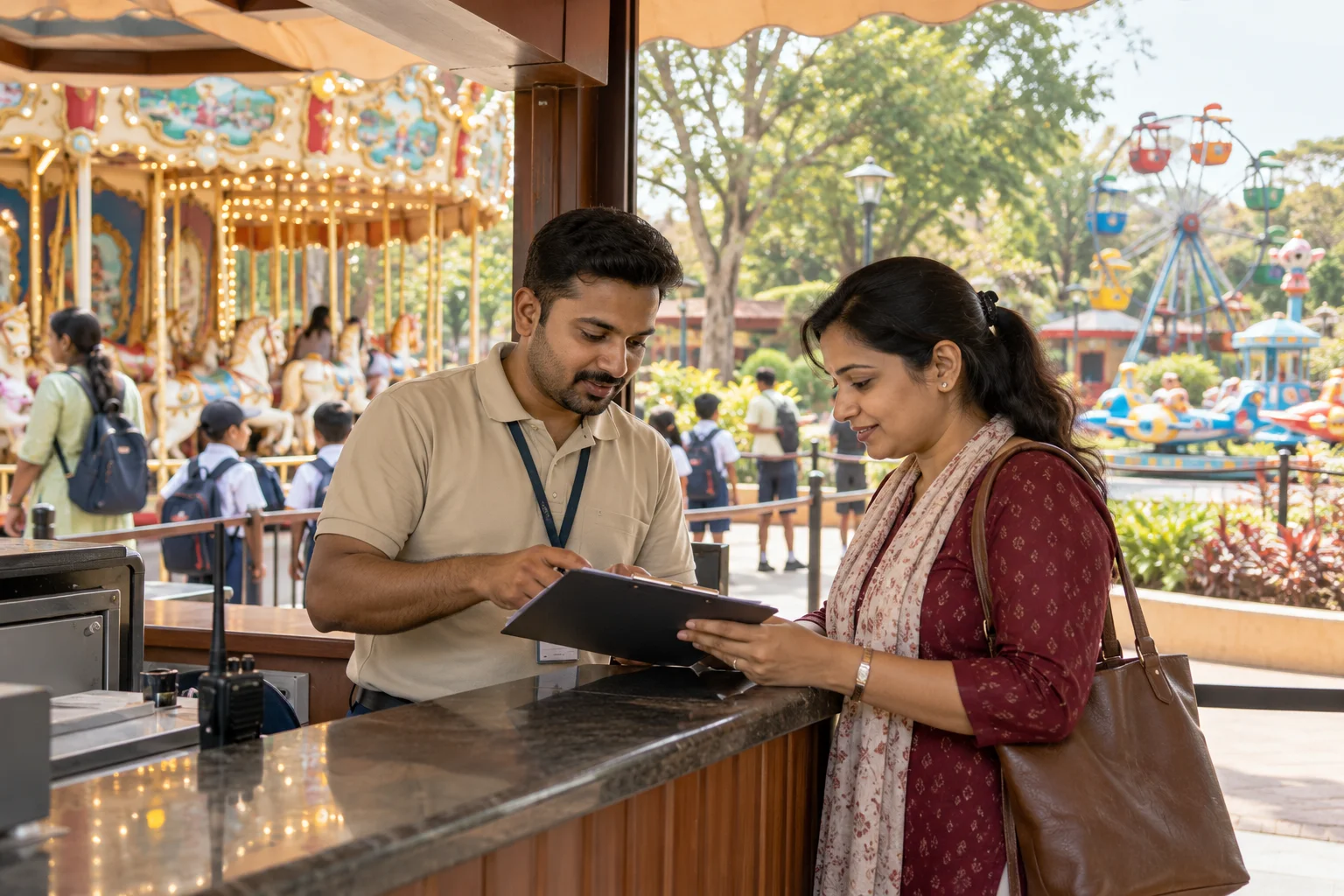
What search engine optimisation means
Search engine optimisation (SEO) is the work of getting your website to appear when a buyer searches Google for what you sell. GullySales builds pages around real search terms, fixes technical issues that block ranking, and tracks which searches actually bring enquiries.
Also for amusement parks and family entertainment centres
- Local SEO for amusement parks and family entertainment centres
- Website for amusement parks and family entertainment centres
- Lead generation for amusement parks and family entertainment centres
- Social media marketing for amusement parks and family entertainment centres
- Content marketing for amusement parks and family entertainment centres
- Buyer personas for amusement parks and family entertainment centres
- CRM for amusement parks and family entertainment centres
- Follow-up systems for amusement parks and family entertainment centres
Sales and marketing for amusement parks and family entertainment centres, the overview.
Last updated 22 Oct 2026.
For amusement parks and family entertainment centres
Where it usually goes wrong, and what we would do.
“Families search by occasion, not by park name”
Phrases about a birthday venue, a school picnic spot or a weekend outing with children are how new visitors arrive. A site that only talks about the park name misses all of them.
“Ticket and ride information is searched constantly”
Visitors look for opening hours, ride heights, ticket combinations and what is closed. If your page does not answer, an aggregator or an old blog post does, possibly with outdated facts.
“Photographs must be recent and honest”
Search engines and parents both read old images as a sign that the park has not changed. A gallery of current rides, food areas and party rooms, with captions, is both a ranking aid and a booking aid.
“Seasonal pages are neglected”
A water park page on a rainy day, or a monsoon note on an adventure park, earns attention that a static home page does not. Pages should change with the seasons, not stay frozen.
What we do
What we deliver for amusement parks and family entertainment centres.
Every deliverable, what it covers for you, and the result it is there to produce. Nothing here is an extra.
Search map by occasion
A list of the phrases for outings, picnics, parties and corporate days, matched to pages.
Result: Each occasion has a page built for it.
Ticket, timing and ride pages
Clear pages for prices you supply, timings and ride information, with a note of the last update.
Result: A visitor gets facts that match what happens at the gate.
Group and party landing pages
Dedicated pages for school trips, corporate days and birthdays.
Result: Organisers land on pages written for their task.
Image and caption refresh
A set of current photographs, captioned and sized to load on a phone on a phone.
Result: The site shows the park as it is now.
Technical clean-up
Mobile layout, speed, structured data for opening hours and events, and broken links fixed.
Result: Fixes are listed and re-checked on the live site.
How the result is measured
- Ranking positions
- Organic traffic
- Enquiries from organic search
Recorded as a baseline before work starts, so every later report has an honest comparison.
Who it is for
This is written for these amusement parks and family entertainment centres.
- Theme parks and water parks on the outskirts of large cities
- Mall-based family entertainment centres with games and soft play
- Trampoline, adventure and kids activity parks
- Amusement parks attached to resorts and farmhouses
- Fairs, exhibitions and seasonal carnival grounds
- Snow-themed and indoor attraction parks
- School and college picnic organisers
- Corporate outing and employee family-day planners
- Residents' associations and apartment societies planning group trips
- Birthday and kitty party hosts
How it works
How the search engine optimisation work runs
The work itself, in order. How an engagement starts, from your brief to a written scope, is set out on our method page.
- 1
Audit and baseline
We record where the site stands today: positions, traffic, technical faults and the enquiries search currently produces. Nothing starts until this number is written down.
- 2
Decide what to rank for
We map the searches your buyers use, in your words and theirs, and pick the ones worth the effort for your margin and your capacity.
- 3
Fix the foundations
Technical faults first, because the cheapest gains are usually there. Then the Business Profile and directory consistency.
- 4
Build the pages
A page for each thing you do, written to answer the question it is searched for, with a clear next step at the end.
- 5
Publish and earn mentions
Content goes out on the calendar. Links and mentions are earned from real relationships, not bought.
- 6
Measure, report, adjust
At the interval agreed at the start we report what moved and what did not, and change the plan when the numbers say so.
Where this fits
Three pieces of sales work, in this order.
This work sits inside sales process design, at stage 1, prospecting and lead generation. The audit comes before it, and sales management keeps it running.
Step 1
Sales audit
Find where deals are being lost and what to fix first.
Start here if you cannot say where orders are lost.
Step 2 · you are here
Sales process design
One written way to sell, from first enquiry to repeat order.
Start here if every salesperson sells differently.
Step 3
Sales management
A target, a review routine and someone who owns the number.
Start here if the team has targets and no routine.
FAQ
Questions owners ask before they call.
Not here? More answers, or ask on WhatsApp.
Will SEO compete with the ticketing aggregators?
How do we show safety information?
Do we need a page for each ride?
How much does it cost?
How long is the contract?
How soon will we see results?
Who will actually do the work?
What do you need from us?
What if we are not happy with the work?
More for amusement parks and family entertainment centres
Everything else we would do for you.
Closest to this: search and visibility
Also for amusement parks and family entertainment centres
- Lead generation for amusement parks and family entertainment centres
- Social media marketing for amusement parks and family entertainment centres
- Content marketing for amusement parks and family entertainment centres
- Buyer personas for amusement parks and family entertainment centres
- CRM for amusement parks and family entertainment centres
- Follow-up systems for amusement parks and family entertainment centres
Or start from the overview: sales and marketing for amusement parks and family entertainment centres.
Your next practical step
Tell us what you are trying to grow, and we will read it before we call.
Eight short steps, mostly taps. Skip anything you would rather answer on the call.