Amusement parks and family entertainment centres · Social media
Make a family want to come before the weekend plans are set.
Social media marketing for an amusement park or family entertainment centre uses reels, photographs and stories to show what a day out feels like. GullySales plans the content and the booking prompts that move a viewer from watching to buying a ticket or asking about a party.
Scope, fee, reporting and term are agreed in writing after we have read your brief and spoken to you.
What social media means
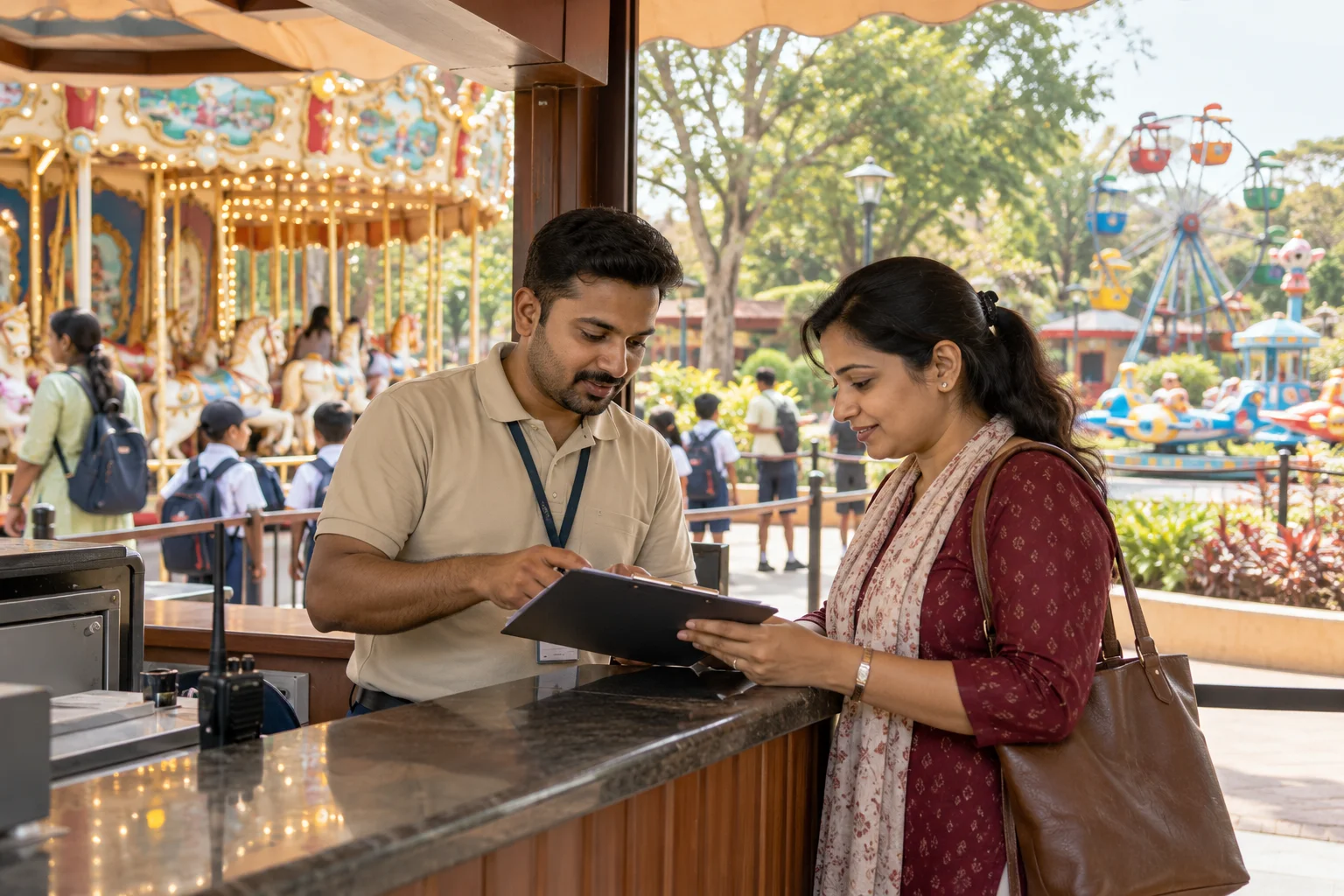
Social media is the ongoing posting your business does on platforms such as Instagram, Facebook and LinkedIn to stay visible to customers and prospects between purchases. GullySales plans a posting calendar, writes captions and designs the images so the page looks active and answers what a visitor would ask.
Also for amusement parks and family entertainment centres
- Content marketing for amusement parks and family entertainment centres
- Lead generation for amusement parks and family entertainment centres
- SEO for amusement parks and family entertainment centres
- Local SEO for amusement parks and family entertainment centres
- Buyer personas for amusement parks and family entertainment centres
- CRM for amusement parks and family entertainment centres
- Follow-up systems for amusement parks and family entertainment centres
- WhatsApp marketing for amusement parks and family entertainment centres
Sales and marketing for amusement parks and family entertainment centres, the overview.
Last updated 22 Oct 2026.
For amusement parks and family entertainment centres
Where it usually goes wrong, and what we would do.
“A reel is the ticket window for a parent choosing a day out”
A short clip of a slide, a splash or a kid laughing is how a parent decides. A page of announcements does not do that. Video from the park, shot on ordinary phones, is enough.
“Children's faces need consent”
Footage of guests, especially children, needs permission from the parent or guardian. Ask at entry, post notices where filming happens and delete on request. Do not use a child's image in an advertisement without written agreement.
“The weekday audience is not the weekend one”
A school group, an office team and a family on holiday see different posts. A single feed that talks to all of them says little to any. Use separate messages for separate groups.
“Complaints and reels travel together”
A viral video of a long queue or a closed ride reaches more people than your own posts. A calm reply with facts, posted where it started, limits the damage.
What we do
What we deliver for amusement parks and family entertainment centres.
Every deliverable, what it covers for you, and the result it is there to produce. Nothing here is an extra.
Content plan around park moments
A set of post ideas tied to rides, food, seasons and events, with shots the team can capture on the day.
Result: The team has a clear list of what to film.
Consent and filming notice
A simple notice for entry and a log of permissions for any child or guest used in marketing.
Result: You hold a record of consent for featured guests.
Audience-specific posts
Posts for school groups, offices and families, each with a different call to action.
Result: Each audience sees a message that suits them.
Comment and message guide
Short replies for common questions about timings, tickets and party bookings.
Result: Comments get a useful answer and a route to booking.
Creator and local collaboration list
Names of local parenting and lifestyle creators to invite for a visit, with a clear brief.
Result: Invitations go to people who fit your visitors.
How the result is measured
- Posts published
- Engagement rate
- Enquiries from social profiles
Recorded as a baseline before work starts, so every later report has an honest comparison.
Who it is for
This is written for these amusement parks and family entertainment centres.
- Theme parks and water parks on the outskirts of large cities
- Mall-based family entertainment centres with games and soft play
- Trampoline, adventure and kids activity parks
- Amusement parks attached to resorts and farmhouses
- Fairs, exhibitions and seasonal carnival grounds
- Snow-themed and indoor attraction parks
- School and college picnic organisers
- Corporate outing and employee family-day planners
- Residents' associations and apartment societies planning group trips
- Birthday and kitty party hosts
How it works
How the social media work runs
The work itself, in order. How an engagement starts, from your brief to a written scope, is set out on our method page.
- 1
Understand your audience and platforms
We identify which platforms your specific buyers actually use and what kind of content they respond to.
- 2
Audit current presence
We review existing pages, past content performance and any gaps in consistency.
- 3
Build the content calendar
A plan is created, balancing genuine value with occasional direct offers.
- 4
Implement and post
Content is created and published consistently on the agreed schedule.
- 5
Measure and optimise
We track enquiries alongside engagement and adjust the content mix based on what actually performs.
Where this fits
Three pieces of sales work, in this order.
This work sits inside sales process design, at stage 0, foundation. The audit comes before it, and sales management keeps it running.
Step 1
Sales audit
Find where deals are being lost and what to fix first.
Start here if you cannot say where orders are lost.
Step 2 · you are here
Sales process design
One written way to sell, from first enquiry to repeat order.
Start here if every salesperson sells differently.
Step 3
Sales management
A target, a review routine and someone who owns the number.
Start here if the team has targets and no routine.
FAQ
Questions owners ask before they call.
Not here? More answers, or ask on WhatsApp.
Do we need a social media manager on site?
Can we run contests?
Should we pay creators?
How much does it cost?
How long is the contract?
How soon will we see results?
Who will actually do the work?
What do you need from us?
What if we are not happy with the work?
More for amusement parks and family entertainment centres
Everything else we would do for you.
Closest to this: content and social
Also for amusement parks and family entertainment centres
- Lead generation for amusement parks and family entertainment centres
- SEO for amusement parks and family entertainment centres
- Local SEO for amusement parks and family entertainment centres
- Buyer personas for amusement parks and family entertainment centres
- CRM for amusement parks and family entertainment centres
- Follow-up systems for amusement parks and family entertainment centres
Or start from the overview: sales and marketing for amusement parks and family entertainment centres.
Your next practical step
Tell us what you are trying to grow, and we will read it before we call.
Eight short steps, mostly taps. Skip anything you would rather answer on the call.