Budget hotels · Digital marketing
Join the listing, the website, the chat and the register so each guest is counted once.
Digital marketing for a budget hotel is the combined work of listing, website, chat, ads and records, planned as one system. GullySales decides what comes first for your hotel and what waits.
Scope, fee, reporting and term are agreed in writing after we have read your brief and spoken to you.
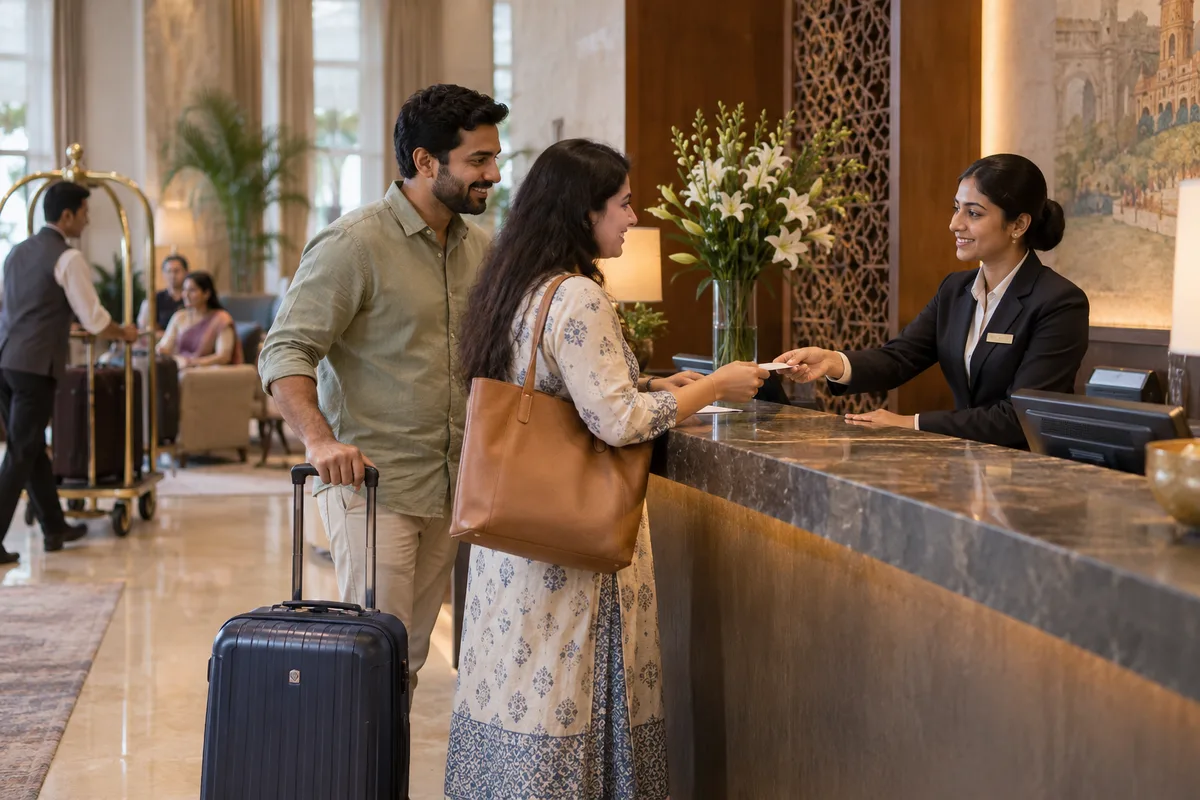
What digital marketing means
Digital marketing is the combined work of search, social media, advertising and website channels running together rather than as separate projects with separate people. GullySales runs these as one connected system so a change in one channel, such as a new offer, is reflected everywhere at once.
Last updated 18 Oct 2026.
For budget hotels
Where it usually goes wrong, and what we would do.
“Every channel is run by a different person”
The Maps listing belongs to the owner's nephew, the app extranet to the manager and the page to nobody. Rates drift apart and no one sees the whole.
“Spending goes where the noise is”
A hotel buys app visibility because the commission feels invisible, then finds the weekday rooms still empty. Spend should follow the guests who call and return.
“Online and desk are treated as separate”
A guest sees the listing, calls, and is quoted a different rate at the desk. The joined-up work is making the screen and the counter agree.
“Without a record nobody learns”
If bookings are not tied to a source, the hotel cannot tell the hospital search from the app. The register is what turns a plan into a lesson.
What we do
What we deliver for budget hotels.
Every deliverable, what it covers for you, and the result it is there to produce. Nothing here is an extra.
A channel audit
The listing, app pages, website, social page and chat reviewed side by side for gaps and mismatches.
Result: One document shows the same hotel facts across all channels.
A one-rate rule
A single rate card used on every channel and at the desk.
Result: The rate on screen equals the rate at the counter.
A priority plan
The work ordered by what a guest checks first, with items that wait named.
Result: The plan lists what is done now and what is held back.
A source-tagged register
Each booking marked by source: Maps, website, chat, app, walk-in, organiser.
Result: You can count bookings by source.
A direct-booking route for regulars
A route for repeat guests to book by phone or chat instead of an app.
Result: Regulars hold your number and know to use it.
How the result is measured
- Enquiries across channels
- Cost per enquiry overall
- Channel mix by contribution
Recorded as a baseline before work starts, so every later report has an honest comparison.
Who it is for
This is written for these budget hotels.
- Budget hotels near railway stations and bus stands
- Hotels near hospitals and diagnostic centres
- Hotels near markets, mandis and wholesale areas
- Economy hotels on highways
- Budget stays near coaching centres and exam venues
- Pilgrim-town budget hotels
- Family-run hotels with 10 to 30 rooms
- Franchise-style economy hotel brands
How it works
How the digital marketing work runs
The work itself, in order. How an engagement starts, from your brief to a written scope, is set out on our method page.
- 1
Understand the objective
We agree the one thing this campaign needs to achieve before choosing any channel.
- 2
Audit available channels
We assess which channels are realistic to run well within the budget and timeline.
- 3
Strategise the central idea
One message and offer is developed that will work across every planned channel.
- 4
Implement across channels
Each channel receives its own adapted version, launched on a shared timeline.
- 5
Measure as one campaign
Results from every channel are combined into a single report against the original objective.
Where this fits
Three pieces of sales work, in this order.
This work sits inside sales process design, at stage 0, foundation. The audit comes before it, and sales management keeps it running.
Step 1
Sales audit
Find where deals are being lost and what to fix first.
Start here if you cannot say where orders are lost.
Step 2 · you are here
Sales process design
One written way to sell, from first enquiry to repeat order.
Start here if every salesperson sells differently.
Step 3
Sales management
A target, a review routine and someone who owns the number.
Start here if the team has targets and no routine.
FAQ
Questions owners ask before they call.
Not here? More answers, or ask on WhatsApp.
Where should a budget hotel start?
Do we leave the booking apps?
Who manages all this day to day?
How long is the contract?
How soon will we see results?
Who will actually do the work?
What do you need from us?
What if we are not happy with the work?
More for budget hotels
Everything else we would do for you.
Closest to this: strategy and research
Also for budget hotels
Or start from the overview: sales and marketing for budget hotels.
Your next practical step
Tell us what you are trying to grow, and we will read it before we call.
Eight short steps, mostly taps. Skip anything you would rather answer on the call.