Amusement parks and family entertainment centres · Content marketing
Publish the planning guide a teacher or parent needs before booking.
Content marketing for an amusement park or family entertainment centre is writing the guides and checklists that an organiser reads when planning an outing. GullySales drafts these from what your front desk already explains on calls.
Scope, fee, reporting and term are agreed in writing after we have read your brief and spoken to you.
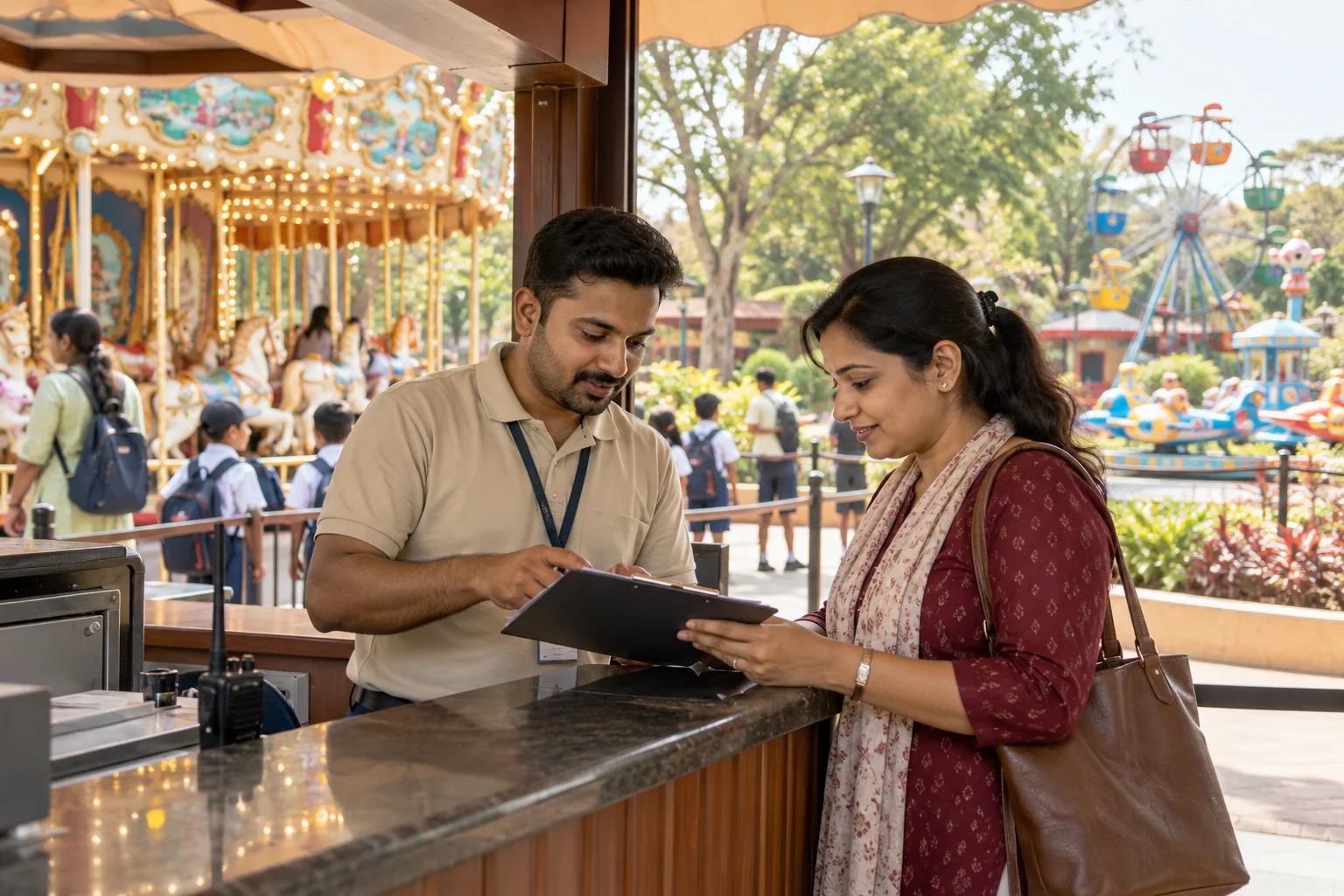
What content marketing means
Content marketing is writing articles, guides and pages that answer the questions buyers search before they are ready to enquire. This makes your business visible and trusted before the first call. GullySales plans this content from the first conversation onward, choosing topics that match real search demand rather than guesses.
Also for amusement parks and family entertainment centres
- Social media marketing for amusement parks and family entertainment centres
- Lead generation for amusement parks and family entertainment centres
- SEO for amusement parks and family entertainment centres
- Local SEO for amusement parks and family entertainment centres
- Buyer personas for amusement parks and family entertainment centres
- CRM for amusement parks and family entertainment centres
- Follow-up systems for amusement parks and family entertainment centres
- WhatsApp marketing for amusement parks and family entertainment centres
Sales and marketing for amusement parks and family entertainment centres, the overview.
Last updated 14 Nov 2026.
For amusement parks and family entertainment centres
Where it usually goes wrong, and what we would do.
“Organisers need a checklist, not an advertisement”
A teacher planning a trip needs timings, transport notes, consent forms and a headcount process. A guide that provides these is passed round the staff room. A slogan is not.
“Parents search for what to expect”
Questions about queue times, food rules, height limits and what to carry are asked in every group chat. A clear guide on the site answers them and builds trust before the visit.
“Seasonal guides keep the site relevant”
A guide for the summer holidays, the monsoon, the festival season or the exam break gives the site a reason to be opened again and again.
“Stories need consent and facts”
A story about a school group's visit makes a good page, but needs the school's agreement and nothing invented. Without it, the page turns into a claim you cannot stand behind.
What we do
What we deliver for amusement parks and family entertainment centres.
The work available for this need. We agree the deliverables and responsibilities for your engagement in writing.
Organiser's guide to a group visit
A page that covers booking, headcount, supervision, meals and timing, using details you supply.
Result: Organisers can plan a visit from one page.
Parents' guide to the park
A guide to what to carry, which rides suit which ages and where to rest, written from your own rules.
Result: Parents arrive knowing what to expect.
Seasonal content calendar
A list of topics matched to school terms, holidays and festivals.
Result: The content plan follows the park's real calendar.
Approved visit stories
Short write-ups of group visits, published with the organiser's written consent.
Result: Each story carries a permission on file.
A content distribution list
Where each guide is sent, such as school coordinators, society groups and your own message lists.
Result: Each guide has named readers to reach.
How the result is measured
- Pages published
- Organic traffic
- Enquiries from content pages
Recorded as a baseline before work starts, so every later report has an honest comparison.
Posts and pieces to plan
Write these pieces for the questions parents and organisers ask before they book.
- Planning a school picnic here
- A guide for teachers covering supervision, food, the rides open to each age and the booking steps. Needs your group rules written down.
- Which rides suit which age
- A table of rides against height and age limits, with a photo of each. It is the page parents save before a visit.
- How a birthday party works
- A walkthrough from booking to cake cutting, with what is provided and what the family brings. Use a real party for the photos.
- What to carry to a water park
- A checklist covering swimwear rules, lockers and food policy. It lowers arguments at the gate and gets shared in family groups.
- A corporate family day, planned
- A sample plan for an HR head showing the flow of the day, food and billing. Written from a day you have hosted.
Who it is for
This is written for these amusement parks and family entertainment centres.
- Theme parks and water parks on the outskirts of large cities
- Mall-based family entertainment centres with games and soft play
- Trampoline, adventure and kids activity parks
- Amusement parks attached to resorts and farmhouses
- Fairs, exhibitions and seasonal carnival grounds
- Snow-themed and indoor attraction parks
- School and college picnic organisers
- Corporate outing and employee family-day planners
- Residents' associations and apartment societies planning group trips
- Birthday and kitty party hosts
Before you decide
When this may not be the right fit.
- Your rules for food, swimwear and group supervision are not yet fixed, so pieces explaining them would need rewriting.
- You have no one to update the pieces when prices or rides change, and an out-of-date guide misleads a family at the gate.
Before you decide
Agree the work. Know how to judge it.
Content marketing for amusement parks and family entertainment centres: use these checks to prepare, choose the scope, and review what changes.
Bring the right evidence
Bring questions from sales calls and examples of objections that delay a decision. Choose a subject expert who can check the substance, and identify evidence that can be published.
Make the scope clear
Agree the reader, buying question, format, and distribution route for each piece. Set the approval process and distinguish new research from rewriting material you already have.
Check the work in use
Ask a colleague to use the draft in a real buyer conversation. It should answer the question, support its claims, and make the next step clear without requiring a sales pitch to explain it.
Know when to change course
If the same unanswered question appears in several articles, improve the strongest page before commissioning another. More words are not a substitute for missing evidence.
These are discussion points, not a fixed package. GullySales confirms the deliverables, responsibilities, fee, and term in writing after reading your brief and speaking with you.
Before we start
What to have ready before the work starts.
The records, access and decisions this work needs from amusement parks and family entertainment centres. Anything missing is noted in the written scope, with who will supply it.
- Notes from group coordinator calls
- Provide any notes, WhatsApp threads or emails that show what teachers and offices ask, with personal details covered. We need real questions. Without them, the guides answer what we imagine, and an organiser still has to phone to learn the thing they needed. Even a few weeks of messages show the order of worries better than any guess from outside the park.
- The safety and supervision notice
- Share the written notice you give schools about supervision ratios, first aid, lifeguards and emergency contacts, as the park's own text. We do not write safety facts. Without this document, guides leave the topic to a phone call, and a worried teacher chooses another venue. Bring the latest version, because an older circular may still list a ride or rule that has changed since.
- Current food and outside-food policy
- Bring the policy on packed lunches, vendor meals, allergies and drinking water, with who supplies group lunches. A clear sentence is enough. Missing, the guides stay silent on food, which is the first detail an organiser asks. Say plainly whether outside food is allowed, which areas are for eating, and whether the park arranges meals for large groups.
- A fact checker with floor knowledge
- Name the person who will read every draft against how the park really runs today, and tell us their availability for answers. Without this person, publication waits, or worse, a draft goes out with a ride or rule that has changed. They also need authority to say a draft is wrong, since a polite nod from someone unsure is not a check.
- Written consent for any visit story
- If a school or company agrees to appear in a story, bring their written permission, with the name they approve. Without it, we write stories with no names and no photographs of identifiable people, and the stories lose some of their pull. This protects the school or company as well as the park, and it settles any later doubt about what was agreed.
How it works
How the content marketing work runs
The work itself, in order. How an engagement starts, from your brief to a written scope, is set out on our method page.
- 1
Record the front desk explaining a visit
We listen to the front desk and group coordinator explain a group visit to a teacher, with their permission, and note the order of their questions. You choose which calls we may use. This gives us the real checklist an organiser needs, in the words your own team already uses. Names and school details are left out of anything we draft from the calls.
- 2
Agree the guides and who checks them
We propose a short list of guides, such as a teacher's checklist, a parent's first-visit guide and a festival plan, and you strike or add. You name one person who checks facts on each guide, because a wrong timing or rule in print is worse than silence. Each guide gets a reader and a named checker before we write it.
- 3
Collect the park's own source material
Share the rate sheet, ride rules, food policy, safety notice and any circular sent to schools. We use these as the only facts. Where a detail is missing, we write a question to you instead of filling it from another park's page. Where two documents disagree, we ask you which one is current and note the answer for later use.
- 4
Draft the guides in the park's voice
We write each guide in plain language with headings an organiser can follow on a phone, covering what to bring, how supervision works, where buses stop and what the food arrangement is. We avoid claims about thrills and keep to what the park has stated. Sections are short, so a coordinator can forward one part to a principal without sending the whole page.
- 5
Run the factual read-through with operations
The operations manager reads every guide against the live park: closed rides, current timings, queue rules, washroom locations. You return corrections in writing. Pieces that mention a ride under repair are held back until it is back, so no reader plans around it. Nothing is published until you confirm in writing that the facts match the park as it is today.
- 6
Check which guides led to enquiries
After publication we match guide reads to group forms, calls and party requests, against counts taken before the work began. You decide which guides to refresh before the next season, which to merge and which topic to add, based on what organisers actually asked. We also note which questions arrived on calls that no guide answered, because those are the next topics.
Where this fits
Three pieces of sales work, in this order.
This work sits inside sales process design, at stage 0, foundation. The audit comes before it, and sales management keeps it running.
Step 1
Sales audit
Find where deals are being lost and what to fix first.
Start here if you cannot say where orders are lost.
Step 2 · you are here
Sales process design
One written way to sell, from first enquiry to repeat order.
Start here if every salesperson sells differently.
Step 3
Sales management
A target, a review routine and someone who owns the number.
Start here if the team has targets and no routine.
FAQ
Questions owners ask before they call.
Not here? More answers, or ask on WhatsApp.
What topics work best for a park?
Who checks the facts?
Can we use staff photographs?
What if a blog post lists a ride that is closed for repairs?
Can a guide mention that a ride is under repair?
Does the park own the guides after delivery?
How much does it cost?
How long is the contract?
How soon will we see results?
Who will actually do the work?
More for amusement parks and family entertainment centres
Related work to consider.
Closest to this: content and social
Also for amusement parks and family entertainment centres
- Lead generation for amusement parks and family entertainment centres
- SEO for amusement parks and family entertainment centres
- Local SEO for amusement parks and family entertainment centres
- Buyer personas for amusement parks and family entertainment centres
- CRM for amusement parks and family entertainment centres
- Follow-up systems for amusement parks and family entertainment centres
Or start from the overview: sales and marketing for amusement parks and family entertainment centres.
Your next practical step
Tell us what you are trying to grow, and we will read it before we call.
Eight short steps, mostly taps. Skip anything you would rather answer on the call.